 Garden


Affiliate Disclosure
Some links on this page are affiliate links. As an Amazon Associate, we earn from qualifying purchases — at no extra cost to you. We do not buy, test, or physically handle the products we cover; our rankings come from aggregated owner reviews, ratings and expert consensus. Commissions never change our verdicts. How we rank · full disclosure.
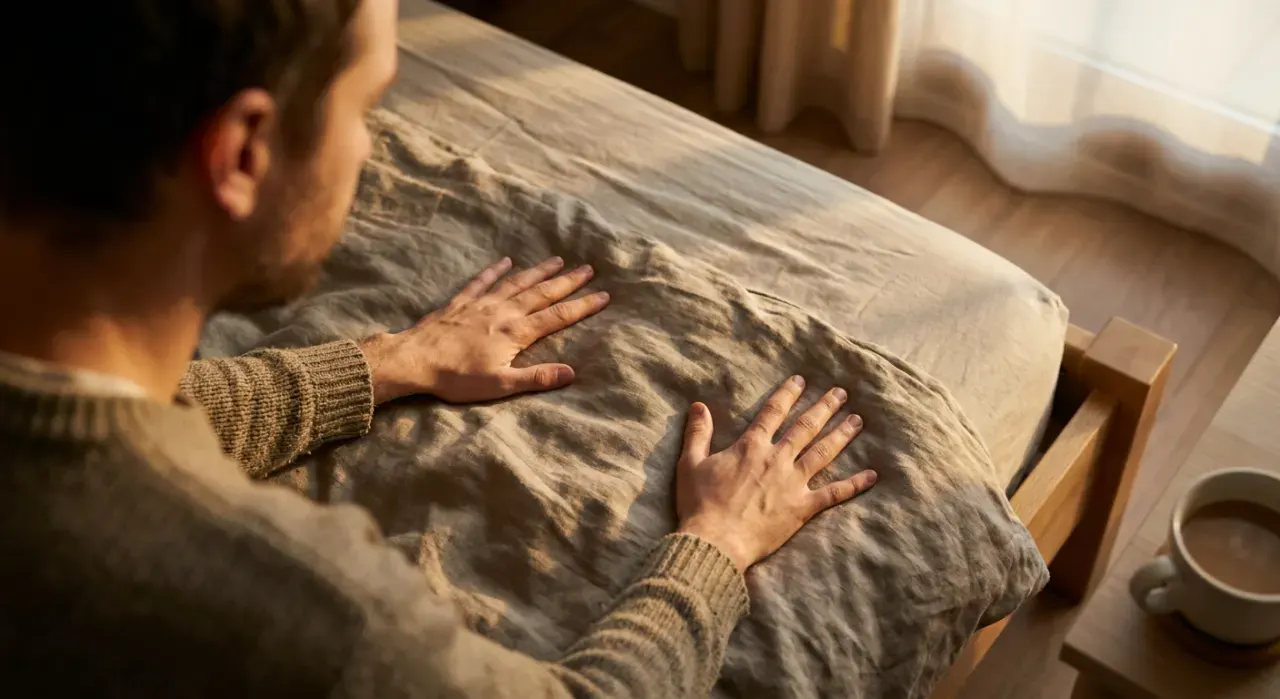
The wrong ones do, and it is a construction problem rather than an inevitable trade-off. Protectors backed with vinyl or a thick TPU laminate block airflow and water vapor along with liquid, so body moisture has nowhere to go and condenses at the sheet. Protectors built on a thin polyurethane membrane bonded to a cotton terry or Tencel face pass vapor while still stopping liquid, and owners of those rarely mention heat at all. The tell is immediate: if it crinkles when you press it or feels plasticky, it will sleep hot.
Why does the material matter so much?
Because sweating in bed is mostly a vapor problem, not a temperature one. An adult loses moisture continuously overnight, and that vapor normally passes down through the sheet and into the mattress, which absorbs and releases it over the day. Put a vapor-impermeable sheet in the middle and the moisture has nowhere to go, so it accumulates in the sheet against your skin — which reads as sweating even when the room has not got warmer.
A microporous polyurethane membrane works the way a breathable rain shell works: pores too small for liquid droplets, large enough for individual water molecules as vapor. It breathes less than bare cotton, but it is in a completely different category from vinyl.
Which construction sleeps coolest?
| Construction | Waterproof | Breathability | Noise | Typical queen price |
|---|---|---|---|---|
| Thin PU membrane, cotton terry face | Yes | Good | Silent | $30–$60 |
| Thin PU membrane, Tencel face | Yes | Good, best moisture handling | Silent | $45–$90 |
| Thick TPU laminate | Yes | Poor | Some crinkle | $20–$40 |
| Vinyl / PVC sheet | Yes | Very poor | Loud | $15–$30 |
| Tightly woven, no membrane | No — resists only | Excellent | Silent | $35–$70 |
| Quilted pad with PU backing | Usually | Moderate — fill adds warmth | Silent | $50–$110 |
Note the last two rows. A tightly woven protector with no membrane breathes best of all but only resists liquid rather than blocking it — fine for dust and allergens, not for spills. A quilted pad adds fiberfill, which is insulation, so it can sleep warmer than a thin protector despite being the more comfortable-sounding option. That distinction is the subject of protector versus mattress pad.
How do you tell which one you have?
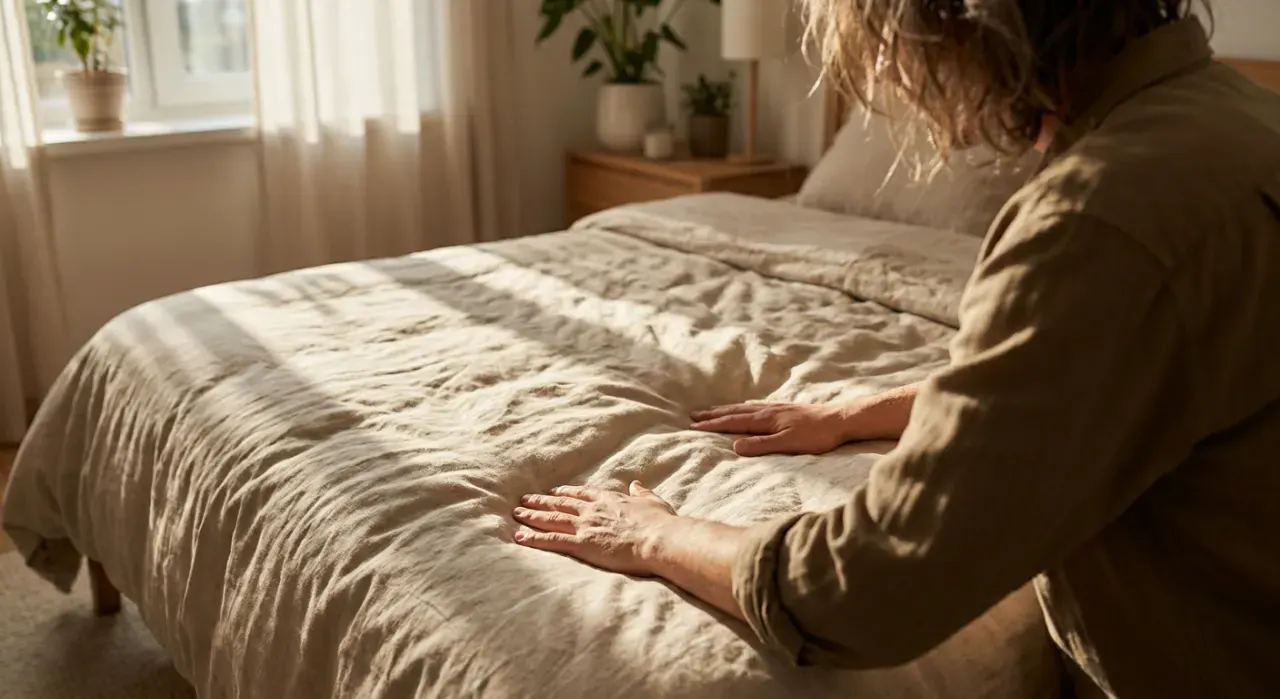
- Press it and listen. Audible crinkle means a stiff laminate.
- Feel the underside. Slick and plasticky is vinyl or thick TPU; a soft matte film that moves with the fabric is thin PU.
- Read the care label. Wipe clean only points to vinyl. Machine wash warm, tumble low points to a fabric-faced membrane protector.
- Do the vapor check. Lay a hand flat on the bare protector for two minutes. A breathable one warms and stays dry; an impermeable one leaves your palm damp.
What else in the bed could be the cause?
Before replacing the protector, check the three layers with more thermal mass than it has. The comforter is the largest variable — fill weight dominates bed temperature, and comforters for hot sleepers covers the lighter options. The sheets come next: polyester microfiber holds moisture badly, and percale, linen or Tencel handle it far better, which is the point of are cooling sheets worth it. And the mattress or topper underneath: dense closed-cell memory foam insulates, while coils, latex and open-cell foams do not.
Room temperature sits behind all of it. Sleep guidance commonly puts the ideal bedroom range at about 65 to 68°F, and no bedding change compensates for a room well above that.
What should you buy instead?
A thin polyurethane membrane with a natural-fiber face, machine washable warm, sized to your mattress depth including any topper. Wash it warm rather than hot and tumble low — heat degrades the membrane and stiffens it, which is how a protector that started breathable ends up hot in year two. Our mattress protector picks weight owner comments on heat and noise heavily, because those are the two complaints that make people stop using a protector altogether. On whether to run one at all, see are mattress protectors worth it and do you need a mattress protector.
We never buy, test or physically handle the products we rank. Recommendations come from aggregated owner reviews, star ratings, review volume and expert consensus — see how we rank.
More from this hub: Bedding & Sleep · Best cooling sheets · Do cooling sheets work · How we rank