 Garden

Affiliate Disclosure
Some links on this page are affiliate links. As an Amazon Associate, we earn from qualifying purchases — at no extra cost to you. We do not buy, test, or physically handle the products we cover; our rankings come from aggregated owner reviews, ratings and expert consensus. Commissions never change our verdicts. How we rank · full disclosure.
The short answer: to make a bed like a hotel, layer clean white long-staple cotton in a set order — mattress protector, fitted sheet, a flat sheet tucked with hospital corners, a duvet with a washable cover folded in thirds at the foot, then plumped pillows standing against the headboard with two decorative shams in front. The details that actually matter are a percale weave in the 250 to 400 thread count range, sheets made up while barely damp so they dry taut, and that tight foot-of-bed corner. It takes about ten minutes once you know the sequence.
Everything else is refinement. Hotels are not using secret bedding — they are using ordinary quality linen laundered rigorously and assembled in the same order every time. We do not sleep-test the sheets we rank; our picks come from aggregated owner reviews and expert consensus, explained in how we rank. Below is the exact method, the materials that create the effect, and where home beds usually go wrong.
The seven layers, bottom to top
A hotel bed is built in a fixed order. Skip a layer or reverse two and it stops reading as hotel. Here is the full stack from mattress up.
| Layer | Purpose | Home shortcut |
|---|---|---|
| 1. Mattress protector | Hygiene, keeps the mattress warranty valid | A quiet fitted protector, not a crinkly vinyl one |
| 2. Fitted sheet | The taut base surface | Deep pockets sized to your mattress depth |
| 3. Flat sheet | The tucked, crisp edge | Non-negotiable for the real look |
| 4. Duvet with washable cover | The main warmth layer | A cover you can wash weekly saves the insert |
| 5. Sleeping pillows | What you actually use | Two per person, in plain cases |
| 6. Decorative shams | The front row for looks | Optional, but they hide the flatter sleep pillows |
| 7. Throw or runner | Color and a finished edge | Fold across the foot, third of the way up |
Notice there is no comforter fighting a duvet, no pile of ten cushions. Hotels keep the count low and the layers deliberate. The luxury reads through crispness and order, not volume.

Choose the right sheets — weave beats thread count
The most common home mistake is chasing a high thread count. Beyond roughly 400, the number is usually padded by counting the plies in a twisted yarn, and ultra-high counts sleep hot because the weave is so dense. What upscale properties actually specify is long-staple cotton in a percale weave, most often 250 to 400 thread count. Percale is a simple one-over-one-under weave that produces that cool, crisp, slightly matte hotel hand and holds a pressed finish. Sateen feels silkier and drapes more, but it wrinkles into soft folds rather than crisp lines, so it looks less tailored.
Cotton staple length matters more than the headline number. Long-staple cottons — often labeled as combed cotton, pima, or a genuine Egyptian cotton — resist pilling and get softer with washing. If you are buying to get the hotel effect, prioritize a white or pale percale from long-staple cotton over any inflated count. For the full ranked field see our best sheet brands roundup, and if you want a cooler, more breathable option in the same crisp style, best bamboo sheets covers that category. Whether the number on the package matters at all is unpacked in does thread count actually matter in sheets.
Master the hospital corner
This is the technique that separates a home bed from a hotel one. A hospital corner wraps the flat sheet tight at each foot corner with no fabric hanging loose, so the bed stays taut and does not pull free overnight.
- Lay the flat sheet centered, wrong side up, with the top hem level with the top of the mattress. Let the sides and foot hang evenly.
- Tuck the foot end firmly under the mattress across the whole bottom edge.
- At one bottom corner, grab the side of the sheet about 16 inches from the corner and lift it straight up onto the bed, forming a 45 degree diagonal fold. The part now hanging below the mattress edge should hang square.
- Tuck that hanging part smoothly under the mattress.
- Drop the diagonal fold back down and tuck it under too, pulling for tension. You should have a clean 45 degree line at the corner.
- Repeat at the other foot corner. Leave the top sides untucked or tuck lightly, depending on how tailored you want it.
Do this while the sheet is barely damp from the dryer and it dries drum-tight. The corner is worth practicing twice — after that it is muscle memory and takes seconds.
The duvet fold and the triple-sheet trick
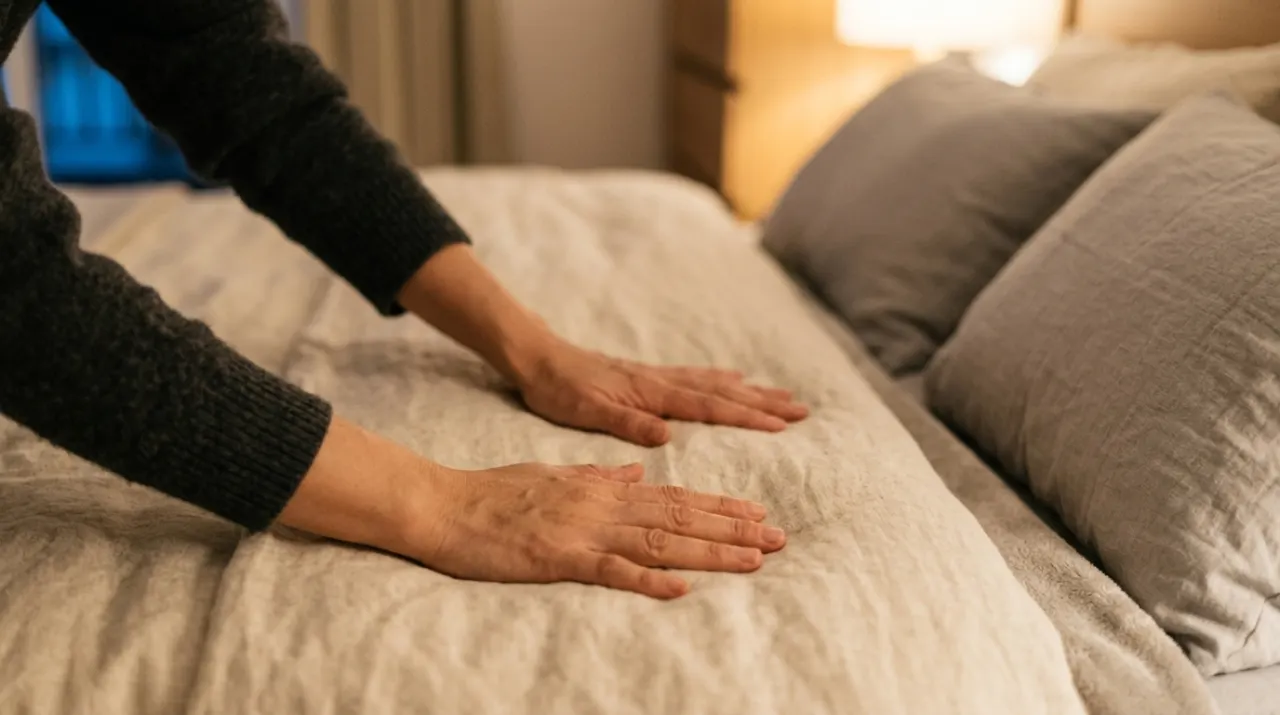
Hotels handle the top warmth layer one of two ways. The classic look is a white duvet inside a washable cover, laid flat over the tucked flat sheet, then folded back on itself roughly one third of the way down to expose the crisp flat sheet beneath — that folded reveal is a big part of the effect. The second method, the triple sheet, sandwiches a thin blanket between two flat sheets so nothing needs a cover; it launders flat and is why many hotel beds feel light rather than puffy.
For a home bed, a washable duvet cover is the practical choice: it protects the insert from body oils so the insert itself rarely needs washing. Pick an insert weight for your climate — a lighter fill for warm rooms, a heavier one for cold. If you run hot, the duvet is where you lose or gain the most heat, and our best comforter for hot sleepers guide covers low-fill, breathable options, while best comforter ranks the field generally. Whether you even need a cover is answered in do you need a duvet cover for a comforter.
Plump and arrange the pillows
Pillow arrangement is where home beds tip into either flat or cluttered. The hotel formula is simple and restrained.
- Sleeping pillows first. Stand two firm pillows per person upright against the headboard, in plain white cases. Give each a karate chop in the center top to create the dented, tailored shape hotels use.
- Shams in front. One or two decorative shams lean against the sleeping pillows, hiding the flatter everyday ones behind. This is what gives the layered, deep look without a mountain of cushions.
- One accent, maximum. A single lumbar pillow or a folded throw is the whole decorative budget. Restraint is the point.
- Fluff before arranging. A flat pillow reads as tired no matter how good the sheets are. Shake and knead each one; if it stays flat, it is past its life. Our how often should you replace pillows guide covers when to retire them, and best pillow brands ranks replacements.

Launder and press like a housekeeping department
The crispness is 80 percent laundry technique. Hotels wash on hot with a whitening agent, dry, then press the top sheet and cases before making the bed. You can replicate the essentials at home.
| Step | What hotels do | Home version |
|---|---|---|
| Wash | Hot cycle, oxygen or chlorine bleach for whites | Warm to hot for whites, oxygen bleach to protect fibers |
| Dry | Commercial dryer, pulled while damp | Remove sheets while barely damp, not bone dry |
| Press | Roller iron on flat sheet and cases | Handheld steamer or iron the top sheet and pillowcases only |
| Make | Bed made immediately while linen is damp | Make the bed straight away so it dries taut |
Percale takes a press beautifully; sateen fights it. Washing sheets weekly keeps them looking fresh, and skipping fabric softener is what keeps them crisp rather than slick — softener coats the fibers and dulls that clean percale hand. For the full routine, see how to wash bedding, and if pilling is your issue, how do you stop sheets from pilling.
Where home beds go wrong
If your bed does not look hotel after all this, it is almost always one of these five things.
- No flat sheet. Without it there is no tucked edge, and the bed reads casual no matter how nice the duvet.
- Fabric softener and dryer sheets. They make sheets feel plush but kill the crisp percale finish and, over time, reduce absorbency.
- The wrong fitted sheet depth. A pocket too deep bunches; too shallow pops off corners. Match the pocket to your actual mattress depth, including any topper.
- Too many pillows. A wall of cushions reads busy, not luxurious. Two sleepers, two shams, one accent.
- Color chaos. Hotels win with white or a single tight neutral. If you want color, keep it to one accent and let the base stay pale and clean.
Get the layers, the corner, and the laundry right and the effect is immediate. Explore the rest of the category at the bedding and sleep hub, and for the crisp-versus-silky weave decision see percale versus sateen sheets.