 Garden
Affiliate Disclosure
Some links on this page are affiliate links. As an Amazon Associate, we earn from qualifying purchases — at no extra cost to you. We do not buy, test, or physically handle the products we cover; our rankings come from aggregated owner reviews, ratings and expert consensus. Commissions never change our verdicts. How we rank · full disclosure.
Wash a mattress protector in cold or warm water on the gentle cycle with a small amount of mild liquid detergent, then tumble dry on low or air dry. No bleach, no fabric softener, no dryer sheets, no hot water, no ironing, no dry cleaning. Those five prohibitions all protect the same thing: the thin polyurethane or TPU membrane laminated to the underside, which is what makes the protector waterproof and which is destroyed permanently by heat and by the waxy residue softeners leave behind.
We never buy or physically handle the products we rank; recommendations come from aggregated owner reviews and manufacturer care specifications, described in how we rank. More at the bedding and sleep hub.
What You Are Actually Protecting
A waterproof mattress protector is a laminate. The top is a soft face fabric — cotton terry, bamboo viscose, jersey knit or a quilted fill — and bonded to its underside is a membrane, typically thermoplastic polyurethane (TPU) on better products or plain polyurethane (PU) on cheaper ones. That membrane is a few thousandths of an inch thick. It is what stops liquid, and it is the only part of the product that fails.
Two things kill it. Heat softens and eventually cracks the film and breaks the adhesive bond to the fabric, which shows up as stiff patches, crinkling that was not there before, or visible separation. Fabric softener and dryer sheets deposit a hydrophobic waxy film that clogs the breathable structure and interferes with the laminate, which is why a protector can start feeling clammy and then start leaking after a few softener washes.
Neither damage is reversible. This is why the care instructions on a mattress protector are stricter than on anything else on the bed.
The Wash, Step by Step
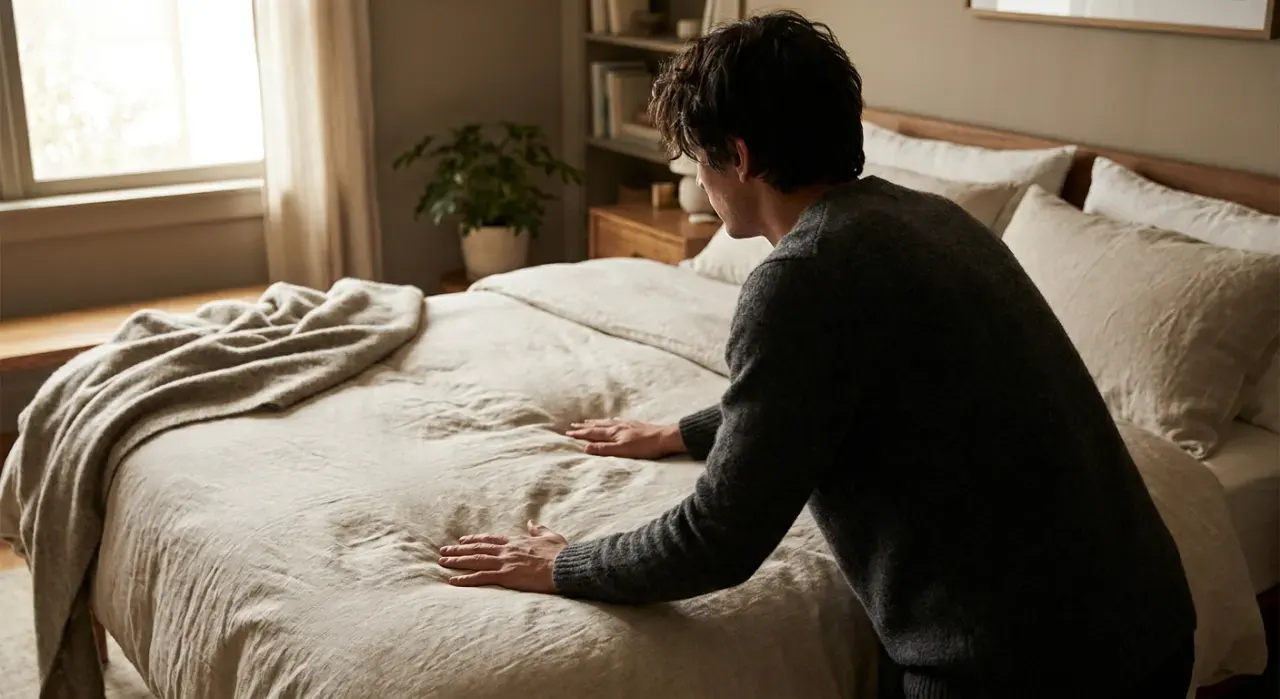
- Read the tag first. Manufacturers differ on maximum temperature and several specify air dry only. The tag overrides anything here.
- Pre-treat stains. Enzyme-based stain remover or a paste of mild detergent, applied to the face fabric only, left 10 to 15 minutes. Do not scrub the backing. For urine and sweat, an enzymatic cleaner is far more effective than detergent alone because it breaks down the proteins and uric acid rather than diluting them.
- Load it loosely. Alone, or with one or two light items. Never with towels (lint) or heavy items (mechanical damage).
- Cold or warm, gentle cycle. Cold is safest; warm up to about 104 degrees F is acceptable on most quality protectors. Avoid the high-speed spin — a slower final spin is kinder to the seams.
- Mild liquid detergent, half the normal dose. Liquid rinses out of quilted fill more completely than powder. Skip oxygen boosters and never use chlorine bleach, which attacks polyurethane directly.
- No fabric softener, no dryer sheets, ever. If you want it softer, add half a cup of distilled white vinegar to the rinse instead — it strips detergent residue and leaves nothing behind.
- Extra rinse. Worth running. Detergent trapped in quilting is the usual cause of a protector that feels stiff or smells faintly soapy after drying.
- Dry low or air dry. Tumble on low or air-fluff, 30 to 60 minutes, and remove while slightly damp to finish on the bed or a rack. Two or three dryer balls speed drying and stop the quilting from bunching. Line drying works but keep it out of direct sun, which degrades polyurethane over time.
Full drying detail, including why a protector takes so much longer than sheets, is at how to dry a mattress protector.
Care by Protector Type
| Type | Wash temp | Dry | Watch for |
|---|---|---|---|
| TPU-backed waterproof (most common) | Cold to warm, gentle | Low or air | Heat cracking, softener residue |
| Vinyl / PVC backed (budget) | Cold only | Air dry only | Stiffening and cracking; shortest lifespan |
| Quilted, fiber-filled | Warm, gentle | Low, with dryer balls | Fill clumping; needs longer drying |
| Zippered encasement (bed bug / allergy) | Warm, gentle | Low | Zipper damage — close it fully before washing |
| Wool or cotton, non-waterproof | Per tag, often warm | Low | Shrinkage; no membrane to protect |
| Cooling / phase-change face | Cold, gentle | Air dry preferred | Heat degrades the cooling finish |
How Often, Honestly
Every one to two months covers most adults. Move to monthly if you sweat heavily at night, sleep with pets, eat in bed, or run warm — and wash immediately after any spill, vomit, or illness, before the liquid has time to reach the mattress. Children's beds generally need monthly or more.
The protector is not the layer doing the daily hygiene work. Sheets and pillowcases collect the skin cells that feed dust mites, and those want washing weekly at 130 degrees F or above. The protector sits under that barrier, so it stays cleaner longer — which is exactly what it is for. Related: how often to wash a comforter.
Common Problems and Fixes
It crinkles loudly. Either it is a cheap PU or vinyl backing (inherent, and it gets worse with age), or the membrane has stiffened from heat. Washing with a half cup of vinegar and drying on air with dryer balls softens it somewhat. If it started after a hot dryer cycle, the damage is permanent.
Yellow staining that will not shift. Sweat and body oils oxidize. An enzymatic pre-soak of 30 to 60 minutes in cool water is the most effective home treatment. Oxygen bleach is a last resort and will shorten membrane life; chlorine bleach will destroy it.
It smells even after washing. Detergent residue trapped in the quilting, or bacteria in the fill. Run a wash with no detergent and one cup of vinegar, then a plain rinse. If the smell persists, the fill is saturated and the protector is at end of life.
Elastic skirt has gone slack. Common at three to four years and not repairable in any lasting way. Sheet suspenders are a workable stopgap.
It feels clammy. Usually softener buildup blocking breathability. Two vinegar washes with no detergent often restore it.
Washing After an Accident or Illness
This is the job the protector exists for, and speed matters more than technique.
- Strip the bed immediately and blot — do not rub — with dry towels to lift as much liquid as possible before it soaks into the quilting.
- Rinse the affected area under cool running water from the back side, pushing liquid out the way it came rather than deeper in. Cool water only; heat sets protein stains permanently.
- Apply an enzymatic cleaner and leave it 15 to 30 minutes. Enzymes break down the proteins and uric acid in urine, vomit and blood, which ordinary detergent only dilutes. This is why a protector can smell faintly of ammonia after a normal wash.
- Wash on the warmest setting the tag permits, usually warm rather than hot, with mild detergent and an extra rinse.
- Check by smell before drying. Heat sets any remaining odor. If it still smells, repeat the enzyme step rather than drying and hoping.
- Dry thoroughly on low, and check the mattress underneath — if anything got through, the protector has failed and the mattress needs its own treatment.
For norovirus or similar illness, the CDC advises washing soiled laundry on the warmest permitted cycle and drying completely, and handling it with gloves without shaking it out. A waterproof protector generally cannot take the hot wash that would be ideal, which is a strong argument for a second protector so one can be out of service.
When to Replace It
Owner reports cluster around two to three years for typical waterproof protectors under normal washing, and less for vinyl-backed budget versions. Replace it when any of these appear: liquid soaks through in a spot test, the backing shows cracking or delamination, the elastic no longer holds, or the smell survives two washes.
Test it in 30 seconds: lay it flat, pour a quarter cup of water on the face fabric, wait five minutes, then feel underneath. Any dampness means the membrane has failed.
Our current picks are at best mattress protector, ranked on aggregated owner reports of how long the waterproofing survives washing — the single most predictive quality signal in this category. Related reading: are mattress protectors worth it, do mattress protectors make you sweat, mattress protector vs mattress pad, and do mattress protectors stop bed bugs.