 Garden

Affiliate Disclosure
Some links on this page are affiliate links. As an Amazon Associate, we earn from qualifying purchases — at no extra cost to you. We do not buy, test, or physically handle the products we cover; our rankings come from aggregated owner reviews, ratings and expert consensus. Commissions never change our verdicts. How we rank · full disclosure.
It is off-gassing, and it normally clears in three to seven days. Polyurethane foam releases small amounts of volatile organic compounds left over from manufacture. In a vacuum-compressed mattress in a box, those compounds are sealed in with the foam for weeks, so they all come out at once when you cut the plastic. The smell peaks in the first few hours, drops sharply by day two, and is usually gone inside a week with the window open. Ventilation is the whole fix — it is a dilution problem, not a defect.
What causes the smell?
Three sources, in rough order of contribution. The foam itself: residual reactants and blowing agents from polyurethane production remain in the cell structure and evaporate slowly. Adhesives: the glues bonding foam layers and the cover contribute their own compounds. Packaging: the plastic wrap holds everything in and adds a plastic note of its own.
The reason a mattress in a box smells more than a showroom mattress is not that it is made worse. It is that a conventional mattress spends weeks in a warehouse and on a truck uncompressed, off-gassing quietly the whole time, so by the time you receive it the peak has passed. A compressed mattress does all of that in your bedroom.

How long does it take to go away?
| Time from unboxing | What to expect | What to do |
|---|---|---|
| 0–4 hours | Strongest smell; mattress expanding | Window open, fan on, door open, stay out of the room |
| 4–24 hours | Noticeably weaker | Keep it bare and uncovered |
| Day 2–3 | Mild; detectable close up | Continue airing; optional baking soda pass |
| Day 3–7 | Usually gone | Add protector and bedding |
| Day 7–14 | Occasional faint trace in dense foam | Air the room daily; contact seller if strong |
Cold slows it down, the same way cold slows expansion — see how long a mattress in a box takes to expand. A bedroom at 60°F will stretch the timeline by a day or two compared with one at 72°F.
How do you get rid of it faster?
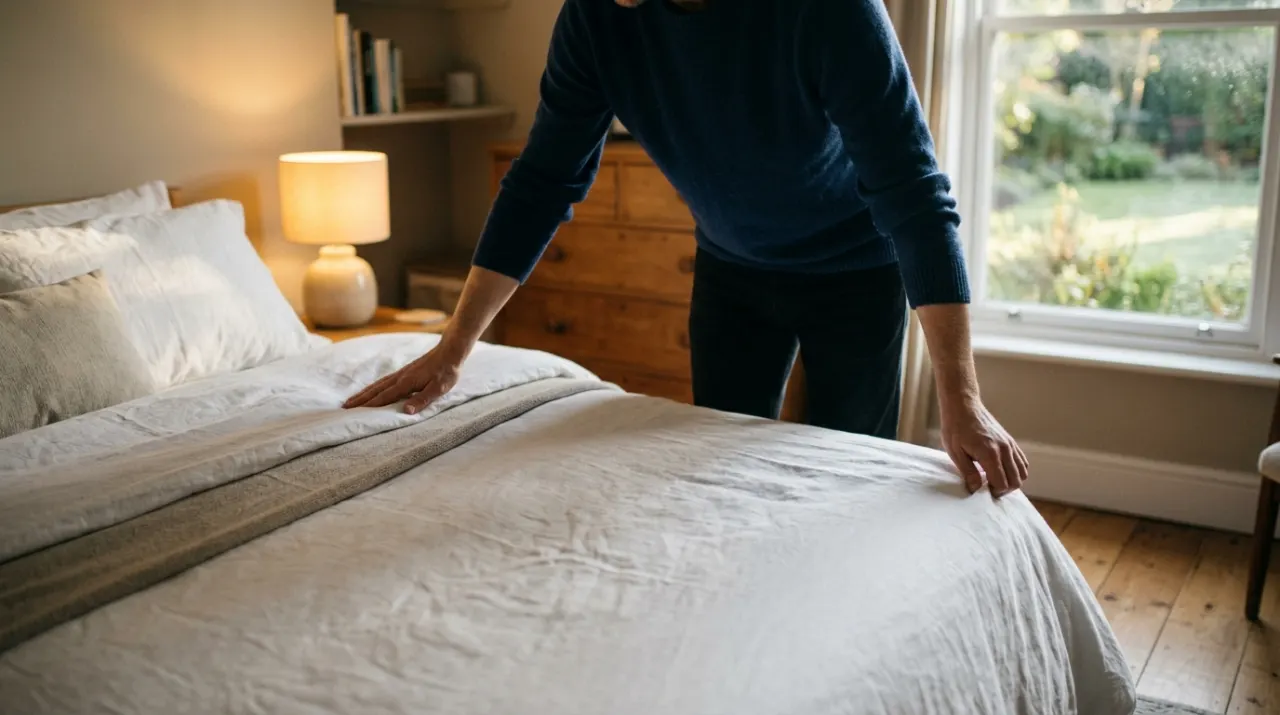
- Unbox in the room it will live in, and open a window immediately. Point a fan out the window, not at the mattress, so you are exhausting air rather than circulating it.
- Leave it completely bare for the first 24 to 48 hours. No sheets, and especially no waterproof protector — a membrane traps vapor and slows everything down.
- Warm the room to about 70°F. Warmth speeds both expansion and off-gassing, which is what you want.
- Baking soda pass at day two or three. Sprinkle across the bare surface, leave several hours, vacuum off with an upholstery tool.
- Do not spray it with anything. Fabric sprays and essential oils add moisture and scent to foam without removing the source, and moisture in foam causes worse problems than smell.

Is it harmful?
The mainstream position from regulators is that the concern with new furnishings is elevated indoor VOC levels rather than the product itself, and the mitigation is ventilation — the EPA guidance on indoor air quality and new furnishings is essentially open the windows and increase air exchange. Foam certified under CertiPUR-US is tested for low VOC emissions and screened for certain flame retardants, formaldehyde, phthalates and heavy metals, and it is the most useful certification to look for on a foam mattress or topper. Mattresses sold in the US also have to meet the CPSC flammability standards in 16 CFR 1632 and 1633.
This is general product information, not medical advice. If anyone in the household has asthma, a chemical sensitivity or is pregnant, air the mattress in a separate ventilated room for a few days before use and follow your clinician guidance.
When is the smell not off-gassing?
Off-gassing smells chemical or plasticky and fades daily. Two other smells do not. A musty, sour or earthy smell is moisture — mildew in the foam or a damp room — and it gets worse rather than better; that is a return conversation, not an airing problem. A fishy or acrid smell that persists past two weeks in a ventilated room is also worth escalating to the manufacturer while the sleep trial is open, since most mattress-in-a-box brands run 90 to 120 day trials.
The same off-gassing happens with new foam toppers, on a shorter timeline — see how long a topper takes to expand. If you are still choosing, our mattress in a box picks note which brands owners describe as low-odor out of the box, and how often to replace a mattress covers the other end of the life cycle.
We never buy, test or physically handle the products we rank. Recommendations come from aggregated owner reviews, star ratings, review volume and expert consensus — see how we rank.
More from this hub: Bedding & Sleep · Do you need a protector · Box spring with foam · How we rank