 Garden
Affiliate Disclosure
Some links on this page are affiliate links. As an Amazon Associate, we earn from qualifying purchases — at no extra cost to you. We do not buy, test, or physically handle the products we cover; our rankings come from aggregated owner reviews, ratings and expert consensus. Commissions never change our verdicts. How we rank · full disclosure.
The short version: our #1 pick is Clorox Toilet Bowl Cleaner with Bleach, because it is the only widely available formula that whitens the waterline ring and disinfects the porcelain in one pass, and its clinging gel stays put long enough to do it. It suits any household with municipal water and an ordinary dirty bowl. If your ring is chalky and your water is hard, Lysol Power uses acid and dissolves scale that bleach only lightens. If the stain is orange, you need Iron OUT instead — rust is a different problem.
One thing worth saying before the rankings, because it decides more outcomes than the brand does: almost every complaint about a toilet cleaner failing traces back to contact time. Thirty seconds and a scrub will disappoint you no matter what is in the bottle.
Top Picks at a Glance
Our #1 Pick: Clorox Toilet Bowl Cleaner with Bleach
Toilet bowls collect three distinct problems, and most products only address one. There is organic soil and the biofilm that grows in it, which is what makes a bowl smell. There is mineral scale from hard water, which forms the chalky ring at the waterline. And there is metal staining, usually iron, which shows up as orange or brown streaks. Clorox handles the first thoroughly, lightens the second, and does nothing for the third — but the first is what most people are actually looking at, and the consensus across a very large owner-review base reflects that.
What separates it from cheaper bleach cleaners is the viscosity. A thin liquid poured into a bowl reaches the trap in seconds and spends the rest of its dwell time diluting in standing water where the stain is not. The clinging gel formulation holds on the vertical porcelain, which is precisely where the ring lives. Owners who switch from a bargain bottle and report a sudden improvement are almost always describing that difference rather than a difference in active ingredient.
The angled neck matters more than it sounds. Rim jets are where biofilm establishes itself unseen, and a bottle that cannot deliver product up under the rim leaves the reservoir of the problem untouched. That is also why a bowl can look clean and still smell.
Honest caveats: it is bleach, so it will mark colored fabric on contact and it must never be combined with any acid cleaner or with ammonia. The fragrance is strong in a small room. And on genuine limescale it whitens rather than removes, which means the deposit is still there and will re-stain quickly.
Check price on Amazon → (paid link)
The Ranked Field

Best for the household that wants one bottle that cleans, whitens and disinfects
- Clinging bleach gel holds on the bowl wall instead of running straight to the trap
- Whitens the waterline ring as well as disinfecting it
- Angled neck reaches under the rim where the jets are
- Sold in every grocery store in the country
Why buy it: bleach gel is the only common formula that removes the stain and kills what is causing it in the same pass, and the clinging viscosity is what makes it work above the water.

Best for limescale, hard-water rings and homes that avoid bleach
- Hydrochloric-acid formula that dissolves mineral scale rather than bleaching it
- Bleach free, so it will not damage colored grout or fabrics on contact
- Thick gel clings above the waterline
- Septic safe at label dose
Why buy it: acid removes hard-water scale that bleach only whitens, which is why it beats Clorox in a house with mineral-heavy water.
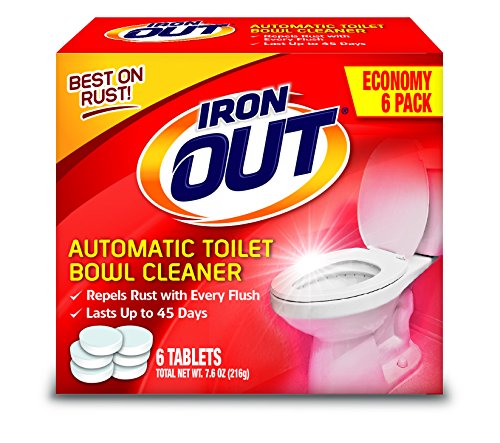
Best for orange and brown iron staining from well water
- Targets iron and rust, which ordinary cleaners will not touch
- One tablet lasts roughly 45 days in the tank
- Prevents the stain returning rather than only removing it
- Made for well-water and high-iron supplies
Why buy it: rust staining is a chemically different problem from limescale and soap film, and this is the cheapest reliable answer to it.
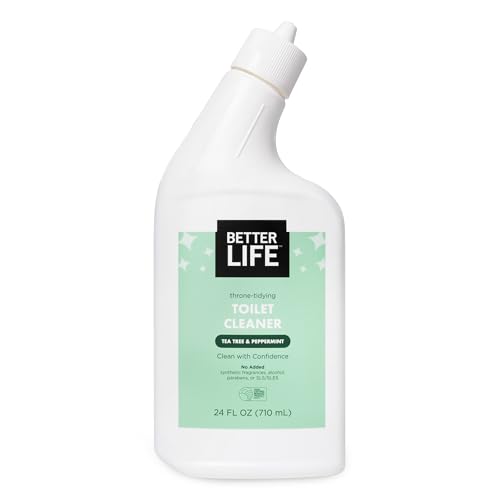
Best for septic systems, small bathrooms and anyone bothered by bleach fumes
- No chlorine, no petroleum solvents
- Citric-acid based, so it still works on light scale
- Tea tree and peppermint scent rather than a chemical one
- Safe around pets and children at label dose
Why buy it: the only formula here you can use in a windowless powder room without the fumes becoming the main event.
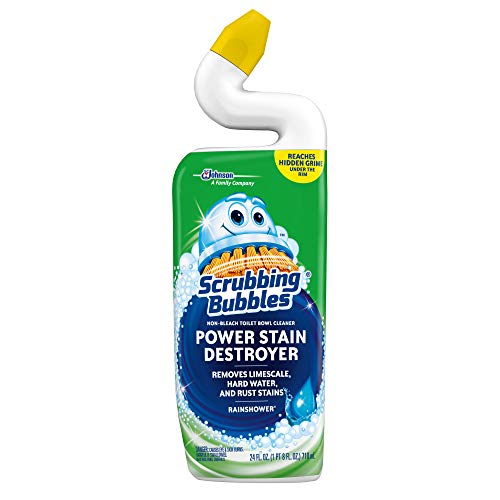
Best for keeping a clean bowl clean rather than rescuing a bad one
- Non-bleach formula that changes color as it works
- Handles limescale, hard water and light rust marks
- Fifteen-minute dwell then a single scrub
- Will not bleach a bath mat if it splashes
Why buy it: the color-change cue removes the guesswork about dwell time, which is the single biggest reason toilet cleaners underperform.

Best for guest bathrooms and anyone who would rather never scrub
- Installs in the tank and doses with every flush
- Each refill runs about three months
- OxiClean stain fighters rather than chlorine tablets
- Designed not to eat tank flappers the way bleach pucks do
Why buy it: it is the only option here that keeps a rarely used bathroom from developing a ring in the first place.
Quick Comparison
| Product | Best for | Rating | Price | Buy |
|---|---|---|---|---|
| Clorox Toilet Bowl Cleaner with Bleach, Fresh Scent (24 oz) | Best Overall | — | Check (paid link) | |
| Lysol Power Toilet Bowl Cleaner, 10x Cleaning Power (24 oz) | Best Disinfectant | — | Check (paid link) | |
| Iron OUT Automatic Toilet Bowl Cleaner Tablets (6 tablets) | Best for Rust Stains | — | Check (paid link) | |
| Better Life Toilet Bowl Cleaner, Tea Tree & Peppermint (24 oz) | Best Plant-Based | — | Check (paid link) | |
| Scrubbing Bubbles Toilet Bowl Cleaning Gel, Rainshower (24 oz) | Best Between-Clean Maintenance | — | Check (paid link) | |
| Kaboom Scrub Free! Continuous Clean Toilet System with OxiClean | Best Hands-Off | — | Check (paid link) |
Consensus Scores
Each score is our reading of the owner-review picture for that product — star average weighted by review volume and recency, adjusted for how the negative reviews cluster. It is never a measurement we took ourselves, and the verified review count sits on the card above.
| Cleaner | Consensus Score | What the reviews cluster on |
|---|---|---|
| Clorox with Bleach | Consensus Score █████████░░░ 8.8 | reliable whitening, strong fumes |
| Lysol Power | Consensus Score █████████░░░ 8.7 | beats bleach on scale, harsh on skin |
| Iron OUT Tablets | Consensus Score ████████░░░░ 8.1 | fixes rust nothing else touches |
| Better Life | Consensus Score ███████░░░░░ 7.6 | pleasant to use, weaker on heavy rings |
| Scrubbing Bubbles Gel | Consensus Score ███████░░░░░ 7.8 | good maintenance, not a rescue product |
| Kaboom Continuous Clean | Consensus Score ███████░░░░░ 7.4 | genuinely hands-off, install fiddly |
How We Rank
We do not buy these cleaners or scrub with them. We read the owner-review record at volume, because a toilet cleaner is judged over months in real water conditions rather than in a single side-by-side. Four things carry the weight here. Ring removal, judged from what reviewers say about the waterline specifically rather than general impressions. Performance in hard water, since roughly 85 percent of US homes have hard water according to the US Geological Survey, and that single variable decides whether an acid or a bleach formula is right. Cling and dwell behavior, because a formula that runs off the porcelain cannot work regardless of its chemistry. And safety in ordinary use — fumes in a small unventilated room, damage to tank components, and how badly it behaves if splashed. Prices were checked at the time of writing. Full method on how we rank.
The Cleaners, Reviewed
1. Clorox Toilet Bowl Cleaner with Bleach — Best Overall
Covered above. What owners like: that it works on the visible ring quickly, that it disinfects at the same time, that the clinging gel stays where you put it, and that it costs a few dollars. Recurring complaints: fumes in a small bathroom without a window; splashes bleaching bath mats and towels; and disappointment on chalky hard-water rings, which it whitens without removing. Check price (paid link).
2. Lysol Power Toilet Bowl Cleaner — Best Disinfectant
The active here is hydrochloric acid, and that changes what the product can do. Acid dissolves calcium and magnesium carbonate, which is the chalky deposit that builds at the waterline and inside the rim jets in a hard-water house. Bleach cannot do this at any concentration; it only lightens the surface. Reviewers who describe a ring that came back within days after cleaning, then vanished properly after switching to Lysol Power, are describing exactly this distinction.
It is also bleach free, which matters practically. It will not destroy a towel it splashes on, and it can be used in a bathroom with colored grout without the risk of lightening it.
Recurring complaints: it is harsh on skin and should not be handled without gloves; the acid smell is sharp even though it is not chlorine; and it is less effective than bleach on organic staining and odor, which is the flip side of the same chemistry. It must never be used in the same session as a bleach product. Check price (paid link).
3. Iron OUT Automatic Toilet Bowl Cleaner Tablets — Best for Rust Stains
If your staining is orange, brown or reddish rather than gray or chalky, you have dissolved iron in the water supply and you are wasting money on ordinary cleaners. Iron staining needs a reducing agent — usually sodium hydrosulfite — which converts the insoluble iron oxide back into a soluble form that flushes away. That is what this is, in tank-tablet form, and the reviews from well-water households are unusually emphatic about it working when nothing else did.
Sitting in the tank, it treats the water before it ever reaches the bowl, so it prevents the stain rather than chasing it. One tablet runs about six weeks.
Recurring complaints: it does nothing for ordinary soil or the bacterial smell, so most households still need a bowl cleaner alongside it. Some reviewers report the tablet dissolving faster than the stated 45 days in a heavily used toilet. And it does not fix the underlying water problem — if you have iron in your supply, your fixtures and laundry are staining too, and the real answer is treatment at the point of entry. Check price (paid link).
4. Better Life Toilet Bowl Cleaner — Best Plant-Based
Plant-based cleaners are often a compromise. This one is a reasonable compromise. The acid is citric rather than hydrochloric, which means it still works on light mineral scale but far more slowly and far less aggressively. What you buy is the absence of chlorine and petroleum solvents, and in a small windowless powder room where the fumes from a bleach product genuinely fill the space, that is a real benefit rather than an abstract one.
It is also the right choice on a septic system, though it is worth noting that a normal dose of any of these products is not what harms a septic tank — repeated heavy bleach use is.
Recurring complaints: it will not rescue a badly neglected bowl, and reviewers who bought it hoping to skip the scrubbing say so plainly. It costs roughly twice what the mainstream bottles do. And the tea tree scent, which most people like, is disliked by a consistent minority. Check price (paid link).
5. Scrubbing Bubbles Toilet Bowl Cleaning Gel — Best Between-Clean Maintenance
The color-change cue is a better idea than it first appears. The most common reason a toilet cleaner underdelivers is that the user scrubbed too soon, and a product that visibly signals when the reaction is under way solves that problem for free. It is non-bleach and handles limescale, hard water and light rust marks, which puts it in between the bleach and acid products in capability.
Where it fits best is maintenance. A bowl cleaned weekly with this never develops the deposit that requires an aggressive product later.
Recurring complaints: it is not strong enough to rescue a heavily stained bowl, and reviewers expecting a rescue are the source of most of the low ratings. The bottle geometry makes it awkward to get product all the way under the rim. And the scent is polarizing in the way most heavily fragranced cleaners are. Check price (paid link).
6. Kaboom Scrub Free! Continuous Clean — Best Hands-Off
This is the tank-dosing system done with OxiClean rather than chlorine, and the distinction matters — an oxygen cleaner is not automatically a registered disinfectant. If ingredient screening matters to you, EPA Safer Choice lists certified products by category, including laundry, all-purpose and floor cleaners. Chlorine pucks in a tank are the reason plumbers see so many disintegrated flappers and failed fill valves, and most toilet manufacturers explicitly exclude that damage from warranty coverage. An oxygen-based system avoids that failure mode while still dosing the bowl on every flush.
Its real use case is a bathroom nobody watches — a guest bath, a basement toilet, a rental. Those are the rooms where a ring establishes itself between visits.
Recurring complaints: installation in the tank is fiddly and a recurring source of one-star reviews, particularly in older or unusually shaped tanks. Refills are an ongoing cost that adds up against a four-dollar bottle. And it maintains rather than cleans — a bowl that is already stained needs a manual product first. Check price (paid link).
What Owners Actually Complain About
Five themes account for most of the one- and two-star reviews in this category, and three of them are technique rather than product.
It did not remove the ring. Overwhelmingly a contact-time problem, and secondly a chemistry-mismatch problem. Bleach on limescale and acid on organic soil both underperform, and both get blamed on the brand.
The smell is overwhelming. Genuine, and worse in the small windowless bathrooms these products are most used in. Run the fan, open the door, and never layer two products.
It bleached something. Chlorine gel splashes further than people expect when it hits water. Bath mats and towels are the usual casualties.
The toilet started running. Almost always an in-tank chlorine product degrading the flapper. If you want in-tank convenience, use a non-chlorine system.
The stain is orange and nothing works. That is iron, not dirt. No amount of bleach or scrubbing will shift it, and the answer is a rust-specific product plus, ideally, water treatment.
How to Choose a Toilet Bowl Cleaner
Start by identifying what you are actually looking at. Gray or brown soil with an odor is organic — buy bleach. A chalky white or beige ring that feels rough is mineral scale — buy an acid formula. Orange or reddish streaks are iron — buy a rust remover and treat the water. People buy the wrong product for years because these three look similar from three feet away and behave completely differently.
Then fix the method, which matters as much as the bottle. Apply under the rim so the product coats the whole bowl on the way down. Leave it a minimum of fifteen minutes, and overnight for a heavy ring. Scrub with a brush that has bristles rather than a worn-out stub — a tired brush is why the same ring survives every week. If the deposit is thick enough to feel, a wet pumice stick removes it from vitreous china safely in a way no liquid will. And never, under any circumstances, mix products.
If the bowl smells rather than looks dirty, the problem may not be the bowl at all. Our guide to cleaning grout covers the surrounding floor joints that hold odor, and the all-purpose cleaner picks cover the rest of the room.
The Verdict
For most households, Clorox Toilet Bowl Cleaner with Bleach is what the owner-review record supports — it whitens the ring, clings long enough to work, and carries a disinfectant registration, for the price of a coffee. One caveat worth carrying through this whole category: EPA registers disinfectants and the product label governs what it may claim, so a cleaner disinfects only to the extent its registration and directions say it does. If your water is hard and the ring is chalky, buy Lysol Power instead and let acid do what bleach cannot. If the stain is orange, buy Iron OUT and stop wasting money on everything else. Check price on Amazon → (paid link)
Next: the full cleaning & laundry hub · best all-purpose cleaners · best grout cleaners · how to remove hard water stains · how we rank.