 Garden
Affiliate Disclosure
Some links on this page are affiliate links. As an Amazon Associate, we earn from qualifying purchases — at no extra cost to you. We do not buy, test, or physically handle the products we cover; our rankings come from aggregated owner reviews, ratings and expert consensus. Commissions never change our verdicts. How we rank · full disclosure.
Removing hard water stains is an easy DIY task of 5 minutes of work around a 30 to 60 minute soak, using white vinegar you already have. No permit or pro is involved. Hard water stains are alkaline mineral deposits, so acidic vinegar dissolves them, and the secret is dwell time, not elbow grease, keeping the acid in contact with the crust long enough to break it down. The one real caution is surface: vinegar is safe on glass and chrome but can etch natural stone.
Step-by-step: the vinegar soak method
- Identify the surface. Confirm the surface is vinegar-safe, glass, ceramic, chrome or stainless. For natural stone, switch to a stone-safe cleaner.
- Wet the deposits. Spray or wipe white vinegar generously onto the stained area so it is thoroughly coated.
- Keep it in contact. Lay vinegar-soaked paper towels or a cloth over the stain, or wrap a faucet, so the acid stays in contact rather than running off.
- Let it dwell. Leave it 20 to 60 minutes depending on how heavy the buildup is. This soak is what does the real work.
- Scrub gently. Work the softened deposits with a non-scratch pad or an old toothbrush, reaching into faucet bases and aerator threads.
- Add abrasion if needed. For stubborn spots, apply a baking soda paste for mild abrasion, or use a calcium-lime-rust remover per its directions.
- Rinse thoroughly. Rinse the surface well with clean water so no acid or residue remains on the finish.
- Dry and buff. Dry with a microfiber cloth to prevent new spotting and buff fixtures to a shine.
Tools and materials
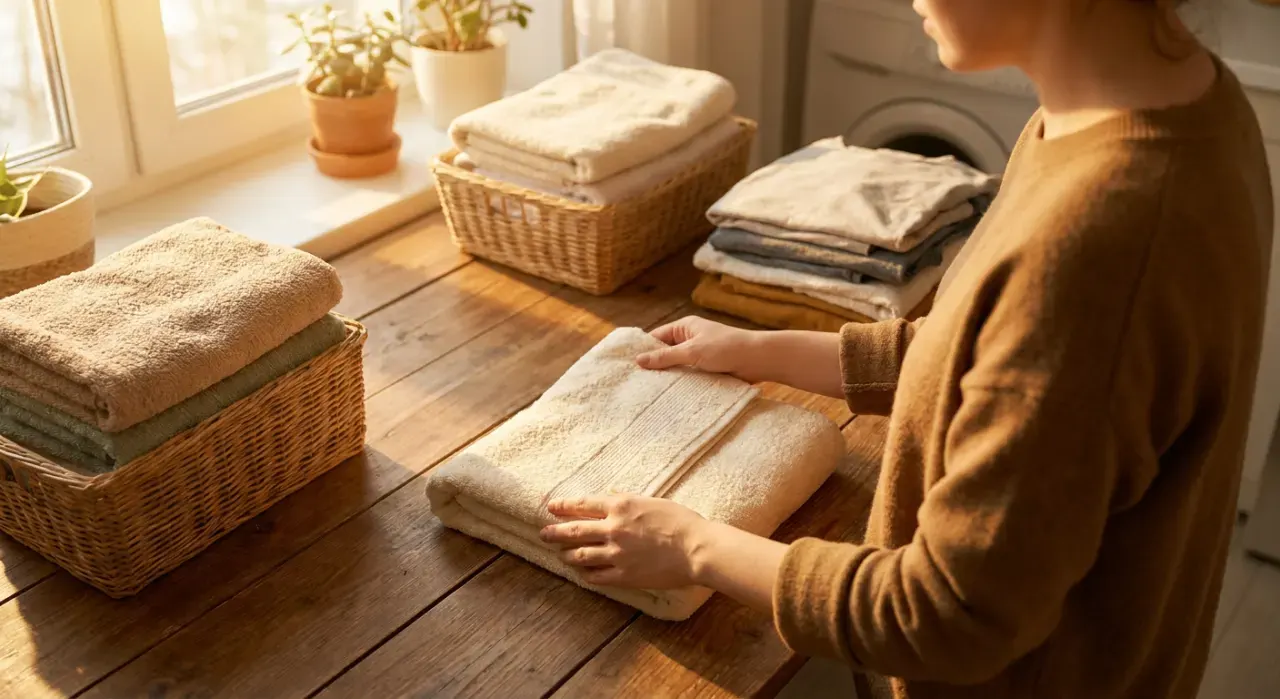
You need white vinegar, paper towels or cloths, an old toothbrush, a non-scratch pad and microfiber for buffing. Good microfiber is what leaves fixtures spot-free after the soak, as covered in our microfiber cloth picks. Hard water dulls more than faucets, so pair this with descaling the appliances it also affects and keeping bathroom and kitchen surfaces clear with the products in our all-purpose cleaner roundup.
Mistakes that fail or damage surfaces
- Quick wiping instead of soaking. A fast vinegar wipe barely works. Let it dwell.
- Vinegar on natural stone. Acid etches marble and granite. Use a stone-safe cleaner there.
- Abrasive pads on glass or chrome. They scratch. Use non-scratch pads and baking soda paste.
- Not rinsing. Leftover acid can dull finishes. Rinse thoroughly afterward.
- Letting it build up. Thick crust takes long soaks. Wipe and squeegee regularly to prevent it.

Notes and safety
This is low-risk DIY. The cautions are to test vinegar on a hidden spot of any finish, keep acids off natural stone and delicate coated or brass fixtures, never mix vinegar with bleach, and rinse well afterward. There is no code or permit involved. If deposits have etched glass or stone after years of buildup, that damage is permanent and cosmetic correction or replacement is the only remedy, and chronic severe hard water is best solved at the source with a water softener.
We never buy, test or physically handle the products we rank. Recommendations come from aggregated owner reviews, star ratings, review volume and expert consensus — see how we rank.
More from this hub: Cleaning & Laundry · Clean grout · Descale a dishwasher · Clean stainless steel appliances · Best microfiber cloths · How we rank