 Garden

Affiliate Disclosure
Some links on this page are affiliate links. As an Amazon Associate, we earn from qualifying purchases — at no extra cost to you. We do not buy, test, or physically handle the products we cover; our rankings come from aggregated owner reviews, ratings and expert consensus. Commissions never change our verdicts. How we rank · full disclosure.
The short answer: for a normal backyard pile, buy the REOTEMP 20-Inch. Its stem is long enough to reach the hot core, the dial is readable at a glance, and it is the most-reviewed compost thermometer on the market by a wide margin. Drop to the 16-inch for tumblers and small bins, and step up to the 36-inch pro only for genuinely large heaps.
A compost thermometer does one job: it tells you whether the middle of your pile is hot enough to work. That sounds trivial until you realize the core of a heap can be cooking at 150 degrees while the surface feels cold, or dead and stalled while the outside looks fine. You cannot tell by hand. The thermometer is the instrument that turns a compost pile from guesswork into a managed process, and choosing one is mostly about matching the stem to the pile.
What Actually Separates a Good Compost Thermometer
The differences that matter are few and unglamorous, and they are what this page ranks on:
- Stem length. The single most important spec. The stem has to reach the hot core of your particular pile, and a stem that stops short reads the cool outer layer and misleads you.
- Dial readability. A large, clearly zoned face you can read while standing beats a fiddly one you have to crouch over, especially in poor light.
- Scale. Fahrenheit-only is fine for US guidance; a dual Celsius-Fahrenheit face helps if you follow metric instructions.
- Build and corrosion resistance. The stem lives in wet, acidic material, so stainless steel and a sealed dial are worth having.
- The proven record. A long, deep review history exposes the failure modes — fogged dials, bent stems — that a launch-week rating hides.
The Thermometers at a Glance
Our #1 Pick: The REOTEMP 20-Inch
This is the compost thermometer most gardeners should buy, and it earns the spot on fundamentals rather than any clever feature.
Why the 20-inch stem is the sweet spot. A typical backyard pile or bin is deep enough that the hot zone sits well inside it, and a 20-inch stem reaches that zone with margin to spare. Shorter probes read the cooler outer material and can tell you a healthy pile is failing; longer pro stems are overkill for a domestic heap and cost several times as much. Twenty inches is the length that fits the widest range of real gardens, which is exactly why it is the default recommendation.
The dial is the other half of the appeal: a large Fahrenheit face with the composting zones clearly marked, readable while you are standing over the pile rather than kneeling in it. The included digital composting guide spells out the target temperatures so a beginner is not left guessing what the numbers mean. And the review base is simply in a different league from everything else in the category — thousands upon thousands of ratings accumulated over years, which is the clearest possible evidence that the stem does not bend and the dial does not fog.
Consensus Score █████████░ 9.3 — the longest and deepest owner consensus of any compost thermometer sold.
Where it is weak. It is Fahrenheit-only, so metric users may prefer a dual-scale rival; the dial can fog if water gets behind the lens on older units; and for a very large or deep pile the 20-inch stem is not long enough, which is what the 36-inch pro model is for.
Check price on Amazon → (paid link)
The Thermometers, Ranked
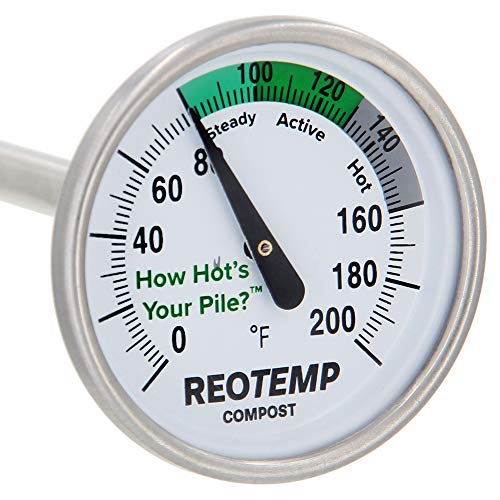
Best for the standard backyard pile where a 20-inch stem reaches the hot core and the dial is easy to read
- 20-inch stem reaches the center of a typical pile or bin
- Large, clearly zoned Fahrenheit dial you can read at a glance
- Includes a digital composting guide for target temperatures
- The most reviewed compost thermometer on the market by a wide margin
Why buy it: It is the default recommendation for good reason: a stem long enough for a real pile, a dial you can read without kneeling, and a review base so large that the durability picture is beyond doubt. For most gardens this is simply the one to buy.
Best for smaller bins, tumblers and raised beds where 16 inches is plenty of reach
- 16-inch stem suited to compact bins and tumblers
- Same clear Fahrenheit dial and build as the 20-inch model
- Included composting guide explains the temperature zones
- Lower price for a shorter reach you may not need
Why buy it: The same trusted thermometer with a shorter stem and a lower price. If your pile is a tumbler or a small bin rather than a big open heap, the extra four inches on the 20-inch model buys you nothing.
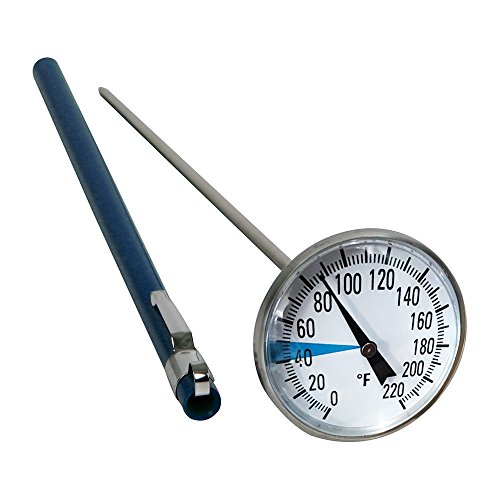
Best for shallow bins, soil temperature and gardeners who want a pocketable probe
- 127mm (5-inch) stainless stem for soil and shallow compost
- Easy-to-read 1.5-inch dial marked 0 to 220 degrees Fahrenheit
- Doubles as a soil thermometer for seed sowing
- Compact enough to keep in a tool bag
Why buy it: A short-stem probe that crosses over between compost and soil temperature, which is useful if you also time your sowing by soil warmth. The trade-off is obvious: five inches will not reach the core of a large pile.

Best for gardeners who want both Celsius and Fahrenheit on the same face
- 20-inch stainless stem for full-size piles
- Dial marked in both Celsius and Fahrenheit
- Colored zones flag the active composting range
- A direct alternative to the category leader at a similar price
Why buy it: Essentially the same tool as the top pick with a dual Celsius-Fahrenheit face, which matters if you follow guidance written in metric. A solid, well-reviewed choice that simply has a smaller following than REOTEMP.
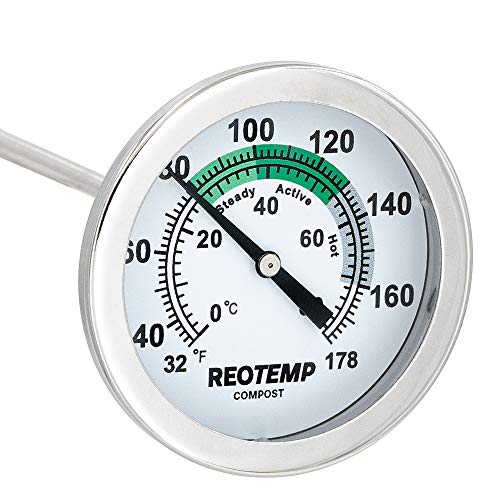
Best for the cheapest way to start monitoring a small bin or tumbler
- 12-inch stem for small bins and tumblers
- Dual Fahrenheit and Celsius scale, 32 to 178 degrees
- Comes with a composting guide for target ranges
- The lowest price of the well-reviewed options here
Why buy it: The budget entry that still comes with a proper guide and a dual scale. Twelve inches limits it to smaller setups, but for a first thermometer on a tumbler it does everything you need for the least money.

Best for large, deep or windrow-style piles where a standard stem cannot reach the middle
- 36-inch stem reaches the core of large and deep piles
- Heavier-duty build aimed at frequent, serious use
- Same clear dial and composting guide as the shorter models
- The tool for big producers rather than a single backyard bin
Why buy it: When the pile is big enough that a 20-inch stem stops short of the hottest zone, this is the answer. It costs several times the standard model, so it only earns its place on genuinely large heaps.

Quick Comparison
| Product | Best for | Rating | Price | Buy |
|---|---|---|---|---|
| REOTEMP 20-Inch Backyard Compost Thermometer with Composting Guide | Best Compost Thermometer Overall | — | Check (paid link) | |
| REOTEMP 16-Inch Backyard Compost Thermometer with Composting Guide | Best Value Compost Thermometer | — | Check (paid link) | |
| Smart Choice Stainless Steel Soil & Compost Thermometer, 5-Inch Stem | Best Compact Dial | — | Check (paid link) | |
| Greenco Stainless Steel Compost Thermometer, 20-Inch Stem | Best Dual-Scale Dial | — | Check (paid link) | |
| K83B1 12-Inch Soil & Compost Thermometer with Guide | Best Budget Pick | — | Check (paid link) | |
| REOTEMP 36-Inch Pro Backyard Compost Thermometer with Guide | Best Long-Reach Pro Model | — | Check (paid link) |
Matching the Stem to Your Pile
This is the whole decision, so it is worth stating plainly. A large open backyard heap wants the 20-inch stem. A tumbler, a compact bin or a raised bed is well matched to a 12 to 16-inch stem, and paying for extra length you never push into the pile is pointless. A big, deep or windrow-style pile — the sort a serious grower or a small farm runs — needs the 36-inch pro stem, because a standard probe simply cannot reach the middle. If your pile size changes through the year, buy for the largest pile you make, because a too-long stem in a small bin is a minor nuisance while a too-short stem in a big pile gives you a reading that is actively wrong.
How We Rank Compost Thermometers
We do not buy, probe piles with, or physically handle these thermometers. The ranking is built from aggregated owner reviews read across the full life of each product, published specifications, and the settled consensus of experienced composters. We weight stem length against typical pile sizes, dial readability, corrosion resistance and, heavily, the depth of the review record — because bent stems and fogged dials only show up in the reviews written a year in. Prices were current at the time of writing and move around. Full method on how we rank.
The Thermometers, Assessed
1. REOTEMP 20-Inch — Best Overall
Covered above. Who it is for: the standard backyard pile. What it does better: the right stem length for most gardens, a readable dial and an unmatched review record. Where it is weak: Fahrenheit-only and too short for very deep piles.
2. REOTEMP 16-Inch — Best Value
Who it is for: tumblers, compact bins and raised beds. It is the same well-built, well-reviewed thermometer as the top pick with a shorter stem and a lower price. If your composting happens in an enclosed tumbler rather than a big open heap, those four extra inches on the 20-inch model do nothing for you and this saves money. Where it is weak: the 16-inch reach is not enough for a large open pile.
3. Smart Choice 5-Inch — Best Compact Dial
Who it is for: shallow bins, and gardeners who also want to read soil temperature for sowing. The short 5-inch stainless stem and wide 0-to-220 dial make it a genuine crossover between compost and soil work, which is handy if you time your sowing by soil warmth as well. Where it is weak: five inches will not reach the core of any real pile, so treat it as a soil-and-shallow-bin tool rather than a pile thermometer.
4. Greenco 20-Inch — Best Dual-Scale Dial
Who it is for: gardeners who want Celsius and Fahrenheit on one face. It is functionally the same tool as the top pick, with a 20-inch stainless stem and colored zones, and the dual scale is the reason to choose it over REOTEMP if you follow metric guidance. Where it is weak: a much smaller review following than the category leader, so the long-term durability picture is thinner even though the reports are good.
5. K83B1 12-Inch — Best Budget Pick
Who it is for: the cheapest sensible start on a small bin or tumbler. It still ships with a composting guide and a dual scale, which budget rivals often skip. Where it is weak: the 12-inch stem limits it to small setups, and the lighter build shows in a shorter review history than the established REOTEMP models.
6. REOTEMP 36-Inch Pro — Best Long-Reach Model
Who it is for: large, deep or windrow piles where a standard stem cannot reach the hot middle. The heavier build and 36-inch stem are aimed at frequent, serious use. Where it is weak: it costs several times the standard model and is pure overkill on a single backyard bin, so only genuinely large heaps justify it.
How to Choose
Standard backyard pile? The 20-inch. Tumbler or small bin? The 16-inch or the 12-inch budget model. Also reading soil temperature? The 5-inch Smart Choice probe. Following metric guides? The dual-scale Greenco. Running big, deep piles? The 36-inch pro. Whatever you pick, a thermometer only helps if you act on it — pair it with a routine of turning the pile when the heat fades. If your heap will not warm up at all, the fix is usually the mix, not the thermometer; see the wider composting and soil hub, and check soil chemistry separately with a soil pH meter.
The Verdict
The REOTEMP 20-Inch is the compost thermometer we would tell a friend to buy: the right stem for most gardens, a dial you can read standing up, and a review record nothing else in the category can match. Choose the 16-inch or the K83B1 12-inch for tumblers and small bins, the Greenco for a dual scale, and the 36-inch pro for large piles. Then browse the rest of the composting and soil hub or the full resources library. Check the current price on Amazon → (paid link)