 Garden
Affiliate Disclosure
Some links on this page are affiliate links. As an Amazon Associate, we earn from qualifying purchases — at no extra cost to you. We do not buy, test, or physically handle the products we cover; our rankings come from aggregated owner reviews, ratings and expert consensus. Commissions never change our verdicts. How we rank · full disclosure.
The short version: the best soil pH tester for most gardeners is the Luster Leaf Rapitest capsule kit, because it measures pH chemically in a soil-and-water suspension rather than inferring it from electrical conductivity. That distinction is the single most important thing in this category. If the decision hanging on the result is expensive — a large lime application, a new orchard, a blueberry patch — spend a little more on a mail-in laboratory test like MySoil and get a number to a decimal place.
The honest headline here is uncomfortable for a lot of best-seller lists: the two-prong probe meters that dominate the category do not really measure pH. They have no battery and no electronics, and they respond mostly to soil moisture and dissolved salts. Oregon State Extension says home test kits and devices generally will not give results as accurate as a soil testing service, and does not recommend them for problem solving. They are fine for spotting that one bed is different from another; they are not a basis for spreading a quarter ton of lime. For the full nutrient picture rather than pH alone, see best soil test kit, and for what to do with the result, how to read a soil test. Everything else is at the composting and soil hub.
Top Picks at a Glance
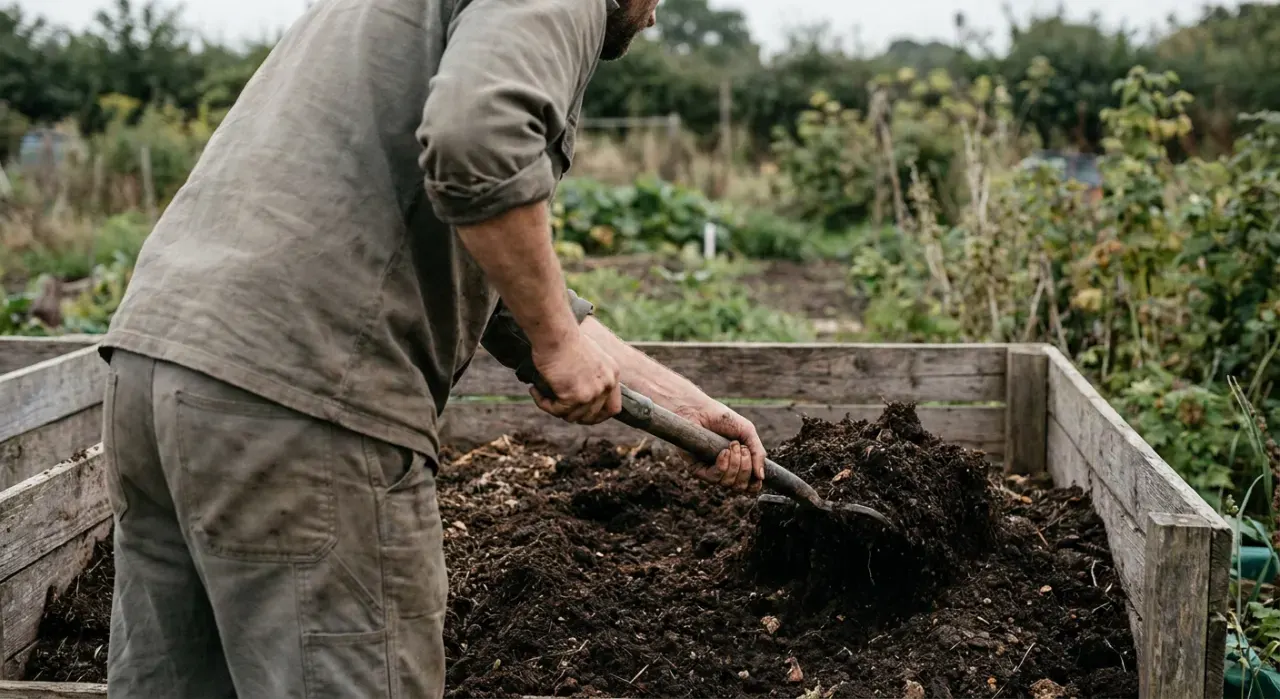
Our #1 Pick: Luster Leaf Rapitest Soil Test Kit
What makes this the sensible default is method rather than brand. You take a soil sample, mix it with distilled water in the supplied chamber, add a color-coded capsule, shake it and let it settle. The color of the resulting solution is compared against a printed scale. That is a chemical measurement of hydrogen ion concentration in a water suspension, and it is fundamentally the same approach a laboratory uses, simplified.
Consensus Score ████████░░ 8.0 — owners consistently report results that track their extension-service lab tests closely
The kit covers pH plus nitrogen, phosphorus and potassium, with ten tests of each, which is enough to test four or five distinct areas of a garden properly rather than testing one spot and extrapolating. The included plant preference list covering more than 400 species is genuinely useful — it is the step most gardeners skip, and knowing that blueberries want 4.5 to 5.5 while asparagus is happy at 7.0 changes what you do with the reading.
It also costs less than most probe meters, which makes the comparison straightforward: a cheap probe gives you an unreliable number for the same money that this gives you a defensible one.
The recurring criticisms are fair. Colour matching is subjective, and owners consistently report ambiguity between adjacent shades on the comparator — particularly for nitrogen, which is the least reliable of the four tests. It is fiddly: measuring soil and water accurately, waiting for the suspension to settle, and reading in good light all take patience, and rushed tests give poor results. The capsules are consumable, so ongoing testing costs money. Results are reported in broad bands rather than to a decimal place. And using tap water instead of distilled water skews the pH result, which catches out a great many first-time users.
Check price on Amazon → (paid link)
Best Soil pH Testers 2026: The Ranked Field

Best for a real pH reading you can act on, plus nitrogen, phosphorus and potassium
- Capsule and color comparator chemistry rather than a conductivity probe
- Tests pH plus N, P and K
- 40 tests in the kit — 10 of each
- Includes a plant preference list for over 400 species
Why buy it: it measures pH chemically in a water suspension, which is what actually produces a number rather than an educated guess.

Best for a definitive answer before spending money on amendments
- Mail-in laboratory analysis, not a home color match
- Reports pH plus 13 nutrients with target ranges
- Personalised fertiliser recommendations for your plants
- Results delivered online, usually within a week or two
Why buy it: a laboratory measures pH to a decimal place, which matters because a 0.5 difference changes which amendments will work.

Best for repeat testing across a large garden without using up capsules
- Digital display with a detachable stainless steel probe
- Reads pH at root depth rather than at the surface
- Reusable indefinitely with no consumables
- Includes a plant pH preference reference
Why buy it: no capsules to buy means you can test twenty spots across a garden instead of rationing four tests.
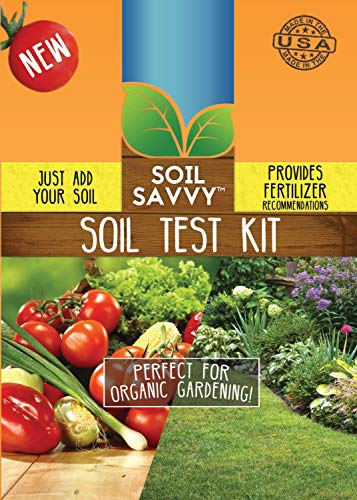
Best for a laboratory report that translates directly into a fertiliser plan
- Professional laboratory analysis by mail
- Reports pH and a full nutrient panel
- Recommendations expressed as products and rates
- Prepaid return mailer included
Why buy it: the report tells you what to apply and how much, rather than leaving you to interpret raw numbers.

Best for a quick relative check across beds where trends matter more than precision
- Analog dial showing acid to alkaline at a glance
- No batteries required
- Probe inserts directly into moist soil
- Reference guide for over 50 plants included
Why buy it: it is cheap enough to keep in the shed for a rough comparison between beds, which is genuinely useful even if it is not precise.

Best for houseplants and containers, where moisture and light matter as much as pH
- Reads moisture, light level and relative pH on one probe
- No batteries needed
- Toggle switch between the three functions
- Long probe suits pots and raised beds
Why buy it: for container growing the moisture and light readings are the useful ones, and the pH scale is a bonus rather than the point.
Quick Comparison
| Product | Best for | Rating | Price | Buy |
|---|---|---|---|---|
| Luster Leaf Rapitest Soil Test Kit for Gardens Vegetables Flowers and Lawns | Best Overall | — | Check (paid link) | |
| MySoil Soil Test Kit Complete and Accurate Nutrient and pH Analysis | Best Accuracy | — | Check (paid link) | |
| Luster Leaf 1847 Rapitest Digital Plus Soil pH Meter | Best Digital Meter | — | Check (paid link) | |
| Soil Savvy Soil Test Kit Analysis for Lawn and Garden Fertilizer Needs | Best Lab Alternative | — | Check (paid link) | |
| Luster Leaf 1840 Rapitest Soil pH Meter | Best Budget Probe | — | Check (paid link) | |
| SONKIR Soil pH Meter MS02 3-in-1 Soil Moisture Light and pH Tester | Best Multi-Function | — | Check (paid link) |
How We Rank
We do not buy or physically handle these products. Rankings come from aggregating star ratings and review volume across large owner-review sets, weighting recent reviews above older ones, checking stated measurement methods, test counts, reported ranges and calibration requirements against manufacturer documentation and against published extension-service guidance on soil testing, and reading negative reviews closely. In this category the negative reviews are especially useful because so many describe a meter giving the same reading in soil, in water and in a cup of vinegar.
Four factors set the order. Measurement method, weighted most heavily, since a chemical or laboratory measurement of pH is fundamentally more trustworthy than a conductivity probe. Repeatability, judged from owner reports of testing the same soil twice. Actionability, meaning whether the result tells you what to do. And owner satisfaction, weighted by review volume and read with attention to whether the reviewer had a reference result to compare against. Prices were checked at the time of writing. Full method: how we rank.
The Testers, Reviewed
1. Luster Leaf Rapitest Soil Test Kit — Best Overall
Covered above. Consensus Score ████████░░ 8.0. Strengths: genuine chemical measurement in a water suspension; covers pH plus N, P and K; 40 tests in the kit; a plant preference list for over 400 species; and it costs less than most probe meters while being far more trustworthy. Recurring complaints: subjective color matching, worst on the nitrogen test; a fiddly procedure that rewards patience; consumable capsules; results in broad bands rather than decimals; and tap water skewing the pH reading if distilled water is not used.
2. MySoil Soil Test Kit — Best Accuracy
The step up to a real laboratory. You collect a sample, mail it in the supplied packaging, and receive an online report covering pH and thirteen nutrients with target ranges and specific recommendations. Laboratory pH is measured with a calibrated electrode to a decimal place, and that precision matters more than it sounds: the difference between pH 6.3 and 6.8 changes which amendments make sense and how much of them you need.
Consensus Score █████████░ 8.9 — the best-rated product here, with cost per test the only real objection
Recurring complaints: it is a per-test cost, so testing several areas gets expensive quickly. Turnaround takes one to two weeks, which is slow if you are planting this weekend. Owners report the recommendations leaning toward the company's own products. Several reviewers note that sample collection technique matters enormously and is easy to get wrong. And it does not test for organic matter or texture, which some gardeners expect.
3. Luster Leaf 1847 Rapitest Digital Plus — Best Digital Meter
The reusable option. A detachable stainless steel probe reads at root depth and the digital display removes the color-matching subjectivity of the capsule kit, with no consumables to run out. For anyone testing many spots across a large garden, or repeating tests through a season to watch a correction take effect, the economics are clearly better than a capsule kit.
Consensus Score ███████░░░ 7.4 — reasonable ratings, with calibration and drift the recurring concern
Recurring complaints: accuracy against a laboratory reference is the main criticism, with owners reporting readings drifting over time and between soil moisture levels. Several describe inconsistent results in the same spot minutes apart. The probe needs cleaning carefully between readings. It requires reasonably moist soil to read at all. And it is expensive relative to a capsule kit that arguably gives a better answer.
4. Soil Savvy Soil Test Kit — Best Lab Alternative
The other credible mail-in laboratory option, and the one most focused on translating results into action. Rather than handing you a nutrient panel to interpret, the report expresses recommendations as specific products and application rates, which is the step that stops most gardeners acting on a test they paid for.
Consensus Score ████████░░ 8.0 — well rated, particularly for report clarity
Recurring complaints: the cost per test is the same barrier as MySoil. Turnaround is reported as variable, with some owners waiting longer than advertised. Several reviewers find the recommendations oversimplified for experienced gardeners. It uses a single extraction method, which some argue suits some soils better than others. And, again, sample quality determines result quality entirely.
5. Luster Leaf 1840 Rapitest Soil pH Meter — Best Budget Probe
Included because it is what most people buy, and it deserves an honest assessment. It is an analog dial on a probe with no battery, and it responds primarily to moisture and dissolved salts rather than to hydrogen ion concentration. As a way of noticing that your acid bed reads differently from your neutral bed, it has some value. As a basis for a lime application, it does not.
Consensus Score ██████░░░░ 6.5 — the lowest-rated product here, and the ratings are telling you something
Recurring complaints: accuracy dominates the negative reviews, with many owners reporting it reading near-neutral in soils a laboratory found strongly acidic. Several describe it giving the same reading in different soils, or in plain water. It needs moist soil and clean probes, and it stops responding if the probe oxidises. There is no calibration adjustment. And readings shift noticeably with watering.
6. SONKIR MS02 3-in-1 — Best Multi-Function
Best understood as a moisture meter that also shows a light level and a relative pH scale. The moisture function is genuinely useful for containers and houseplants, where overwatering is the leading killer, and the light reading helps place a plant sensibly. The pH scale carries the same caveats as any battery-free probe and should be treated as indicative only.
Consensus Score ███████░░░ 7.2 — decent ratings, driven mostly by the moisture function
Recurring complaints: the pH function is the weakest of the three by a wide margin, and owners comparing it against a laboratory result say so plainly. Several report the light meter being similarly approximate. The probes tarnish and stop reading. It needs moist soil. And a small number report the toggle switch failing early.
How to Choose a Soil pH Tester
Decide what the reading is for, because that determines how accurate it needs to be. If you are curious whether the far bed is more acidic than the near one, a cheap probe will tell you that. If you are about to spend money on lime, sulfur, or an acid-loving planting that will fail outright in the wrong soil, you need a chemical kit at minimum and a laboratory test ideally. The cost of a wrong amendment vastly exceeds the cost of a proper test — Illinois Extension puts an accredited laboratory test at around $15 to $30.
Prefer a method that actually measures pH. Chemical capsule kits measure hydrogen ion concentration in a water suspension. Laboratory tests use a calibrated glass electrode. Two-prong probe meters generate a small current between dissimilar metals and respond mostly to moisture and salts. That is not a marginal difference in accuracy — it is a difference in what is being measured.
Sample properly, because technique matters more than equipment. Take 6 to 10 cores from across the area, 4 to 6 inches deep for beds and lawns, avoiding paths, fence lines, compost heaps and anywhere ash or concrete has been. Mix them thoroughly in a clean plastic bucket — not a galvanised one, which contaminates the sample with zinc — and test from the mixture. Test different areas separately. A perfect instrument on a careless sample gives a useless answer.
Finally, act patiently on the result. pH changes slowly: lime typically takes several months to move soil pH meaningfully, and elemental sulfur can take a full season or more depending on temperature and soil biology. Apply the recommended rate, work it in where you can, and retest before applying more. Contact your local Cooperative Extension office if you want a low-cost, authoritative test with recommendations calibrated to your region — Iowa State Extension keeps a list of university and private laboratories that handle home garden and lawn samples, and extension guidance is tailored to local soils in a way no generic kit can be.
What Owners Actually Complain About
Probe meters that read the same everywhere is the defining complaint of this category, and it appears across every brand of two-prong meter. Owners describe getting a near-neutral reading in soil a laboratory found strongly acidic, or identical readings in soil and in a glass of water. It is a limitation of the method, not a manufacturing fault.
Subjective color matching is the equivalent complaint about capsule kits. Adjacent bands on the comparator can be genuinely hard to distinguish, particularly in poor light, and the nitrogen test draws the most criticism. Reading in daylight against a white background helps considerably.
Tap water ruining the result is the most common user error and generates a steady stream of confused reviews. Municipal water is often alkaline and buffered, which shifts the reading substantially. Distilled water is a requirement, not a suggestion.
Slow laboratory turnaround is the recurring frustration with mail-in kits, especially in spring when everyone is testing at once. And bad sampling underlies more disappointing results than any product flaw — a single core taken next to a path is not a soil test.
The Verdict
For most gardeners the Luster Leaf Rapitest capsule kit is the soil pH tester to buy: it measures pH properly, it covers the main nutrients too, and it costs less than the probe meters it comfortably outperforms. When the decision is expensive, spend the extra on a laboratory test — MySoil for the most detailed panel, Soil Savvy if you want recommendations expressed as products and rates. The Luster Leaf 1847 digital meter is worth considering if you test many spots repeatedly and understand its limits. And be clear-eyed about the cheap probes: the Rapitest 1840 and the SONKIR MS02 are useful for relative comparisons and for moisture, and neither is a basis for spreading lime.
Check price on Amazon → (paid link)
Next: get the full nutrient picture with best soil test kit, learn to sample properly in how to collect a soil sample for testing, interpret the result with how to read a soil test, or correct it using how do you lower soil pH quickly.