 Garden


Affiliate Disclosure
Some links on this page are affiliate links. As an Amazon Associate, we earn from qualifying purchases — at no extra cost to you. We do not buy, test, or physically handle the products we cover; our rankings come from aggregated owner reviews, ratings and expert consensus. Commissions never change our verdicts. How we rank · full disclosure.
The short answer: buy the VermiHut Plus 5-Tray. Its continuous-flow trays let worms migrate upward so you harvest finished castings without sorting, and its airflow design tackles the moisture and odor problems that sink most beginner bins. Want it cheaper? The Blütezeit 5-Tray runs the same format for less. Short on space? The FCMP 2-Tray is the compact pick.
A worm bin turns kitchen scraps into worm castings — the richest soil amendment a home gardener can make, and one you cannot buy in the same quality. Composting worms do the work quietly, indoors or out, in a footprint the size of a small table. The craft of choosing a bin is really about two things: making harvesting painless, and keeping the bin from getting too wet or too smelly, which is where beginners fail. The bins below are ranked on exactly that.
What Actually Separates a Good Worm Bin
Strip away the styling and worm bins differ on a handful of practical points:
- Continuous-flow harvesting. A stacking or flow-through design lets worms migrate away from finished castings, so you empty a tray instead of sorting worms by hand. This is the biggest quality-of-life factor.
- Moisture and airflow. The two things that kill beginner bins are too much moisture and too little air. A bin with real drainage and ventilation is far more forgiving.
- Capacity matched to the household. Too small and you overfeed and sour the bin; too big and it sits half-used.
- Drainage. A working spigot to draw off leachate keeps the bin from flooding at the bottom.
- The proven record. A deep, long review base shows whether the trays warp, the spigot leaks and the bin survives a few seasons.

The Worm Bins at a Glance
Our #1 Pick: The VermiHut Plus 5-Tray
This is the worm bin most people should buy, and it wins by solving the two problems that make or break a home vermicomposter.
The continuous-flow system does the tedious part for you. Five stacking trays mean the worms migrate upward toward each fresh tray of food, vacating the lower trays as they finish them. When the bottom tray is dark and crumbly you simply lift it off and empty it — no tipping the whole bin out and picking worms from castings by hand, which is the chore that makes people quit vermicomposting. That single design choice is why stacking bins dominate this list.
The airflow design tackles what beginners get wrong. Nearly every failed worm bin fails the same way: it gets too wet, loses oxygen, and starts to smell. The Plus model adds a V-shaped air-flow system and a bottom board that improve ventilation and pest resistance over a plain box, which makes it markedly more forgiving of the early overfeeding and over-watering that everyone does at first. A spigot drains the leachate before it can pool. And the review base is one of the deepest in the category, which is the clearest evidence that the trays hold up and the system keeps working season after season.
Consensus Score █████████░ 9.0 — the most trusted stacking worm bin, with the forgiveness a beginner needs.
Where it is weak. It ships empty, so worms are a separate purchase; the plastic trays are functional rather than handsome; and in a cold spot the worms slow right down, so it needs a temperate location to perform.
Check price on Amazon → (paid link)
The Worm Bins, Ranked

Best for the household that wants a proven, continuous-flow stacking bin that just works
- Five stacking trays for a continuous flow of castings
- V-shaped air-flow system to reduce odor and moisture problems
- Spigot to drain worm tea and a bottom board to deter pests
- One of the most-reviewed worm bins on the market
Why buy it: The default recommendation for good reason. Five trays give a genuine continuous-flow system, the airflow design tackles the two things that sink beginner bins, moisture and smell, and the review base is deep enough to trust. For most people this is simply the worm bin to buy.

Best for buyers who want the trusted VermiHut system in its original, simpler form
- Five-tray continuous-flow design
- Simpler construction than the Plus at a similar price
- Spigot for draining leachate
- Long, well-established owner base
Why buy it: The original VermiHut, without the Plus model's extra airflow refinements. It runs the same proven five-tray system and, if you manage moisture yourself, does the same job. A safe, long-established choice.
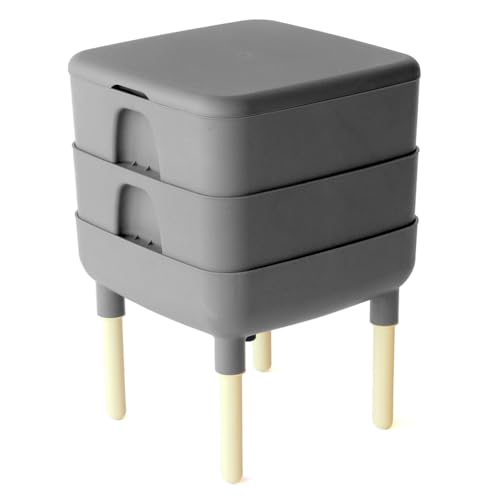
Best for smaller households and tighter spaces that do not need five trays
- Compact two-tray footprint for small kitchens or balconies
- Continuous-flow stacking design
- Weather-resistant build rated for indoor or outdoor use
- Well-regarded, cleanly designed system
Why buy it: The right size for a couple or a small kitchen. Two trays are plenty for modest scrap volumes, the footprint is small, and the build stands up to a sheltered outdoor spot. Add capacity only if you actually outgrow it.
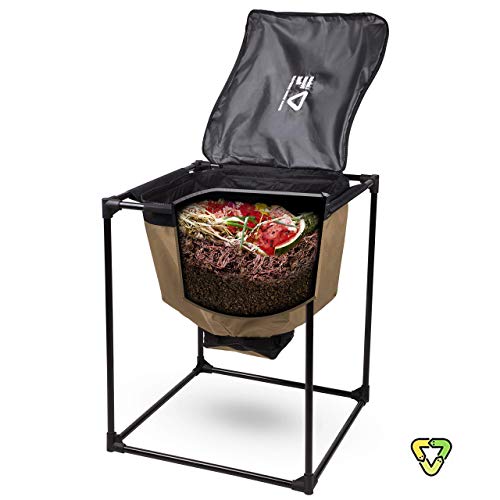
Best for serious vermicomposters who want easy bottom-harvesting and high capacity
- Fabric continuous-flow-through design, harvest from the bottom
- Breathable material that regulates moisture and air
- Large capacity in a single unit, no tray shuffling
- Zipper-free removable bottom for clean harvesting
Why buy it: A different, arguably superior approach for the committed: feed the top, harvest finished castings from the bottom, never lift a tray. The breathable fabric manages moisture well. You pay more, and it is a bulkier commitment, but the harvesting is the easiest here.

Best for the cheapest way into a full five-tray continuous-flow system
- Five-tray continuous-flow design at a lower price
- 53-quart total capacity
- Includes a worm-farm starter kit
- Indoor and outdoor use
Why buy it: A five-tray system at the lowest price in this group, with a starter kit thrown in. The review base is smaller than VermiHut's, so the long-term durability picture is thinner, but the format is the proven one.

Best for raised-bed and in-ground gardeners who want worms to feed the soil directly
- Sinks into a raised bed or garden soil
- Worms move between the composter and the surrounding soil
- BPA-free, durable construction
- Feeds castings straight into the root zone
Why buy it: A completely different design: buried in a bed, it lets worms carry castings straight into the surrounding soil, so you never harvest at all. Ideal alongside raised-bed growing, though it is a soil-enrichment tool rather than a castings-production system.
Quick Comparison
| Product | Best for | Rating | Price | Buy |
|---|---|---|---|---|
| VermiHut Plus 5-Tray Worm Composting Bin | Best Worm Bin Overall | — | Check (paid link) | |
| VermiHut Classic 5-Tray Worm Composter | Best Value Stacking Bin | — | Check (paid link) | |
| FCMP Outdoor Essential Living Composter, 2-Tray | Best Small-Space Bin | — | Check (paid link) | |
| Urban Worm Bag Composting Bin, Version 2 | Best Continuous-Flow Bag | — | Check (paid link) | |
| Blütezeit 5-Tray Worm Compost Bin, 53QT | Best Budget 5-Tray | — | Check (paid link) | |
| Vego Garden In-Ground Worm Composter, 7 Gallon | Best In-Ground Option | — | Check (paid link) |
Getting Started: The Part the Bin Can't Do
Whichever bin you buy, the first month decides whether vermicomposting sticks. Set the bin up with damp bedding — shredded cardboard or coconut coir wrung out to the wetness of a wrung sponge — before the worms arrive, so they have a home the day they land. Buy red wigglers, not garden worms, and start with the recommended half-pound to a pound. Then underfeed for the first few weeks; the single most common beginner mistake is burying the worms in more food than a small starting population can process, which sours the bin. Add dry bedding whenever it looks wet, keep it in a temperate spot, and bury each feeding. Do that and the bin runs itself; skip it and even the best bin will smell.
How We Rank Worm Bins
We do not buy, populate, or physically handle these bins. The ranking is built from aggregated owner reviews read across the full life of each product, published specifications, and the settled consensus of experienced vermicomposters. We weight continuous-flow harvesting, moisture and airflow management, drainage, capacity fit, and the depth of the review record — because leaking spigots, warped trays and odor problems only surface in the reviews written months in. Prices were current at the time of writing and move around. Full method on how we rank.

The Worm Bins, Assessed
1. VermiHut Plus 5-Tray — Best Overall
Covered above. Who it is for: most households. What it does better: easy tray harvesting plus airflow that forgives beginner errors. Where it is weak: ships empty and needs a temperate spot.
2. VermiHut Classic 5-Tray — Best Value System
Who it is for: buyers who want the trusted VermiHut trays without the Plus refinements. It runs the same continuous-flow format and drains through a spigot; if you are willing to manage moisture yourself, it does the same job. Where it is weak: it lacks the extra airflow of the Plus, so it is a little less forgiving of overwatering.
3. FCMP Essential Living 2-Tray — Best Small-Space Bin
Who it is for: couples, small kitchens and balconies. Two trays are ample for modest scrap volumes, the footprint is small, and the weather-resistant build suits a sheltered outdoor spot. Where it is weak: the smaller capacity is easy to outgrow if your household produces a lot of scraps.
4. Urban Worm Bag Version 2 — Best Flow-Through Bag
Who it is for: committed vermicomposters who want the easiest harvesting and high capacity. Feed the top, open the bottom, and finished castings drop out — no trays to lift, and the breathable fabric manages moisture and air well. Where it is weak: it is the most expensive here and a bulkier, more permanent fixture than a compact tray bin.
5. Blütezeit 5-Tray — Best Budget 5-Tray
Who it is for: the cheapest route into a full five-tray system, starter kit included. The format is the proven one and the price is the lowest in this group. Where it is weak: a smaller review base than VermiHut, so the long-term durability record is thinner.
6. Vego In-Ground Composter — Best In-Ground Option
Who it is for: raised-bed gardeners who want worms feeding the soil directly. Buried in a bed, it lets worms carry castings into the surrounding root zone, so you never harvest. Where it is weak: it is a soil-enrichment tool rather than a castings-production system, and it only makes sense if you have a bed to sink it into.
How to Choose
Want the safe, forgiving default? The VermiHut Plus. Same system for less? The Blütezeit or the VermiHut Classic. Tight on space? The FCMP 2-Tray. Want the easiest harvesting and don’t mind the price? The Urban Worm Bag. Growing in raised beds? The Vego in-ground composter. Whichever you choose, the bin is only half of it — buy red wigglers separately and go easy on the feeding at first. A worm bin pairs naturally with a countertop compost bin to collect the scraps, and if you also want to compost meat and dairy, add a bokashi bin. It is closely related to the worm composter options too.
The Verdict
The VermiHut Plus 5-Tray is the worm bin we would tell a friend to buy: painless tray harvesting, airflow that forgives beginner mistakes, and a record deep enough to trust. Save money with the Blütezeit or VermiHut Classic, go compact with the FCMP 2-Tray, choose the Urban Worm Bag for the easiest harvest, and the Vego for in-ground use. Explore the rest of the composting and soil hub or the full resources library. Check the current price on Amazon → (paid link)