 Garden

Affiliate Disclosure
Some links on this page are affiliate links. As an Amazon Associate, we earn from qualifying purchases — at no extra cost to you. We do not buy, test, or physically handle the products we cover; our rankings come from aggregated owner reviews, ratings and expert consensus. Commissions never change our verdicts. How we rank · full disclosure.
Flush a tank water heater once a year. Go to every 6 months if your water is hard — above roughly 7 grains per gallon — or if you hear rumbling and popping during heating. In soft-water homes, every 18 to 24 months is defensible. Tankless units need descaling instead, typically annually, or every 6 to 12 months on hard water. Most manufacturers make annual flushing a condition of the tank warranty, so it is worth doing even where the benefit is modest.
We never buy, test or physically handle the products we rank; recommendations come from aggregated owner reviews and expert consensus, described in how we rank. More at the DIY plumbing hub.
How does water hardness change the interval?
Hardness is the whole argument, so start by finding out what you have. Your water utility publishes it in the annual Consumer Confidence Report, and a $10 test strip kit gives an answer in a minute. The US Geological Survey classifies hardness in these bands, and the practical flushing interval follows directly:
| Hardness | Grains per gallon | mg/L as CaCO₃ | Suggested tank flush |
|---|---|---|---|
| Soft | Under 3.5 | Under 60 | Every 18–24 months |
| Moderately hard | 3.5–7.0 | 60–120 | Every 12 months |
| Hard | 7.0–10.5 | 120–180 | Every 6–12 months |
| Very hard | Over 10.5 | Over 180 | Every 6 months |
Large parts of Texas, Arizona, Nevada, Utah, Kansas and the upper Midwest sit in the very hard band; the Pacific Northwest, New England and the Southeast are broadly soft. If you are in a hard-water area and have never flushed the tank, that is the single most likely reason it is noisy and slow to recover.
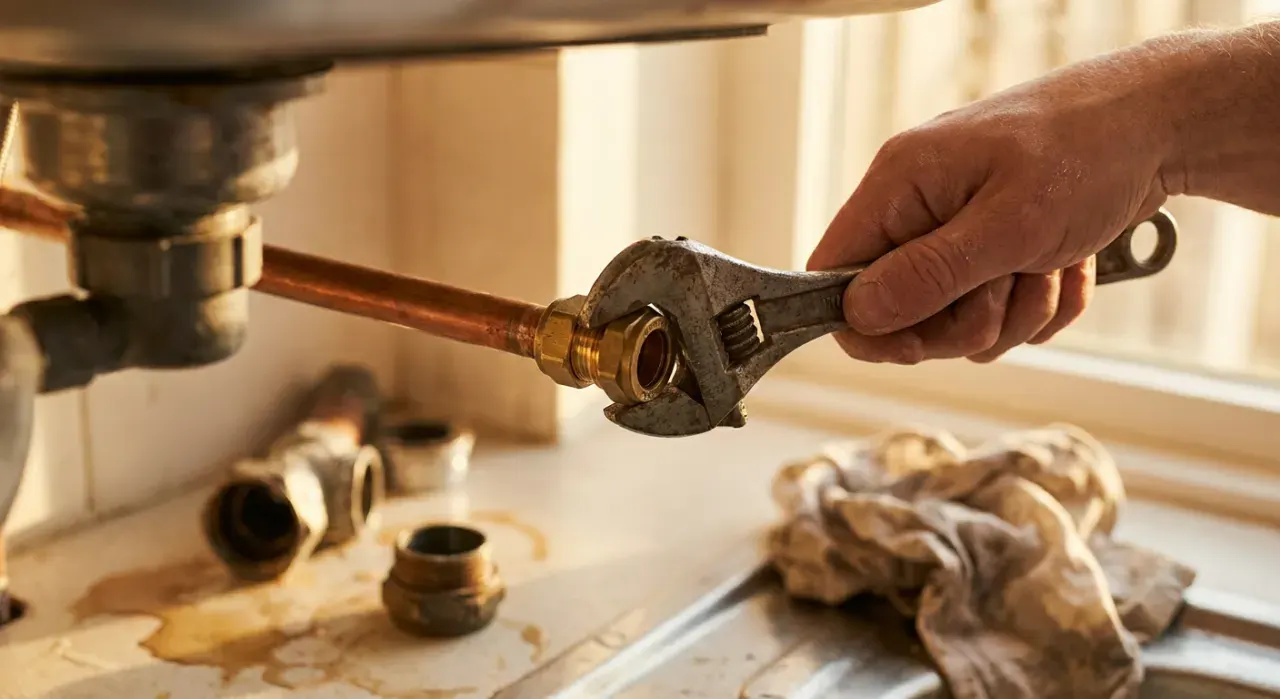
How do you flush a tank water heater?
It is a straightforward job with one genuine hazard — the water in the tank is at scalding temperature, so do not skip the cooling step.
- Turn off the heat. Gas: set the control to Pilot or Vacation. Electric: switch the breaker off. Never run an electric element in a drained tank; it will burn out in seconds.
- Let it cool for one to two hours, or run hot taps until the water is lukewarm.
- Shut the cold inlet valve on top of the tank.
- Connect a hose to the drain valve at the base and run it to a floor drain or outside, below the level of the tank.
- Open a hot faucet somewhere in the house to break the vacuum, then open the drain valve.
- Drain, then stir. Once flow slows, crack the cold inlet open in bursts to swirl the tank floor and push settled sediment out. Repeat until the discharge runs clear.
- Close the drain, refill with the hot faucet still open until water flows steadily and air stops sputtering, then restore the heat.
You need a garden hose, a flathead screwdriver for the drain valve, and ideally a brass replacement drain valve on standby. Basic kit is covered in best plumbing tools.
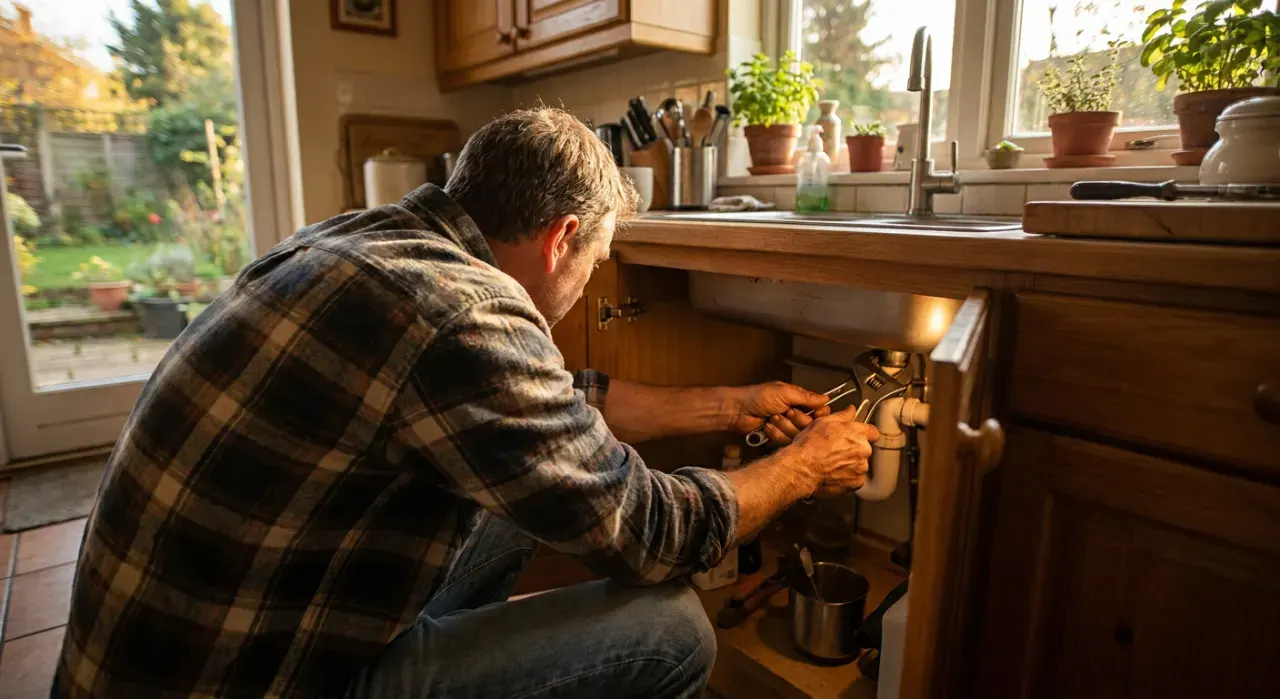
How is a tankless unit different?
There is no tank floor to drain, so the job is descaling the heat exchanger rather than flushing sediment. You isolate the unit at its service valves, connect a small submersible pump and two hoses, and circulate several gallons of white vinegar or a proprietary descaler through the exchanger for 45 to 60 minutes, then rinse. Most manufacturers specify annually, shortening to every 6 months in hard water, and — importantly — most make it a condition of the exchanger warranty. If the isolation valve kit was not installed originally, adding one costs $150 to $300 and makes every future service straightforward.
How do you know a flush is overdue?
Four signals, in order of how often they show up: rumbling, popping or kettling as the burner fires, which is steam escaping through a sediment layer; less hot water than the tank used to deliver, because sediment has taken up volume; slower recovery between showers; and gritty sediment or discolored water at the hot taps, particularly first thing in the morning. If hot water is running out fast, work through why hot water runs out so fast — sediment is one cause of several.
Related: how long a water heater lasts, what temperature to set a water heater to, and if the tank is beyond saving, do you need a permit to replace a water heater.