 Garden

Affiliate Disclosure
Some links on this page are affiliate links. As an Amazon Associate, we earn from qualifying purchases — at no extra cost to you. We do not buy, test, or physically handle the products we cover; our rankings come from aggregated owner reviews, ratings and expert consensus. Commissions never change our verdicts. How we rank · full disclosure.
Residential water pressure should sit between 40 and 60 psi, with 50 to 55 psi the usual target. Below about 40 psi, showers and simultaneous fixture use feel weak. Above 60 psi you are shortening the life of every appliance hose, valve and seal in the house. Both the International Plumbing Code and the Uniform Plumbing Code require a pressure-reducing valve where static pressure exceeds 80 psi, as commonly adopted — that is a ceiling, not a goal. A $12 screw-on gauge at a hose bib answers the question in 30 seconds.
We never buy, test or physically handle the products we rank; recommendations come from aggregated owner reviews and expert consensus, described in how we rank. More at the DIY plumbing hub.
What does your reading mean?
Take the reading with everything else off, at a hose bib near where the supply enters the house. Then use this:
| Reading | Verdict | What to do |
|---|---|---|
| Under 30 psi | Too low — fixtures will struggle | Check main and meter valves, then the PRV; call the utility if the street side is low |
| 30–40 psi | Usable but weak | Adjust the PRV up, or investigate corroded supply piping |
| 40–60 psi | Ideal | Nothing |
| 60–80 psi | Higher than necessary | Fit or adjust a PRV down to 50–60 psi; check for thermal expansion |
| Over 80 psi | Above the code limit in most jurisdictions | A pressure-reducing valve is required; confirm with your building department |
| Over 100 psi | Actively damaging | Fit a PRV promptly — appliance hoses and supply lines are at risk |
What does high water pressure actually cost you?
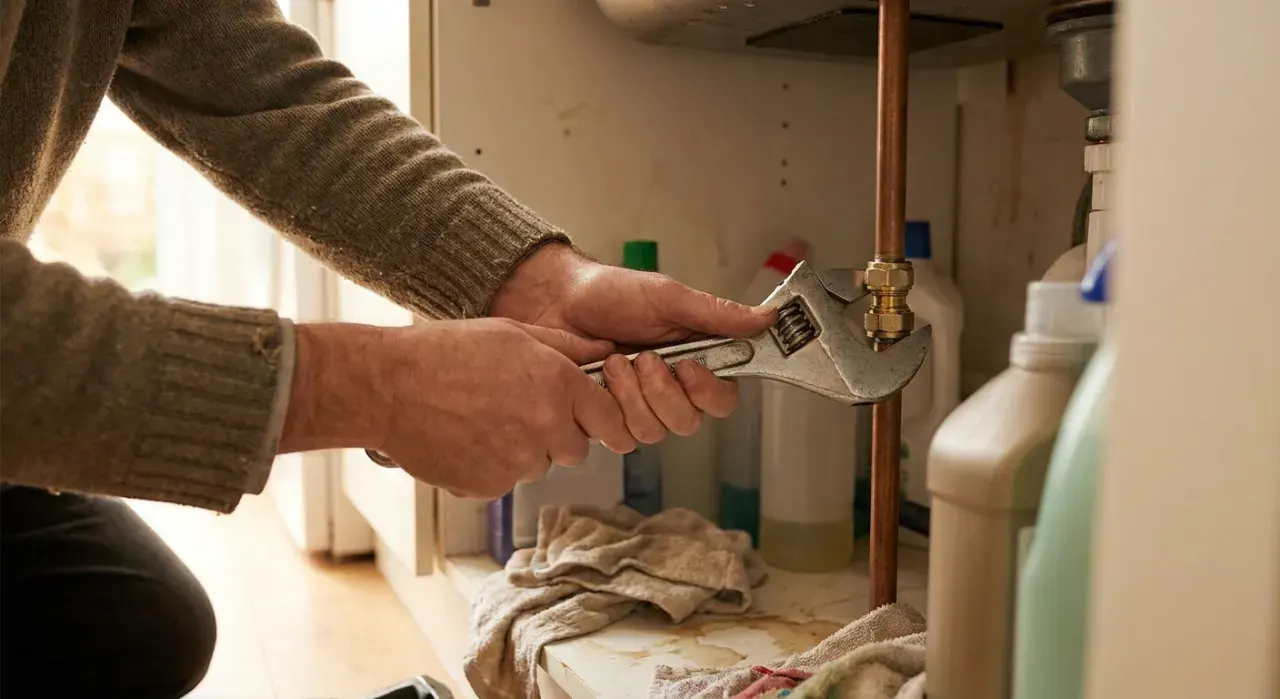
Quietly, quite a lot. Every psi above what the house needs works against washing machine and dishwasher inlet valves, toilet fill valves, faucet cartridges, braided supply lines and pipe joints. Braided stainless supply lines under sinks and behind washing machines are the most common failure point in a high-pressure house, and a burst one puts water into the building at several gallons a minute. High pressure also wastes water — the same shower at 80 psi uses noticeably more than at 55 — and it makes water hammer worse, which is covered in what causes water hammer in pipes.
The other cost is warranty. Many appliance and water heater warranties explicitly exclude damage from pressure above 80 psi, so a manufacturer can decline a claim on a reading you never took.
What is a pressure-reducing valve and do you have one?
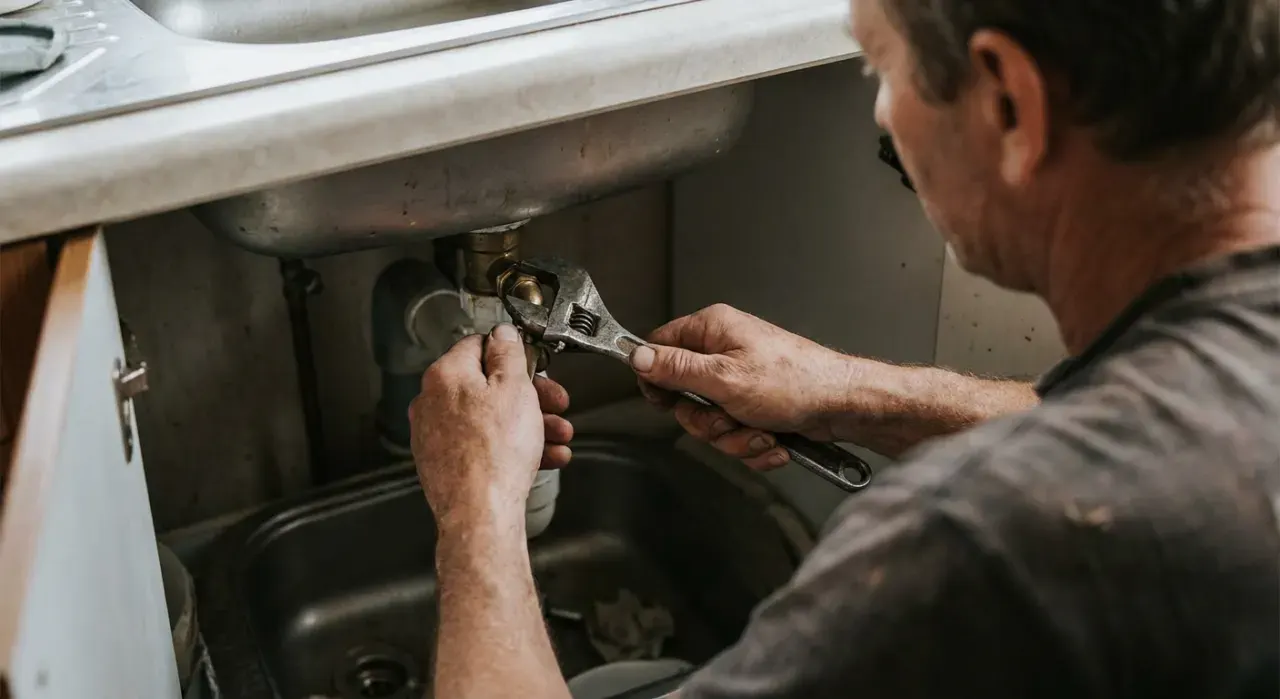
A PRV is a bell-shaped brass valve on the main supply line, usually just after the shutoff where water enters the house, with an adjusting screw and locknut on top. Most homes on a municipal supply in areas with high street pressure — hillside neighborhoods and anywhere the water tower sits well above the house — have one. Homes on a well have a pressure tank and a pump switch instead, typically set to a 40/60 psi cut-in and cut-out band.
PRVs are consumables. They last roughly 7 to 12 years and normally fail by drifting: pressure creeps down over months until the shower feels tired, or occasionally sticks open and lets full street pressure through. Adjusting one is a screwdriver-and-wrench job — loosen the locknut, turn the screw clockwise to raise pressure, a quarter turn at a time, re-reading the gauge each time. Replacing one is a $350 to $750 job in most of the country.
Why would pressure be low?
Work from the street inward. Utility side: a main break or a maintenance shutdown, which your water department can confirm. Meter and main valve: a valve that was only partly reopened after a repair is a surprisingly common cause. PRV: drifted down or failed. Piping: galvanized steel supply lines in homes built before about 1960 close up with corrosion from the inside and cannot be cleaned — repiping is the only fix. Fixture level: aerators and showerhead screens clogged with mineral scale, which is a two-minute repair and by far the most common cause when only one tap is affected.
Related answers: what causes water hammer in pipes, how long a pipe can stay frozen before it bursts, and how much a plumber charges per hour if the answer is a new PRV. For the gauge and the wrenches, see best plumbing tools.