 Garden

Affiliate Disclosure
Some links on this page are affiliate links. As an Amazon Associate, we earn from qualifying purchases — at no extra cost to you. We do not buy, test, or physically handle the products we cover; our rankings come from aggregated owner reviews, ratings and expert consensus. Commissions never change our verdicts. How we rank · full disclosure.
Anchoring furniture to the wall is a ten-minute DIY safety job needing only a drill, a stud finder and an anti-tip kit that costs under $15. No permit or pro is involved, and it is one of the highest-value small jobs in any home. Furniture tip-overs injure tens of thousands of people a year, most of them young children, per the CPSC. The whole task is driving a strap into a wall stud and a solid part of the furniture. Doing it well means matching the anchor to the wall and loading the piece low.
Step-by-step: strapping a piece safely
- Identify what to anchor. Walk the home and flag every tall, top-heavy or climbable piece: dressers, bookcases, media stands, and TVs not already wall-mounted.
- Position the furniture. Set the piece where it will live, flush to the wall, and shim the base level if it rocks on carpet or uneven floor.
- Find the stud. Behind the top of the piece, locate a stud with a finder and confirm with a small test hole. Mark the center.
- Attach the furniture end. Screw the strap or bracket into a solid structural part high on the piece, the top rail, a back stile or thick top, not a thin back panel.
- Attach the wall end. Screw the wall end into the stud at about the same height, so the strap runs nearly level with minimal slack.
- Use rated toggles if no stud. Where no stud is available, use a heavy-duty toggle bolt rated above the load, never a plastic plug.
- Add a second strap on wide pieces. A wide dresser or bookcase gets two anchor points for balanced holding.
- Load low and test. Put heavy items in the bottom drawers and shelves, then confirm the piece cannot rock or lean.
Tools and materials
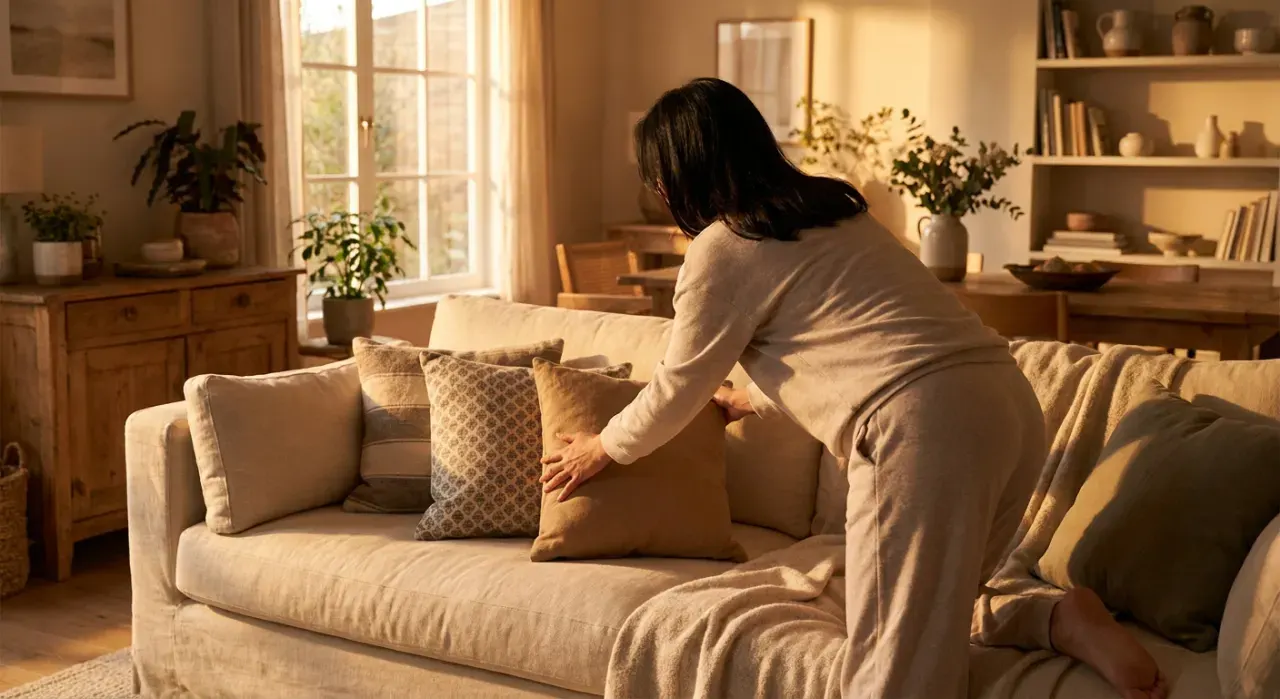
You need a drill/driver, a stud finder, and an anti-tip strap or bracket kit, plus rated toggles if studs are unavailable. Anchoring is easiest on pieces built to accept a strap and rated for real load, which is exactly what we weigh in our bookshelf picks. Anchoring is a whole-room habit, so as you place seating and storage from our accent chair roundup and beyond, strap every tall unit as you go rather than meaning to come back to it.
Mistakes that leave furniture unsafe
- Anchoring into drywall only. A plastic plug can rip out under a tip. Reach a stud or use rated toggles.
- Strapping to a thin back panel. It pulls through. Anchor to a solid rail, stile or top.
- Loading heavy up high. A top-heavy piece tips easily. Weight the bottom drawers.
- One strap on a wide piece. It can twist. Use two spread-apart anchors.
- Meaning to do it later. Unanchored is the danger. Strap each piece as you place it.
Safety and code
This is DIY, and the safety payoff is large. In homes with children, anchoring tall furniture is the point of the CPSC's Anchor It campaign, and it takes minutes per piece. No permit is involved, but if a wall is masonry, plaster, or you cannot find framing, match the anchor to the substrate rather than trusting a plastic plug, and never drive long screws blindly into a wall that may hide wiring or pipes. When unsure about the wall, choose a rated heavy-duty anchor over a light one.
We never buy, test or physically handle the products we rank. Recommendations come from aggregated owner reviews, star ratings, review volume and expert consensus — see how we rank.
More from this hub: Furniture & Decor · Assemble and anchor a bookshelf · Mount a TV on the wall · Build a floating shelf · Best bookshelves · How we rank