 Garden

Affiliate Disclosure
Some links on this page are affiliate links. As an Amazon Associate, we earn from qualifying purchases — at no extra cost to you. We do not buy, test, or physically handle the products we cover; our rankings come from aggregated owner reviews, ratings and expert consensus. Commissions never change our verdicts. How we rank · full disclosure.
Building a coffee table is an intermediate weekend project, roughly 6 to 10 hours of work spread over two days for glue and finish to cure, at a lumber cost of $40 to $120 depending on wood. You need a saw, a drill and ideally a pocket-hole jig; no permit or pro is involved. The build itself is simple joinery. The part that determines whether the table actually works in the room is the dimensions, getting the height, length and clearance right so it sits comfortably with your sofa.
Step-by-step: a simple four-leg coffee table
- Set your dimensions. Measure the sofa. Target 16 to 18 inches tall, a length about two-thirds of the sofa, and 20 to 24 inches deep. Write a cut list.
- Acclimate and cut the lumber. Let boards sit indoors a few days, then cut legs, aprons, stretchers and top boards to length with square, clean ends.
- Build the top. Edge-glue the top boards, or use a solid slab or banded plywood. Clamp, wipe squeeze-out, and let the glue cure fully before sanding flat.
- Drill pocket holes. Set a pocket-hole jig for 3/4-inch stock and drill the apron ends and stretchers where they meet the legs.
- Assemble the base. Glue and pocket-screw the aprons to the legs to form the frame, checking for square with a diagonal measurement. Add lower stretchers for rigidity.
- Attach the top. Fasten the top to the base with figure-8 fasteners or elongated screw slots that allow the solid wood to expand and contract seasonally without cracking.
- Sand up through the grits. Sand to 150 then 180-grit, easing all sharp edges so nobody catches a shin.
- Finish. Apply stain if desired, then two to three thin coats of polyurethane, sanding lightly between coats. Let it cure before use.
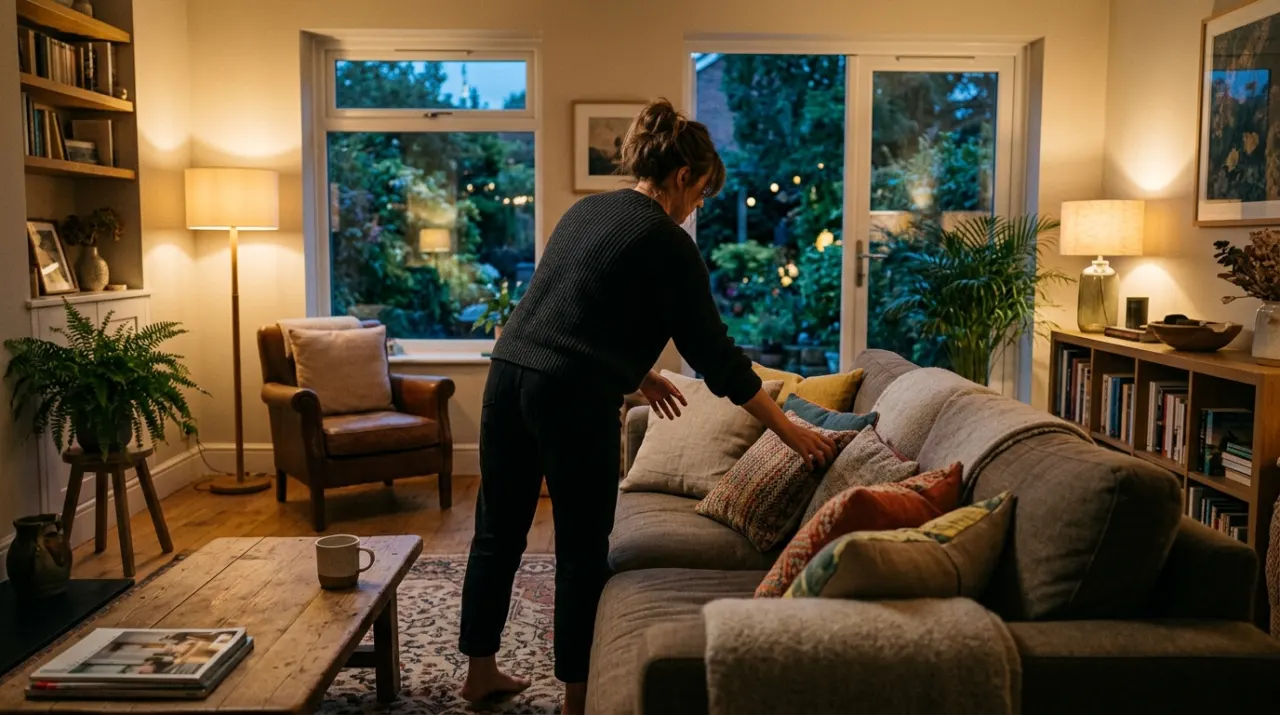
Tools and materials
You need a saw, drill/driver, pocket-hole jig, clamps, sandpaper and finish. A coffee table anchors the seating group, so its proportions should be set against the sofa and chairs you already have or plan to add, which is why it helps to size it alongside our accent chair picks for the surrounding seating. If the same room doubles as a workspace, keeping wood tones consistent with a desk from our standing desk roundup ties an open plan together.

Mistakes that ruin a build
- Skipping acclimation. Fresh lumber warps after assembly. Let it sit indoors first.
- Fixing the top rigidly. A screwed-down solid top cracks with seasonal movement. Use slotted or figure-8 fasteners.
- Ignoring clearance. A table too close to the sofa blocks the walkway. Leave 14 to 18 inches.
- Not checking square. A racked base wobbles. Measure diagonals during assembly.
- Under-finishing. One thin coat lets water rings through. Build two to three coats of poly.

Notes and safety
This is DIY woodworking with normal shop cautions: eye and ear protection, push sticks near saw blades, and ventilation plus proper disposal for oily finish rags, which can spontaneously combust if wadded up. There is no building code or permit for furniture. The main risk is to your fingers and your lumber budget, so take the cuts slowly and dry-fit every joint before glue-up.
We never buy, test or physically handle the products we rank. Recommendations come from aggregated owner reviews, star ratings, review volume and expert consensus — see how we rank.
More from this hub: Furniture & Decor · Build a console table · Build a floating nightstand · Refinish a wood dresser · Best accent chairs · How we rank