 Garden

Affiliate Disclosure
Some links on this page are affiliate links. As an Amazon Associate, we earn from qualifying purchases — at no extra cost to you. We do not buy, test, or physically handle the products we cover; our rankings come from aggregated owner reviews, ratings and expert consensus. Commissions never change our verdicts. How we rank · full disclosure.
The short answer: IP is a two-digit code — the first digit is protection from solids (dust), the second from water. Outdoors, the second digit is what matters. Use IP44 only under a covered porch, IP65 for anything in a bed, on a path or on an exposed wall, IP67 for fixtures recessed into paving, decking or the ground where water can pool, and IP68 for anything submerged in a pond or fountain. When in doubt, go one step higher than the placement strictly requires.
What the Two Digits Mean
IP stands for Ingress Protection, defined in an international standard. The first digit rates protection against solid objects, from a finger down to fine dust. The second rates protection against water, and it is a graded scale where each level is a defined laboratory test rather than a marketing claim.
| First digit (solids) | Protects against |
|---|---|
| 0 | No protection |
| 1 | Objects over 50 mm — a hand |
| 2 | Objects over 12.5 mm — a finger |
| 3 | Objects over 2.5 mm — a tool, a thick wire |
| 4 | Objects over 1 mm — most wires and screws |
| 5 | Dust protected — some ingress allowed, but not enough to interfere |
| 6 | Dust tight — no ingress at all |
| Second digit (water) | Test | What that means in a yard |
|---|---|---|
| 0 | None | Indoor only |
| 1 | Dripping water, vertical | Effectively nothing outdoors |
| 2 | Dripping at up to 15° tilt | Still indoor-grade |
| 3 | Spraying water up to 60° from vertical | Light rain under shelter |
| 4 | Splashing from any direction | Covered porch, deep eave, under a pergola roof |
| 5 | Low-pressure jets from any direction | Driving rain, sprinklers, a hose rinse |
| 6 | Powerful jets | Storm-driven rain, pressure washing nearby |
| 7 | Immersion to 1 m for 30 minutes | Standing water, puddles, snowmelt pooling |
| 8 | Continuous immersion, depth per manufacturer | Pond, fountain, pool niche |
Two quirks are worth knowing. The scale is not strictly cumulative at the top — a fixture rated IP67 has been immersion tested but not necessarily jet tested, which is why serious outdoor fixtures sometimes carry a dual rating like IP65/IP68. And an X in place of a digit, as in IPX4, means that property simply was not tested, not that it scored zero. IPX4 tells you about water and nothing about dust.
Which Rating a Given Placement Actually Needs
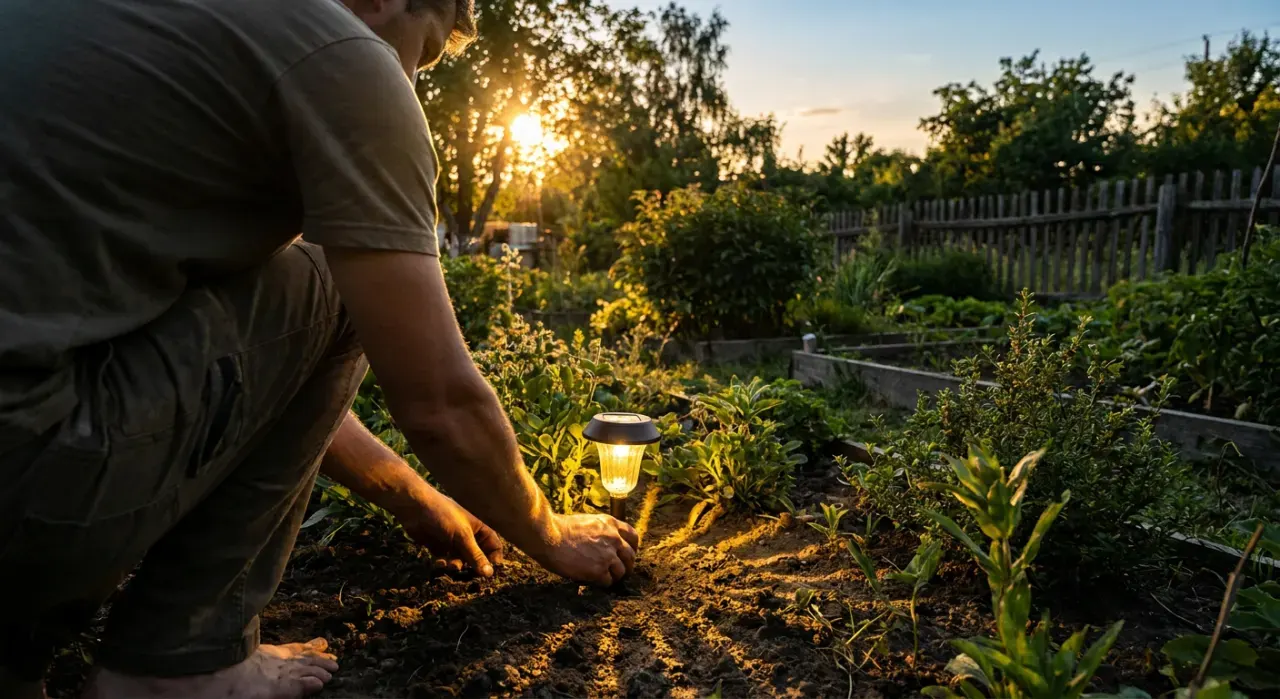
This is the table that matters. Ratings below are the sensible minimum; going one step higher is rarely wasted money because seals degrade with age.
| Placement | Minimum rating | Better choice | Why |
|---|---|---|---|
| Covered porch ceiling, deep eave | IP44 | IP65 | Sheltered from direct rain but not from wind-blown spray |
| Exterior wall lantern, open wall | IP44 | IP65 | Driving rain hits a wall from the side, not vertically |
| Path light staked in a bed | IP65 | IP65 | Sprinklers and rain from every angle |
| Spotlight uplighting a tree | IP65 | IP67 | Aims upward, so the lens collects standing water and debris |
| Step light recessed in a riser | IP65 | IP67 | Splash-back and snowmelt against the riser face |
| Deck light flush in the boards | IP67 | IP67 | Water pools on a flat deck before it drains |
| In-grade well light in paving or turf | IP67 | IP67/IP68 | Sits in a low spot; irrigation and rain collect over it |
| Fixture in a bed that floods in storms | IP67 | IP67 | Temporary submersion is routine, not exceptional |
| Pond edge, splash zone of a fountain | IP67 | IP68 | Water level rises and falls; splash is constant |
| Submerged pond or fountain light | IP68 | IP68 | Continuous immersion is the only test that applies |
| Pool niche lighting | IP68 | IP68 plus a listing for pool use | Chemistry and bonding requirements go beyond IP |
| Transformer on an exterior wall | IP44 minimum | IP65, mounted 12 in above grade | Splash-back off paving is the usual killer |
| String lights over a patio | IP44 | IP65 | Exposed to rain; connectors are the weak point |
| Cable connectors, buried | Sealed / gel-filled | Sealed / gel-filled | IP is rarely quoted here; use gel connectors regardless |
The In-Grade and Uplight Trap
Two placements catch people out repeatedly, and both share the same physics: an upward-facing lens becomes a bowl.
An uplight aimed at a tree collects rain, irrigation, leaf litter and mulch on its lens. Even where the fixture drains, a rim of debris holds a shallow puddle against the gasket for hours after every storm. Fixtures that would be perfectly happy on a wall at IP65 start weeping into the housing after two or three seasons in this position. Choose IP67 for uplights, tilt them slightly off vertical where the effect allows so water runs off, and clear the debris that collects around the base each fall.
In-grade well lights are worse, because they are set flush with paving or turf in what is by definition a low point. Everything that runs across the surface runs over the fixture. Beyond IP67, look for a specified drainage arrangement — a gravel bed under the housing, a weep path, or a driver mounted remotely rather than inside the sunken can. A well light with the driver in the buried housing is a fixture that fails the first time the seal ages.
Ratings Age — Plan for It
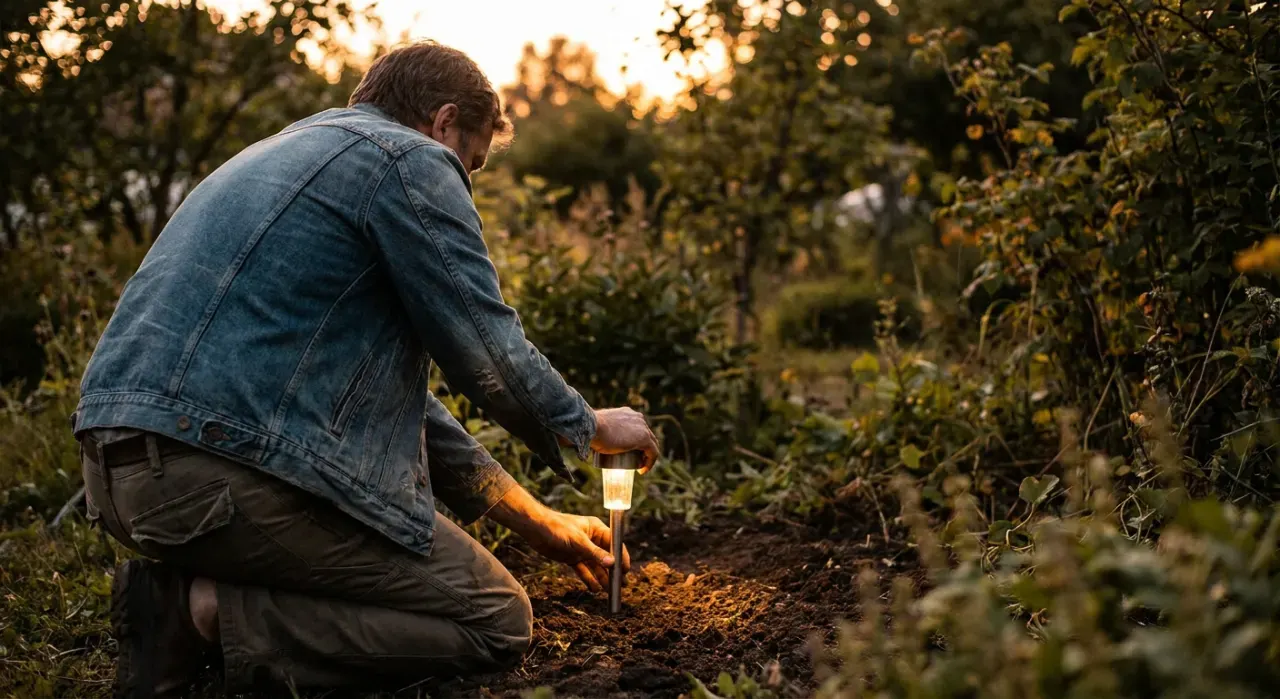
An IP rating is measured once, on a new unit, in a laboratory. The yard does not respect that. Four mechanisms erode a seal:
- UV hardening of gaskets. Rubber and silicone stiffen and shrink over years of sun exposure, so a compression seal that was tight at installation loses contact pressure.
- Thermal cycling. A fixture that runs warm at night and cools by dawn breathes — air, and eventually moist air, is drawn in and out past any imperfect seal. This is why a fixture with no visible leak can still fog inside.
- Freeze-thaw. Water that has entered a threaded joint expands as it freezes and works the joint open a little more each cycle.
- Adhesive failure. On sealed-lens LED fixtures, the lens is often bonded rather than gasketed, and that bond has a finite life under UV.
The practical consequence is that the misted lens and dead LED in year three, a recurring complaint across owner reviews of budget outdoor fixtures, is very often a seal that aged rather than a rating that was fake. Two responses help: buy one step above the strict requirement, and prefer fixtures with a serviceable gasket and a replaceable lamp over a fully potted sealed unit, because the sealed unit is disposable by design.
What IP Does Not Cover
IP is a narrow specification and reading too much into it is the second most common mistake here. It says nothing about:
| Hazard | What to look for instead |
|---|---|
| UV degradation | UV-stabilized polycarbonate, powder-coated metal, glass lens rather than acrylic |
| Salt corrosion | Marine-grade brass, copper or 316 stainless; avoid plated steel near the coast |
| Impact (mowers, kids, hail) | An IK rating if published; metal housing; glass over thin acrylic |
| Freezing temperatures | A stated operating range; lithium cells outperform NiMH in cold |
| Wet vs damp location suitability | A UL or ETL listing marked "suitable for wet locations" |
| Corrosive soil and fertilizer contact | Brass and copper stakes; avoid bare aluminum in heavily fertilized beds |
In the US market the UL or ETL wet/damp location listing often tells you more about real-world suitability than the IP figure, because it is a safety certification tied to installation code rather than a self-declared marketing number. Many quality fixtures carry both. A fixture with neither, sold with a large IP claim in the title and no certification mark, deserves suspicion.
Judging a Claim You Cannot Verify
IP figures on inexpensive listings are frequently self-declared and occasionally optimistic — the same housing appears under several brand names with two different ratings. Since you cannot test the seal from a product page, the useful signals are indirect:
- Look at the seam design in the photos. A visible compression gasket and machine screws is a better sign than a smooth glued joint on a cheap fixture.
- Look for a glass lens. Glass resists UV and scratching, and it usually accompanies a more serious housing.
- Look for a serviceable battery compartment on solar fixtures — a sealed unit means the whole fixture is disposable when the cell fades, and a gasketed screw-down compartment is a sign the manufacturer expects the fixture to last.
- Read the year-two and year-three reviews rather than the recent ones. Water ingress is a slow failure, and it shows up in reviews written twenty months after purchase, not twenty days.
That last one is the most useful filter available and it is exactly how the fields in best solar landscape lights and best low-voltage landscape lights are weighted — long-term reports about condensation, seal failure and corrosion carry far more weight than first-week impressions of brightness, because brightness is obvious on day one and sealing is not.
If Water Already Got In
A fogged lens is not always terminal. If the fixture is serviceable, open it on a dry day, dry the interior completely, clean the gasket seat, and replace or lightly grease the gasket with silicone dielectric grease before reassembling. Add a small silica gel packet inside if there is room. For a fixture where the lens is bonded, a bead of clear silicone around the lens rim buys a few more seasons but is a repair rather than a fix.
Prevention is cheaper than any of that. Site fixtures where water drains away rather than collects, keep mulch below the base rather than piled over it, tilt uplights slightly so the lens sheds, and wipe lenses twice a year — which also recovers the surprising amount of output that dust and pollen quietly absorb.
We never buy, test or physically handle the products we rank. Recommendations come from aggregated owner reviews, star ratings, review volume and expert consensus — see how we rank.
More from this hub: Garden Lighting · Why solar lights stop working · How to install path lighting · Solar vs low-voltage · How we rank