 Garden

Affiliate Disclosure
Some links on this page are affiliate links. As an Amazon Associate, we earn from qualifying purchases — at no extra cost to you. We do not buy, test, or physically handle the products we cover; our rankings come from aggregated owner reviews, ratings and expert consensus. Commissions never change our verdicts. How we rank · full disclosure.
Use a light mineral oil, camellia oil or a general light machine oil such as 3-in-1 on steel blades, and boiled linseed oil or tung oil on wooden handles. Mineral and camellia oils are food-safe and leave a thin moisture barrier on metal; linseed and tung penetrate wood and cure to a finish. Avoid used motor oil, which carries combustion byproducts and heavy metals you do not want in garden soil. Clean and dry the tool first — oil over wet mud protects nothing.
Which oil for which part?
| Part | Best oil | Why |
|---|---|---|
| Steel blades (spades, hoes, trowels) | Mineral oil, camellia oil | Food-safe, thin protective film, no residue issues |
| Pruner and shear pivots | Light machine oil (3-in-1) | Penetrates the joint and keeps the action smooth |
| Wooden handles | Boiled linseed or tung oil | Soaks in and cures; prevents drying, cracking, splinters |
| Springs and moving parts | Light machine oil | Displaces moisture where rust seizes mechanisms |
| Long-term storage on carbon steel | Mineral oil or a rust-inhibiting oil | Carbon steel rusts readily without a barrier |
How do you oil a blade properly?
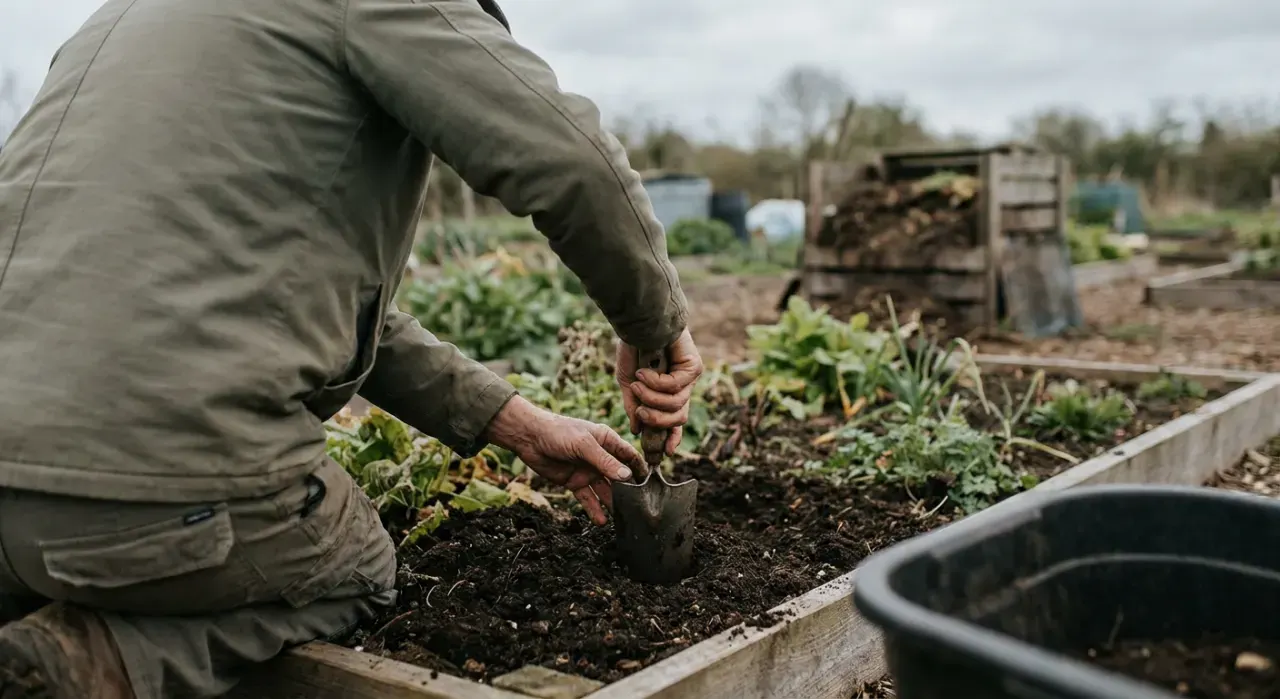
The order matters more than the brand. Scrape or brush the soil off first, wash if the tool is caked, then dry it completely — oil applied over trapped moisture seals water against the steel and accelerates rust rather than preventing it. Remove any existing rust with a wire brush or steel wool before oiling, or you simply preserve it; the full method is in getting rust off garden tools. Then put a small amount of oil on a rag and wipe the whole blade, both faces and the edge. You want a film you can feel, not a coating that drips. On pruners and shears, put a drop into the pivot and work the handles to draw it in.
What about wooden handles?
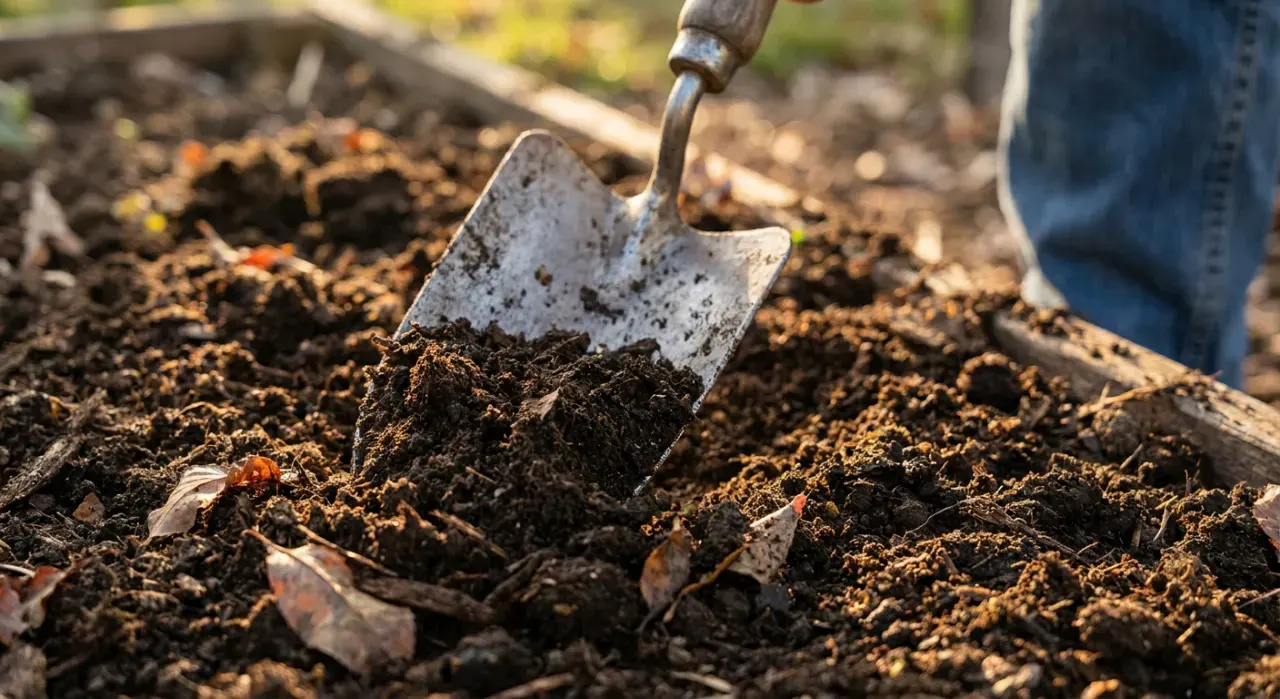
Ash and hickory handles dry out, gray off and eventually splinter or crack — and a cracked handle on a spade you are levering with is a genuine hazard. Boiled linseed oil is the traditional treatment and still the most common recommendation from extension services and tool makers; tung oil is a harder-wearing alternative. Sand any roughness lightly with fine paper, wipe the handle clean, then apply a thin coat with a rag, let it penetrate for 15 to 30 minutes, and wipe off everything that has not soaked in. Two or three thin coats a day apart produce a far better result than one heavy application that stays tacky.
One serious safety note: rags soaked in boiled linseed or tung oil generate heat as the oil cures and have caused fires when left crumpled in a pile or a bin. Lay used rags out flat to dry completely outdoors, or submerge them in water in a sealed metal container before disposal. This is a well-documented fire risk, not a theoretical one.

Should you use motor oil or a sand bucket?
The old sand-and-oil bucket — a pail of builders sand with oil mixed through, into which you plunge a blade a few times to clean and coat it — genuinely works as an end-of-day habit, and the scouring action does remove soil well. The problem is what people traditionally filled it with. Used motor oil contains combustion byproducts and heavy metals, is classed as hazardous waste by most municipal programs, and has no business going into soil where you grow vegetables. Mineral oil costs a few dollars a bottle and does the same job. Two other limitations: the bucket does nothing for wooden handles, and sand can work into the pivots of pruners, where it becomes an abrasive rather than a lubricant. Wipe pruners with a rag instead.
How often, and does the steel matter?
Wipe blades with oil whenever you have cleaned them after a wet or muddy job, and do a thorough clean, sharpen and oil on every tool before winter storage — that single end-of-season pass prevents most of the rust people find in spring. Handles want re-oiling once or twice a year, or as soon as the wood looks gray and feels rough. How much attention a tool needs depends on what it is made of: carbon steel holds a better edge but rusts quickly and needs oiling diligently, while stainless resists corrosion largely on its own. That trade-off is covered in stainless versus carbon steel and which is better for garden tools. Where you keep them matters too — see how to store garden tools.
We do not buy, test or physically handle any product on this site. Guidance reflects manufacturer care instructions and extension service recommendations — our method is on how we rank.
More from this hub: Garden Hand Tools · Best garden tool sets · Sharpening garden tools · How we rank