 Garden

Affiliate Disclosure
Some links on this page are affiliate links. As an Amazon Associate, we earn from qualifying purchases — at no extra cost to you. We do not buy, test, or physically handle the products we cover; our rankings come from aggregated owner reviews, ratings and expert consensus. Commissions never change our verdicts. How we rank · full disclosure.
The short answer: for a winter greenhouse that actually holds heat, buy the MU 7x7 double-layer walk-in — its heavier double-layer PE cover insulates where thin single-layer tents leak warmth all night. Want the fastest setup? The EAGLE PEAK pop-up. Need the strongest frame for snow and wind? The KING BIRD galvanized steel tunnel. Just protecting a few pots? A Quictent tabletop.
A winter greenhouse is judged on different specs than a summer one. Cover thickness, frame strength and wind anchoring decide whether it protects anything through the cold months. If your winters are genuinely harsh you will also want to read best greenhouse heater, and if you need the most room, compare the walk-in greenhouses. The full picture is in the greenhouses hub.
What Makes a Greenhouse Good for Winter
The summer job of a greenhouse is mostly about not overheating. The winter job is the opposite: hold onto every degree of the day's heat and survive the weather. Three specifications decide whether a structure does that, and they are the axes this page ranks on:
- Cover thickness. The single biggest difference between a real winter greenhouse and a summer tent. A heavier or double-layer cover traps far more of each day's warmth overnight; a thin single layer sheds it almost as fast as it gains it.
- Frame strength. Winter means snow load and storms. A galvanized steel frame with good ground anchoring stands; a light frame folds. This is where cheap structures most often fail.
- Controllable venting. Even in winter, a sunny sealed greenhouse overheats and grows condensation that causes disease. Roll-up doors and mesh windows let you manage both.
Notice what is not on that list: raw size. A big greenhouse with a thin cover and a weak frame protects less through a real winter than a small one built for the job.
The Winter Greenhouses at a Glance
Our #1 Pick: MU 7x7 Double-Layer Walk-In
The MU walk-in tops this list for the reason most winter greenhouses fail: the cover. Where the budget field almost universally uses a thin single-layer film that loses heat as fast as it gains it, this one wraps a heavier 180g double-layer PE cover around a full walk-in frame.
Why the cover is the whole story. A greenhouse in winter is a heat battery: it charges up in the day and discharges overnight. A double-layer cover traps a pocket of air that slows that discharge, so the interior stays warmer through the coldest hours, which is precisely when hardy plants need the margin. A thin single layer, by contrast, barely holds the day's gain past sunset. Owners of this structure single out how much better it holds warmth than the lightweight tents they replaced.
It ships with ground stakes for anchoring, which is non-negotiable for any winter greenhouse, and at roughly 7 by 7 feet it gives genuine walk-in room without being so large it is hard to keep warm. Its honest limits: it is still an unheated structure, so in a hard-freeze climate it protects hardy plants rather than tender ones, and like every tent it wants its doors opened on sunny days to shed heat and vent condensation. For the money, the heavier cover makes it the most sensible winter buy here.
Check price on Amazon → (paid link)
The Winter Greenhouses, Ranked

Best for the gardener who wants a walk-in that actually holds heat, thanks to a heavier double-layer cover most budget tents skip
- 180g double-layer PE cover for better insulation
- Full walk-in height at roughly 7 x 7 ft
- Ground stakes included for wind anchoring
- Heavier cover than typical single-layer tents
Why buy it: Most budget winter greenhouses fail on the cover, and a thin single layer sheds heat fast; this one uses a heavier double-layer PE that holds warmth better, which is exactly what a winter structure needs.

Best for anyone who wants a sturdy walk-in up in minutes without bolting a frame together
- One-person pop-up setup in minutes
- Roll-up zippered doors and mesh windows
- Reinforced corners for wind resistance
- Large, well-reviewed owner base
Why buy it: The pop-up frame is the fastest route to a proper walk-in, and with roll-up doors and mesh vents it manages the overheating that undoes cheaper tents, making it the low-effort winter choice.
Best for protecting a few trays or tender pots on a bench or patio without buying a whole structure
- Compact tabletop footprint
- UV-protected waterproof cover
- Quick tool-free setup
- Ideal for seed starting and small pots
Why buy it: Not everyone needs a walk-in; for a handful of tender plants a tabletop cover is the cheapest frost insurance there is, and it packs away when the cold passes.

Best for a narrow spot against a house or fence wall, where the wall adds warmth and shelter
- Lean-to shape fits against a wall or fence
- Heavy-duty cover with roll-up zippered door
- Tall enough for climbing crops like tomatoes
- Compact ground footprint
Why buy it: A lean-to borrows heat and wind shelter from the wall it sits against, which makes it one of the more thermally sensible shapes for winter in a tight urban yard.

Best for a serious grower who wants a large tunnel with a metal frame that survives snow load and wind
- Galvanized steel frame for strength
- Large 15 ft length for real growing space
- Mesh door and window screens for venting
- Includes anchoring hardware
Why buy it: The galvanized steel frame is the difference between a tunnel that stands through a snowy winter and one that folds, and at 15 feet it gives enough room to overwinter a real collection of plants.
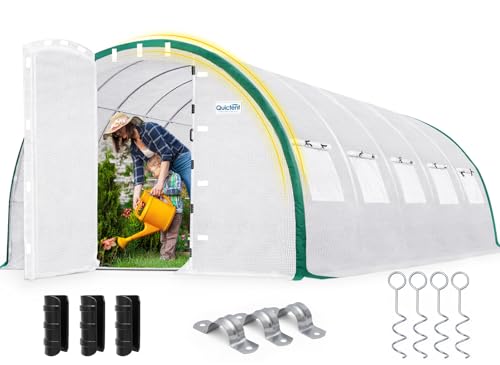
Best for the grower who needs the most protected square footage and has the yard to put it in
- 25 ft length for maximum coverage
- Reinforced top structure and cover
- Two door frames for airflow and access
- Heavy-duty tunnel design
Why buy it: When the goal is overwintering a lot of plants or a small nursery operation, this is the most coverage on the page, with a reinforced structure built to handle the weather a big tunnel is exposed to.
Quick Comparison
| Product | Best for | Rating | Price | Buy |
|---|---|---|---|---|
| MU 7x7x7.6 ft Walk-In Winter Greenhouse, Double-Layer PE Cover | Best Overall Winter Greenhouse | — | Check (paid link) | |
| EAGLE PEAK 8x6 Pop-Up Walk-In Greenhouse, Clear/Green | Best Pop-Up Winter Greenhouse | — | Check (paid link) | |
| Quictent Portable Tabletop Mini Greenhouse, UV-Protected Cover | Best Budget Tabletop | — | Check (paid link) | |
| Ohuhu Portable Lean-To Greenhouse, Heavy-Duty with Roll-Up Door | Best Lean-To | — | Check (paid link) | |
| KING BIRD Premium 15x7x7 ft Greenhouse, Galvanized Steel Frame | Best Heavy-Duty Frame | — | Check (paid link) | |
| Quictent 25x10x6.6 ft Premium Walk-In Greenhouse, Reinforced | Best Large Walk-In | — | Check (paid link) |
How to Choose a Winter Greenhouse
Match the structure to your climate and your plants, not to the size that looks impressive:
- In a mild-winter region, almost any of these will overwinter hardy plants unheated. Prioritize a heavier cover and good venting, and buy the size your space and plant collection actually need.
- In a harsh-winter region, prioritize frame strength and cover thickness above all — a steel-framed tunnel with a double or heavy cover — and plan to add a thermostatic heater for anything tender.
- In an exposed, windy site, frame strength and anchoring beat size. Present the smallest face to the prevailing wind and use every stake and rope provided.
- For a handful of tender pots, skip the walk-in entirely; a tabletop or lean-to cover is cheaper and easier to manage.
Whatever you choose, anchoring and siting are covered further in the greenhouses hub, and the USDA Plant Hardiness Zone map is the right starting point for judging how cold your winters really get.
How We Rank Winter Greenhouses
We do not buy, test or physically handle greenhouses. We read owner reviews in aggregate, weighting long-tail reports written after a full winter more heavily than launch-window ratings, because a winter greenhouse is only proven once it has survived snow, wind and a hard freeze. We check cover thickness and construction, frame material, anchoring hardware and venting, since those specifications decide whether a structure protects anything through the cold. Prices were current at the time of writing and change constantly, so the listing is always the authority. Full method on how we rank.
The Verdict on the Best Winter Greenhouse
The MU 7x7 double-layer walk-in is the winter greenhouse we would steer most gardeners to, because its heavier cover fixes the flaw that sinks cheaper tents. Choose the EAGLE PEAK pop-up for the fastest setup, the KING BIRD steel tunnel for snow and wind, the Quictent large walk-in for maximum coverage, and a tabletop cover when you only need to protect a few pots. Pair any of them with a heater from best greenhouse heater if your winters bite. Everything else is in the greenhouses hub. Check the current MU price on Amazon → (paid link)