 Garden

Affiliate Disclosure
Some links on this page are affiliate links. As an Amazon Associate, we earn from qualifying purchases — at no extra cost to you. We do not buy, test, or physically handle the products we cover; our rankings come from aggregated owner reviews, ratings and expert consensus. Commissions never change our verdicts. How we rank · full disclosure.
The short answer: for reliable, set-and-forget greenhouse heat, buy a thermostatic heater built for the job — our overall pick pairs an accurate digital thermostat with overheat protection so it holds a target temperature overnight. Want the best air circulation to fight condensation? The Bio Green PALMA. On a tight budget? A milkhouse utility heater with a tip-over cut-out. Draughty structure? Go infrared.
A greenhouse heater is only half the answer — the other half is insulation. The best heater in a leaky structure just burns money. Pair one with a winter-ready structure from best greenhouse for winter, and see the wider guidance in the greenhouses hub. This page ranks the heaters themselves, on the specs that actually matter overnight.
What Separates a Good Greenhouse Heater From a Space Heater
Plenty of people heat a small greenhouse with an ordinary utility heater, and it can work. But a heater doing this job overnight, unattended, in a cold and damp environment, is asked to do more than warm a living room. Four things decide the ranking here:
- Thermostat accuracy. The heater's job is to hold a temperature, not to blast heat. A precise thermostat runs the element only when needed, which protects the plants and cuts the running cost. A coarse dial that overshoots and undershoots does neither well.
- Air circulation. A fan spreads warmth into the corners and, just as importantly, moves air to dry the condensation that breeds fungal disease in a sealed greenhouse.
- Safety for unattended, damp duty. Overheat protection, tip-over shut-off and a housing rated for humidity are what make it safe to leave running overnight.
- Efficiency for your structure. A fan heater suits a reasonably tight greenhouse; infrared heats plants directly and wastes less in a draughty one.
The Heaters at a Glance
Our #1 Pick: Thermostatic Greenhouse Heater
Our overall pick tops the list because it is built around the one component a greenhouse heater cannot compromise on: the thermostat. It pairs an accurate digital control and temperature display with fast heating and overheat protection, which is exactly the combination a plant needs to survive a cold night unattended.
Why the thermostat is everything. The purpose of greenhouse heat is not to make the space warm, it is to keep it above a threshold — often just above freezing — without wild swings. A precise thermostat cycles the heater on only when the temperature drops to your set point and off again once it recovers, which both protects the plants from cold and keeps the electricity bill down, since the element is idle most of the night. A digital display means you can actually see and trust the target rather than guessing at a dial.
The overheat protection is what makes it safe to leave running while you sleep, and it is sized for greenhouses, tents and small rooms rather than being a repurposed room heater. Its honest limits are the limits of all electric heating: at 1500W it is bound by what a household outlet can supply, so a very large or very leaky greenhouse in a hard-freeze climate may need better insulation rather than a bigger heater. For a typical hobby greenhouse, this is the most sensible balance of control, safety and price on the page.
Check price on Amazon → (paid link)
The Heaters, Ranked

Best for the grower who wants set-and-forget thermostatic heating tuned for a greenhouse or grow tent rather than a repurposed room heater
- Built-in thermostat with digital temperature display
- Fast-heating element for quick recovery
- Overheat protection for unattended running
- Sized for greenhouses, tents and small rooms
Why buy it: A greenhouse heater lives or dies on its thermostat, and this one pairs an accurate digital control with overheat protection, so it holds a target temperature overnight instead of cooking or freezing the plants.

Best for a purpose-built greenhouse heater that also circulates air to fight the cold spots and condensation of a sealed structure
- Stainless steel body rated splash-proof
- 1500W with strong 5800 ft³/h air circulation
- Digital thermostat over a wide range
- German-engineered greenhouse specialist
Why buy it: Bio Green builds heaters specifically for the wet, cold environment of a greenhouse, and the strong fan does double duty circulating warm air into corners and drying condensation that would otherwise breed disease.

Best for heating a small greenhouse on the cheapest sensible budget, with the basic safety features that matter
- Adjustable thermostat and 1500W output
- Overheat protection and tip-over shut-off
- Rugged metal utility housing
- Very large, long-running review base
Why buy it: A milkhouse-style utility heater is the classic low-cost greenhouse solution, and this one includes the two safety features that matter for unattended use — overheat cut-out and tip-over shut-off — at a fraction of a specialist unit.

Best for a small structure where a compact, safety-focused utility heater is all the situation needs
- Stay-cool durable metal housing
- Overheat protection and tip-over auto shut-off
- Adjustable thermostat and 3-prong plug
- Compact footprint for tight spaces
Why buy it: A close cousin of the Comfort Zone, this compact utility heater covers the safety essentials in a cooler-running metal housing, making it a sound budget pick for a small greenhouse or shed.

Best for warming plants and surfaces directly rather than heating a whole volume of leaky air
- Infrared element warms objects, not just air
- Efficient in draughty or poorly sealed spaces
- 1500W output for a small-to-mid greenhouse
- Quiet operation with no strong fan noise
Why buy it: Infrared heats surfaces and plants directly instead of trying to warm every cubic foot of a leaky greenhouse, which makes it an efficient choice for a draughty structure where a fan heater would fight a losing battle.
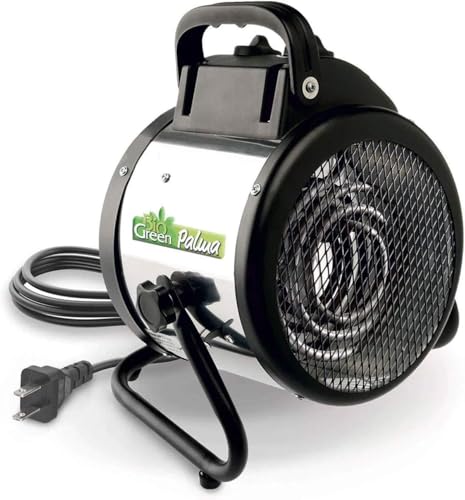
Best for a smaller greenhouse that still wants a purpose-built, weather-rated heater rather than a general utility unit
- Greenhouse-specific fan heater design
- Compact body for smaller structures
- Two-year warranty
- Air circulation to reduce cold spots
Why buy it: The compact Palma brings Bio Green greenhouse-rated engineering to smaller structures, so a modest greenhouse gets a heater actually built for damp, cold conditions instead of a repurposed space heater.
Quick Comparison
| Product | Best for | Rating | Price | Buy |
|---|---|---|---|---|
| Greenhouse Heater with Thermostat & Digital Display, Overheat Protection | Best Overall Greenhouse Heater | — | Check (paid link) | |
| Bio Green PALMA Electric Greenhouse Heater & Fan, Digital Thermostat, 1500W | Best Fan Heater | — | Check (paid link) | |
| Comfort Zone Milkhouse Utility Heater with Thermostat, 1500W | Best Budget Heater | — | Check (paid link) | |
| Shinic 1500W Milkhouse Heater, Thermostat & Tip-Over Shut-Off | Best Compact Utility Heater | — | Check (paid link) | |
| Dr. Infrared DR218 Greenhouse & Workshop Infrared Heater, 1500W | Best Infrared Heater | — | Check (paid link) | |
| Bio Green PAL 2.0 Palma Electric Fan Heater for Greenhouses | Best Compact Greenhouse Fan Heater | — | Check (paid link) |

How to Choose a Greenhouse Heater
Work from your structure and climate, not from wattage alone:
- For a typical enclosed hobby greenhouse, a thermostatic fan heater is the default: it holds temperature and circulates air to fight condensation.
- For a draughty or poorly sealed structure, an infrared heater warms plants directly and wastes less to leaking air.
- On a budget, a milkhouse utility heater with a tip-over shut-off and overheat protection is a proven low-cost route; add a plug-in thermostat if it only has a coarse dial.
- For damp, unattended overnight duty, favor a heater rated for greenhouse conditions and always power it from a GFCI-protected outdoor circuit.
Remember that the cheapest degree of heat is the one you do not lose: insulating and sealing the greenhouse, covered in the greenhouses hub, does more for the running cost than any heater choice.
How We Rank
We do not buy, test or physically handle heaters. We read owner reviews in aggregate, weighting long-tail reports written after a full heating season more heavily than launch-window ratings, because a heater's reliability and thermostat drift only show over time. We check thermostat type and accuracy, safety features for unattended damp use, air-circulation capacity and whether the unit is rated for greenhouse conditions. Electric-heat running cost is arithmetic, not opinion, so we explain the math rather than quote a single figure. Prices were current at the time of writing and change constantly, so the listing is always the authority. Full method on how we rank.
The Verdict
A thermostatic greenhouse heater with overheat protection is the buy for most growers, because holding a temperature overnight is the whole job. Step up to the Bio Green PALMA when air circulation and condensation control matter, drop to a milkhouse utility heater when budget rules, and choose infrared when your structure leaks heat. Whatever you pick, pair it with a well-sealed winter structure from best greenhouse for winter — insulation saves more money than any heater. Everything else is in the greenhouses hub. Check the current price on Amazon → (paid link)