 Garden
Affiliate Disclosure
Some links on this page are affiliate links. As an Amazon Associate, we earn from qualifying purchases — at no extra cost to you. We do not buy, test, or physically handle the products we cover; our rankings come from aggregated owner reviews, ratings and expert consensus. Commissions never change our verdicts. How we rank · full disclosure.
The short version: after weighing six of the most-reviewed space heaters in the US market on owner ratings, review volume, safety features and recurring complaints, our #1 pick is the Dreo Atom One. It heats a room faster than anything else here, the 70-degree oscillation spreads that heat instead of roasting one side of you, and the digital thermostat means it cycles off rather than running flat out — which is the only way a 1,500-watt appliance stays affordable.
One thing to settle before you buy: every 1,500-watt heater costs the same to run, so you are choosing on how it delivers heat, how quiet it is and how safely it is built — not on efficiency claims. The technology comparison is in the heating and cooling hub, and please read space heater safety rules before the first cold night.
Top Picks at a Glance
Our #1 Pick: Dreo Atom One
The Atom One is the heater that gets the fundamentals right at a price that makes them accessible. A 1,500-watt PTC ceramic element brings a home office from cold to comfortable in well under two minutes, and the 70-degree oscillation is the feature that separates it from the tabletop crowd — without it, a fan heater warms a narrow cone and leaves the rest of the room untouched.
The digital thermostat matters more than it sounds. Set a target temperature and the heater cycles rather than running continuously, which both keeps the room comfortable and directly reduces what it costs to run. Add a remote, a 1-to-12-hour timer, an ECO mode and ETL-listed tip-over and overheat protection, and there is very little left to want at roughly $70.
Consensus Score █████████░░ 8.9 — from 28,738 owner ratings across an average of 4.5 stars.
The honest weaknesses: it is a fan heater, so it is audible — quiet for the type, but not silent, and that rules it out for light sleepers. Like every ceramic heater it produces a faint burning-dust smell for the first few uses. And it is a personal-to-medium room appliance; a large open-plan space needs the Dr Infrared or the Vornado instead.
Check price on Amazon → (paid link)
The Ranked Field
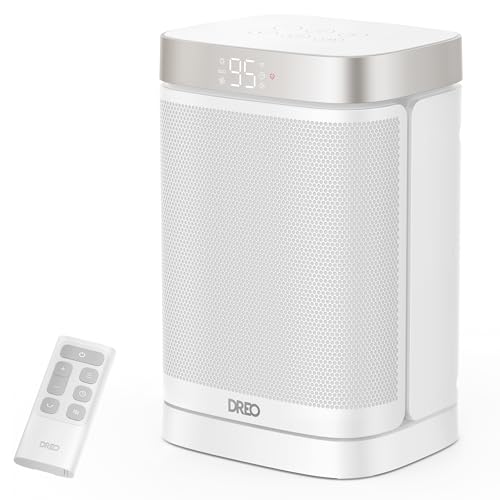
Best for a home office or living room you want warm in a minute
- 1500W PTC ceramic element
- 70-degree oscillation
- Digital thermostat, remote and 12-hour timer
- ETL-listed tip-over and overheat protection
Why buy it: the fastest useful heat here, with the oscillation and thermostat control that stop a room from cooking on one side.

Best for a desk, a small bedroom or a dorm room
- 1500W high and 900W low, plus fan-only
- Adjustable thermostat with 11 settings
- Self-regulating ceramic element
- 3-year limited warranty
Why buy it: decades of owner history behind the cheapest heater worth owning — it simply works and it costs almost nothing.
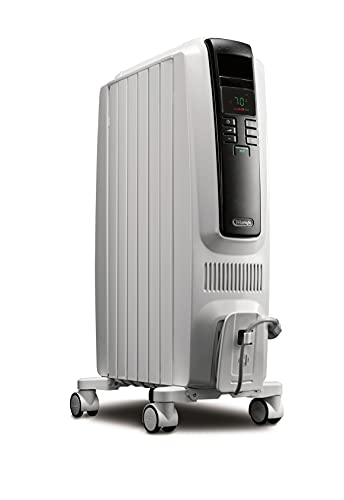
Best for overnight bedroom heat and homes with children
- Oil-filled radiator — completely silent
- Lower surface temperature than ceramic
- Programmable 24-hour timer with ECO mode
- Child lock and thermal cut-off
Why buy it: silent, steady warmth that keeps radiating after the thermostat cycles off — the safest choice near sleeping children.
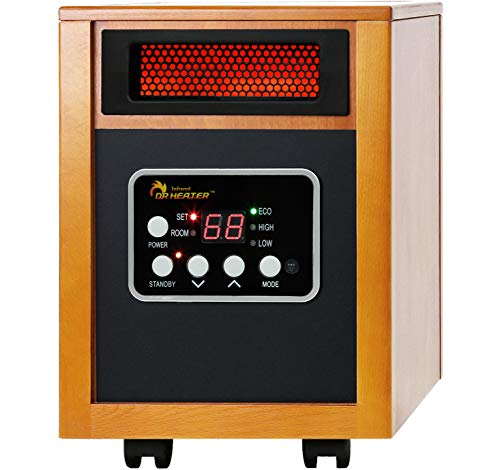
Best for big, drafty or high-ceilinged rooms
- Dual infrared quartz plus PTC heating
- Around 5,200 BTU at 1500W
- Thermostat from 50°F to 85°F
- Quiet blower and caster wheels
Why buy it: infrared warms people and objects rather than just air, which is why it works where fan heaters give up.
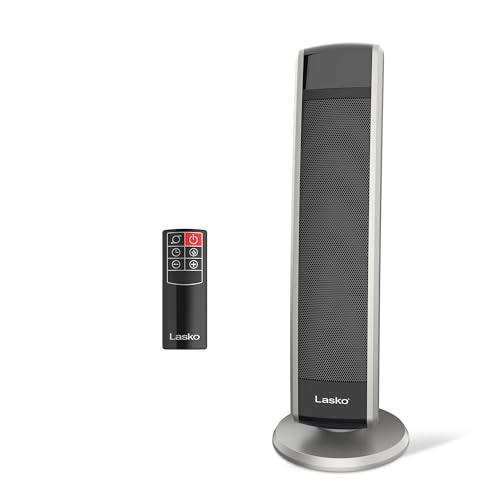
Best for even heat across a living room without floor clutter
- 29-inch tower with wide oscillation
- Digital display, remote and 8-hour timer
- Two quiet heat settings plus auto
- Cool-touch housing and overheat protection
Why buy it: the tall element and wide sweep spread heat further across a room than any tabletop unit can manage.
Best for holding a steady temperature in a medium room
- Vortex circulation heats the whole room evenly
- Three heat settings plus a thermostat dial
- Cool-touch case and tip-over switch
- Five-year warranty
Why buy it: it circulates the air instead of blasting one spot, so the room reaches an even temperature and stays there.
Quick Comparison
| Product | Best for | Rating | Price | Buy |
|---|---|---|---|---|
| Dreo Atom One Space Heater | Best Overall | — | Check (paid link) | |
| Lasko 754200 Ceramic Heater | Best Value | — | Check (paid link) | |
| De’Longhi Dragon Digital TRD40615E | Best for Bedrooms | — | Check (paid link) | |
| Dr Infrared Heater DR-968 | Best for Large Rooms | — | Check (paid link) | |
| Lasko 5586 Oscillating Ceramic Tower | Best Tower | — | Check (paid link) | |
| Vornado VH200 Whole Room Heater | Best Whole-Room Circulation | — | Check (paid link) |

How We Rank
We do not buy, test or physically handle space heaters. We rank them on evidence that scales, which for a seasonal appliance means the second winter matters more than the first week. Five inputs set the order. Star rating weighted by review volume — 4.4 stars across 28,738 owner ratings is a stronger signal than 4.8 across 400. Safety features and certification, checked against the listing: tip-over switch, overheat cut-off, cool-touch housing and an ETL or UL listing are requirements, not bonuses. Recurring complaints in critical reviews, where we look for burning smells, thermostat drift and units that stop heating in year two. Long-term owner reports from a second and third season. And expert consensus across established review outlets as a cross-check. Prices were current at the time of writing. Full method on how we rank.
The Space Heaters, Reviewed
1. Dreo Atom One — Best Overall
Covered above. What owners praise: how fast it heats, the oscillation, an accurate thermostat, the remote, and build quality that feels above its price. What owners complain about: the fan is audible enough to bother light sleepers, the initial burning-dust smell, and the display light in a dark bedroom. The best all-round buy for a room you occupy during the day.
2. Lasko 754200 — Best Value
The heater that has been in American offices and dorm rooms for two decades. It is small, it is around $35, it has an 11-position thermostat and a fan-only mode, and the review base behind it is enormous. What owners praise: price, portability, the fact that it just keeps working, and a three-year warranty on a $35 appliance. What owners complain about: it is noisy for its size, it heats a desk area rather than a room, and the thermostat is a dial with no numbers so setting it is guesswork. Extraordinary value within its limits.
3. De’Longhi Dragon Digital TRD40615E — Best for Bedrooms
The bedroom answer. An oil-filled radiator makes no noise at all, its surface runs cooler than ceramic or quartz, and it keeps radiating heat after the thermostat has cycled off, so the room temperature stays flat instead of sawing up and down. What owners praise: silence, gentle even heat, the programmable 24-hour timer, ECO mode, and the child lock. What owners complain about: it takes fifteen to twenty minutes to become useful, it is heavy at around 25 pounds even on wheels, and it is the most expensive heater here. If anyone is sleeping in the room, this is the right category.
4. Dr Infrared Heater DR-968 — Best for Large Rooms
The one that works where fan heaters fail. Infrared quartz warms objects and people directly rather than heating the air first, which is why owners with high ceilings, drafty rooms, garages and sunrooms consistently rate it highest. The dual system pairs the quartz tube with a PTC element for air heating too. What owners praise: effectiveness in large or leaky spaces, a genuinely quiet blower, the remote, and the caster wheels. What owners complain about: it is bulky and heavy at around 19 pounds, the cabinet finish looks dated, and it takes longer to feel warm than a ceramic fan because it is warming you rather than the room.
5. Lasko 5586 Oscillating Ceramic Tower — Best Tower
The tall format earns its place. A 29-inch heating element with wide oscillation distributes heat across a living room far better than a tabletop unit, and the small floor footprint suits rooms where there is nowhere to put a box heater. What owners praise: even coverage, the remote with onboard storage, the 8-hour timer, and the digital display. What owners complain about: the fan noise is more noticeable than the marketing suggests, the oscillation motor is a common failure point in longer-term reviews, and the plastic housing feels light. Good coverage for the money.
6. Vornado VH200 — Best Whole-Room Circulation
Vornado’s vortex airflow is the differentiator: instead of blowing hot air at you, it circulates the whole room’s air so the temperature evens out and then holds. That makes it the best of these at maintaining a set temperature rather than producing a hot spot. What owners praise: even, draft-free warmth, a genuinely cool-touch case, the five-year warranty, and how compact it is at four pounds. What owners complain about: it is slower to make you feel warm than a directional fan heater, the thermostat dial is unmarked, and it costs more than the Lasko for similar wattage. Best for steady comfort over a long evening.
What Owners Actually Complain About
Five complaints recur across the whole category, and four of them are predictable enough to plan around. The burning smell on first use is dust on the element and disappears after a few cycles — it alarms people every winter and is almost never a fault. Fan noise is the most common source of returns; if a heater is going in a bedroom, buy oil-filled rather than expecting a quiet fan. Thermostat inaccuracy shows up in nearly every budget model with an unmarked dial, which is the strongest argument for a digital display. Tripped breakers and hot plugs come from running a 12.5-amp heater on a shared circuit or through an extension cord — a genuine safety issue rather than an annoyance, and the reason every listing tells you to use a wall outlet directly. And failure in the second winter, especially of oscillation motors, is the most frequent long-term gripe; a three- or five-year warranty is worth more here than in most categories. Costs are broken down in space heater running costs.

How to Choose Between These Six
Work backwards from the room. Home office or living room you use in the daytime? The Dreo Atom One. Desk, dorm or a tight budget? The Lasko 754200. Bedroom, or a house with young children? The De’Longhi oil-filled radiator, and nothing else in this list comes close on that criterion. Large, drafty or high-ceilinged space? The Dr Infrared DR-968. Living room with no floor space to spare? The Lasko 5586 tower. Want a steady, even temperature over hours rather than a fast blast? The Vornado VH200. If you are still deciding between technologies rather than models, ceramic vs infrared vs oil-filled settles it.
What Separates a Great Heater From a Cheap One
Since every 1,500-watt heater produces the same heat for the same money, five other things decide which one is worth buying. A real thermostat is first and biggest — a model that cycles off when the room reaches temperature costs meaningfully less to run over a winter than one with only a high-low switch, and digital models with a numeric target beat unmarked dials by a wide margin. Heat distribution is second: oscillation, vortex circulation or a tall element are what turn a hot spot into a warm room, and a heater without any of them warms whoever is directly in front of it and nobody else.
Safety engineering is third and non-negotiable — tip-over cut-off, overheat protection, a cool-touch housing and an ETL or UL listing should all be on the listing, and a heater missing any of them is not a bargain. Noise is fourth and is the specification most often regretted; there is no such thing as a silent fan heater, so a bedroom means oil-filled. Warranty length is fifth and is a fair proxy for expected life in a category where second-winter failures are the most common complaint; three to five years signals real confidence.
Running a Space Heater Safely and Cheaply
Get four things right and a portable heater is both safe and genuinely economical. Plug it directly into a wall outlet. Never an extension cord, never a power strip, never a multi-outlet adapter — a 12.5-amp appliance exceeds what most of those are rated for, and overheated cords are the mechanism behind a large share of heating fires. Ideally give it a circuit that is not also running a microwave or a hair dryer.
Keep three feet of clearance on every side from bedding, curtains, upholstery, paper and clothing — three feet is the separation the US Fire Administration specifies between a heat source and anything that can burn, and set it on a hard level floor rather than carpet or furniture. Use zone heating properly: turn the central thermostat down five to eight degrees, heat only the room you occupy, and close the door — that combination is where the saving actually comes from, and running several heaters while the furnace still runs normally will cost more, not less. Use the timer and the thermostat rather than leaving it at full output, and switch it off when you leave the room or go to sleep. If a bedroom genuinely needs overnight heat, use an oil-filled radiator on a thermostat and a timer rather than a fan heater. The CPSC-aligned checklist is in space heater safety rules, and the dollar math is in running costs.
The Verdict
For the best combination of fast heat, sensible controls and safety features at a fair price, the Dreo Atom One is the space heater we would recommend to most households. Choose the De’Longhi oil-filled radiator instead if the heater is going in a bedroom, or the Dr Infrared DR-968 if the room is large and drafty. Whatever you buy, plug it straight into a wall outlet, keep three feet clear on every side, and do not leave it running while you sleep. Check price on Amazon → (paid link)