 Garden

Affiliate Disclosure
Some links on this page are affiliate links. As an Amazon Associate, we earn from qualifying purchases — at no extra cost to you. We do not buy, test, or physically handle the products we cover; our rankings come from aggregated owner reviews, ratings and expert consensus. Commissions never change our verdicts. How we rank · full disclosure.
A 1,500-watt space heater costs about 26 cents an hour at a representative US residential rate of 17 cents per kWh, or about 13 cents an hour on a 750-watt setting. Run 8 hours a day it adds roughly $61 a month; used for a few evening hours in one room it is closer to $20 to $30. The heater type makes no difference at all — ceramic, infrared and oil-filled are all essentially 100 percent efficient, so wattage is the entire story. Use your own rate from your bill, since state averages run from roughly 11 cents to over 30 cents per kWh and that spread swings the answer by a factor of three.
We do not physically handle the products we rank; our picks come from aggregated owner reviews and expert consensus — see how we rank.
The arithmetic
One formula covers every case:
watts ÷ 1,000 × hours × your rate per kWh = cost
For a 1,500-watt heater running 8 hours at 17 cents:
- 1,500 ÷ 1,000 = 1.5 kW
- 1.5 × 8 hours = 12 kWh
- 12 × $0.17 = $2.04 a day
- $2.04 × 30 = $61.20 a month
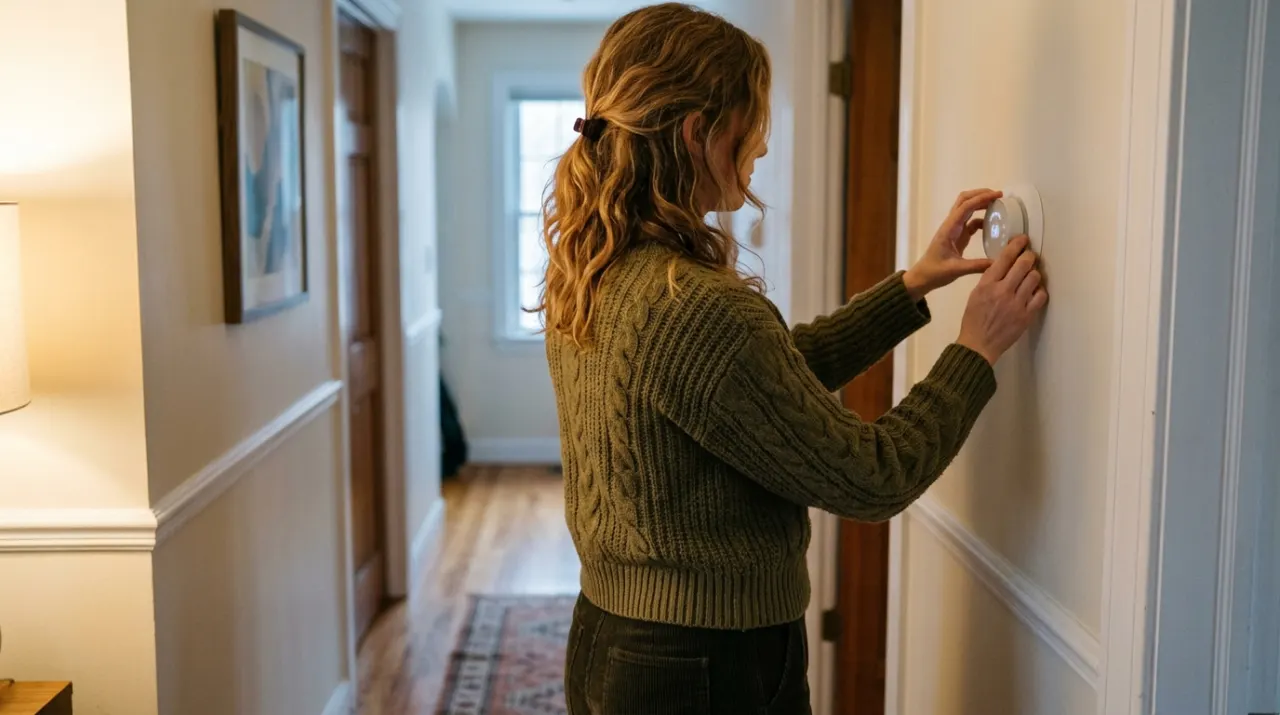
The one thing this formula ignores is the thermostat. A heater with a working thermostat does not run continuously — it cycles the element off once the room reaches the setpoint. If it runs 40 percent of the time, multiply the result by 0.4. In a reasonably insulated room at a modest setpoint, duty cycles of 30 to 50 percent are common, which turns that $61 into $18 to $31.
Cost by wattage and electricity rate
Cost per hour of continuous running, so you can find your own rate:
| Heater wattage | At 11¢/kWh | At 17¢/kWh | At 24¢/kWh | At 32¢/kWh |
|---|---|---|---|---|
| 400 W (personal / desk) | $0.04 | $0.07 | $0.10 | $0.13 |
| 600 W | $0.07 | $0.10 | $0.14 | $0.19 |
| 750 W (low setting) | $0.08 | $0.13 | $0.18 | $0.24 |
| 900 W | $0.10 | $0.15 | $0.22 | $0.29 |
| 1,200 W | $0.13 | $0.20 | $0.29 | $0.38 |
| 1,500 W (standard high) | $0.17 | $0.26 | $0.36 | $0.48 |
| 3,000 W (240 V garage unit) | $0.33 | $0.51 | $0.72 | $0.96 |
| 5,000 W (240 V shop unit) | $0.55 | $0.85 | $1.20 | $1.60 |
And what that becomes over a month of continuous running at 17 cents per kWh:
| Hours per day | 750 W | 1,500 W | 1,500 W at 40% duty cycle |
|---|---|---|---|
| 4 hours | $15.30 | $30.60 | $12.24 |
| 8 hours | $30.60 | $61.20 | $24.48 |
| 12 hours | $45.90 | $91.80 | $36.72 |
| 24 hours | $91.80 | $183.60 | $73.44 |
The right-hand column is the one that reflects real life for most households, and it is why an accurate thermostat is worth more than any efficiency badge. A per-session breakdown is in cost to run a space heater for 8 hours.
Why the heater type does not change the cost
Every electric resistance heater — ceramic, infrared, quartz, micathermic, oil-filled — converts essentially 100 percent of the electricity it draws into heat in the room. There is nowhere else for the energy to go. A 1,500-watt infrared heater and a 1,500-watt oil-filled radiator therefore produce the same heat and cost the same per hour, and any marketing claim to the contrary is describing how the heat feels, not what it costs.
Where the types genuinely differ is delivery, and that can affect how many hours you run the thing. Infrared warms objects directly in its path, so it makes a drafty garage tolerable in minutes where a ceramic heater would run all afternoon achieving nothing. An oil-filled radiator coasts for half an hour after switching off, so its effective duty cycle is lower. Those are real, indirect savings — but they come from runtime, not efficiency. The full comparison is in ceramic vs infrared vs oil-filled, and wattage by type is tabulated in how many watts a space heater uses.

Four things that genuinely lower the bill
- Use the low setting. Dropping from 1,500 to 750 watts halves the cost per hour outright. Bring the room up on high, then hold it on low — most people do the reverse and leave it on high all evening.
- Buy a heater with an accurate thermostat. Duty cycle is the largest variable in the whole calculation. Cheap thermostats overshoot and undershoot, running the element more than necessary. Owner reviews are unusually consistent on which models hold a setpoint and which swing.
- Zone heat deliberately. A space heater only saves money if you turn the central heating down while you use it. Heating one room to 70 while the house sits at 62 is cheaper than heating everything to 68; adding a space heater on top of an unchanged thermostat is a straight extra cost.
- Seal the room. A weatherstripped door and sealed window gaps cut the heat loss the heater is replacing, which shortens the duty cycle every hour it runs. Methods are in weatherstripping a door and window insulation kits.
Sizing matters too. An undersized heater in a large room runs at full power indefinitely and never satisfies, which is the worst possible cost profile — the math is in what size space heater for a room.
Against central heating and heat pumps
Electric resistance heating delivers exactly one unit of heat per unit of electricity. A heat pump moves heat rather than creating it and typically delivers two to four units per unit of electricity in mild conditions, which makes it fundamentally cheaper per unit of warmth. Natural gas heating is usually cheaper still per BTU in most of the country, though the gap varies by region and season.
So a space heater is not a cheap way to heat a house. It is a cheap way to heat one room while heating the rest of the house less. That distinction is the whole case for owning one, and it is where the saving lives or dies.
One cost you should never economize on
Nothing above is worth compromising safety for. Whatever you run, use a UL or ETL listed heater with tip-over and overheat shutoffs, plug it directly into a wall outlet — never an extension cord or power strip, which the CPSC rules out explicitly — and keep the 3 feet of clearance the US Fire Administration specifies from anything combustible. The full rules are in space heater safety, and overnight use specifically is covered in are space heaters safe to leave on overnight.
Where to go next
Model shortlists are in best space heaters and best energy efficient space heaters. If your breaker trips when the heater runs, see why a space heater trips the breaker. All under the heating and cooling hub.