 Garden
Affiliate Disclosure
Some links on this page are affiliate links. As an Amazon Associate, we earn from qualifying purchases — at no extra cost to you. We do not buy, test, or physically handle the products we cover; our rankings come from aggregated owner reviews, ratings and expert consensus. Commissions never change our verdicts. How we rank · full disclosure.
The short answer: fire safety authorities say no — the NFPA, the US Fire Administration and the US Consumer Product Safety Commission all advise turning portable heaters off when you leave the room or go to bed. The reason is in the data: NFPA analysis attributes the large majority of home heating fire deaths to space heaters, and the leading cause is combustible material within 3 feet of the unit. If you run one anyway, use a UL-listed oil-filled model with tip-over and overheat cutoffs, plugged straight into a wall outlet, on a hard floor, with 3 feet clear and a working smoke alarm.
We do not physically handle the products we rank; picks come from aggregated owner reviews and expert consensus — see how we rank. Model shortlists are in best space heater.
What actually causes space heater fires?
Not usually a defective heater. NFPA fire data consistently identifies the dominant factor as heating equipment too close to something that burns — bedding, upholstered furniture, clothing, curtains and mattresses. The second cluster is electrical: overloaded extension cords and power strips carrying a 12.5 amp continuous load they were never rated for. Both are placement and setup failures rather than product failures, which is why the same advice appears on every manufacturer manual and in CPSC guidance: three feet of clearance, wall outlet only, flat hard surface.
| Risk factor | Why it matters overnight | Mitigation |
|---|---|---|
| Bedding or clothing within 3 ft | Leading ignition path in fire statistics | Keep a 3 ft circle clear on all sides |
| Extension cord or power strip | 12.5 A continuous exceeds most cord ratings | Wall outlet only, no adapters |
| Carpet or rug placement | Blocks airflow, traps heat under the unit | Hard, level floor |
| Nobody awake to notice | Delays discovery by critical minutes | Working smoke alarm in the room |
| Exposed glowing element | Ignites contact material fast | Choose oil-filled or enclosed ceramic |
| Old unit, no safety certification | No tip-over or thermal cutout | UL, ETL or CSA mark only |

If I am going to do it anyway, how do I lower the risk?
Assume the heater will run unattended for eight hours and set it up accordingly. Pick a unit with an enclosed element, a real thermostat so it cycles rather than running flat out, and a shutoff timer. Put it on a hard floor away from the bed, not at the foot of it. Plug it directly into a wall receptacle on a circuit that is not already loaded, run it on the low or 750 watt setting rather than 1,500 where the room allows, and confirm the smoke alarm in that room works before the first cold night.
- Oil-filled column — coolest surface, no exposed element, holds heat between cycles.
- Wall outlet, nothing between — no strip, no cord, no travel adapter.
- Three feet clear on every side, including above.
- Built-in timer set to 1 to 2 hours rather than all night.
- Smoke alarm in the room, tested. A closed bedroom door slows discovery.
Type-by-type differences are in oil-filled vs ceramic space heater and ceramic vs infrared space heater.
What should I do instead?
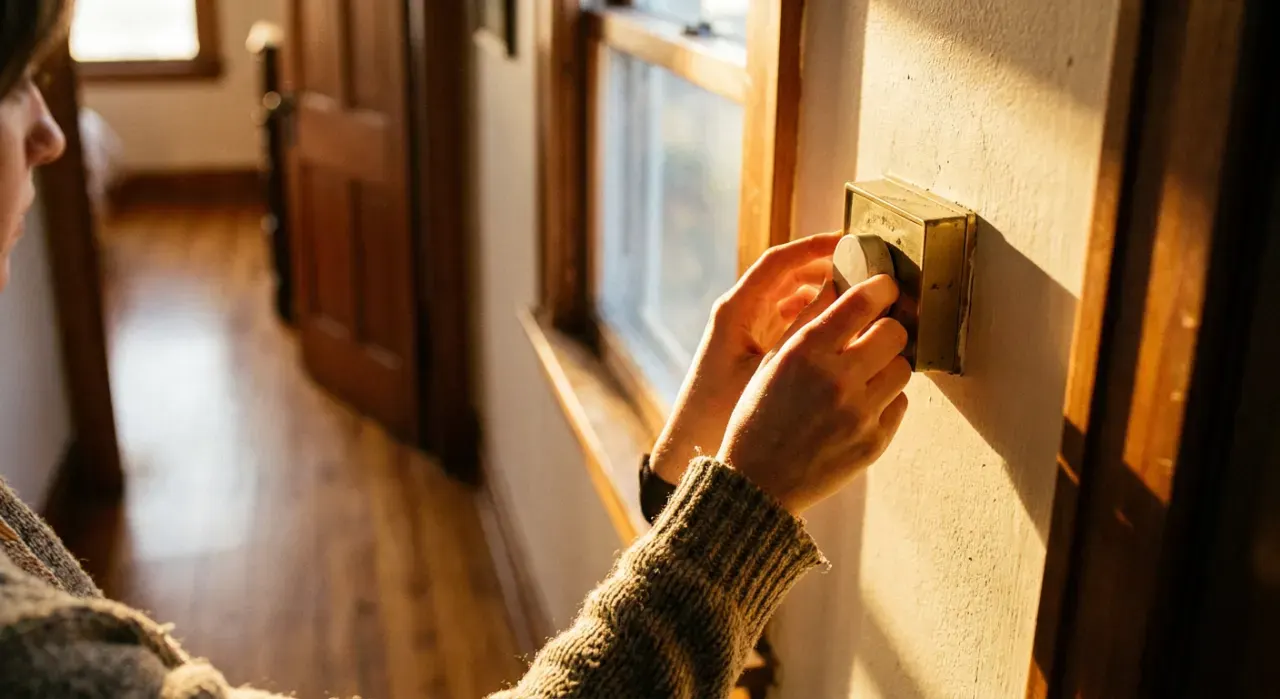
Solve the reason the room is cold. Most bedrooms that need a heater overnight are losing heat through an uninsulated attic above, a leaky window, or a door with a half-inch gap under it — all cheaper to fix once than to heat every night, and all safe to leave alone at 3am. A heated mattress pad or electric blanket draws well under 200 watts and warms the person rather than the room. If the room genuinely needs supplemental heat every winter, a permanently installed wall or baseboard unit is designed for unattended operation in a way a portable is not.
Practical fixes: how to weatherstrip a door, how to install a window insulation kit and how to insulate an attic. If a heater is still the answer, running costs are in how much does it cost to run a space heater for 8 hours, and low-draw picks in best energy efficient space heater. More in the heating and cooling hub.