 Garden
Affiliate Disclosure
Some links on this page are affiliate links. As an Amazon Associate, we earn from qualifying purchases — at no extra cost to you. We do not buy, test, or physically handle the products we cover; our rankings come from aggregated owner reviews, ratings and expert consensus. Commissions never change our verdicts. How we rank · full disclosure.
The short version: the phrase “energy-efficient space heater” is mostly a myth, so this page ranks on the three things that are not — thermostat accuracy, zone heating versus whole-room heating, and eco modes that step wattage down. Every resistive electric heater turns essentially all the electricity it draws into heat, so a $25 unit and a $250 unit both running at 1500 watts cost exactly the same per hour. Only control changes a bill.
Wattage is not an efficiency figure. It is a rate, in the same way that a tap's flow is not a measure of how well it fills a bucket. Anyone marketing a 1500-watt heater as more efficient than another 1500-watt heater is selling you something, and the correct response is to ignore the claim and go and look at the thermostat.
Why This Ranking Differs From Our Main Heater Page
Our best space heater roundup answers a different question — which heater suits which room — and it lands on the DREO Atom One, because for most households a fast, well-controlled ceramic fan heater is the right general-purpose buy. Apply the running-cost criteria instead and the order changes, because speed of heating stops mattering and duty cycle starts mattering.
On this page the De’Longhi Dragon Digital takes first place, and the Atom One drops to third. That is not a demotion: the Atom One is still the best genuine zone heater in the group, which is a real efficiency lever. It is simply that the De’Longhi combines a numeric digital thermostat, an ECO step-down and a heat-retaining oil column, and those three together keep the element switched off for a larger share of each hour than anything else here manages.
Top Picks at a Glance
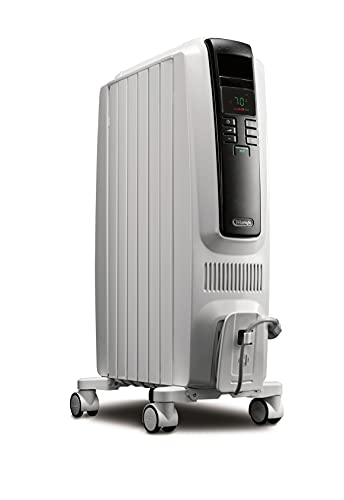
Our #1 Pick: De’Longhi Dragon Digital TRD40615E
Begin with what cannot be argued. At 1500 watts this heater draws 1.5 kilowatt-hours for every hour it runs flat out, and so does every other heater on this page, and so does the cheapest unit in the hardware store. There is no clever element, no efficient technology and no trick that changes that. The only variable anyone can sell you is how many of those hours the element is actually on.
The De’Longhi attacks that variable from three directions at once. Its digital thermostat takes a numeric setpoint rather than a position on an unmarked dial, so the heater knows what temperature it is aiming for and you know what you asked for — which is the difference between a room held at your target and a room quietly held four degrees above it all evening. Its ECO function steps wattage down as the room comes up rather than running at full draw until the thermostat trips, flattening the swing and shortening the full-power stretch. And its oil column keeps radiating heat into the room after the element has cut out, which means the room continues warming during the off portion of the cycle instead of immediately starting to cool.
Add the programmable 24-hour timer, which addresses the largest waste of all — a heater warming an empty room — and you have the machine on this page that spends the smallest fraction of each hour drawing power in a room you occupy for long stretches.
The honest weaknesses: it takes fifteen to twenty minutes to become useful, so it is a poor choice for a quick blast of heat; it is heavy even on casters; and it is the most expensive unit here, which matters given that the cheapest one costs the same per running hour.
Check price on Amazon → (paid link)
The Ranked Field
Best for the lowest share of each hour spent drawing power
- Digital thermostat with a numeric setpoint, not a blind dial
- ECO function steps wattage down once the room is up to temperature
- Programmable 24-hour timer so it is not heating an empty room
- Oil column keeps radiating after the element cuts out
Why buy it: it is not more efficient at the plug than anything else here — nothing is — but it holds a setpoint tightly, steps itself down, and keeps giving off heat while the element is off, so the element runs a smaller share of the hour.
Best for a room you want held at one temperature for hours
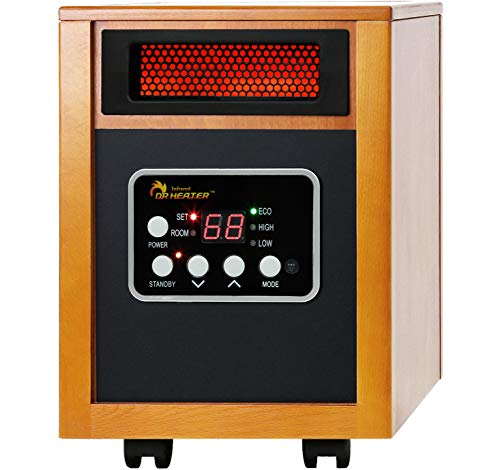
- Auto energy-saving mode adjusts output toward the setpoint
- Thermostat range from 50°F to 85°F with a numeric display
- Infrared quartz warms people and objects, not just air
- Quiet blower and caster wheels
Why buy it: owners consistently report it settling close to the number they set instead of overshooting and swinging, which is the single behavior that decides how much of each hour the element is actually drawing 1500 watts.
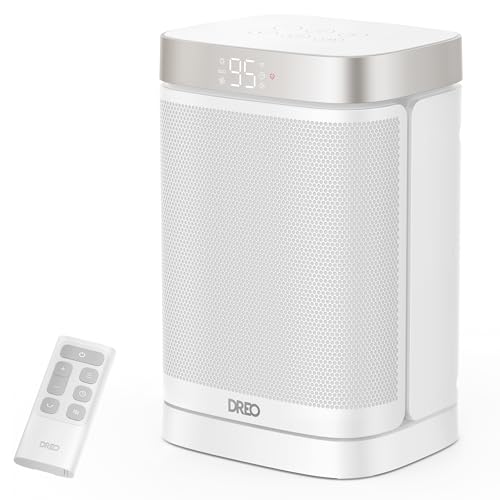
Best for heating the person and the chair rather than the whole room
- Precise digital thermostat with a 1-degree setpoint
- 70-degree oscillation keeps a seating area covered
- ECO mode eases output as the target is approached
- 1-to-12-hour timer
Why buy it: the cheapest real saving available is heating a zone instead of a house, and this is the unit best set up to do it — a tight thermostat plus an oscillation arc that covers a desk or a sofa without warming the corners nobody is in.

Best for set-and-forget heat that reduces its own wattage
- Four modes including an eco mode that steps wattage down
- Digital thermostat and 24-hour timer
- Radiant oil column, silent in operation
- Overheat and tip-over protection
Why buy it: the eco mode is the point: instead of holding 1500 watts until the thermostat trips, it drops to a lower wattage as the room comes up, which flattens the swing and shortens the full-power stretch.

Best for proving the point that watts are watts
- Exactly as efficient at the plug as every heater above it
- Two heat settings plus a fan-only mode
- Mechanical thermostat dial with no numbers
- Self-regulating ceramic element
Why buy it: this is the control case for the whole page: watt for watt while running it costs precisely the same as the $180 unit at the top, and the only thing it gives up is how tightly it holds a setpoint once you have found the right spot on an unmarked dial.

Best for the hours you want the ambience and not the heat
- Flame-only mode runs the 3D effect with the element off
- Thermostat control on the heating mode
- Rated for rooms up to about 1,000 sq ft
- Overheat protection and a cool-touch housing
Why buy it: running the flame effect with the heating element switched off draws a tiny fraction of the heating load, so the evenings when you want the look rather than the warmth cost almost nothing.
Quick Comparison
| Product | Best for | Rating | Price | Buy |
|---|---|---|---|---|
| De’Longhi Dragon Digital Oil Filled Radiator Heater TRD40615E | Best Thermostat & ECO Control | — | Check (paid link) | |
| Dr Infrared Heater DR-968 Portable Space Heater, 1500-Watt | Most Accurate Setpoint Hold | — | Check (paid link) | |
| DREO Atom One Space Heater with Digital Thermostat | Best True Zone Heater | — | Check (paid link) | |
| DREO Oil Filled Radiator Heater with 4 Modes | Best Eco Mode Step-Down | — | Check (paid link) | |
| Lasko Ceramic Space Heater with Adjustable Thermostat | The Honest Control Case | — | Check (paid link) | |
| duraflame Freestanding Electric Fireplace Stove Heater | Best Look-Without-Heat Mode | — | Check (paid link) |
How We Rank on Running Cost
We do not buy, test or physically handle space heaters. Because there is no efficiency difference at the plug to measure, the order on this page is set by control features and by what owners report about them. Thermostat accuracy is weighted first: a numeric digital setpoint ranks above a marked dial, which ranks above an unmarked one, and owner reports of overshoot or drift pull a unit down. Zone-heating suitability is second — whether the heater can warm a person and a seating area effectively enough that you can turn the central heat down, which is where the large savings actually live. Eco and step-down modes are third, judged on whether the mode reduces wattage rather than simply naming itself eco. Heat retention, timers and scheduling then separate units that are otherwise level. Aggregated owner ratings and recurring complaints in critical reviews are read across all of it. Prices were current at the time of writing. Full method on how we rank.
The Heaters, Reviewed on Control
1. De’Longhi Dragon Digital TRD40615E — Best Thermostat & ECO Control
Covered above. The case in one line: numeric digital thermostat, an ECO function that steps wattage down, a programmable timer, and an oil column that keeps radiating while the element is off. What owners praise: silence, how flat it holds a room, the programmable timer, and safety around children. What owners complain about: the fifteen-to-twenty-minute warm-up, the weight, and the price. The lowest duty cycle here in a room you sit in for hours.
2. Dr Infrared DR-968 — Most Accurate Setpoint Hold
The second-place case is almost entirely about the thermostat. Owners consistently describe this unit settling close to the number they set rather than overshooting and then swinging back, and that behavior is what decides how much of each hour the element spends at 1500 watts. Its auto energy-saving mode adjusts output as the room approaches target rather than running flat out to a hard cut-off. The infrared element is a secondary efficiency argument: because it warms people and objects directly, you feel comfortable at a lower air temperature, so the setpoint you choose can be lower in the first place. What owners praise: how steadily it holds a temperature, the quiet blower, and effectiveness in drafty rooms. What owners complain about: it is bulky and heavy, and it feels slower because it warms you rather than the air.
3. DREO Atom One — Best True Zone Heater
The best zone heater in the group, and zone heating is the biggest saving on the page. A precise digital thermostat lets you set a genuinely low target and trust it, and the 70-degree oscillation covers a desk, a chair or a two-seater sofa without pushing heat into corners nobody occupies. Used the way it should be — central heat down, one occupied area warmed, door shut — it produces a larger reduction in a bill than any thermostat refinement further up this list. What owners praise: the accurate thermostat, the timer, and how little it seems to run once an area is warm. What owners complain about: it is a fan heater so it is audible, the first-use dust smell, and a display light that is noticeable in a dark room.
4. DREO Oil Filled Radiator — Best Eco Mode Step-Down
The clearest example on the page of what an eco mode should do. Rather than holding full wattage until the thermostat trips and then stopping dead, its eco setting steps the draw down as the room comes up to temperature, which both flattens the temperature swing and cuts the total time spent at full power. Combine that with a digital thermostat, a 24-hour timer and the same heat-retention advantage the De’Longhi has, and you get most of the winner's behavior for less money. What owners praise: silence, the mode selection, the remote, and even heat. What owners complain about: slow warm-up, weight, and controls that take a read of the manual to understand.
5. Lasko Ceramic Space Heater — The Honest Control Case
This unit is on the page to keep everything above it honest. Running at 1500 watts it costs precisely the same per hour as the heater at the top of this list, and it converts electricity into heat with exactly the same effectiveness, because both of them convert essentially all of it. There is no efficiency gap to find. What it gives up is entirely a control story: a mechanical thermostat dial with no numbers means finding the setpoint is trial and error, and a dial set slightly too high holds the room a couple of degrees warmer than you wanted for the whole evening — which is where the real difference in a season's bill comes from. What owners praise: the price, portability, the fan-only mode, and that it simply keeps working. What owners complain about: noise for its size, and the unmarked dial.
6. duraflame Freestanding Electric Fireplace Stove — Best Look-Without-Heat Mode
A different kind of saving, and a legitimate one. The flame effect runs independently of the heating element, so on the many evenings when what you actually want is the look of a fire rather than another 1500 watts in the room, you can have it for a tiny fraction of the load. The heating mode itself is thermostat-controlled and behaves like any other 1500-watt heater, because it is one. What owners praise: the flame effect, the flame-only option, and that it heats a room properly when asked to. What owners complain about: the blower is audible, and the heat output is exactly what 1500 watts gives you rather than the roomful the styling suggests.
How to Choose on Running Cost
Start by refusing to shop on efficiency claims. There is nothing to compare. Turn the box over and look for three things instead: a numeric digital thermostat, an eco or step-down mode that reduces wattage rather than just switching off, and a timer. A heater with all three will cost less over a winter than a heater with none, and the mechanism is entirely duty cycle — how much of each hour the element is drawing power.
Then decide whether you are heating a zone or a room. This is the decision with the biggest number attached to it. Heating the person and the chair with an oscillating ceramic unit while the furnace sits five to eight degrees lower is a genuine, large saving. Heating three rooms with space heaters while the furnace still cycles normally is a bill increase dressed up as a saving. If you are heating a zone, the DREO Atom One is the tool; if you are holding one room warm for a whole evening, the De’Longhi or the Dr Infrared.
Then match the heater to how long you will sit there. Heat retention only pays over long occupancy: an oil column that keeps radiating after the element cuts out is worth real money across a four-hour evening and worth nothing at all for a twenty-minute warm-up. Conversely a ceramic fan heater gives you useful heat in under two minutes, which matters if you are in and out.
Then do the arithmetic on your own rate. Cost is watts times hours times the rate on your bill, and the only term you control is hours. The dollar figures are worked through in what it costs to run a space heater for 8 hours and space heater running costs, the wattage question is covered in how many watts a space heater uses, and sizing is in what size space heater for a room.
What Owners Actually Complain About
The running-cost complaints cluster into three, and none of them are about the element. Bills higher than expected almost always trace to a heater running continuously rather than on a thermostat, or to space heaters being added to the furnace rather than substituted for part of it. Thermostat drift and overshoot is the complaint that actually costs money, and it concentrates in models with unmarked dials, where a room held three degrees too warm for an evening is invisible until the bill arrives. Disappointment with heat output is the third, and it is a physics complaint rather than a product fault: 1500 watts is about 5,100 BTU per hour, which will not heat a large open-plan space no matter whose badge is on it. Whichever you buy, the CPSC rules still bind: wall outlet only, never a cord or power strip, and three feet of clearance from anything that can burn.
The Verdict
Efficiency is the wrong word for what you are buying. Every heater here converts essentially all the electricity it draws into heat, so choose on control instead, and the De’Longhi Dragon Digital is the pick — a numeric digital thermostat, an ECO step-down, a programmable timer and an oil column that keeps radiating after the element is off. Take the Dr Infrared DR-968 if holding one temperature precisely for hours is the priority, the DREO Atom One if you are heating a zone rather than a room, and the DREO radiator for the eco step-down at a lower price. The Lasko is on this page to make the point that it costs the same per hour as all of them, and the duraflame is for the evenings you want the flames without the wattage. For the general room-by-room ranking rather than the running-cost one, see our best space heater roundup — it reaches a different answer for a different reason. Check price on Amazon → (paid link)