 Garden
Affiliate Disclosure
Some links on this page are affiliate links. As an Amazon Associate, we earn from qualifying purchases — at no extra cost to you. We do not buy, test, or physically handle the products we cover; our rankings come from aggregated owner reviews, ratings and expert consensus. Commissions never change our verdicts. How we rank · full disclosure.
The short answer: an electric fireplace draws about 1,500 watts with the heater running and 10 to 60 watts for the flame effect alone. At the US average residential rate of roughly 17 cents per kWh (Energy Information Administration), that is about 26 cents an hour heating and well under a penny an hour for the visuals. Four hours an evening through a five-month season works out to roughly $190. It is not expensive per hour — it becomes expensive when it runs all day or heats more than one room.
We do not physically handle the products we rank; rankings come from aggregated owner reviews and expert consensus — see how we rank. Model shortlists are in best electric fireplace.
What does it actually cost per hour and per month?
Multiply kilowatts by your rate. A 1,500-watt unit is 1.5 kW, so at 17 cents per kWh it costs 25.5 cents an hour at full heat. The low heat setting on most models is 750 watts, halving that. Rates vary enormously by state — the EIA puts residential electricity near 11 cents per kWh in Idaho and above 30 cents in California and much of New England, so run the math on your own bill rather than on a national average.
| Mode | Watts | Cost per hour at 17¢/kWh | 4 h/day for 30 days | Season (4 h/day, 5 months) |
|---|---|---|---|---|
| Flame effect only | 10 – 60 W | $0.002 – $0.010 | $0.20 – $1.22 | $1.02 – $6.12 |
| Low heat | 750 W | $0.128 | $15.30 | $76.50 |
| High heat, 120 V | 1,500 W | $0.255 | $30.60 | $153.00 |
| 240 V hardwired | 3,000 – 5,000 W | $0.510 – $0.850 | $61.20 – $102.00 | $306.00 – $510.00 |
The 240-volt row is worth flagging because it surprises people. Large built-in linear fireplaces are often available in a hardwired 240-volt version rated 3,000 watts or more, and they cost two to three times as much per hour to run as the plug-in kind. They also require a dedicated circuit installed by a licensed electrician.

How does it compare to other room heaters?
Against another resistive heater, it is a wash. Every 1,500-watt electric heater — fireplace, ceramic tower, oil-filled radiator — produces exactly the same heat for exactly the same money, because they all convert electricity to heat at essentially 100 percent. The differences are in how the heat is delivered and how it feels, not in the running cost. Against a heat pump or gas, an electric fireplace is expensive.
- Vs a space heater: identical cost at identical wattage. Choose on placement, appearance and safety features, not efficiency. See energy-efficient space heaters.
- Vs a ductless mini split: a heat pump delivers two to four units of heat per unit of electricity, so it costs roughly a third to a half as much per BTU. Installed cost is the barrier — see mini split installation cost.
- Vs natural gas central heat: gas is typically cheaper per delivered BTU across most of the US, but it heats the whole house. Zone heating one occupied room is where the electric fireplace wins.
How do I keep the running cost down?
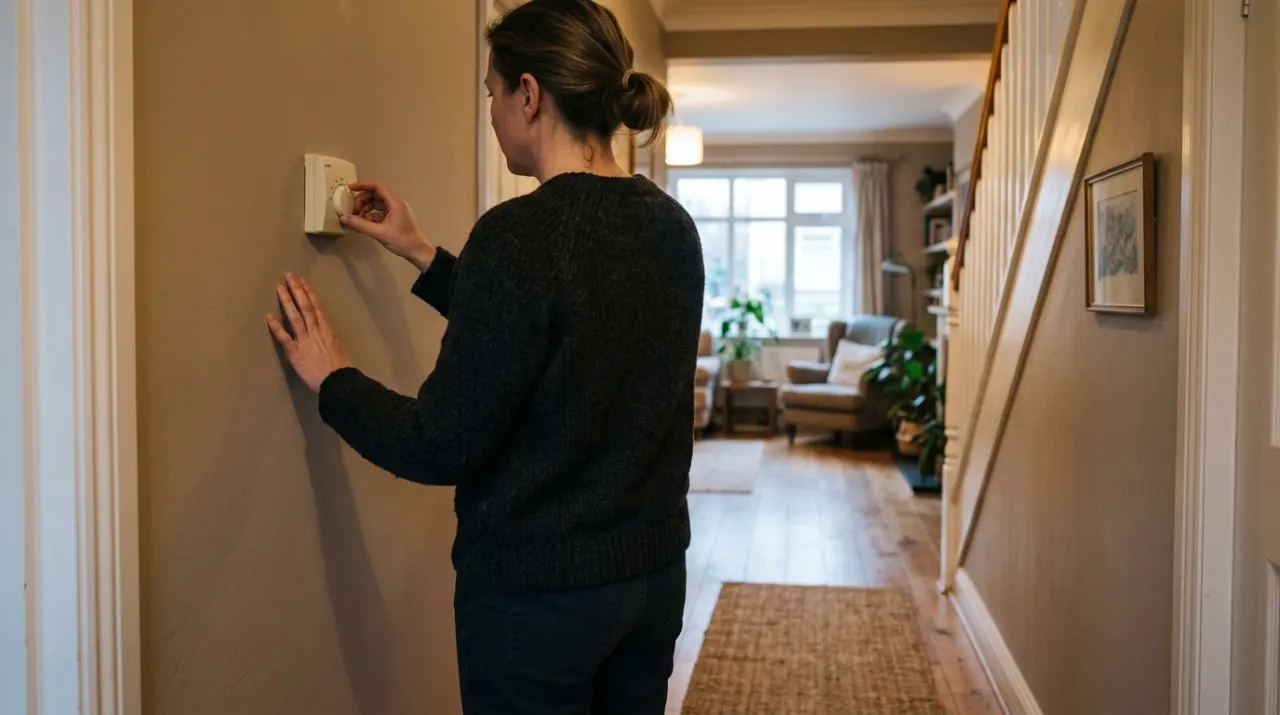
Use it as a zone heater and lower the thermostat elsewhere. That is the only strategy that produces real savings: drop the central setpoint several degrees, heat the room you are in, and let the fireplace cover the difference. Owners consistently report this pattern working well in a living room or a finished basement, and consistently report disappointment when a fireplace is expected to warm an open-plan floor on its own.
Beyond that, use the thermostat if the unit has one rather than running the element continuously, run flame-only when you want atmosphere rather than heat, and check what the unit realistically covers — most 1,500-watt models are rated for about 400 square feet, and the practical limits are covered in how many square feet an electric fireplace heats. If yours is not keeping up at all, start with why is my electric fireplace not heating, and for the buying decision see are electric fireplaces worth it.