 Garden

Affiliate Disclosure
Some links on this page are affiliate links. As an Amazon Associate, we earn from qualifying purchases — at no extra cost to you. We do not buy, test, or physically handle the products we cover; our rankings come from aggregated owner reviews, ratings and expert consensus. Commissions never change our verdicts. How we rank · full disclosure.
The short answer: a typical tower fan draws 40 to 60 watts on high and 15 to 30 watts on low. Running 8 hours a night that is about 0.4 kWh a night, 12 to 15 kWh a month and roughly $2.10 to $2.60 a month at the US average residential rate of 17.5 cents per kWh (EIA). Across a four-month summer, expect $8 to $11 total. Large or bladeless models reach 65 watts and small ones sit closer to 25.
To put that in context, a tower fan running all night uses about the same electricity as a single 40-watt light bulb, and roughly one twentieth of what a window air conditioner uses over the same period. We do not physically handle the fans we rank; our picks come from aggregated owner reviews and expert consensus, described in how we rank, with the ranked field in best tower fans.
Consumption by wattage and run time
| Draw | Per 8-hr night | Per 24 hr | Per month (8 hr/night) | Per month (24/7) |
|---|---|---|---|---|
| 25 W (low) | 0.20 kWh | 0.60 kWh | 6.0 kWh | 18 kWh |
| 40 W (medium) | 0.32 kWh | 0.96 kWh | 9.6 kWh | 29 kWh |
| 50 W (typical high) | 0.40 kWh | 1.20 kWh | 12.0 kWh | 36 kWh |
| 65 W (large model, high) | 0.52 kWh | 1.56 kWh | 15.6 kWh | 47 kWh |
| 100 W (very large or bladeless, max) | 0.80 kWh | 2.40 kWh | 24.0 kWh | 72 kWh |
What that costs by state rate
Use the all-in rate from your own bill — total charge divided by kWh used — which typically runs 15 to 40 percent above the advertised supply rate. All figures below are for a 50-watt fan.
| Rate per kWh | Per 8-hr night | Per month, 8 hr/night | Per month, 24/7 | Per 4-month summer, 8 hr/night |
|---|---|---|---|---|
| 11¢ — WA, ID, ND | $0.04 | $1.32 | $3.96 | $5.28 |
| 14¢ — TX, TN, MO | $0.06 | $1.68 | $5.04 | $6.72 |
| 17.5¢ — US average | $0.07 | $2.10 | $6.30 | $8.40 |
| 25¢ — NY, NH, VT | $0.10 | $3.00 | $9.00 | $12.00 |
| 32¢ — CA, MA, CT | $0.13 | $3.84 | $11.52 | $15.36 |
| 44¢ — HI | $0.18 | $5.28 | $15.84 | $21.12 |
Rates are 2026 US residential averages. The formula is watts ÷ 1,000 × hours × rate per kWh. Whatever the number, a fan only earns it while someone is in the room: as ENERGY STAR puts it, fans cool people, not rooms.

Against the alternatives
| Appliance | Typical draw | 8 hours | Cost, 8 hr at 17.5¢ |
|---|---|---|---|
| Ceiling fan | 15 – 90 W | 0.12 – 0.72 kWh | $0.02 – $0.13 |
| Tower fan | 40 – 60 W | 0.32 – 0.48 kWh | $0.06 – $0.08 |
| Box or pedestal fan | 50 – 100 W | 0.40 – 0.80 kWh | $0.07 – $0.14 |
| Evaporative cooler | 100 – 300 W | 0.8 – 2.4 kWh | $0.14 – $0.42 |
| Window air conditioner, 8,000 BTU | 700 – 900 W | 5.6 – 7.2 kWh | $0.98 – $1.26 |
| Portable air conditioner | 900 – 1,400 W | 7.2 – 11.2 kWh | $1.26 – $1.96 |
| Central air conditioning, 3 ton | 3,000 – 3,500 W | 24 – 28 kWh | $4.20 – $4.90 |
The useful takeaway is not that a fan is cheap — it is that a fan changes what temperature feels comfortable. The wind-chill effect from moving air makes most people feel about 4°F cooler, so a fan running alongside air conditioning lets you raise the setpoint by roughly that much. On a central system that is a saving of several dollars a day against a fan cost of about seven cents. Remember it only works on people, so switch fans off in empty rooms.
Small savings worth knowing
- Use low or medium overnight. Dropping from 50 W to 25 W halves the draw and is usually the more comfortable setting anyway.
- Use the sleep timer so it does not run through the morning in an empty room.
- Clean it. A dust-loaded impeller does not draw meaningfully more power but delivers noticeably less air, so you end up running a higher speed for the same effect — see how to clean a tower fan.
- Unplug over winter if the model has a remote and a standby display. It is only 0.5 to 2 watts, but it is 24 hours a day for six months.
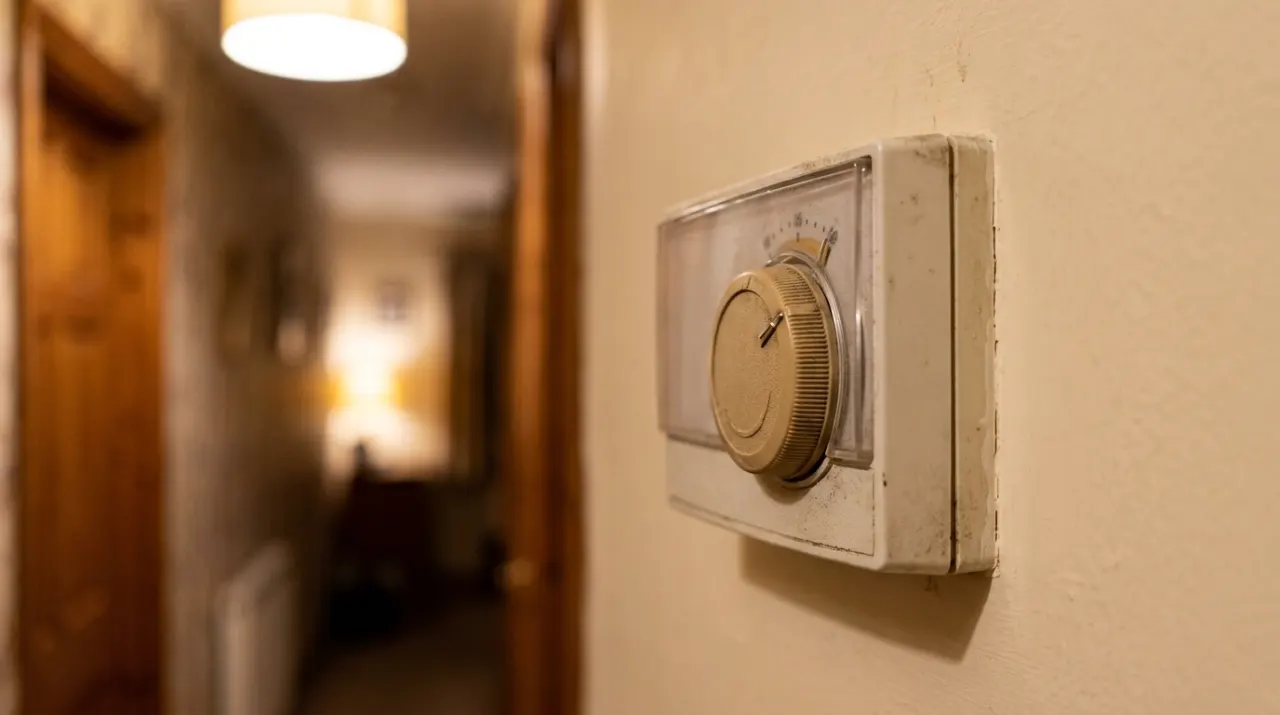
- Pair it with the thermostat. Fans plus a higher setpoint is where the money actually is.
For the wattage detail see how many watts a tower fan uses, and for what a fan realistically does to a room, do tower fans cool a room. If you are choosing a type, tower fan vs box fan and bladeless vs tower fan cover the trade-offs, and the setpoint side is in the best temperature to set AC to save money. Everything else is at the heating and cooling hub.