 Garden

Affiliate Disclosure
Some links on this page are affiliate links. As an Amazon Associate, we earn from qualifying purchases — at no extra cost to you. We do not buy, test, or physically handle the products we cover; our rankings come from aggregated owner reviews, ratings and expert consensus. Commissions never change our verdicts. How we rank · full disclosure.
As a starting point, hang full-spectrum LED panels and bars 12 to 18 inches above the top of the plant, high-power LEDs 16 to 24 inches, and small seedling lights 6 to 12 inches. The right distance depends mainly on the light's type and intensity, not the plant. LEDs run cool, so scorch from heat is rare, but too much intensity too close still bleaches and crisps top leaves, while too far makes plants stretch and pale. The reliable method is to start in the range for your light and then read the plant's response.
What distance for each type of light?
Intensity is what matters, and it varies by light type more than by plant. Start in these ranges, measured from the light to the top of the canopy.
| Light type | Starting distance above canopy |
|---|---|
| Small seedling / clip lights | 6–12 in |
| Full-spectrum LED panels & bars | 12–18 in |
| High-power / high-wattage LEDs | 16–24 in |
| Fluorescent (T5) tubes | 6–12 in (they run cool and weaker) |
| HID (HPS/MH, hot) | 24–36+ in (heat and intensity) |
These are starting points. A PAR or PPFD meter measures light at the canopy directly if you want precision, but for houseplants, adjusting to the plant's response works fine.
How do you tell it is too close?
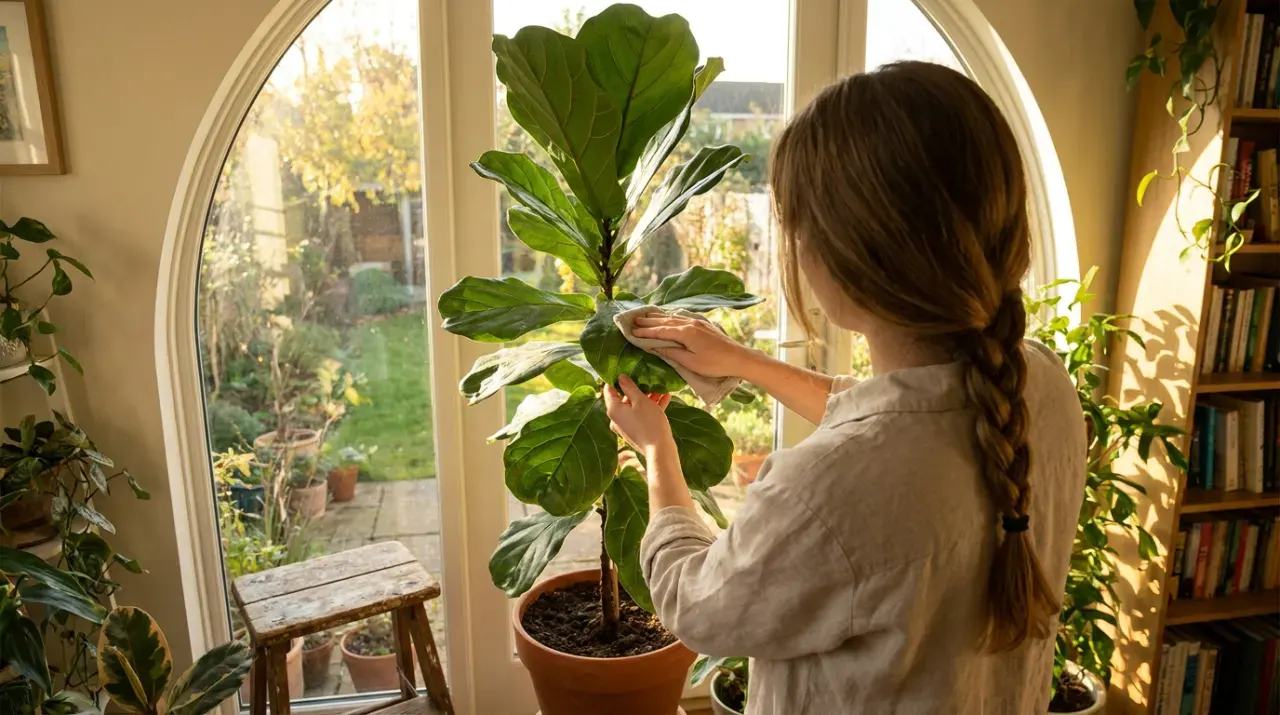
Too close means too much intensity, and the damage always appears at the top of the plant, nearest the light. Look for bleached or washed-out upper leaves, brown crispy tips and edges, and leaves that curl or cup away from the light. With hot HID lamps you may also see literal heat scorch. Because bleaching can look like a nutrient deficiency, check the light distance before you reach for fertilizer — if the pale, crisped growth is all at the top, distance is the likely cause. Raise the light a few inches and watch for a week.
How do you tell it is too far?
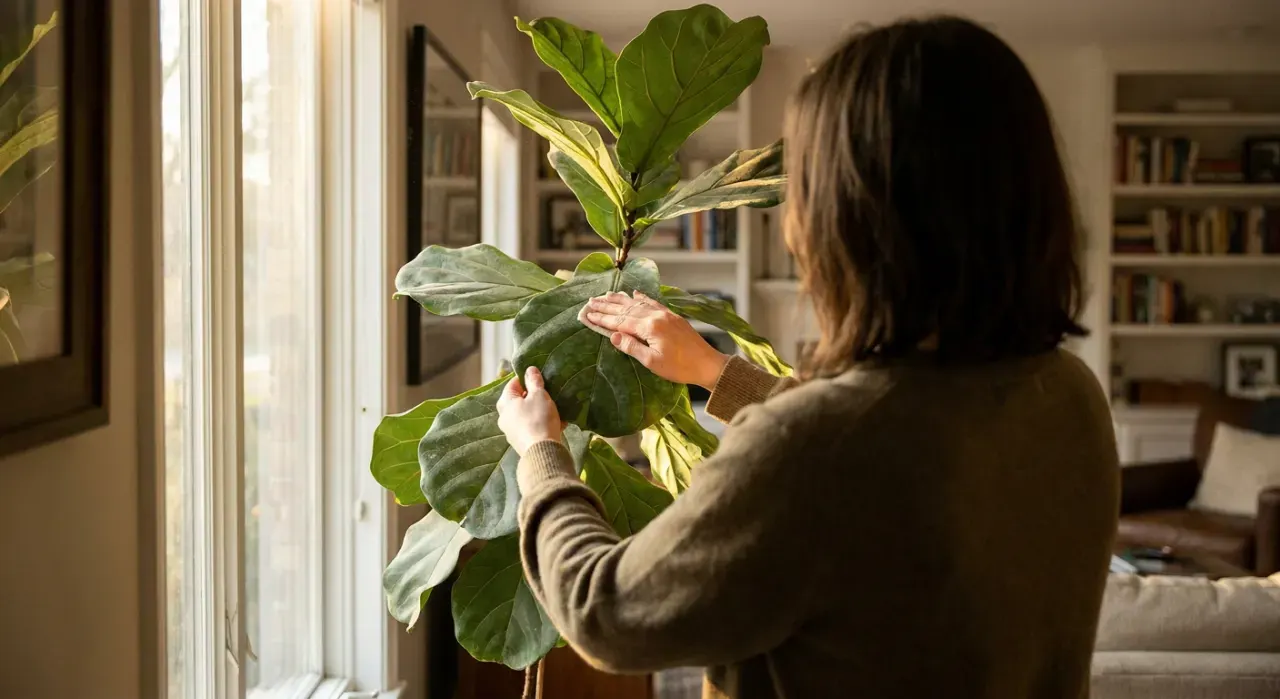
Too far means too little light, and plants respond by stretching to reach it — a process called etiolation. The signs are long gaps between leaves (leggy growth), thin weak stems, small or pale leaves, and seedlings that flop over rather than standing sturdy. This is by far the more common problem with houseplants, because people worry about scorching and hang lights too high. The fix is to lower the light into the recommended range or add more light. Seedlings stretch fastest, which is why their lights sit closest.
Distance changes as the plant grows
The gap you set on day one does not stay correct. As the plant grows toward a fixed light, the canopy-to-light distance shrinks, so what started as an ideal 18 inches can become a too-close 8 inches over a few weeks — especially with fast seedlings. This is why experienced growers hang lights on adjustable ropes, chains or a shelf they can raise. Check the gap every week or two during active growth and lift the light to keep the canopy in the target range. Reading the plant beats trusting the original number.
The bottom line
Start in the range for your light type — roughly 12 to 18 inches for a standard LED panel — then let the plant tell you: stretching means lower it, bleaching at the top means raise it, and raise it again as the plant grows. Distance is only half of grow-light setup; the other half is duration, covered in how many hours a grow light should run. For how much light different plants actually need, see how much light houseplants need, and for choosing a fixture, our best grow lights roundup.
We never buy, test or physically handle the products we rank. Recommendations come from aggregated owner reviews, star ratings, review volume and expert consensus — see how we rank.
More from this hub: Houseplants & Indoor Greenery · Best grow lights · Grow light hours per day · How much light houseplants need · How we rank