 Garden

Affiliate Disclosure
Some links on this page are affiliate links. As an Amazon Associate, we earn from qualifying purchases — at no extra cost to you. We do not buy, test, or physically handle the products we cover; our rankings come from aggregated owner reviews, ratings and expert consensus. Commissions never change our verdicts. How we rank · full disclosure.
The short answer: water a fiddle leaf fig about every 7 to 10 days, but let the soil decide — water only when the top 2 inches feel dry. Water thoroughly until it runs out the drainage holes, then empty the saucer so the roots never sit in water. In the bright, warm months it may need water weekly; in winter, every 10 to 14 days or less. The two things fiddle leaf figs demand are consistency and good drainage: erratic watering triggers leaf drop, and soggy soil causes the root rot that shows up as brown spots and falling leaves. Overwatering harms them far more than the occasional dry spell.
Fiddle leaf figs (Ficus lyrata) have a reputation for being temperamental, but most of that comes down to watering and stability. This guide reflects horticultural consensus and the patterns owners report, not first-hand growing on our part; see how we rank. For the broader logic, see how often to water houseplants.
The finger test beats a schedule
A fiddle leaf fig's water needs shift constantly with light, temperature, humidity, pot size, and season, so no fixed schedule stays right for long. The finger test adapts automatically. Push a finger 2 inches into the soil: dry means water, still moist means wait and check again in a few days.
Two inches is the depth that matters, because the surface dries out days before the root zone. Judging by the top alone is the classic route to overwatering. If you prefer a tool, a moisture meter pushed to root depth gives the same read, and simply lifting the pot works once you learn its dry versus watered weight. The habit to build is checking before watering, every time, rather than watering by the calendar.
How to water a fiddle leaf fig properly
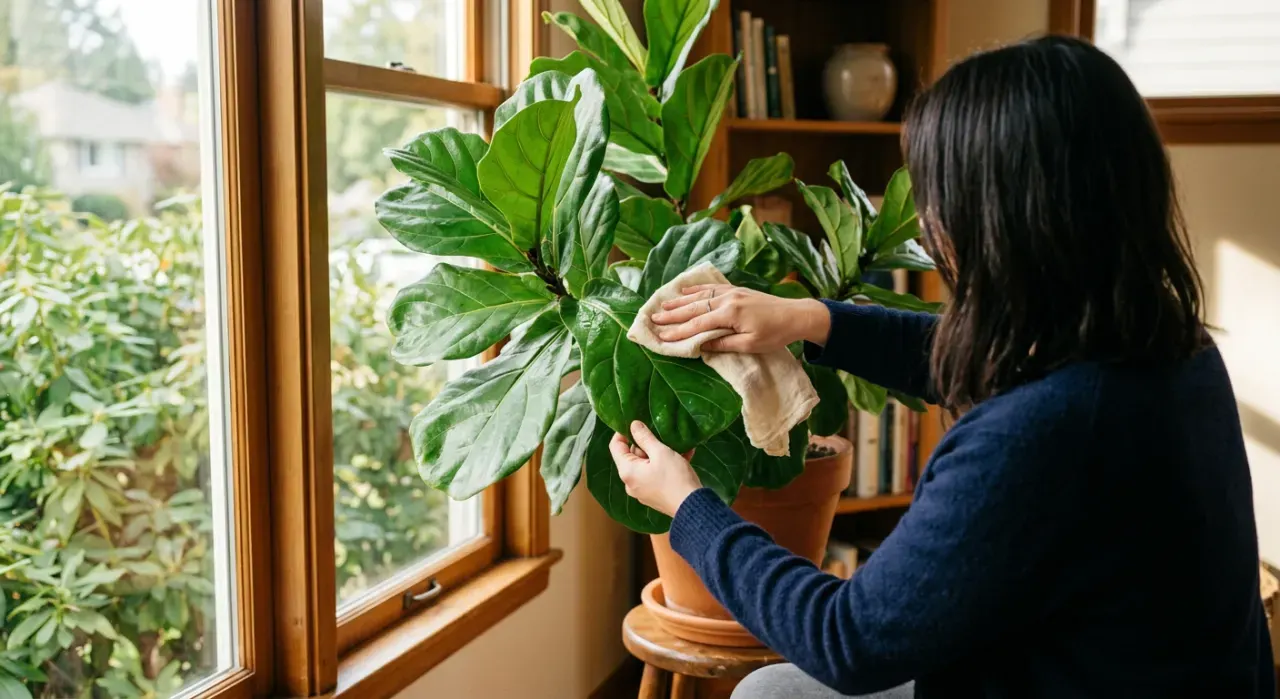
When it is time, water deeply. Pour evenly over the whole surface until water flows freely from the drainage holes, which soaks the entire root ball and flushes out mineral salts that otherwise build up and brown the leaves. Let it drain fully, then tip out any water in the saucer.
Deep, thorough watering followed by a real dry-down is exactly the rhythm these plants want. The opposite habit — frequent small splashes — wets only the top layer, leaving deep roots dry while the surface stays damp, which stresses the plant and invites fungus gnats and rot. Use room-temperature water, and if your tap water is heavily chlorinated, letting it stand overnight is gentler on a sensitive fig.
Watering a fiddle leaf fig by season
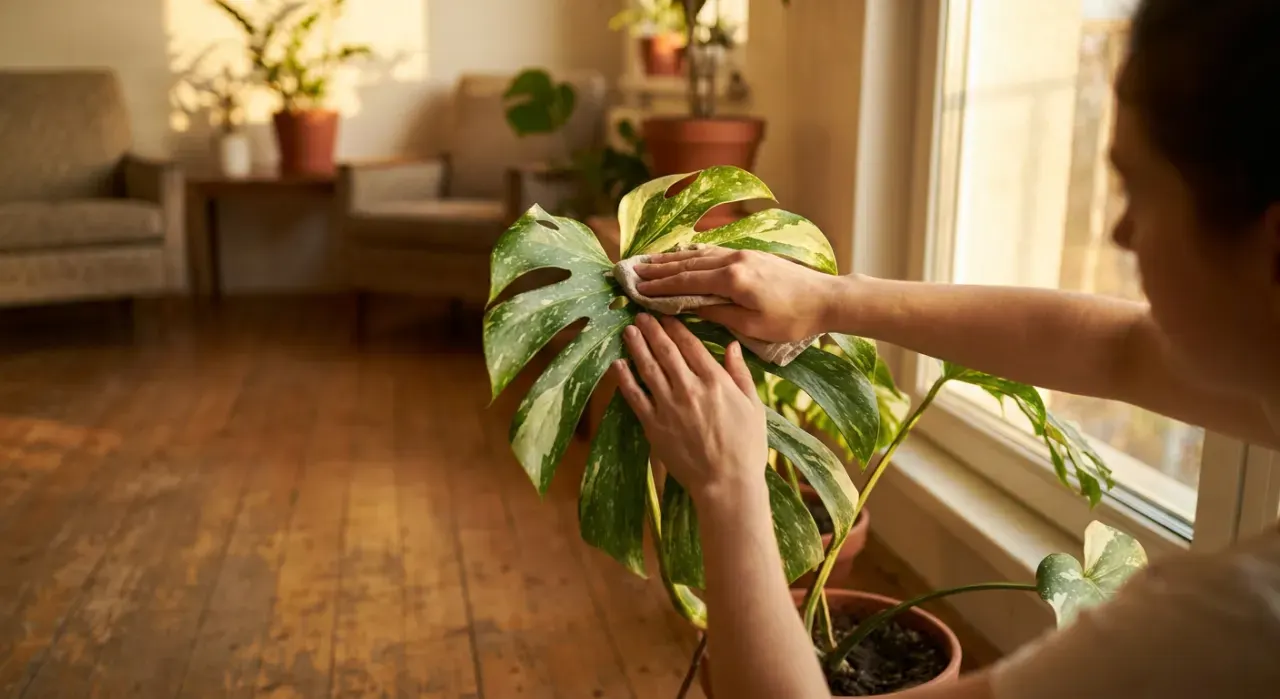
Adjusting for the seasons is one of the most important things you can do, because a fiddle leaf fig drinks far more in summer than in winter, and a summer routine continued into winter is a common way to rot one.
| Season | Typical frequency | Why |
|---|---|---|
| Spring | Every 7 to 10 days | Growth resumes, water use rises |
| Summer | Every 7 days | Peak light, heat, and growth |
| Fall | Every 10 to 12 days | Growth slows with the light |
| Winter | Every 10 to 14 days or more | Semi-dormant, low light, slow drying |
These are starting points, not rules. Always confirm with the finger test, and expect to water clearly less in winter, when the soil holds moisture much longer in cool, dim conditions.
What changes how often you water a fiddle leaf fig
- Light. A fiddle leaf fig in bright light grows faster and dries faster, so it drinks more often than one in a dimmer spot. These plants want lots of bright, indirect light — see how much light do houseplants need.
- Pot type and size. Terra cotta dries faster than plastic or glazed ceramic; a large pot dries slower than a small one.
- Soil mix. A chunky, well-draining mix needs more frequent watering but protects against rot; a dense mix stays wet and risks it.
- Temperature and humidity. Warm, dry rooms dry the soil quickly; cool or humid rooms slow it down.
- Plant and root size. A large, mature fig with a full root system uses water faster than a young one.
Why consistency matters so much
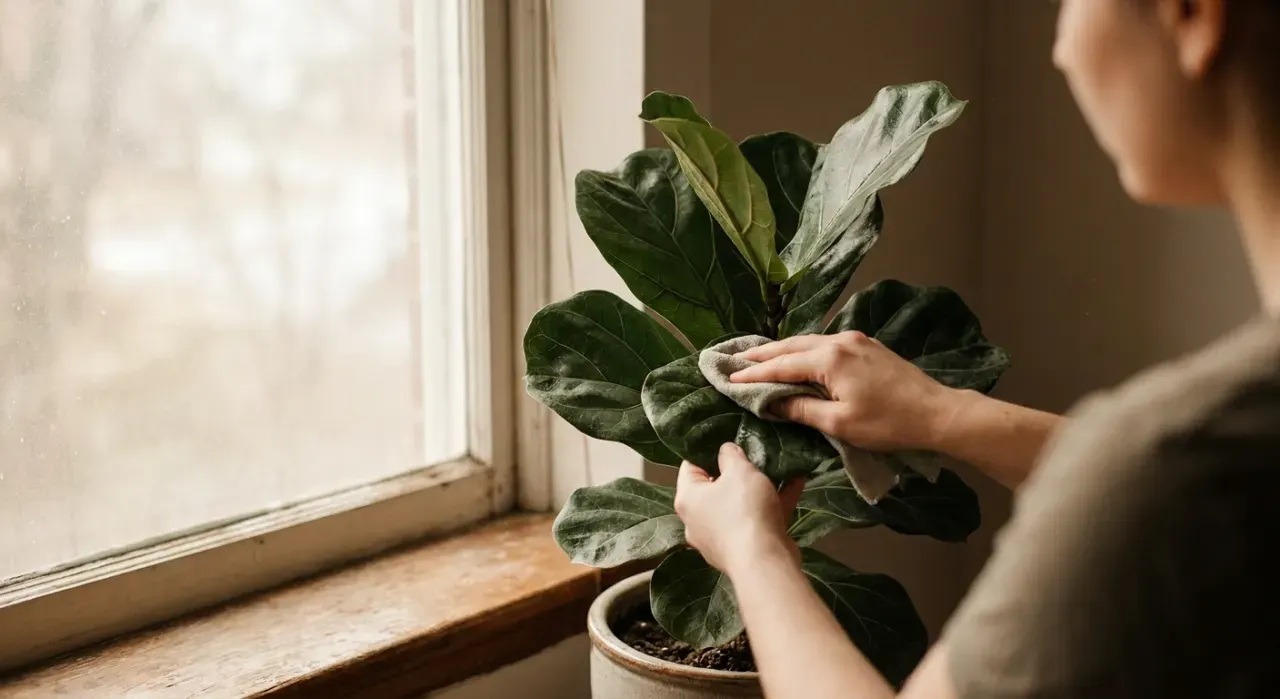
More than most houseplants, fiddle leaf figs reward stability and punish sudden change. They are notorious for dropping leaves after being moved, after a swing in light or temperature, or after an erratic watering pattern of drought followed by flooding. The single best thing you can do is keep the plant in one bright, stable spot and water on a steady, soil-checked rhythm.
Avoid the boom-and-bust cycle of forgetting the plant, then overcompensating with a heavy soak. Roots that go from bone dry to waterlogged repeatedly are stressed roots, and stressed roots drop leaves. A fiddle leaf fig that gets consistent light, consistent watering, warmth, and no cold drafts is a far happier plant than one that is fussed over unpredictably.
Reading the leaves: over vs underwatering
The leaves tell you which way you have erred, but the signs overlap, so check the soil to be sure.
| Sign | Overwatering | Underwatering |
|---|---|---|
| Leaf spots | Dark brown, from the center or base, spreading | Brown, dry, at the edges and tips |
| Soil | Wet, musty, slow to dry | Dry, pulling away from the pot |
| Leaf feel | Soft, limp, may yellow | Crispy, curling |
| Leaf drop | Yes, often lower leaves | Yes, often with browning |
| Fix | Stop watering, dry out, check roots | Soak thoroughly; bottom-water if bone dry |
If the soil is wet and you see dark spreading spots, ease off immediately and check for root rot — the recovery steps are in how do you save an overwatered plant. If the soil is dry with crispy edges, the plant simply needs a good, thorough drink and a more consistent routine. When repotting a rot-affected fig, use a well-draining mix from best potting mix for houseplants.
Get the finger test, seasonal adjustment, and consistency right and a fiddle leaf fig is far less dramatic than its reputation. For another popular statement plant, see how often to water a monstera, and if the leaves are yellowing, yellow leaves on houseplants covers the causes. Everything else is at the houseplants and indoor greenery hub.