 Garden

Affiliate Disclosure
Some links on this page are affiliate links. As an Amazon Associate, we earn from qualifying purchases — at no extra cost to you. We do not buy, test, or physically handle the products we cover; our rankings come from aggregated owner reviews, ratings and expert consensus. Commissions never change our verdicts. How we rank · full disclosure.
An expensive blender is worth it if you make hot soups, nut butters, or fibrous green smoothies most days — or if you have already replaced two cheap blenders. Those are the jobs where a $400 machine does something a $100 one genuinely cannot, and where its 5 to 10 year warranty starts to look like arithmetic rather than a luxury. For frozen drinks, protein shakes, salsa and soft-fruit smoothies, a well-chosen $100 blender does close to the same job. The honest dividing line is what you blend, not how much you care about cooking.
We never buy, test or physically handle the products we rank; recommendations come from aggregated owner reviews, star ratings, review volume and expert consensus, as described in how we rank. Full rankings live at best blender, and the category sits at the small kitchen appliances hub.
What each price tier actually buys
| Price | Motor | Warranty | Handles well | Struggles with |
|---|---|---|---|---|
| $30 – $60 | 300 – 700 W, plastic coupling | 1 year | Soft fruit, milkshakes, batters | Ice, fibrous greens, anything sustained |
| $70 – $140 | 900 – 1,400 W peak | 1 year | Frozen fruit, crushed ice, salsa, protein shakes | Nut butter, kale stems, hot soup |
| $150 – $250 | 1,000 – 1,500 W, metal coupling | 2 – 5 years | Most household blending, decent green smoothies | Sustained nut grinding |
| $300 – $600 | 2+ peak HP, metal drive | 5 – 10 years | Nut butter, hot soup by friction, fibrous produce | Nothing in a home kitchen |
The jump that matters most is not the top one. Moving from a $40 blender to a $110 one changes what the machine can do; moving from $110 to $400 mostly changes how well and how long it does it. That is the whole argument in one sentence, and it is why the answer differs so much by household.
The four things premium blenders genuinely do better
Fibrous produce. Kale stems, celery, raw beet, whole dates and pineapple core are structural plant fiber. A budget blender chops them into small pieces that circulate; a high-speed machine shears them apart. This is the difference people describe as grit, and it is real rather than perceived.
Nut butter. Grinding almonds to butter requires sustained high speed for two to four minutes while the mixture is thick and offers no cooling. Budget motors hit thermal cutout partway through, and repeated attempts are how they die.
Hot soup from friction. Running a high-speed blender for five to seven minutes heats the contents to steaming through blade friction alone. It is a party trick that turns out to be genuinely useful, and no budget machine does it. Separately, putting already-hot liquid into any sealed blender is a scalding hazard — see can you put hot soup in a blender.
Sustained load without cutout. Thick frozen mixtures, doubled recipes and back-to-back batches. A premium motor holds speed; a budget one bogs down, and bogging down under load is what burns windings. That smell has a specific cause, covered in why blenders smell like burning plastic.
Does the cost per year actually work out?
This is where the argument is usually won or lost, and it depends entirely on how long each machine lasts in your kitchen.
| Scenario | Cost | Realistic life | Cost per year |
|---|---|---|---|
| $45 blender, light use | $45 | 3 – 4 years | $13 |
| $45 blender, daily smoothies | $45 | 1 – 2 years | $30 |
| $110 blender, daily use | $110 | 4 – 6 years | $22 |
| $400 blender, daily use | $400 | 10 – 12 years | $36 |
| $400 blender, daily use, one repair | $460 | 15 years | $31 |
Read that honestly: the premium machine does not usually win on cost per year. It wins on not failing mid-recipe, on doing jobs the cheap one cannot, and on being repairable — replaceable blade assemblies, containers, gaskets and drive sockets are sold years after purchase, which is not true of most budget models. If your case for spending $400 is purely financial, the numbers do not support it. If it is that you make soup and nut butter and you are tired of replacing blenders, they do.
Who should spend the money, and who should not
Buy premium if
- You blend daily, not weekly.
- Green smoothies with kale, chard or celery are a routine, not an experiment.
- You make nut butter, hot soup, or grind grains.
- You have replaced two or more blenders in five years.
- You cook for four or more and blend in large batches.
Stay under $150 if
- Your blending is smoothies with frozen fruit, protein shakes and the occasional frozen cocktail.
- You blend a few times a week.
- You already own a food processor for chopping and a stick blender for soup.
- Counter space is your real constraint — see counter space planning.
- One person is drinking one shake a day, in which case a personal blender is a better fit than either.
Three machines that frame the decision

Best for daily heavy use, hot soups and nut butters
- 2-peak-horsepower motor with variable speed
- 64 oz container, aircraft-grade stainless blades
- 7-year full warranty covering the machine and container
- Blade friction heats soup to steaming in about 6 minutes
Why buy it: the long warranty and available spare parts are the real argument — this is a machine people still run after a decade.
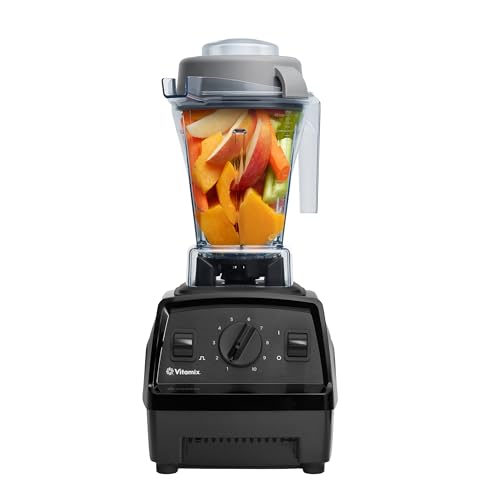
Best for the same drivetrain in a smaller, cheaper package
- 48 oz container sized for a standard counter
- 2.2-peak-horsepower motor, 10 variable speeds
- 5-year warranty
- Self-cleaning with soap and warm water in 60 seconds
Why buy it: most of the premium build for meaningfully less money, with a jar that actually fits under a cabinet.

Best for smoothies and frozen drinks without premium money
- 1,400 peak watt motor, stacked blade assembly
- 72 oz Total Crushing pitcher
- Auto-iQ preset programs for smoothies and ice
- Dishwasher-safe parts
Why buy it: for smoothies and crushed ice specifically, the gap to a $400 machine is much smaller than the price gap suggests.
Those three are not a ranked list so much as the three positions in the argument: the premium case, the same drivetrain for less, and the value counter-argument. Owner reviews of all three are strong; they disagree about what the money is for. The full field is at best blender.

What owners actually complain about at each end
Premium blender complaints are consistent and worth knowing before you spend: they are loud, at a level owners routinely describe as needing raised voices; the tall 64-ounce containers do not fit under standard 18-inch upper cabinets; the base is heavy enough that most people leave it out permanently; and the containers eventually cloud and scratch and are expensive to replace.
Budget blender complaints cluster around leaking from the blade gasket, plastic drive couplings stripping, motors cutting out on thick mixtures, and jars that crack at the base. Leaking specifically is the most common and often fixable — see why blenders leak from the bottom. Cleaning either kind properly matters more than most owners expect: how to deep clean a blender.
The short version
Spend $300 to $400 if you blend hard things every day and want a machine that will still be here in a decade. Spend $100 to $140 if you make smoothies and frozen drinks and want the job done well. Spend $40 only if blending is genuinely occasional, and expect to buy again. The one purchase almost nobody regrets is the middle tier — it clears the capability gap that separates cheap from adequate.
More from this hub: Small Kitchen Appliances · what to look for in a blender · how much a good blender costs · blender vs food processor · appliance warranties decoded · how we rank.