 Garden

Affiliate Disclosure
Some links on this page are affiliate links. As an Amazon Associate, we earn from qualifying purchases — at no extra cost to you. We do not buy, test, or physically handle the products we cover; our rankings come from aggregated owner reviews, ratings and expert consensus. Commissions never change our verdicts. How we rank · full disclosure.
An air fryer smokes for one of two reasons: fresh fat dripping into a hot drawer and passing its smoke point, or old residue baked onto the heating element and interior. Tell them apart by running the unit empty for five minutes. If it smokes empty, the problem is accumulated residue and the fix is cleaning, including the element and the interior ceiling. If it only smokes with food, the fat is the source — add two to three tablespoons of water to the drawer beneath the basket and cook in smaller batches.
Why does high-fat food make it smoke?
Because the drawer beneath the basket is running at cooking temperature and rendered fat pools there. Every fat has a smoke point, and most animal fats sit below the temperature an air fryer runs at.
| Fat or oil | Approximate smoke point | Smokes at 400°F? |
|---|---|---|
| Butter | ~300–350°F | Yes, badly |
| Extra virgin olive oil | ~350–375°F | Yes |
| Bacon fat | ~375°F | Yes |
| Beef tallow | ~400°F | Borderline |
| Canola oil | ~400°F | Borderline |
| Refined peanut oil | ~450°F | No |
| Avocado oil | ~500°F | No |
The practical implication is that bacon, sausage, wings, burgers and marbled steak will smoke in an air fryer unless the fat is managed, and that spraying extra virgin olive oil onto food headed for a 400 degree cook is asking for smoke before the food even renders anything.

Does putting water in the drawer actually work?
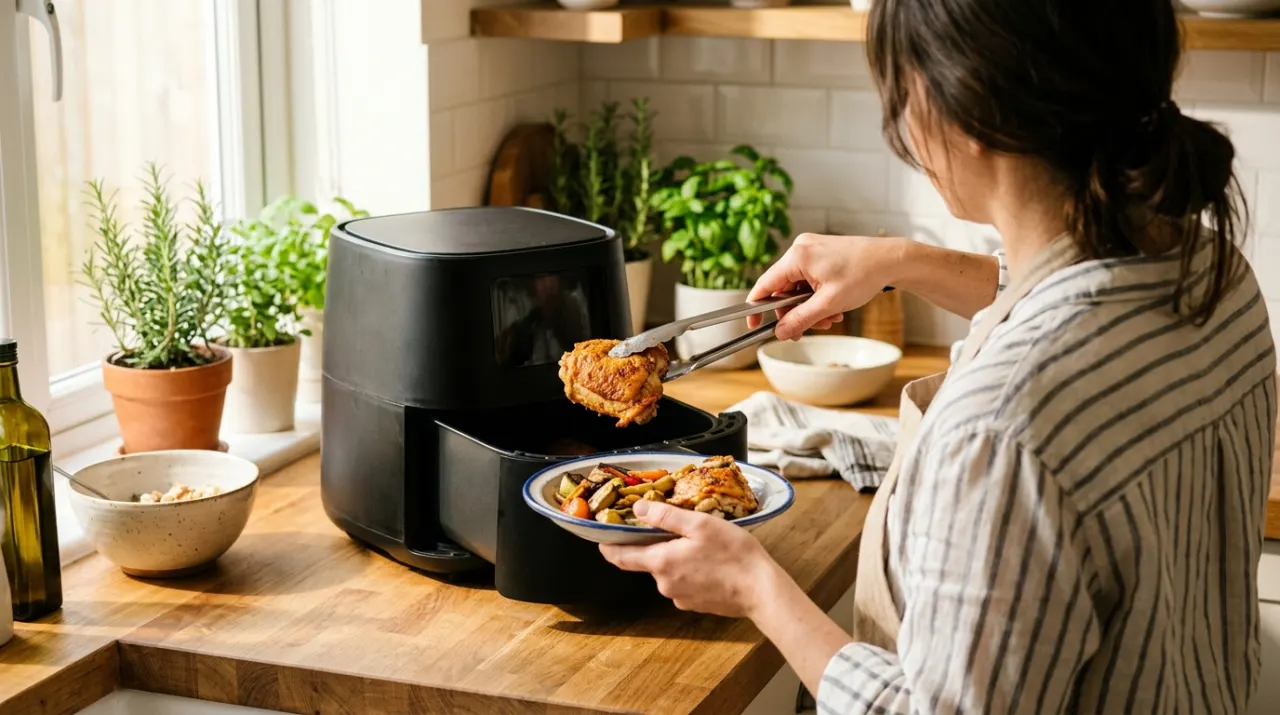
Yes, and it is the most effective single fix. Two to three tablespoons of water in the bottom drawer, beneath the perforated basket, keeps any fat that collects there at or near the boiling point of water rather than letting it climb past its smoke point. It does not steam the food, because the water sits below the basket and the volume is tiny relative to the airflow. It also makes cleanup considerably easier, since the fat never bakes onto the drawer.
Two things to avoid. Do not fill the drawer — a few tablespoons is the whole idea, and more will slosh and interfere. And do not use foil to line the drawer as an alternative, which traps grease against the hot surface and blocks the airflow path the appliance depends on.

How do you tell if it is old residue?
Run the empty appliance at 400 degrees for five minutes with the basket in. Smoke from an empty unit means carbonized grease somewhere in the chamber, and almost always on the ceiling or the heating element itself, which is the part owners overlook because it is out of sight above the basket.
To clean it, unplug the unit and let it cool completely, then tip it on its back or side so the element faces up. Wipe the element and the interior ceiling with a damp cloth and a little dish soap, using a soft brush on stubborn spots, and dry thoroughly before plugging back in. Never spray cleaner directly into the chamber and never immerse any part of the housing. Doing this every month or two prevents nearly all residue smoking, and it also removes the layer that forces the element to run hotter than it should.
What are the less obvious causes?
- Overfilling the basket. Food packed in cannot drain, so it sits in its own fat. Cook in two batches rather than one crowded one.
- Loose lightweight food. A stray piece of parchment, a leaf of kale or a slice of bread can be lifted by the fan into the element and scorch instantly.
- Liners blocking the perforations. Foil across the basket floor traps grease under the food instead of letting it fall through.
- Sugary marinades and glazes. Sugar carbonizes well below fat smoke points and welds to the basket, producing acrid smoke.
- A brand new appliance. Factory coatings burn off over the first few cycles; most manuals recommend running the empty unit hot for 10 to 20 minutes before first use.
One case is not a cooking problem at all. If the smoke is dark, smells of burning plastic or electrical insulation, or is accompanied by a hot plug or scorching at the cord entry, unplug the appliance and stop using it. Cooking equipment is consistently reported by the National Fire Protection Association as the leading cause of home structure fires, and an electrical smell is the point at which an appliance stops being worth troubleshooting.
Where to go next
Cleaning solves most smoking, so start with how to clean an air fryer and check whether the basket is dishwasher-safe. Liner misuse is a common trigger — foil in an air fryer explains where it can and cannot go. See also what you cannot cook in an air fryer and how long air fryers last. Replacing yours? The best air fryers ranks models on aggregated owner ratings, inside the small kitchen appliances hub.
We never buy or physically handle the products we rank — our picks come from aggregated owner reviews and expert consensus, explained on how we rank.