 Garden

Affiliate Disclosure
Some links on this page are affiliate links. As an Amazon Associate, we earn from qualifying purchases — at no extra cost to you. We do not buy, test, or physically handle the products we cover; our rankings come from aggregated owner reviews, ratings and expert consensus. Commissions never change our verdicts. How we rank · full disclosure.
The short version: the best post hole digger for most people is the Fiskars 60-inch steel posthole digger — welded 14-gauge hardened blades on a welded steel pivot with no bolts to loosen, at around sixty dollars with a lifetime warranty. If you are digging more than a handful of holes, step up to a Bully Tools model with triple-wall fiberglass handles, which absorb the shock that steel transmits straight into your hands. Choose a 7-inch blade if you are setting 6x6 posts.
Below is the ranked field, how deep and wide the holes actually need to be, the clamshell-versus-auger decision, and the call you must make before you dig.
Top Picks at a Glance

Our #1 Pick: Fiskars 60-Inch Steel Posthole Digger
Every clamshell digger is two blades on a pivot, and the pivot is where they fail. The cheap ones use a bolt through the two handles, which loosens with every stroke because the whole tool is designed to twist. Once that bolt has play, the blades no longer meet cleanly, and a digger whose blades do not close does not lift soil — it stirs it. Owners describe exactly this failure across the budget end of the category.
Fiskars welds the pivot. There is no bolt, no nut and nothing to work loose, and that single decision explains most of why this tool rates as well as it does. The blades are 14-gauge hardened steel and the handles are 16-gauge steel rather than wood or fiberglass, so there is no shaft to snap when you inevitably lever against a rock. At 60 inches overall it reaches a proper fence-post depth without you kneeling — depth being exactly the reason to make one phone call first, since the 811 before-you-dig service asks you to call a few business days ahead of any digging project, including fence posts and planting trees. The lifetime warranty is real and reviewers report it being honored.
Consensus Score ████████░░ 8.7
The complaints are consistent and worth weighing. Weight is the first — all-steel construction makes this heavier than a wood- or fiberglass-handled digger, and by hole ten that is noticeable. Shock transmission is the second and the more serious: steel handles conduct impact straight into your hands and wrists, and reviewers digging in stony ground describe it as punishing compared with fiberglass. Blade width at the standard size is too narrow for 6x6 posts without widening the hole by hand. The blades dull in abrasive or gravelly soil and need occasional filing. Nothing on this list survives a buried service line, which is why the 811 before-you-dig service asks you to call a few business days ahead of any digging project, including fence posts and planting trees and has utilities mark them for free. And several owners note the handles bend rather than break when levered hard, which is preferable to snapping but is still damage.
Check price on Amazon → (paid link)
Best Post Hole Diggers 2026: The Ranked Field
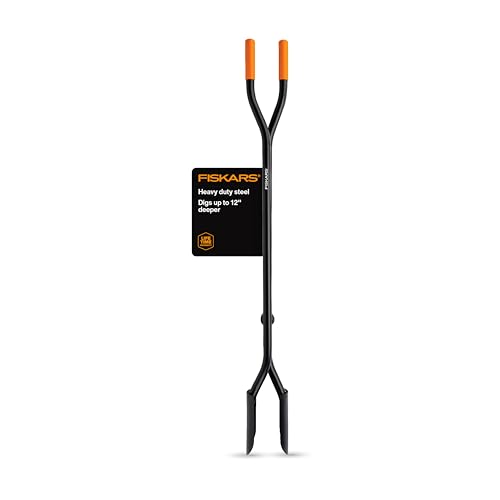
Best for fence lines, mailboxes and deck footings in ordinary soil
- Welded 14-gauge hardened steel blades
- 16-gauge steel handles, welded pivot with no loose bolts
- 60 in overall length for deep holes
- Lifetime warranty
Why buy it: the welded steel pivot is the difference — the bolted joints on cheaper diggers loosen within a few holes and then the blades stop meeting.

Best for standard 4x4 posts and repeat use
- 14-gauge steel blades, 9 x 5 in
- Triple-wall fiberglass handles, 47 in
- 59.5 in total length
- Made in the USA with a limited lifetime warranty
Why buy it: triple-wall fiberglass absorbs shock that steel handles transmit straight into your hands, which matters from about hole six onward.

Best for 6x6 posts, deck footings and concrete-set posts
- 12-gauge steel blades — heavier than the 5.5 in version
- 7 in bite for wider holes
- Triple-wall fiberglass, wood-reinforced handles
- Made in the USA
Why buy it: a 7-inch bite gives a 6x6 post room for concrete all round, which a 5.5-inch digger physically cannot do without widening the hole by hand.

Best for a handful of holes in soft soil
- Steel blades with hardwood handles
- Ruler markings on the handle for depth
- Cushioned grips
- Lighter than the pro tools
Why buy it: depth markings printed on the handle save you measuring every hole, which is the small feature you appreciate on a twenty-post fence.

Best for clay, rocky ground and contractor use
- Heavier-gauge steel blades
- Triple-wall fiberglass handles
- Reinforced pivot assembly
- Limited lifetime warranty
Why buy it: the reinforced pivot and thicker blades survive prying against rocks, which is exactly what destroys ordinary clamshell diggers.

Best for deep narrow holes in soil with few rocks
- Adjustable yoke bores 6, 7 or 8 in holes
- Twists into the ground rather than chopping
- Hardwood T-handle
- Brings the spoil up rather than needing a clamshell lift
Why buy it: an auger cuts a cleaner, straighter hole with far less effort than a clamshell in loose or sandy soil — and jams instantly on the first rock.
Quick Comparison
| Product | Best for | Rating | Price | Buy |
|---|---|---|---|---|
| Fiskars 60-Inch Steel Posthole Digger, Long-Handled Yard Tool | Best Overall | — | Check (paid link) | |
| Bully Tools 92382 5.5-Inch Post Hole Digger with Fiberglass Handles | Best USA-Made | — | Check (paid link) | |
| Bully Tools 92384 7-Inch Post Hole Digger with Fiberglass Handles | Best for Wide Posts | — | Check (paid link) | |
| Ames Dig EZ Post Hole Digger | Best Value | — | Check (paid link) | |
| Bully Tools Heavy Duty Post Hole Digger with Fiberglass Handles | Best Heavy-Duty | — | Check (paid link) | |
| Seymour AUA2 Adjustable Auger with Wood Handle, 6-7-8 Inch Diameters | Best Auger Alternative | — | Check (paid link) |

Spec Comparison
| Digger | Type | Blade bite | Handle | Best soil |
|---|---|---|---|---|
| Fiskars 60 in Steel | Clamshell | ~6 in | Steel | Loam, light clay |
| Bully Tools 92382 | Clamshell | 5.5 in | Fiberglass | Most soils |
| Bully Tools 92384 | Clamshell | 7 in | Fiberglass | Most soils |
| Ames Dig EZ | Clamshell | ~6 in | Hardwood | Soft soil |
| Bully Tools Heavy Duty | Clamshell | ~6 in | Fiberglass | Clay, rocky |
| Seymour AUA2 Auger | Twist auger | 6 / 7 / 8 in | Hardwood T | Sandy, loose, rock-free |
How We Rank
We never buy, swing or dig with the products on this site, and we say so on every ranking page. These rankings are built from aggregated owner reviews, star ratings, review volume, manufacturer specifications and expert consensus from established tool and fencing publications. For post hole diggers we weight four things: pivot design and whether it stays tight, which is the defining failure point in the category, blade steel gauge and how it holds an edge, handle material and shock transmission, since that determines how many holes you can dig in a day, and warranty and whether it is honored. Full method on how we rank.
The Diggers, Reviewed
1. Fiskars 60-Inch Steel — Best Overall
Covered above. What owners like: the welded pivot that never loosens, hardened blades, all-steel construction that survives levering, a genuine lifetime warranty, and a sensible price. What they complain about: weight, harsh shock transmission through steel handles, a bite too narrow for 6x6 posts, and blades that dull in abrasive soil. Check price (paid link).
2. Bully Tools 92382 5.5-Inch — Best USA-Made
Bully Tools builds in Ohio and the fiberglass handles are the reason to pay the premium. Triple-wall fiberglass flexes slightly under impact and absorbs vibration that steel transmits directly into your hands and wrists — and if you are setting twenty fence posts in a weekend, that difference is the difference between finishing on Sunday and not. The 14-gauge blades and limited lifetime warranty are solid, and 5.5 inches is the right bite for standard 4x4 posts.
Consensus Score ████████░░ 8.8
Recurring complaints: the price is roughly forty percent above the Fiskars for a tool that does the same job. Fiberglass handles will crack rather than bend if you lever hard against a rock, and once cracked they cannot be straightened out the way a steel handle can. The blades need occasional sharpening in gravelly ground. And the 5.5 inch bite is too narrow for anything larger than a 4x4 without extra work.
3. Bully Tools 92384 7-Inch — Best for Wide Posts
The same tool with a 7-inch bite and heavier 12-gauge blades. If you are setting 6x6 posts, deck footings or anything that needs a proper concrete collar, this is the version that makes the hole big enough in one pass instead of requiring you to widen it with a spade.
Consensus Score ████████░░ 8.7
Recurring complaints: a wider bite moves more soil per stroke, so it is meaningfully harder work in clay — several reviewers who bought it for general use wished they had taken the 5.5-inch version. It is heavier. It costs more. And in narrow spaces, a wider blade span limits where you can actually open the handles.
4. Ames Dig EZ — Best Value
The mainstream hardware-store digger, with one genuinely useful feature the premium tools omit: depth markings printed along the handle, so you can check hole depth without a tape measure. In soft soil, for a few holes, it does exactly what is needed at a price well below the pro tools.
Consensus Score ███████░░░ 7.3
Recurring complaints: the bolted pivot is the recurring theme — reviewers describe it loosening within a project and needing regular tightening, and once there is play the blades stop closing cleanly. Hardwood handles snap when levered against a rock, and several reviews describe exactly that. The blades are lighter gauge and bend in stony ground. Treat it as a light-duty tool for soft soil and it is fine value; use it on clay and it will not last the job.
5. Bully Tools Heavy Duty — Best Heavy-Duty
The reinforced version, with thicker blades and a beefed-up pivot assembly, aimed at contractors and at anyone working clay or rocky ground. Levering against rocks is what kills clamshell diggers, and this is the one built to take it.
Consensus Score ████████░░ 8.6
Recurring complaints: it is the heaviest and most expensive tool here, and for soft soil that weight is simply extra work with no benefit. Fiberglass handles still crack under extreme levering, even reinforced. And no clamshell digger, however heavy, is the right tool for genuinely rocky ground — reviewers repeatedly note that a digging bar is still required, and the digger only lifts what the bar has already broken loose.
6. Seymour AUA2 Adjustable Auger — Best Auger Alternative
A twist auger works completely differently: you turn it into the ground and it cuts a clean, straight hole, bringing the spoil up on the flights. In sandy, loose or consistent soil it is dramatically less tiring than chopping with a clamshell, and the adjustable yoke lets you bore 6, 7 or 8 inch holes from one tool.
Consensus Score ███████░░░ 7.7
Recurring complaints: rocks and roots stop it dead, and this is not a minor caveat — reviewers in stony or root-filled ground describe the tool as useless without a bar or a clamshell to clear obstructions first. Heavy clay binds on the flights and becomes very hard to turn. The wooden T-handle is the part most often reported breaking under torque. And it cannot widen an existing hole, only cut a new one, so a post that needs a concrete collar still needs a second tool.
What Owners Actually Complain About
Five themes account for most low ratings across post hole diggers. Pivot loosening is first and is almost entirely a budget-tool problem — bolted pivots develop play and the blades stop meeting. Broken handles is second, concentrated in wooden-handled tools, and it nearly always happens when levering against a rock rather than digging. Will not cut clay is third, and it is a soil problem rather than a tool problem: no hand digger cuts dry clay well, and pre-soaking the spot is the fix. Blades bend or dull is fourth, in gravelly and abrasive ground. Hole too narrow is fifth, and it reflects a widespread misunderstanding — the blade size is the bite, not the finished hole, and a post set in concrete needs a hole roughly three times the post width.
How to Choose a Post Hole Digger
Start with your soil, because it decides the tool type. Loose, sandy or consistent soil with no stones? An auger is faster and far less tiring. Anything with rocks, roots or clay — which is most yards? A clamshell, because it always works. More than about ten holes in hard ground? Rent a powered auger; the day rate is less than the physiotherapy.
Then choose the handle. Steel handles survive levering and transmit every impact into your hands. Fiberglass absorbs shock and cracks if you abuse it. Wood is cheapest and breaks first. For a handful of holes in soft soil, any of them is fine; for a whole fence line, fiberglass is worth the money. Finally, match the blade width to the post: 5.5 to 6 inches for 4x4s, 7 inches for 6x6s and deck footings.
Two things before you start digging. Call 811 — free, required notice varies by state, and it gets buried gas, electric, water and communication lines marked on your property. And check your local code for post depth, because the frost line governs how deep a post must go and it ranges from a few inches to over four feet across the US; fence height, setback from property lines and permit requirements are also set locally. Our guide on how far from the property line you can build a fence covers the setback question, and planning a yard layout covers the rest.
The Verdict
The Fiskars 60-inch steel posthole digger is the right buy for most people — a welded pivot that never develops play, hardened blades, a lifetime warranty, and a price that makes it an easy decision. Step up to Bully Tools fiberglass if you are digging a whole fence line and want your wrists intact, take the 7-inch version for 6x6 posts, and consider the Seymour auger only if your soil is genuinely free of rocks. Check price on Amazon → (paid link)
More from this hub: Landscaping & Hardscaping · How far from the property line can you build a fence · How deep should a french drain be · Best landscape edging · How to plan a yard layout · How we rank