 Garden
Affiliate Disclosure
Some links on this page are affiliate links. As an Amazon Associate, we earn from qualifying purchases — at no extra cost to you. We do not buy, test, or physically handle the products we cover; our rankings come from aggregated owner reviews, ratings and expert consensus. Commissions never change our verdicts. How we rank · full disclosure.
The short version: after weighing six popular edging systems on how well they hold a line, how they cope with a mower and how they behave through freeze and thaw, our #1 pick is the EasyFlex No-Dig Landscape Edging 40 ft Kit. It carries roughly 4.5 stars across about thousands of owner ratings, installs in an afternoon with nothing but a mallet, and bends into curves that rigid materials cannot follow. Below is the full ranked field, how we arrive at these rankings, and the honest complaints owners raise about each one.
Edging is the finishing move of a bed, so do it after you have set the shape — the sketching stage is covered in how to plan a yard layout. Already know you want metal? Read steel vs plastic edging before you buy.
Top Picks at a Glance
Our #1 Pick: EasyFlex No-Dig Landscape Edging, 40 ft Kit
If you buy one edging system this year, this is the safe call. It is a flexible polyethylene profile about 1.5 inches tall that you unroll along a bed line and lock down with 8-inch anchoring spikes driven through moulded tabs — no trench, no cutting, no mortar. The reason it tops the field is not novelty but agreement: across roughly 3,905 owner ratings it averages about 4.5 stars, with something close to 90 percent of raters landing on four or five. When that many people agree, the product is doing something right.
The recurring praise in reviews is speed and curves. Owners describe finishing a full front bed in an afternoon, and the profile bends around a tree ring or a kidney-shaped bed without needing relief cuts. The second recurring theme is that it holds mulch and gravel in place — the low lip is enough to stop wash-out onto the lawn after heavy rain.
Consensus Score ████████░░ 8.6 — from 3,905 owner ratings
It is not perfect, and the complaints are consistent enough to take seriously. In rocky or heavily compacted soil the spikes bend before they seat, and several owners recommend pre-drilling a pilot hole or switching to longer landscape staples. A minority report the edging lifting after a hard freeze — almost always traced back to spikes driven vertically into loose backfill rather than angled into firm ground. And at 1.5 inches, this is a visual border and a mulch dam, not a retaining wall; if you need to hold back 6 inches of soil, buy metal.
Check price on Amazon → (paid link)
Best Landscape Edging 2026: The Ranked Field

Best for curved beds and a fast weekend install
- 1.5 in. straight-top profile
- 40 ft with 40 anchoring spikes
- Bends into tight curves without cutting
- No trench required
Why buy it: the consensus pick — roughly 90% of raters give it four or five stars, and the recurring theme in reviews is how quickly it goes in and how well it holds a curve.
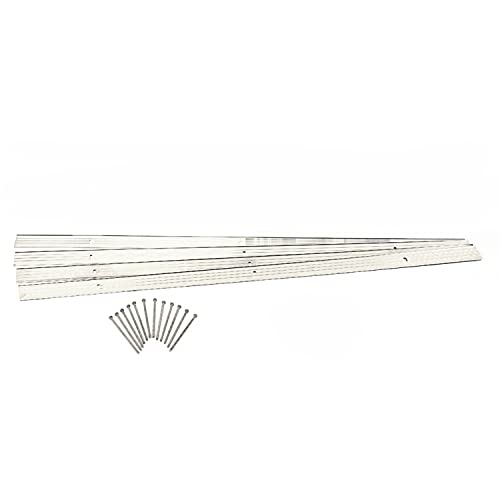
Best for a near-invisible line that will not rust
- Aluminum — will not rust like steel
- Slim profile almost disappears at grade
- Holds a straight run dead straight
- Stakes included
Why buy it: the finish landscapers use — the metal line reads as a shadow rather than a border, and owners in wet climates single out the no-rust aluminum.

Best for a decorative brick look with zero masonry
- Molded brick-look resin
- Sections slide together and tap in
- 20 sections cover 20 linear feet
- Nothing to cut or mix
Why buy it: the cheapest way to get a brick border look — reviewers repeatedly mention it takes an evening and needs no trench or mortar.
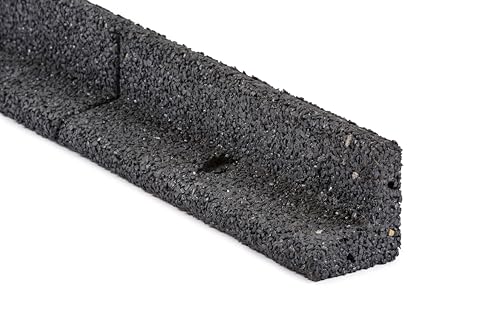
Best for yards where the mower wheel rides the border
- Recycled rubber — flexible but heavy
- 24 ft total per pack
- Will not crack in cold like rigid plastic
- Hardware included
Why buy it: the one owners say survives being run over — rubber flexes under a mower wheel and springs back where plastic splits.

Best for short runs and small beds on a tight budget
- 4 in. galvanized steel strips
- Hammer-in, interlocking ends
- Rigid enough to hold gravel back
- Cheapest metal option here
Why buy it: metal rigidity at plastic money — good for tree rings and small beds, though owners note it takes patience in rocky soil.

Best for edging an entire property in one order
- 100 ft coil plus spikes
- Same profile as the 40 ft kit
- Lowest cost per linear foot here
- One continuous run — fewer seams
Why buy it: the volume buy — the same well-rated profile as our top pick at a noticeably lower price per foot once you need more than 60 feet.
Quick Comparison
| Product | Best for | Rating | Price | Buy |
|---|---|---|---|---|
| EasyFlex No-Dig Landscape Edging, 40 ft Kit | Best Overall | — | Check (paid link) | |
| EasyFlex Aluminum Landscape Edging Kit, 24 ft | Best Metal | — | Check (paid link) | |
| Suncast Interlocking No-Dig Brick Border, 12 in. Sections (20-Pack) | Best Value | — | Check (paid link) | |
| EcoBorder 4 ft Rubber Landscape Edging, Gray (6-Pack) | Best for Mowing Against | — | Check (paid link) | |
| Meyoppm 4 in. Galvanized Steel Landscape Edging (6-Pack) | Best Budget Steel | — | Check (paid link) | |
| EasyFlex No-Dig Landscape Edging Kit, 100 ft | Best for Big Yards | — | Check (paid link) |
Spec Comparison
| Product | Material | Height | Coverage | Install |
|---|---|---|---|---|
| EasyFlex No-Dig 40 ft | Polyethylene | 1.5 in. | 40 ft | No-dig, 40 spikes |
| EasyFlex Aluminum 24 ft | Aluminum | 4 in. | 24 ft | Shallow trench + stakes |
| Suncast Brick Border | Resin | 6 in. (12 in. sections) | 20 ft | No-dig, interlocking |
| EcoBorder Rubber | Recycled rubber | 3.1 in. | 24 ft (6 × 4 ft) | No-dig, spikes |
| Meyoppm Steel | Galvanized steel | 4 in. | ~13 ft | Hammer-in |
| EasyFlex No-Dig 100 ft | Polyethylene | 1.5 in. | 100 ft | No-dig, spikes |
How We Rank
We do not buy, install or physically handle the products on this site — and we say so plainly. Our rankings are built from aggregated owner reviews, star ratings, review volume, question-and-answer threads and expert consensus from established gardening and landscaping publications. For edging specifically we weight four things: line retention (does it still look straight after a season), anchoring (how often owners report heaving or spike failure), durability (cold-crack, UV brittleness, mower impact) and value per linear foot. Prices were checked at the time of writing and move constantly. The full method is on how we rank.
The Edging Systems, Reviewed
1. EasyFlex No-Dig Landscape Edging, 40 ft — Best Overall
Covered above. What owners like: speed of install, genuinely tight curves, holds mulch and gravel back well, priced sensibly per foot. What they complain about: spikes bend in rocky soil, occasional frost heave when spikes are driven straight down, and the 1.5 inch profile is too low for holding back soil grade — a real limit, since Penn State Extension recommends a 2- to 4-inch layer of organic mulch and no more, using less on poorly drained soil and a 1.5 inch lip will not contain the top of that. Check price (paid link).
2. EasyFlex Aluminum Landscape Edging, 24 ft — Best Metal
This is what a bed edge looks like when you want the border to disappear. Aluminum will not rust the way raw steel does, which matters in the Southeast and the Pacific Northwest, and once seated it holds a line that plastic simply cannot match over a long straight run. It flexes enough for gentle curves, though it will not take the tight radius the no-dig plastic manages.
Consensus Score ████████░░ 8.3 — from 332 owner ratings
Recurring complaints: it costs roughly twice as much per foot as plastic; it needs a trench, which turns an afternoon into a day; and reviewers consistently warn that the cut edges are sharp — gloves are not optional. A few note that the stakes supplied are adequate but not generous in hard clay.
3. Suncast Interlocking No-Dig Brick Border — Best Value
A molded resin section that mimics a soldier course of brick, slides into its neighbor and taps down with a mallet. For anyone who wants the look of a brick border without laying brick, it is a genuine shortcut, and with 157 ratings sitting around 4.2 stars, the field has plainly voted on it.
Consensus Score ████████░░ 8.2 — from 157 owner ratings
Recurring complaints: it reads as plastic up close, especially in bright sun; the sections need level ground to line up neatly and will fan out on a slope; and lighter-colored versions show algae and dirt in shaded, damp spots. Owners also note that 20 sections is only 20 linear feet, so a full bed usually needs two or three packs.
4. EcoBorder Rubber Landscape Edging — Best for Mowing Against
Recycled rubber is the answer to the most common way edging dies: a mower wheel. Where rigid plastic splits and thin steel bends, rubber deforms and returns. It is also kinder on a string trimmer line, and it will not go brittle in a cold snap the way inexpensive PVC can.
Consensus Score ███████░░░ 7.9 — from 818 owner ratings
Recurring complaints: it is the priciest per foot here; the 4-foot sections leave visible joints on a curve; and a number of owners mention a rubber smell in hot weather for the first few weeks. It is also chunky — nobody buys rubber edging for a discreet look.
5. Meyoppm Galvanized Steel Edging — Best Budget Steel
Six 4-inch galvanized strips with interlocking ends that you drive in with a hammer. For a tree ring, a small herb bed or a gravel border that needs real rigidity, this gets metal into the yard for about the price of a plastic kit.
Consensus Score ███████░░░ 7.6 — from 266 owner ratings
Recurring complaints: coverage is short — you will need several packs for anything substantial; installation in rocky or clay soil is slow and the tops can mushroom if you hammer directly on bare steel; and reviewers advise a block of scrap wood as a driving cap. Edges are sharp before they are seated.
6. EasyFlex No-Dig 100 ft Kit — Best for Big Yards
Identical profile to our top pick, sold as a 100-foot coil. If you are edging a whole front yard, the per-foot price is the lowest in this field and you get fewer joints, which is one less place for the line to drift.
Consensus Score ████████░░ 8.4 — from 11,242 owner ratings
Recurring complaints: the same spike-and-rocky-soil issue as the 40 ft kit, plus one specific to the big coil — it arrives tightly rolled and wants an hour in the sun to relax before it will lie flat. Owners who fought it straight out of the box are the ones who report wavy lines.
What Owners Actually Complain About
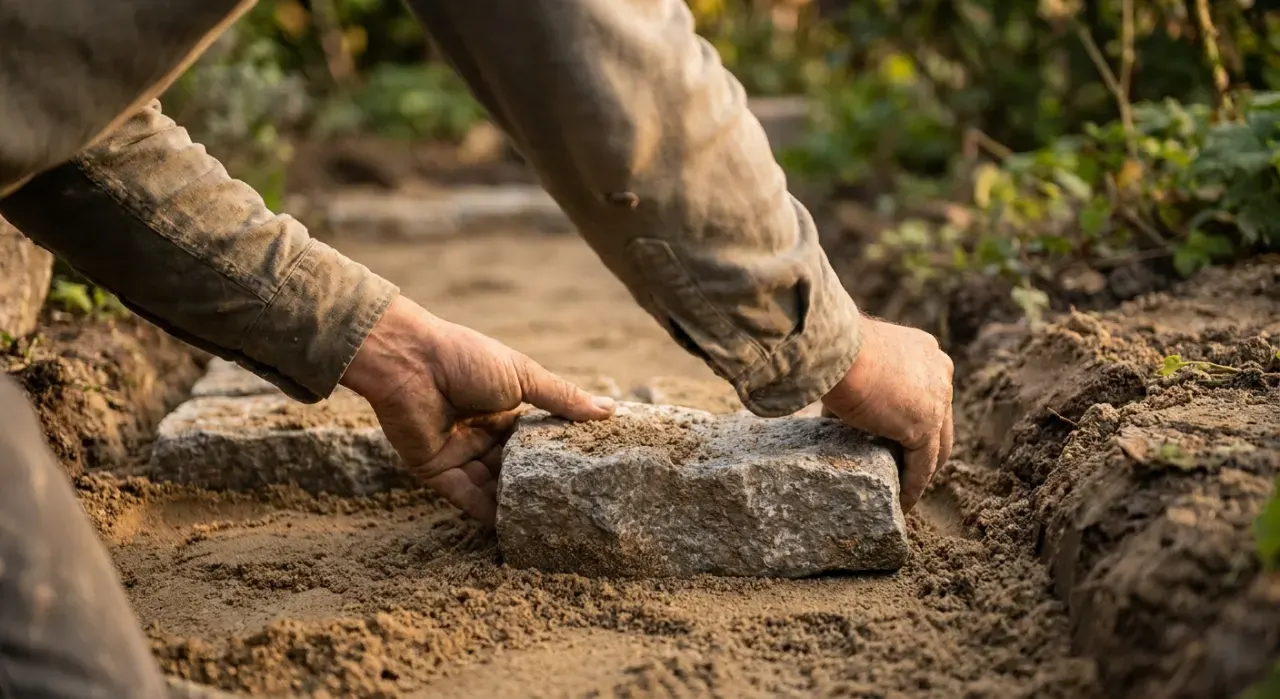
Read enough edging reviews and the same four problems come up regardless of brand. Frost heave is the biggest: edging that looked perfect in October is standing proud by April. Almost every case traces back to spikes driven vertically into the loose soil of a freshly cut trench instead of angled into undisturbed ground beside it. Before you drive anything into the ground, note that the 811 before-you-dig service asks you to call a few business days ahead of any digging project, including fence posts and planting trees. Bent spikes are next, and they are a soil problem rather than a product problem — in rock or hard clay, a pilot hole made with a length of rebar solves it. Wavy lines come from installing a coil cold and rushing; laying the material out in the sun first makes it cooperative. And mower damage is the slow killer — if you intend to run a wheel along the edge, buy rubber or metal rather than a low plastic profile and accept the extra cost.
Edging Materials, Cost and Lifespan
The ranked field above is the DIY, order-it-online end of the category. It is worth seeing it in the context of every edging material available, because for some jobs the right answer is a trenched metal profile or a laid mow strip rather than anything that ships in a box. Figures below are typical US material prices as of mid-2026 for DIY installation, and they vary considerably by region and supplier:
| Material | Cost per linear foot | Life | Best for |
|---|---|---|---|
| Steel (14–16 gauge) | $3–$6 | 20+ years | Curved beds, crisp lines |
| Aluminum | $4–$8 | 25+ years | Wet climates, easy DIY |
| Corten weathering steel | $6–$12 | 25+ years | Modern look, rust patina |
| Plastic / poly roll | $1–$3 | 3–7 years | Budget, gentle curves |
| Paver or brick soldier course | $8–$20 | Decades | Mow strips, formal beds |
| Natural stone | $10–$30 | Decades | Informal, cottage style |
| Poured concrete curb | $5–$12 (contractor) | Decades | Aggressive grasses, long runs |
Curves favor metal and poly. Steel and aluminum come in 8 to 10 foot lengths that flex into smooth arcs without kinking and splice into what reads as one continuous line; poly roll bends tightest of all. Rigid units — pavers, block, stone — can follow a curve only by opening the joints on the outside of the arc, which looks right in an informal cottage bed and wrong in a formal one.
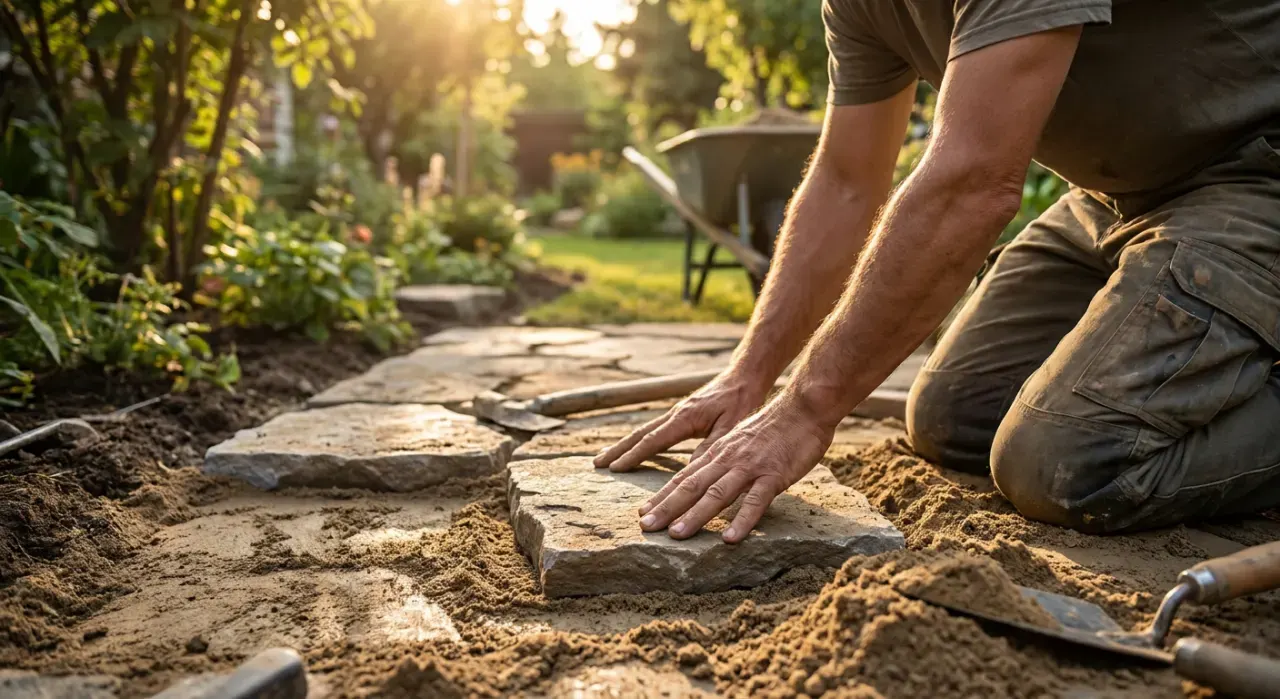
A stone or paver mow strip is the option nobody costs out. A soldier course of pavers or a flat stone band 6 to 12 inches wide, set flush with the lawn on a compacted 4-inch crushed-stone base, lets a mower wheel ride on the edging so the grass is cut right to the bed line with no string trimming at all. It costs several times what a no-dig kit does and takes a weekend rather than an afternoon, but it removes a recurring chore permanently and there is nothing about it that can bend or heave. In a high-traffic yard it is the most durable answer on this page.
And you may not need edging at all. A hand-cut spade edge — a V-shaped trench about 4 inches deep at the bed boundary — is free, looks clean, and is what a great many professionally maintained gardens use. The trade-off is recutting it once or twice a season. Physical edging earns its cost where you need a mow strip, where gravel or mulch has to be contained, where an aggressive turf such as bermudagrass is pushing into beds, or where the shape has to hold precisely without seasonal maintenance.
Depth is what separates edging that works from edging that does not. Grass rhizomes travel in the top 2 to 3 inches, so anything buried shallower than 3 inches will simply be crossed underneath. Trenched metal wants 4 to 5 inches of a 4- or 5-inch profile buried, leaving only a quarter to half an inch standing proud — enough to define the line, not enough to catch a mower deck.
How to Choose Landscape Edging
Work backwards from the yard, not the catalog. Lots of curves? No-dig plastic, every time — it is the only material here that follows a tight radius without cutting. Long, formal, straight beds? Aluminum, for the line it holds and the way it vanishes. Mower wheel rides the border? Rubber. Holding back gravel or a slight grade change? Steel or aluminum, buried deep. Want decoration rather than a boundary? Brick-look resin sections. And whatever you choose, buy about 10 percent more than your measurement says, because curves eat length and a joint in the middle of a run is worth avoiding.
Install matters as much as the product: our install guide covers trench depth, spike angle and how to end a run cleanly. If gravel is going inside the border, read gravel vs mulch and best landscape fabric first, because the fabric goes down before the edging is locked.
The Verdict
For most yards, the EasyFlex No-Dig 40 ft Kit is the one to buy — the broadest owner agreement in the category, an install you can finish in an afternoon, and curves no rigid material will match. Step up to the aluminum kit if you want a line that disappears and lasts decades, or to EcoBorder rubber if the mower is the real enemy. Edging an entire property? The 100 ft coil is the same product for less per foot. Check price on Amazon → (paid link)
More from this hub: Landscaping & Hardscaping · How to lay a paver patio · What landscaping costs · How we rank