 Garden


Affiliate Disclosure
Some links on this page are affiliate links. As an Amazon Associate, we earn from qualifying purchases — at no extra cost to you. We do not buy, test, or physically handle the products we cover; our rankings come from aggregated owner reviews, ratings and expert consensus. Commissions never change our verdicts. How we rank · full disclosure.
The short answer: for most gardens buy a reusable coated-steel cage multi-pack — it stakes a whole row for one price and reuses for years. Step up to an extra-tall 68-inch support for vining indeterminate tomatoes, choose a square cage if rigidity matters most, and pick a short ring for seedlings and dwarf plants.
The whole tomato-support decision comes down to one question growers skip: is your tomato determinate or indeterminate? A bush determinate plant is happy in a modest cage; a vining indeterminate plant will pass six feet and flatten anything short. Get that match right and almost any decent cage works; get it wrong and the sturdiest cage still ends up on the ground in August. This page ranks supports around that reality, and it sits alongside our best cucumber trellis and best garden trellis guides for the plants a tomato cage is not shaped for.
What Actually Separates a Good Tomato Trellis
Once you set price aside, four things decide whether a support holds a loaded plant through to harvest — and these are the axes this page ranks on:
- Height vs variety. The most important match on the page. Determinate tomatoes want ~4 feet; indeterminate ones want 5–6 feet or a stake.
- Rigidity under load. A wet, fruit-heavy plant is top-heavy. Square and heavy-gauge cages resist leaning where thin round cones buckle.
- Reuse and storage. Coated steel that folds or nests flat gets kept and reused for years; flimsy wire gets bent and binned.
- Value per plant. Multi-packs stake a whole bed for the price of one premium cage, which is why they dominate for home rows.

The Tomato Trellises at a Glance
Our #1 Pick: The Reusable 6-Pack Cage Set
This six-pack tops the list because it matches how people actually grow tomatoes: a whole row at once, supported cheaply, with hardware that comes back next season. Each support reaches up to 48 inches — enough for most determinate and compact varieties — the stakes are coated steel that reuse year after year, and six in a pack means staking the entire bed is one easy decision rather than a per-plant calculation.
What it does better than the others. Value without being flimsy. The complaint that defines cheap tomato support is a thin round cage that leans and buckles under a loaded plant, and this set uses coated steel stakes that hold up where bare wire cones fail. It is versatile too — the same supports work for peppers and other climbers — so a single purchase covers most of a mixed vegetable bed. For the common case of several determinate or mid-size tomatoes in a row, it is the most sensible buy here.
Consensus Score ████████░░░ 8.3 — a solid owner consensus, with the caveat that vigorous indeterminate growers want the taller support instead.
Where it is weak. At up to 48 inches it is short for tall indeterminate tomatoes, which will outgrow it — those want the 68-inch K-Brands support. Assembly and staking need doing properly, as any cage does, and in very wet soil the legs want pushing deep. It is a practical row-staking set, not a heavy single showpiece cage, but for the job most gardens need it fits best.
Check price on Amazon → (paid link)
The Tomato Trellises, Ranked

Best for staking a row of tomatoes or peppers with one affordable, reusable set
- Six supports in a pack for a whole row
- Up to 48 inches — enough for most determinate types
- Coated steel stakes that reuse season to season
- Works for tomatoes, peppers and other climbers
Why buy it: The set that stakes a whole bed in one buy: six reusable supports tall enough for most tomatoes, at a price that makes staking the whole row an easy decision.

Best for gardeners who want a sturdier square cage that folds flat for storage
- Square design more rigid than a round wire cone
- Folds flat for compact off-season storage
- Sized for tomatoes and other climbing vegetables
- Strong owner rating across a large review base
Why buy it: A square cage resists leaning better than a round wire cone and still folds flat to store, which is the combination most cage owners actually want.

Best for indeterminate tomatoes that outgrow a standard 4-foot cage by midsummer
- Up to 68 inches for vigorous indeterminate plants
- Stakes and cross-links assemble to height
- Three supports per pack
- The largest review base in this roundup
Why buy it: Indeterminate tomatoes keep climbing all season, and this is the support that keeps giving them somewhere to go instead of flopping over a short cage in July.

Best for raised beds and pots where you want to size each support to the plant
- Adjustable stakes to match plant height
- Six cages for a full bed or several pots
- Suited to raised beds and containers
- Coated steel for repeat seasons
Why buy it: Adjustability lets you set each cage to the plant in front of you, so a short pepper and a tall tomato both get the right support from the same six-pack.
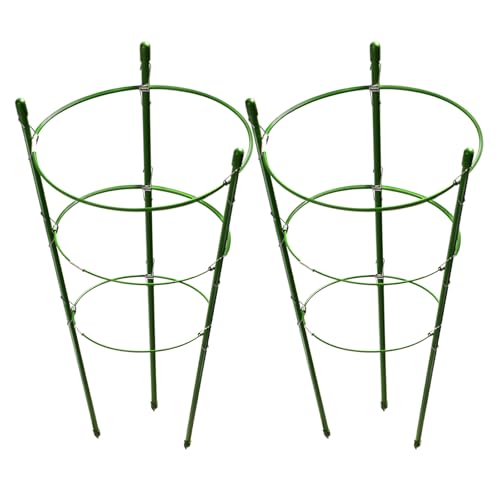
Best for seedlings, dwarf tomatoes and small potted plants that need a light hand
- Short 17.7-inch ring for small plants
- Rust-resistant coated steel
- Simple ring-and-stake support
- Two in a pack for a pair of pots
Why buy it: Not every tomato needs a five-foot cage — for seedlings, dwarf varieties and small pots this short ring gives just enough support without towering over the plant.
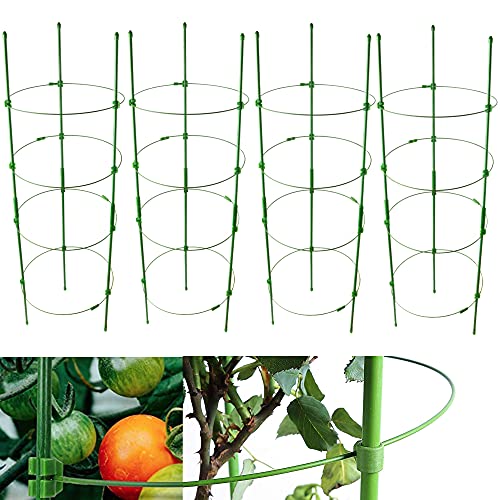
Best for a low-cost round cage for tomatoes, cucumbers, flowers and roses
- Four cages with four adjustable rings each
- 36-inch height for compact varieties
- Works across vegetables, flowers and roses
- Assembles and dismantles for flat storage
Why buy it: A flexible, low-cost round option for mixed planting — the adjustable rings let one set cover tomatoes, cucumbers and flowers, though it suits compact rather than towering plants.
Quick Comparison
| Product | Best for | Rating | Price | Buy |
|---|---|---|---|---|
| 6-Pack Tomato Cage / Trellis, Up to 48" Garden Stakes | Best Tomato Trellis Overall | — | Check (paid link) | |
| Square Tomato Cage, Large Stackable Trellis Support | Best Value Tomato Trellis | — | Check (paid link) | |
| K-Brands Tomato Cage, Extra Tall Up to 68" (3-Pack) | Best for Tall Varieties | — | Check (paid link) | |
| Halatool 6-Pack Tomato Cages, Adjustable Up to 48" | Best Adjustable Cage | — | Check (paid link) | |
| LEOBRO 17.7" Tomato Cage / Ring Stake (2-Pack) | Best for Small Plants | — | Check (paid link) | |
| 4-Pack Adjustable Tomato Cages, 36" (4 Rings Each) | Best Round Multi-Pack | — | Check (paid link) |

How to Choose Between These Supports
A row of determinate tomatoes? The reusable six-pack. Want maximum rigidity? The square cage. Tall indeterminate vines? The 68-inch K-Brands support. Raised beds and pots? The adjustable Halatool six-pack. Seedlings and dwarf plants? The short LEOBRO ring. Mixed compact planting? The 36-inch round multi-pack.
Everything hinges on one check before you buy: determinate or indeterminate. A bush variety thrives in a modest cage; a vining variety needs five to six feet or a stake, and putting it in a short cage guarantees a toppled plant later. After that, push the legs deep — a cage that felt solid empty in spring gets top-heavy and wet-footed by August, and anchoring is what keeps it upright.
How We Rank Tomato Trellises
We do not grow a season on each cage. We weight aggregated owner reviews, reading past the launch-window ratings to the reports written at harvest, where leaning, buckling and rust show up. We judge each support against the plant it is sold for — short rings for small plants, tall stakes for indeterminate vines — rather than on one scale. Published height and gauge are checked against determinate and indeterminate needs, and storage is noted because a support that stores well gets reused. Star ratings are read for their pattern of complaints, not just the average. Prices were current at the time of writing. Full method on how we rank, with the rest of the guides in the resource library.
The Verdict
The reusable coated-steel six-pack is the tomato trellis we would tell a friend to buy for a row of determinate plants: cheap per plant, sturdy enough, and back next season. Go taller with the 68-inch support for indeterminate vines, more rigid with the square cage, and smaller with the short ring for seedlings and dwarf tomatoes. Check the current six-pack price on Amazon → (paid link)