 Garden
Affiliate Disclosure
Some links on this page are affiliate links. As an Amazon Associate, we earn from qualifying purchases — at no extra cost to you. We do not buy, test, or physically handle the products we cover; our rankings come from aggregated owner reviews, ratings and expert consensus. Commissions never change our verdicts. How we rank · full disclosure.
The short answer: drought-tolerant landscaping means designing a yard that thrives on little or no supplemental water, and it comes down to five moves. Improve the soil with compost so it holds what rain falls; choose regional natives and drought-adapted plants that survive on natural rainfall; group plants by water need so irrigation is efficient; mulch beds 2 to 3 inches deep to slash evaporation; and water deeply but infrequently through drip irrigation to drive roots down. Do these, and after the first season or two the yard largely waters itself.
Water-wise landscaping is not a gravel-and-cactus compromise. Done well, it is a lush, colorful, wildlife-friendly yard that happens to need a fraction of the water, mowing, and upkeep of a lawn. It is the smart default anywhere summers are dry or water is expensive or restricted, and it is the lowest-maintenance approach there is. This guide covers the principles and the plants, with the establishment care that makes or breaks the result.
Core Principles of Drought-Tolerant Landscaping
The formal framework is xeriscaping, built on seven principles. Stripped of jargon, they are simple.
| Principle | What it means in practice |
|---|---|
| Plan and zone | Group plants by how much water they need |
| Improve soil | Add compost so soil holds moisture and roots go deep |
| Limit turf | Keep only the lawn you use; replace the rest |
| Choose right plants | Natives and drought-adapted species |
| Mulch | 2 to 3 in to cut evaporation and weeds |
| Water efficiently | Drip, deep and infrequent, on a timer |
| Maintain sensibly | Right-size pruning and feeding, no overwatering |
Every idea below is one of these principles in action. If you want the broader low-work angle beyond dry climates, pair this with low maintenance landscaping ideas.
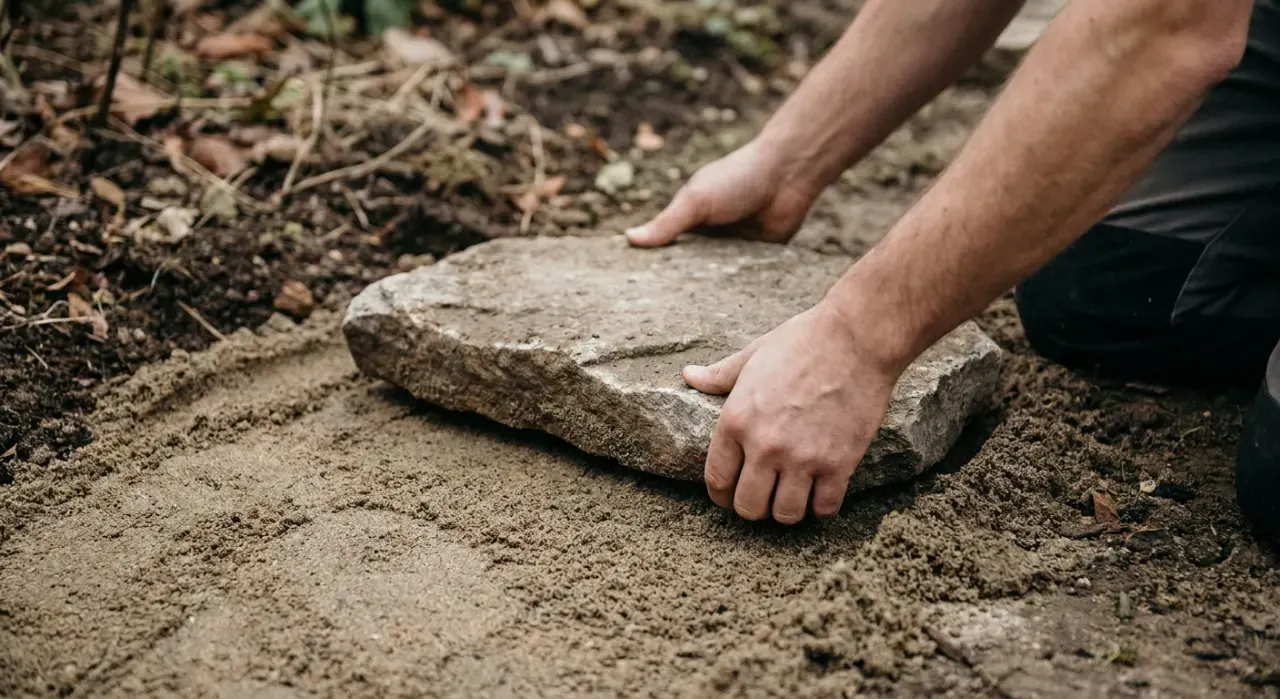
Start with the soil
Counterintuitively, the foundation of a low-water yard is soil that holds water well. Organic matter acts like a sponge, storing rainfall for roots between waterings.
- Work 2 to 3 inches of compost into planting areas before planting to boost water-holding capacity.
- Do not overdo drainage amendments for most drought plants — the exception is succulents and Mediterranean herbs, which want fast-draining, leaner soil.
- Loosen compacted soil so water soaks in rather than running off.
If you are unsure of your soil, a quick soil pH test and a look at how to improve clay soil pay off before you plant.
Choose Drought-Tolerant Plants
Plant selection is where a drought-tolerant yard is won. Natives lead because they evolved for your rainfall, but many adapted species work anywhere.
| Category | Examples | Notes |
|---|---|---|
| Native perennials | Coneflower, yarrow, penstemon, black-eyed Susan | No water once established; pollinator-friendly |
| Mediterranean herbs | Lavender, rosemary, sage, thyme | Want lean, fast-draining soil and full sun |
| Succulents | Agave, sedum, yucca, aloe (mild zones) | Store water; ideal for the Southwest |
| Ornamental grasses | Blue grama, buffalo grass, little bluestem | Turf alternatives and texture |
| Shrubs | Manzanita, ceanothus, sumac, juniper | Structure with minimal water |
Match every plant to your USDA zone and sun exposure, and check with your regional Cooperative Extension or native plant society for the best local performers — they know what survives your specific climate.
Rethink the lawn
Conventional turf is the thirstiest thing in most yards, and in dry regions it is the first thing to reconsider.
- Shrink it to the area you actually use for play or gathering.
- Replace the rest with drought-tolerant groundcovers, native grasses, gravel gardens, or planting beds.
- Consider low-water turf like buffalo grass or blue grama where you want a green surface but less water.
- Check for rebates. Many Western water utilities pay per square foot to remove lawn — real money toward the conversion.
Mulch deeply
Mulch is non-negotiable in a water-wise yard. A 2-to-3-inch layer can cut soil-surface evaporation dramatically and keeps roots cooler.
- Organic mulch (bark, wood chips) around plants also builds soil as it breaks down — see best mulch for flower beds. We rank on aggregated owner reviews, as explained in how we rank.
- Gravel or decomposed granite suits succulent and desert plantings and paths, lasting for years — weigh it against organic mulch in gravel vs mulch paths.
- Keep mulch off stems to prevent rot, and top up organic mulch as it thins.
Water deeply, infrequently, and efficiently
How you water matters as much as how much. Deep, occasional watering trains roots to grow down where soil stays moist; frequent shallow watering keeps roots at the surface where they dry out fast.
- Install drip irrigation on beds — it delivers water straight to roots with little evaporation. See best drip irrigation kit.
- Water early morning to minimize evaporation — details in the best time of day to water plants.
- Go deep and infrequent: a long soak every several days beats a daily sprinkle.
- Add a rain barrel to capture free water for the dry stretches — see best rain barrel.
Establishment: the season that earns the low-water yard
The biggest misconception is that drought-tolerant plants need no water from day one. They do — during establishment.
- Water regularly and deeply for the first one to two seasons so plants build the deep roots that make them self-sufficient.
- Plant in fall or early spring in most regions, so roots establish during cooler, wetter months before summer stress.
- Taper watering off gradually as plants establish, rather than cutting it abruptly.
Once established, most of these plantings survive on rainfall in a normal year, needing extra water only in extended drought. That is the payoff: a yard that looks after itself.
Common Drought-Tolerant Landscaping Mistakes
| Mistake | Result | Fix |
|---|---|---|
| Skipping soil improvement | Water runs off, plants struggle | Add compost before planting |
| Not watering new plants enough | Poor roots, plants die in first drought | Deep-water through establishment |
| Mixing high- and low-water plants | One group always over- or under-watered | Zone plants by water need |
| Thin or no mulch | Soil dries fast, weeds move in | Mulch 2 to 3 in deep |
| Frequent shallow watering | Shallow roots, drought-vulnerable | Deep, infrequent soaks |
Drought-tolerant landscaping is less about exotic plants and more about smart design: build good soil, right-plant for your climate, mulch, zone your watering, and be patient through establishment. Get those right and you trade a thirsty, high-upkeep lawn for a resilient, beautiful yard that shrugs off dry summers. For the wider set of surfaces, edging, and structures, browse the landscaping and hardscaping hub.