 Garden

Affiliate Disclosure
Some links on this page are affiliate links. As an Amazon Associate, we earn from qualifying purchases — at no extra cost to you. We do not buy, test, or physically handle the products we cover; our rankings come from aggregated owner reviews, ratings and expert consensus. Commissions never change our verdicts. How we rank · full disclosure.
Woven landscape fabric under gravel typically lasts 10 to 20 years, and heavy commercial-grade woven geotextile carries manufacturer warranties as long as 25 years. Gravel is the best-case application because the stone blocks ultraviolet light completely, does not decompose into a seed bed the way bark mulch does, and is not disturbed once placed. The three things that shorten it are exposed edges catching sunlight, punctures from sharp angular stone or vehicle traffic on a fabric that is too light, and soil washing over the top from adjacent beds and creating a growing layer.
We never buy, test or physically handle the products we rank; recommendations come from aggregated owner reviews and expert consensus, described in how we rank. More at the landscaping and hardscaping hub.
How long by fabric grade and use?
Weight in ounces per square yard is the most useful spec, and it should scale with the load the surface carries:
| Fabric and application | Expected life |
|---|---|
| Light non-woven (1.5–2 oz), foot-traffic path | 3–6 years |
| Woven residential (3 oz), garden path | 10–12 years |
| Woven commercial (4–6 oz), path or patio base | 15–20 years |
| Heavy woven geotextile, gravel driveway | 20–25 years |
| Any grade under a vehicle drive, too light | 1–3 years |
Why does fabric last so much longer under gravel?
Because the two things that kill it are absent. Ultraviolet light is the primary degrader of polypropylene, and 3 inches of stone blocks it entirely, so the fabric ages far more slowly than the same roll under thin mulch or, worse, exposed at an edge. The second factor is organic buildup: bark mulch breaks down into compost in which weeds root through the weave, whereas gravel is inert and contributes nothing a seed can grow in. What weeds do appear in a gravel path are germinating in wind-deposited dust and leaf litter that has collected on top of the stone, which is a housekeeping issue rather than a fabric failure.
How should it be installed to reach the full lifespan?
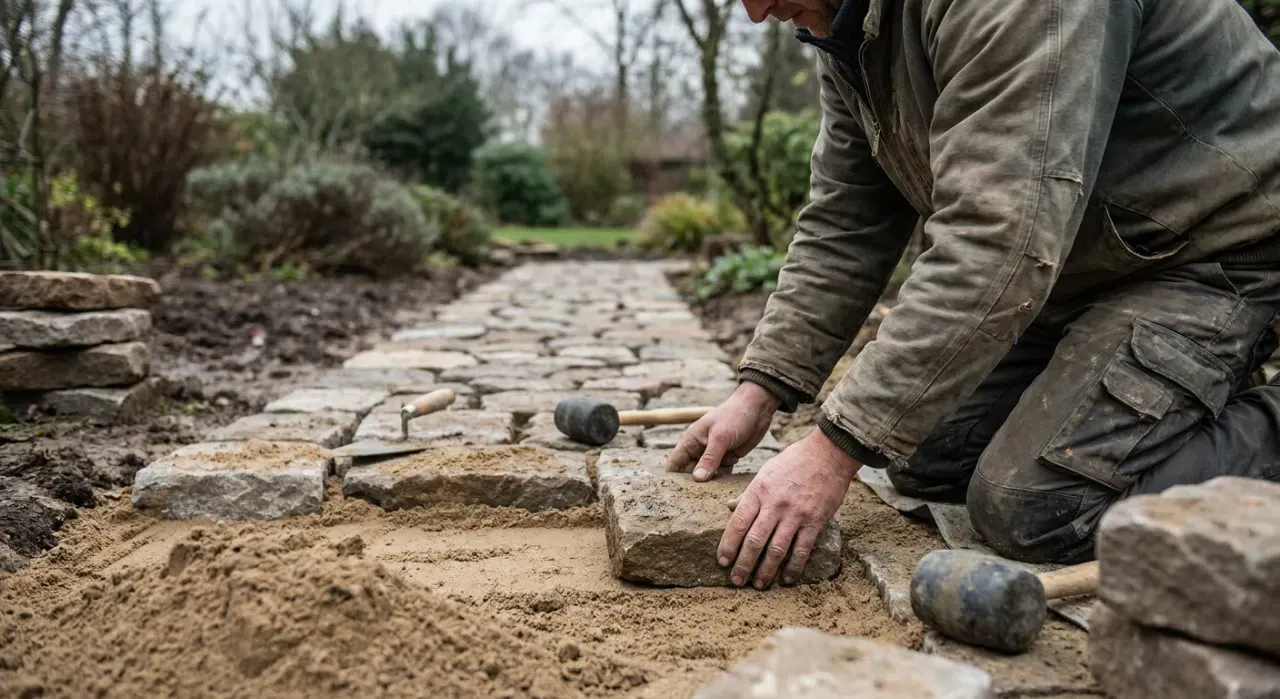
Preparation does most of the work. Strip sod and existing weeds, grade the subgrade smooth and slope it for drainage, and remove sharp roots and rocks that will bear against the sheet. Roll the fabric out flat with no wrinkles, overlap seams by at least 12 inches for traffic areas, and pin every 2 to 3 feet with 6-inch steel staples. Then place a 2-inch bedding layer of smaller crushed stone before the surface gravel, which spreads the point loads of angular material. Finish with at least 3 inches total stone depth for a path and 4 to 6 inches for a driveway, and carry the fabric fully under any edging so no edge is ever exposed to light.
What maintenance extends it?
Keep stone depth up and organic debris out. Rake fallen leaves off the path in fall rather than letting them break down into the stone, blow or sweep accumulated dirt from the surface, and top up gravel wherever it thins to less than about 2 inches, particularly in ruts and turning areas. Spot-treat any weed as soon as it appears rather than letting a root system establish. If soil is washing onto the path from an adjoining bed, fix that with edging, because that sediment is what eventually creates a seed bed on the surface. See how to install landscape edging for that work.
What else should you read?
For lifespans in other applications, see how long landscape fabric lasts, and for the case against using it in beds read should you put landscape fabric under mulch. If you are choosing a surface, gravel versus mulch paths compares the two, and can you lay pavers directly on dirt covers base construction. The consensus picks are in our best landscape fabric roundup. More in the landscaping and hardscaping hub.