 Garden

Affiliate Disclosure
Some links on this page are affiliate links. As an Amazon Associate, we earn from qualifying purchases — at no extra cost to you. We do not buy, test, or physically handle the products we cover; our rankings come from aggregated owner reviews, ratings and expert consensus. Commissions never change our verdicts. How we rank · full disclosure.
The short answer: dethatching removes a spongy layer of dead stems and roots above the soil; aerating pulls plugs out of the soil itself to relieve compaction. Measure before you choose. Cut a 3-inch wedge of turf: if the tan fibrous layer exceeds three-quarters of an inch, dethatch. If a screwdriver will not push 6 inches into moist soil, aerate. Most home lawns need aeration, not dethatching.
These two jobs get confused constantly, partly because rental counters stock both machines and partly because a lawn that feels spongy underfoot could be either. The diagnostics below take about ten minutes and save renting the wrong machine.
We never buy or physically handle the products we rank; recommendations come from aggregated owner reviews and expert consensus, described in how we rank. The full routine is at the lawn care hub.
Side by Side
| Dethatching | Core aeration | |
|---|---|---|
| Problem it solves | Thatch layer over 0.75 in | Compacted soil, poor infiltration |
| What it removes | Dead stems, roots, stolons above the soil | Plugs of actual soil, 2 to 3 in deep |
| Machine | Power rake, vertical mower, dethatching blade | Hollow-tine core aerator |
| Diagnostic | Cut a turf wedge, measure the tan layer | Screwdriver test in moist soil |
| Grasses that need it | Bermuda, zoysia, Kentucky bluegrass, St. Augustine | Any lawn on clay or with traffic |
| Aggression | High — the lawn looks wrecked for two weeks | Low — the lawn is usable the same day |
| Frequency | Only when measurement says so, often never | Annually on clay, every 2 to 3 years on loam |
| Pairs with overseeding | Yes, and it should | Yes, and it is the ideal preparation |
What Thatch Actually Is
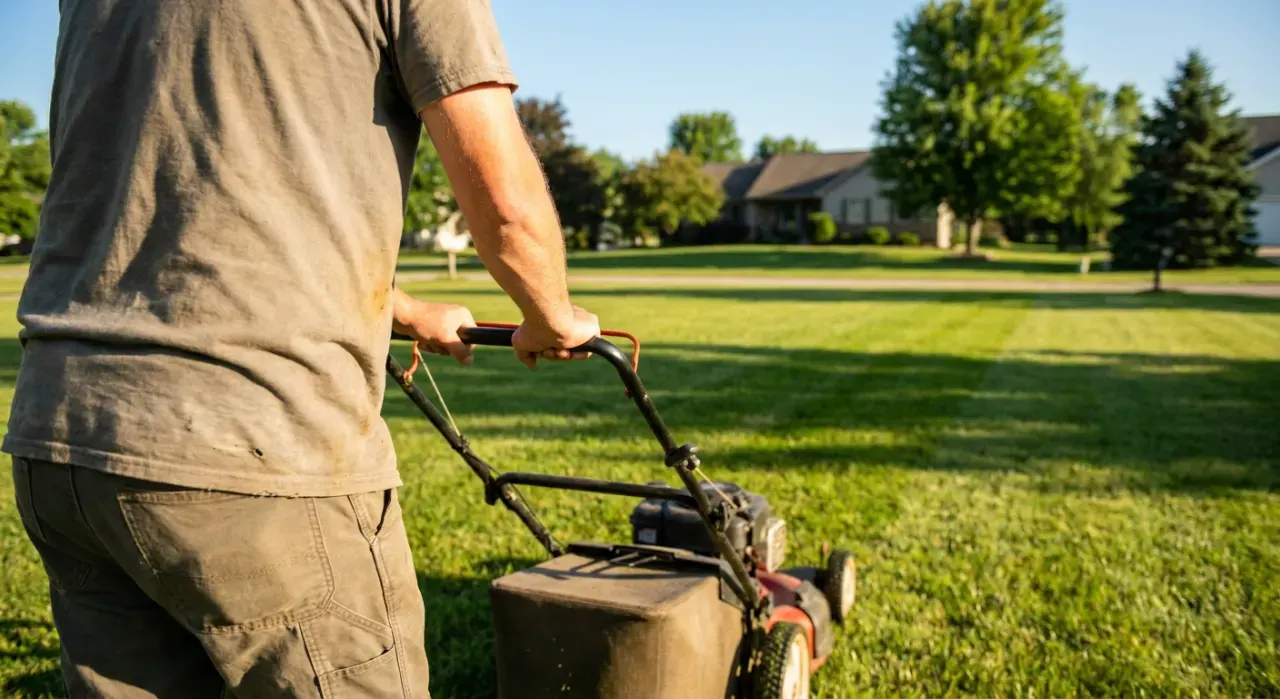
Thatch is a layer of dead and living stems, roots, rhizomes and stolons that accumulates between the green canopy and the soil surface. It is not made of grass clippings — that myth causes a lot of unnecessary bagging. Clippings are mostly water and soft leaf tissue and break down within weeks. Thatch is built from lignin-rich stem and root material that soil microbes decompose slowly.
A thin thatch layer, under a half-inch, is genuinely good for a lawn. It cushions traffic, moderates soil temperature, holds moisture and protects crowns. Removing it is a mistake.
The problem starts past about three-quarters of an inch. At that point the layer is thick enough to shed water rather than let it through, so irrigation and rain run off or perch above the soil. Roots begin growing in the thatch itself rather than in soil, which leaves them with no drought reserve at all. Fertilizer and pre-emergent bind in the organic layer instead of reaching the root zone. And the permanently damp mat becomes a reservoir for fungal disease and a habitat for chinch bugs and billbugs.
Measuring it. Push a spade in and cut out a wedge about 3 inches deep in a few spots around the lawn. Look at the cut face. Green blades on top, dark crumbly soil at the bottom, and between them a tan-to-brown fibrous layer that looks and feels like coarse felt. Put a ruler against it. Under 0.5 in, leave it. Between 0.5 and 0.75 in, address the causes rather than the layer. Over 0.75 in, dethatch.
Why Thatch Builds Up
Some grasses build it and some essentially never do. Species that spread by rhizomes and stolons — Bermuda, zoysia, St. Augustine, Kentucky bluegrass, creeping bentgrass — produce large amounts of stem tissue and are the usual candidates. Bunch-type grasses such as tall fescue and perennial ryegrass rarely accumulate meaningful thatch, which means a tall fescue lawn that feels spongy is almost certainly a compaction or moisture problem instead.
Beyond species, thatch is a symptom of management:
- Too much nitrogen. Pushing growth faster than microbes can decompose the residue is the single biggest cause. Heavy spring feeding on cool-season lawns is a classic contributor — the timing that actually works is in the lawn care calendar.
- Overwatering. Constantly saturated soil holds less oxygen, and the aerobic microbes that break thatch down slow right off.
- Compacted soil. Compaction suppresses the same soil biology, which is why the two problems so often appear together.
- Low pH. Soil below about 6.0 slows microbial activity considerably. This is worth testing before renting anything — see how to read a soil test and best soil test kit.
- Heavy pesticide and fungicide use, which suppresses earthworms and soil fungi that would otherwise be eating the layer.
Dethatch without changing any of those and the layer returns in two or three seasons.

How to Test for Compaction
Compaction is soil pressed dense enough that pore space collapses. Roots cannot push through it, water cannot infiltrate, and air cannot reach the root zone. It comes from foot and vehicle traffic, construction, clay soils, and years of mowing over wet ground.
The screwdriver test. Water the lawn, wait an hour, then push a long screwdriver into the soil with normal hand pressure. Six inches easily means no compaction problem. Stopping at 2 or 3 inches, or needing to lean on it, means compaction.
The runoff test. Run a sprinkler and watch. If water pools or starts running downhill within ten minutes, the soil is not accepting water at the rate you are applying it. On clay that partly reflects the soil type, but it worsens sharply with compaction.
The plug test. Cut and lift a plug of turf. Healthy soil shows white roots running down through it and crumbles in your hand. Compacted soil comes out as a dense slab with a shallow root mat sitting on top.
Compaction is far more common than excessive thatch on the average American lawn, particularly on new-build properties, where the topsoil was stripped and the subsoil driven over repeatedly during construction.
How to Aerate
Use a hollow-tine core aerator. It pulls plugs roughly half an inch across and 2 to 3 inches deep and drops them on the surface. Removing soil is the point: it creates real void space, so surrounding soil can expand into it and pressure genuinely drops. Solid-tine spike aerators and strap-on aerator shoes push soil sideways and compress it around each hole, which on clay achieves close to nothing and can make things marginally worse.
- Water thoroughly a day before. Tines cannot penetrate dry hard ground, and saturated ground smears. Aim for moist.
- Mark sprinkler heads, shallow cable runs and invisible fence wire. This is the most common expensive mistake of the day.
- Mow at your normal height before starting.
- Make two passes in different directions. One pass is a light treatment; two crossing passes give roughly the recommended density of 20 to 40 holes per square foot on a compacted lawn.
- Leave the plugs on the lawn. They look untidy for a week and then break down under mowing and rain, returning soil and microbes to the surface. Raking them off removes the topdressing effect you just paid for.
- Overseed and feed immediately. The holes are perfect seed pockets. This is why aeration and overseeding are done in the same session — the combination is worth far more than either alone. Rates and method are in how to overseed a lawn, and blends by region in best grass seed.
- Topdress with a quarter-inch of compost if you can. Compost worked into aeration holes is one of the highest-value things you can do for a struggling lawn, adding organic matter exactly where it is needed. See the composting and soil hub if you want a home supply.
Timing. Cool-season lawns: early fall, ideally the same day you overseed. Warm-season lawns: late spring into early summer, when they are growing hard. Never aerate a dormant lawn, and never aerate cool-season grass in midsummer — the holes dry the root zone out at the worst possible moment.
How to Dethatch
Dethatching is genuinely aggressive and the lawn will look shocking afterward, so only do it if the measurement justified it.
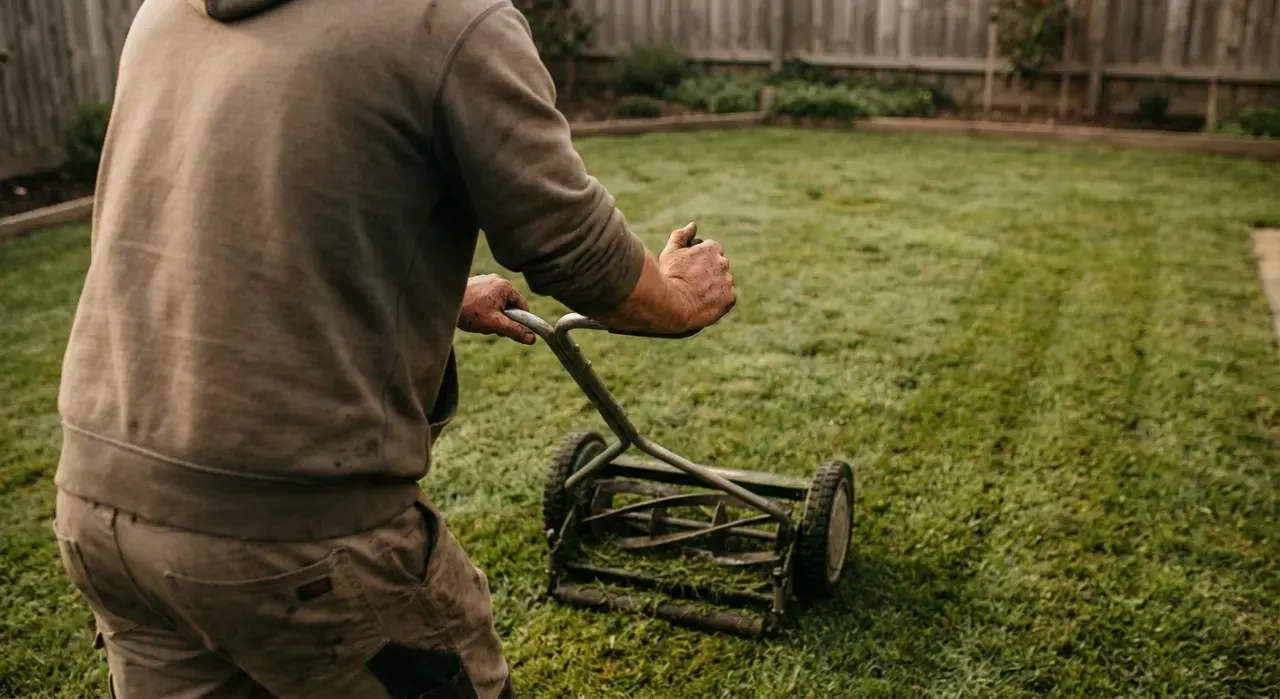
A power rake uses spring tines that flail the thatch layer out. A vertical mower, or verticutter, uses fixed vertical blades that slice into the layer and are more effective on dense Bermuda and zoysia thatch. A dethatching blade fitted to a walk-behind mower is the light-duty option, fine for a modest layer on a small lawn.
Mow low first, at about half your normal height. Set the machine so the tines just reach the soil surface, not down into it. Make one pass, then a second at 45 degrees only if the first did not clear enough. Then rake up the debris — a badly thatched lawn produces a startling volume of material, and it composts well as a brown once mixed with greens. Water thoroughly, feed, and overseed, because dethatching opens bare soil that will otherwise be colonized by weeds. Expect four to six weeks of recovery, which is why it is done at the start of the strong growth window and never in summer.
Doing Both, and Doing Neither
A lawn with over three-quarters of an inch of thatch and compacted soil beneath it needs both, in this order: dethatch first to remove the layer, then core aerate through the cleared surface, then overseed and topdress. It is a long day, and the lawn will look bad for a fortnight before improving markedly.
Many lawns need neither. Before renting anything, check that the mowing height matches the species and that the lawn is being watered deeply rather than daily — those two changes fix a surprising share of lawns described as spongy or thin. The numbers are in mowing height by grass type and how much to water a lawn. And if the lawn is thin because it is underfed rather than compacted, the feeding programs are compared in best lawn fertilizer.