 Garden

Affiliate Disclosure
Some links on this page are affiliate links. As an Amazon Associate, we earn from qualifying purchases — at no extra cost to you. We do not buy, test, or physically handle the products we cover; our rankings come from aggregated owner reviews, ratings and expert consensus. Commissions never change our verdicts. How we rank · full disclosure.
The short answer: the core difference is the season each grass grows in. Fescue is a cool-season grass — it thrives in spring and fall, stays green through cold, and tolerates shade, but struggles in extreme summer heat. Bermuda is a warm-season grass — it loves heat and full sun, spreads aggressively into a dense, traffic-tough lawn, and is drought-hardy, but it needs full sun and turns brown and dormant through winter. Your climate zone and how much sun the yard gets decide which one will actually thrive.
Pick the grass that suits your region and you get an easy lawn; fight your climate and you get a constant battle. We do not grow test plots; our seed rankings come from aggregated owner reviews and expert consensus, described in how we rank. The full picture is at the lawn care hub.
Fescue vs Bermuda at a glance
The two grasses are near-opposites on almost every trait, which is exactly why one suits the North and the other the South. Extension turf programs map both to broad climate bands: cool-season grasses for northern and transition zones, warm-season grasses for the South.
| Trait | Tall fescue | Bermuda |
|---|---|---|
| Season type | Cool-season | Warm-season |
| Best climate | North, transition zone | Hot South |
| Sun / shade | Sun to partial shade | Full sun only |
| Winter color | Stays green in mild cold | Brown, dormant |
| Summer heat | Can struggle in extreme heat | Thrives |
| Drought tolerance | Good (deep roots) | Excellent |
| Traffic tolerance | Moderate | High, self-repairing |
| Spread habit | Bunch-type, slow to fill | Aggressive runners |
| Mowing height | 3 to 4 in | 1 to 2 in |
Which grass suits your climate?
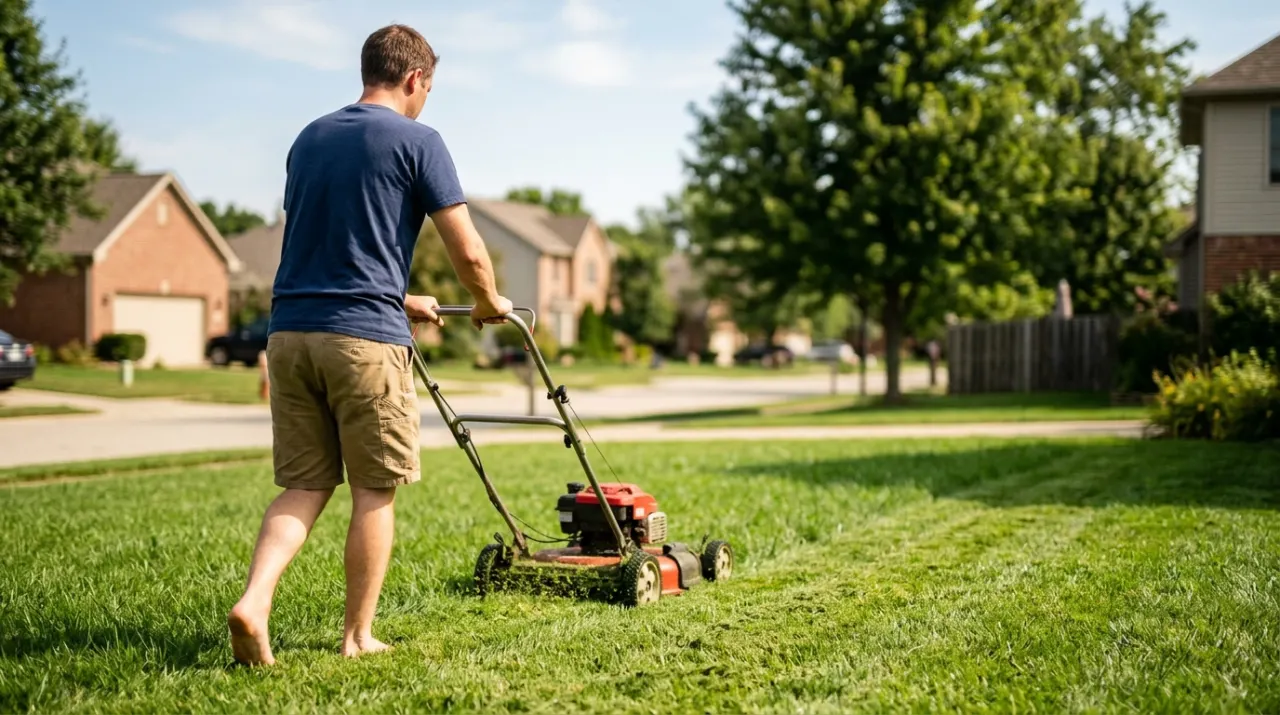
Climate is the first filter. Tall fescue is the workhorse cool-season grass for northern states and the transition zone, holding color through cold and tolerating the shade cast by houses and trees. Bermuda is a southern staple, needing the long, hot summers of the lower states to reach its dense, tough best; it simply will not stay green through a cold winter anywhere. In the transition zone that runs across the middle of the country, both are grown, and the choice comes down to shade and whether you value winter green over summer toughness. Matching height and habit to the grass is covered in mowing height by grass type.
How do they differ on shade and water?
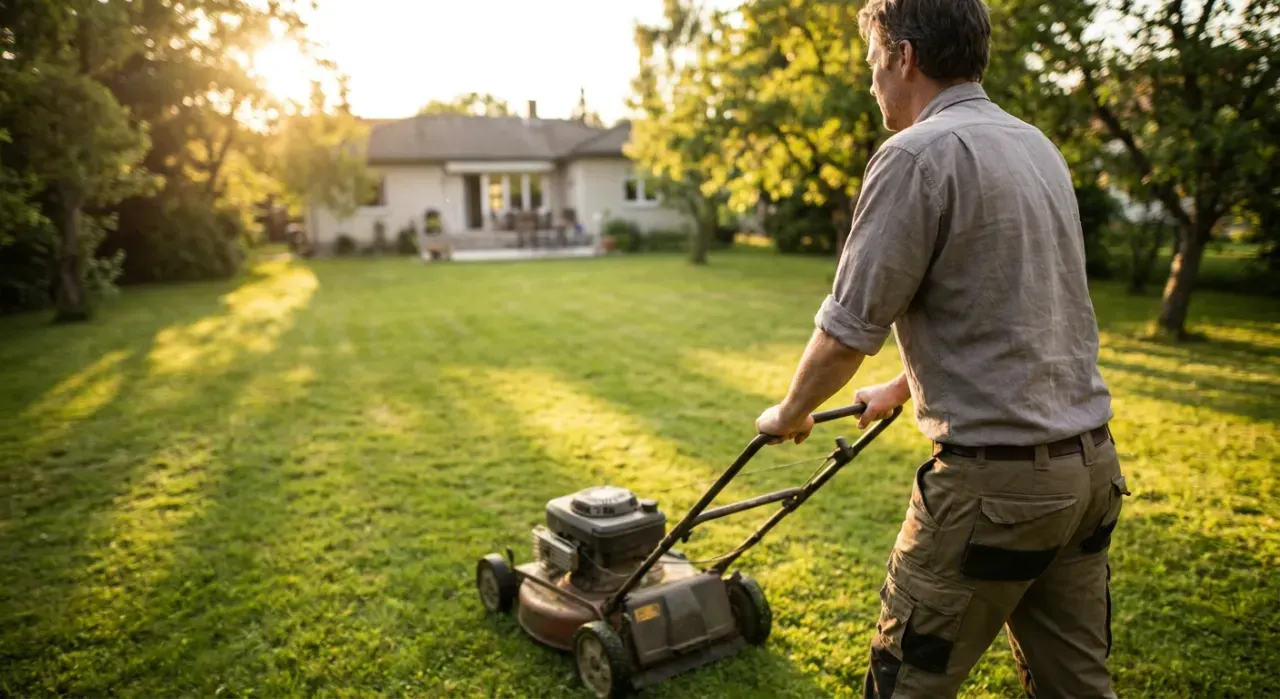
These two factors often decide it when climate leaves the door open for either. Bermuda demands at least six to eight hours of direct sun and thins to bare patches in shade, so a yard with mature trees or a shaded side leans strongly to fescue. On water, Bermuda is the more drought-frugal through summer, surviving dry spells by going dormant, while fescue keeps greener with regular deep watering. The trade-off is visible half the year: Bermuda's summer toughness comes with a brown winter, and fescue's near-year-round green comes with higher summer water needs. Watering strategy for both is in how much to water a lawn.

Which is easier to maintain?
They ask for different routines rather than more or less work overall. Bermuda grows fast in heat and needs frequent, low mowing plus edging to keep its runners from invading beds, but it repairs its own worn spots. Fescue is cut tall and mowed less often in summer, and because it is a bunch grass it does not spread to fill thin areas, so it is renewed by overseeding each fall — see how to overseed a lawn. Feeding schedules differ too, since each grass wants nitrogen during its own growing season.
The practical takeaway: let your USDA zone and sun exposure choose the grass, then follow that grass's routine. Our region-matched seed picks are in best grass seed. Related questions: grass seed germination time, does grass seed go bad?, and leaving clippings on the lawn.