 Garden


Affiliate Disclosure
Some links on this page are affiliate links. As an Amazon Associate, we earn from qualifying purchases — at no extra cost to you. We do not buy, test, or physically handle the products we cover; our rankings come from aggregated owner reviews, ratings and expert consensus. Commissions never change our verdicts. How we rank · full disclosure.
"Commercial" is not a pressure rating — it is a pump, an engine and a flow rate. Plenty of machines sold as commercial carry a 4000 PSI badge, an axial cam pump driven straight off the crankshaft, and an engine nobody stocks parts for. That is a homeowner machine with a large number on the carton, and it will be dead inside a season of daily use.
A genuinely commercial machine has a triplex plunger pump geared down to roughly half engine speed, with seals, valves and packings you replace on a bench; a commercial engine with a cast-iron cylinder sleeve and a nationwide parts counter; and at least 4 GPM, because production rate is what makes a job profitable and 4 GPM is the minimum that will properly spin a 20-inch surface cleaner. Everything below follows from those three.
Top Picks at a Glance
Why Flow Rate Is the Money Number
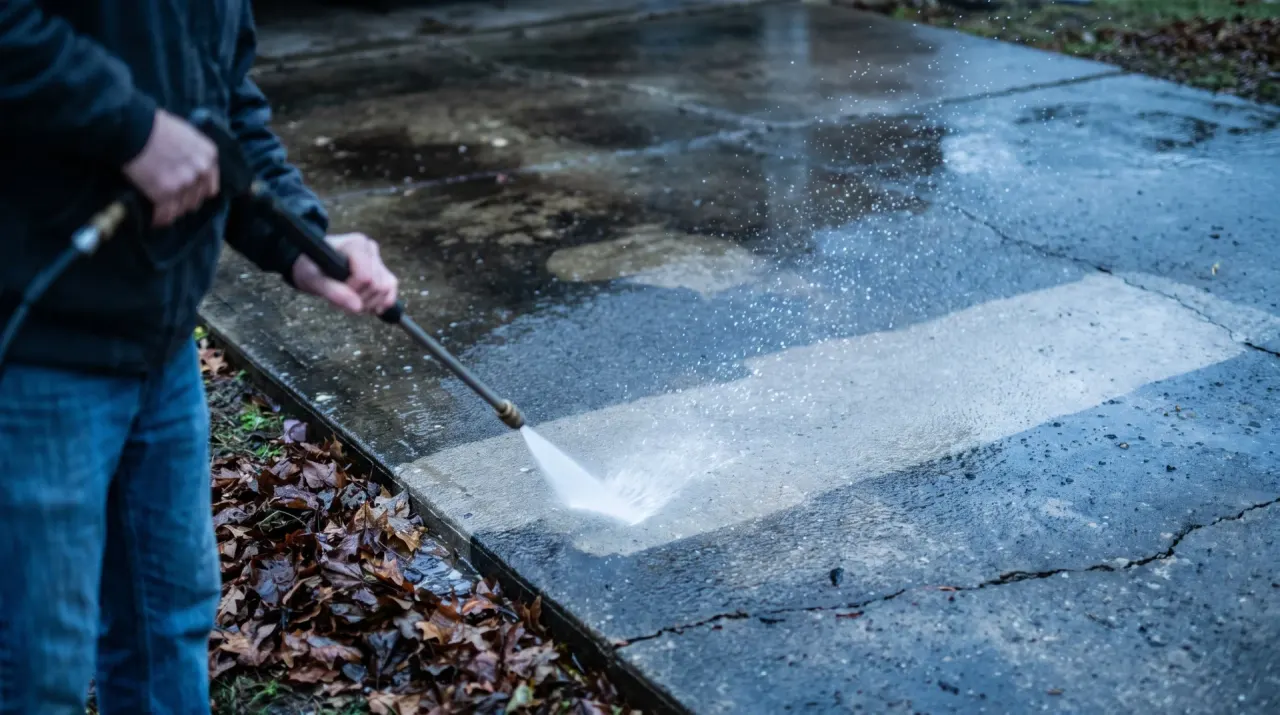
Cleaning speed is PSI multiplied by GPM. Pressure loosens; volume removes. On a contract that is not an abstraction — it is your labor cost per square foot.
| Machine class | PSI × GPM | Cleaning units | Surface cleaner it will drive |
|---|---|---|---|
| Good electric | 2300 × 1.76 | ~4,050 | 12 inch |
| Gas homeowner | 3400 × 2.6 | ~8,840 | 14–16 inch |
| Simpson Aluminum 3600 | 3600 × 2.5 | ~9,000 | 16 inch |
| Westinghouse WPX3400e (electric) | 3400 × 2.0 | ~6,800 | 14 inch |
| Simpson PS4240 | 4200 × 4.0 | ~16,800 | 20 inch |
| Simpson PowerShot 4400 | 4400 × 4.0 | ~17,600 | 20–24 inch |
The gap between a homeowner gas machine and a real 4 GPM unit is roughly double. On a 2,000 square foot driveway that is the difference between one job a day and two — which is the entire economic argument for spending $1,400 instead of $400.
Our #1 Pick: Simpson PS4240 PowerShot
The PS4240 is the machine most small pressure-washing businesses actually start with, and the reason is that it is the cheapest place the three commercial requirements meet honestly: a Honda GX390, an AAA triplex plunger pump, and 4.0 GPM at 4200 PSI. Nothing about that specification is aspirational — it is the standard configuration you will find on rental counters and in the back of contractors' trailers across the country.
What owners describe is a machine that starts, runs all day, and gets rebuilt rather than replaced. The Honda starts on the first or second pull years in, parts are available at any small-engine shop, and the triplex pump takes a seal kit for a fraction of what a new machine costs. The 50-foot steel-braided hose is rated to the full working pressure rather than being the weak link, which is not true of every machine at this price.
Its owner rating is lower than several homeowner machines, and that deserves an explanation rather than a dismissal. Machines in this class are bought by people whose income depends on them, run for hundreds of hours, and reviewed on uptime and on shipping damage to a 200-pound freight item — a much harsher standard than a Saturday-morning washer faces. Reading through the negative reviews, the recurring themes are freight damage, assembly, and unloader adjustment, not pump or engine failure.
Check price on Amazon → (paid link)
The Ranked Field

Best for the first machine of a cleaning business — concrete, fleet and flatwork
- 4200 PSI at 4.0 GPM — about 16,800 cleaning units
- Honda GX390 commercial engine with a cast-iron sleeve
- AAA triplex plunger pump with thermal relief
- 50-foot steel-braided hose and a welded steel frame
Why buy it: the combination that actually defines commercial duty — a Honda GX and a rebuildable triplex pump — at the lowest price that combination is honestly available.

Best for coastal work, marine cleaning and anywhere chemicals live on the frame
- Aluminum frame that will not rust out from the inside
- 4200 PSI at 2.5 GPM from a Honda GX390
- AAA triplex plunger pump, rebuildable
- 50-foot steel-braided hose rated to full working pressure
Why buy it: steel frames on wash rigs die of corrosion long before the engine does — an aluminum frame is the least glamorous upgrade in this list and one of the most durable.

Best for residential contractors who load and unload the machine several times a day
- 3600 PSI at 2.5 GPM, Honda GX200 engine
- Aluminum frame — meaningfully lighter to lift
- AAA triplex plunger pump
- 50-foot hose, professional-grade gun and wand
Why buy it: the highest-rated machine in this group, and the one whose weight you will notice most on the fifth job of the day rather than the first.
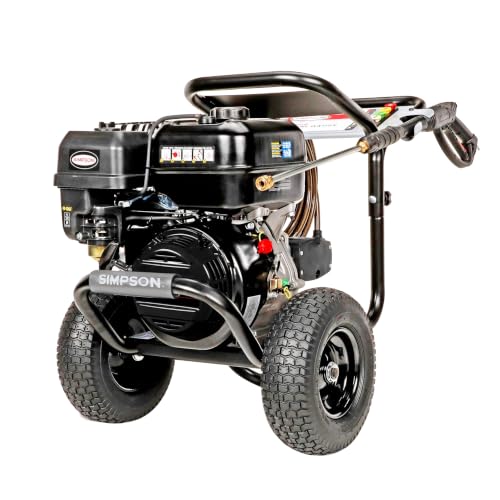
Best for buyers who need 4 GPM output and cannot stretch to a Honda
- 4400 PSI at 4.0 GPM — roughly 17,600 cleaning units
- Simpson CRX 420cc engine rather than a Honda
- AAA triplex plunger pump
- Welded steel frame with 13-inch pneumatic tires
Why buy it: the raw output figure is outstanding for the money — but note the rating, which is the lowest in this group and reflects genuine owner frustration with the engine.

Best for a second machine, or a business testing whether it needs commercial flow
- 4400 PSI at 4.2 GPM, five quick-connect nozzles
- Triplex plunger pump
- Steel frame, spray gun and wand included
- Priced well below the Honda-engined competition
Why buy it: the cheapest route into genuine 4 GPM territory, with the caveat that the engine and support network are not in the same class as a Honda GX.
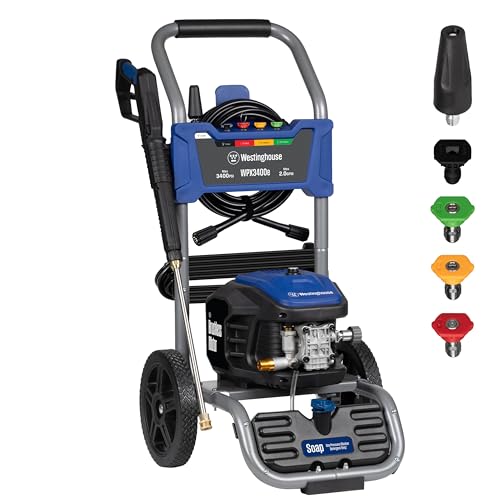
Best for indoor bays, food premises, parking garages and noise-restricted sites
- 3400 max PSI at 2.0 max GPM from a brushless motor
- No exhaust — usable indoors and in enclosed bays
- Far quieter than any gas machine
- Rolling frame with onboard hose and nozzle storage
Why buy it: the one commercial situation gas cannot serve at all: anywhere the exhaust or the noise is unacceptable, which is more job sites than people expect.

Quick Comparison
| Product | Best for | Rating | Price | Buy |
|---|---|---|---|---|
| Simpson PS4240 PowerShot Gas Pressure Washer, Honda GX390, 4200 PSI at 4.0 GPM | Best Overall Commercial | — | Check (paid link) | |
| Simpson Aluminum Series 4200 PSI Gas Pressure Washer, 2.5 GPM, Honda GX390 | Best Corrosion Resistance | — | Check (paid link) | |
| Simpson Aluminum Series 3600 PSI Gas Pressure Washer, 2.5 GPM, Honda GX200 | Best Lighter Pro Unit | — | Check (paid link) | |
| Simpson PowerShot 4400 PSI Gas Pressure Washer, 4.0 GPM, CRX 420cc Engine | Most Output per Dollar | — | Check (paid link) | |
| Westinghouse WPX4400 Gas Pressure Washer, 4400 PSI and 4.2 GPM | Best Value | — | Check (paid link) | |
| Westinghouse WPX3400e Electric Pressure Washer, 3400 Max PSI, 2.0 Max GPM, Brushless | Best Electric Commercial | — | Check (paid link) |
The Constraint Nobody Plans For: Water Supply
A 4 GPM machine needs 4 gallons per minute delivered to its inlet, continuously, or it will cavitate and destroy its own pump. A standard residential hose bib delivers somewhere between 4 and 9 GPM depending on pressure and pipe size, and a 50-foot garden hose at 5/8 inch will strangle it further. This is the single most common reason a new commercial machine surges, pulses and then fails.
- Measure before you buy. Time how long the client's spigot takes to fill a 5-gallon bucket. Under 60 seconds is 5 GPM or better; over 90 seconds and you need a buffer tank.
- Use 3/4-inch supply hose, not 5/8, and keep it as short as practical.
- Fit a buffer tank for anything above 4 GPM if you work off customer spigots. A 100 to 300 gallon tank feeding the pump by gravity removes the variable entirely and is why every established rig has one.
- Never let the pump run dry. Even briefly. It is the fastest way to kill a triplex.
If your machine hunts up and down under load, start here rather than at the unloader — see why a pressure washer surges.
Hot Water: When It Is Worth It
| Work type | Cold enough? | Why |
|---|---|---|
| Concrete, driveways, flatwork | Yes | Cold plus a sodium hypochlorite mix does it |
| House washing, siding | Yes — and low pressure | This is soft washing, not pressure washing |
| Decks and fences | Yes | Heat raises the grain faster on softwood |
| Kitchen exhaust, drive-through pads | No | Grease needs 180–200°F to emulsify |
| Fleet and equipment degreasing | No | Cold water pushes oil around rather than lifting it |
| Food processing floors | No | Sanitation protocols normally specify hot |
A hot-water skid costs several times a cold machine, burns diesel or kerosene, and adds a coil and burner to the maintenance list. Buy one when you have signed the contract that needs it, not before.
Runoff, Permits and the Part That Bites Contractors
Wash water leaving a commercial job and reaching a storm drain is a regulated discharge in most of the United States. The EPA's NPDES industrial stormwater program is the federal framework, and many cities layer their own ordinances on top, requiring containment mats, vacuum recovery and disposal to sanitary sewer for parking lots, fleet washing and anything involving degreaser. Enforcement lands on the contractor. Check your city's stormwater ordinance and your state contractor board before you quote — this is general information, not legal advice, and the rules genuinely differ from one county to the next.
In California, note also that the CARB small off-road engine program has ended new sales of most gas-powered small engines, which affects what you can buy new in-state even though existing machines remain legal to run.
How We Rank
We do not buy or operate these machines. Rankings come from aggregated owner ratings across the most-owned commercial pressure washers, weighted toward reviews written after sustained use, and cross-checked against published pump, engine and flow specifications. Four things carry weight: pump architecture, since a triplex is the dividing line between commercial and prosumer; engine support, meaning whether parts and service exist in every county rather than only online; real production rate, computed as cleaning units; and frame and hose specification, because those are what fail first on a machine that lives in a trailer. Prices were checked at the time of writing. Full method: how we rank.
The Field, Reviewed
1. Simpson PS4240 PowerShot — Best Overall Commercial
Covered above. Owners praise: Honda reliability, a pump that takes a seal kit, real 4 GPM production, and a hose rated to the full pressure. Owners gripe about: freight damage on delivery, assembly time, and unloader adjustment out of the box. Check price (paid link).
2. Simpson Aluminum Series 4200 — Best Corrosion Resistance
The same Honda and pump on an aluminum frame. If your machine lives near salt air, or gets sodium hypochlorite splashed on it every day, this is the version that will still look serviceable in five years.
Owners praise: corrosion resistance, lighter lifting than the steel frame, and the same rebuildable triplex. Owners gripe about: a lower flow rate than the PS4240 at the same price, and an aluminum frame that dents where steel would bend back. Check price (paid link).
3. Simpson Aluminum Series 3600 (GX200) — Best Lighter Pro Unit
The highest owner rating in this group, and the machine that makes most sense for residential contractors doing houses, decks and driveways rather than industrial flatwork. Lighter to lift into a truck bed, and the GX200 is a genuinely long-lived engine.
Owners praise: reliability, manageable weight, and professional-grade gun and hose. Owners gripe about: 2.5 GPM limiting surface-cleaner size, and a price close to 4 GPM machines. Check price (paid link).
4. Simpson PowerShot 4400 (CRX) — Most Output per Dollar
Outstanding numbers, and the lowest rating in this group. The pump and frame are the same Simpson quality; the CRX 420cc engine is where the complaints land, and the difference against a Honda GX390 shows up in starting behavior and in how easy it is to get parts locally.
Owners praise: 4400 PSI at 4 GPM for well under Honda money, and a solid triplex pump. Owners gripe about: hard starting, carburetor issues on some units, and limited local service for the engine. Check price (paid link).
5. Westinghouse WPX4400 — Best Value
The cheapest honest route to 4+ GPM. A triplex pump at this price is genuinely notable, and if the machine is a second unit or a business is testing whether it needs commercial flow at all, that matters more than brand.
Owners praise: the price against the output, and a real triplex rather than an axial pump. Owners gripe about: a small review base compared with Simpson, engine support that is not a Honda dealer network, and assembly quality. Check price (paid link).
6. Westinghouse WPX3400e — Best Electric Commercial
Not a substitute for a gas rig, but the answer to a problem gas cannot solve. Parking garages, indoor wash bays, food premises and noise-restricted municipal work all rule out an internal combustion engine entirely, and a brushless 2.0 GPM electric does that work quietly and without exhaust.
Owners praise: genuine indoor usability, low noise, and a brushless motor that runs cooler than the universal motors in cheap electrics. Owners gripe about: 2.0 GPM capping production rate, a power draw that needs a proper 15-amp circuit to itself, and cord management on a big site. Check price (paid link).
What Owners Actually Complain About
Freight damage. These ship as 150 to 250-pound palletised items and arrive dented or with bent handles more often than small parcels do. Photograph the pallet before you sign.
Engine, not pump. Across this whole class the negative reviews concentrate on non-Honda engines — hard starting, carburetors gumming, and no local service. The triplex pumps are rarely the complaint.
Inadequate water supply. Contractors buy 4 GPM machines and feed them from a 5/8-inch garden hose on a weak spigot, then report surging and pump failure. It is a plumbing problem, not a machine problem.
Unloader adjustment. Several of these arrive set conservatively and need the unloader adjusting to reach rated pressure — routine on commercial equipment, alarming if you have only owned homeowner machines.
Weight. A 4 GPM Honda machine is a two-person lift. Plan the ramp or the trailer before delivery day.
The Verdict
If you are buying a machine to earn money with, buy the Simpson PS4240: Honda GX390, triplex pump, 4 GPM, and the parts network to keep it running. Choose the Simpson Aluminum 4200 instead if the machine will live in salt air or under a constant chemical mist, and the Aluminum 3600 if you do residential work and lift the machine several times a day. Take the Westinghouse WPX3400e as a second machine for indoor and noise-restricted sites — it opens up work the gas rig legally cannot touch. And before any of it, check the water supply, because a 4 GPM pump starved of water is a $1,400 mistake. Check price on Amazon → (paid link)
More from this hub: leaf blowers & yard cleanup · best gas pressure washer · best surface cleaner · pressure washer trailer setups · how we rank.