 Garden

Affiliate Disclosure
Some links on this page are affiliate links. As an Amazon Associate, we earn from qualifying purchases — at no extra cost to you. We do not buy, test, or physically handle the products we cover; our rankings come from aggregated owner reviews, ratings and expert consensus. Commissions never change our verdicts. How we rank · full disclosure.
There is no single best pressure washer soap, because there are three different jobs. Almost all outdoor discoloration is organic — algae, mildew and weathering — and that wants an oxygenated cleaner. Oil, road film and engine grime are hydrocarbons, and those want an alkaline degreaser. Anything with paint and wax on it wants a pH-balanced car soap. Buying the wrong category is far more consequential than buying the wrong brand within it, and it is the mistake behind most disappointed reviews.
The other thing worth settling before anything else: chlorine bleach does not belong in a consumer pressure washer. It degrades pump seals and O-rings, and it is the reason a lot of machines quietly die a season early.
Top Picks at a Glance

The three categories, and how to tell which you need
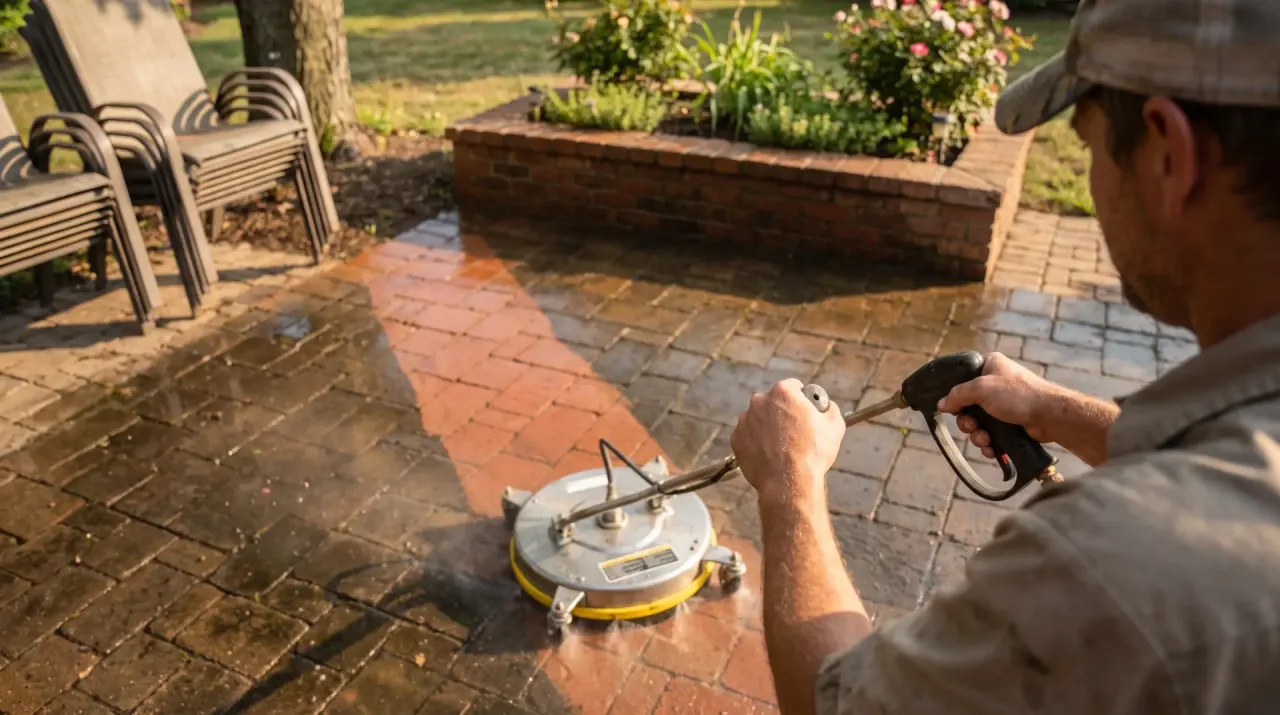
Stand in front of the surface and ask what color the dirt is. Black or green streaking on siding, a gray fence, a patio that has gone dark on the shaded side — that is biological growth and organic weathering, and an oxygen cleaner dissolves it. A dark blotch under where a car parks, a grimy garage floor, a sooty grill surround — that is oil, and an oxygen cleaner will barely touch it.
| Category | Active chemistry | What it removes | Where it belongs |
|---|---|---|---|
| Oxygenated outdoor cleaner | Sodium percarbonate / hydrogen peroxide | Algae, mildew, gray weathering, general grime | Siding, decks, fences, concrete, furniture |
| Alkaline degreaser | Surfactants plus builders, high pH | Oil, grease, road film, engine grime | Driveways, garage floors, equipment |
| pH-balanced car soap | Neutral surfactants, foaming agents | Road dirt without stripping wax | Vehicles, boats, painted metal |
| Sodium hypochlorite (soft wash) | Chlorine bleach plus a surfactant | Heavy mold and algae, fast | Professional downstream systems only |
| Acid cleaner | Muriatic, oxalic, phosphoric | Rust, efflorescence, mineral staining | Spot use, never through the pump |
Our #1 Pick: Simple Green Oxy Solve Total Outdoor
If you are going to own one bottle, this is the one that covers the most ground. The chemistry is peroxide-based rather than chlorine-based, which matters for three separate reasons: it will not attack pump seals, it does not produce chlorine fumes in a confined side yard, and it is far less hostile to the plants growing next to whatever you are washing. The formulation carries EPA Safer Choice certification, a program that reviews every intentionally added ingredient against the agency's safety criteria — a genuinely meaningful label rather than a marketing claim.
What the owner-review record consistently reports is that it works on the things people actually wash: green film on north-facing siding, gray weathered fence boards, patio furniture that has spent a winter outdoors, and the dark bloom that creeps across shaded concrete. It is a concentrate, and reviewers who dilute it as directed and let it dwell are the ones reporting the best results. The recurring criticism is equally consistent — it is not fast, and it will not shift an oil stain, which is a category limitation rather than a product fault.
Check price on Amazon → (paid link)
The Ranked Field

Best for one bottle that covers concrete, siding, fences, decks and outdoor furniture
- Peroxide-based oxygenated chemistry rather than chlorine bleach
- EPA Safer Choice certified formulation
- Concentrate — a gallon makes a very large volume of working solution
- Safe through a detergent injector and safe on most plants once diluted and rinsed
Why buy it: the sensible default. Oxygenated cleaners lift the organic black and green staining that covers most outdoor surfaces without the seal damage, fume risk and plant kill that come with putting chlorine bleach through a machine.

Best for oil, road film, engine grime and general garage-floor filth
- Alkaline degreaser rather than an oxygen cleaner — different job entirely
- Rated for use through pressure washer detergent systems
- Gallon concentrate, biodegradable formulation
- Needs dwell time and brush agitation to do its best work
Why buy it: oxygen cleaners are for organic staining and degreasers are for hydrocarbons, and no single product does both well. If your problem is oily rather than green, this is the bottle you actually need.

Best for driveways, walkways, patios and garage floors
- Formulated for the alkaline, porous surface concrete actually is
- Oxygenated chemistry — no chlorine, no acid, no etching
- Works with a surface cleaner attachment or through a soap nozzle
- Concentrated for injector dilution
Why buy it: concrete rewards a cleaner that can sit on it for ten minutes without drying or etching. Acid cleaners work fast and leave a lighter, rougher patch that soils again quicker — this is the slower, safer route.

Best for decks, fences, pergolas and anything you do not want furred
- Sodium percarbonate chemistry, the standard for wood brightening
- Lifts gray weathering and mildew without chlorine
- Lets you clean wood at low pressure, which is the point
- Rinses without leaving a film that blocks stain adhesion
Why buy it: on wood the chemistry is doing the work and the pressure washer is only rinsing. That is the whole trick — the damage people do to decks comes from using pressure to replace a detergent that would have done it gently.
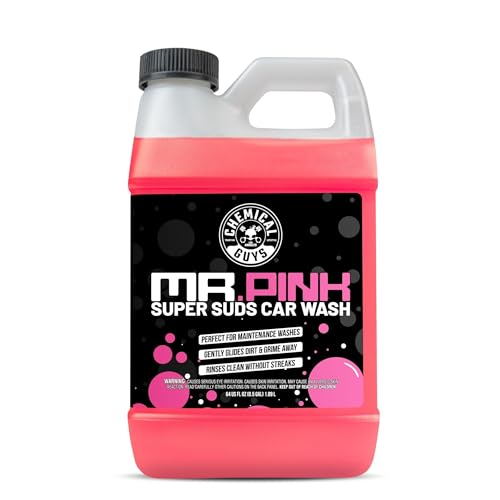
Best for foam cannon washes and anything with paint you care about
- pH-balanced so it will not strip wax or sealant
- Formulated to foam thickly in a cannon rather than a bucket
- Very high dilution ratio — an ounce or two per wash
- Rinses clean without spotting on dark paint
Why buy it: outdoor cleaners are alkaline by design and alkalinity strips wax and dulls trim. A pH-balanced car soap is a genuinely different product, not a milder version of the same one.

Best for occasional users who do not want a gallon sitting in the garage
- Highly concentrated — a quart covers a lot of surface
- Formulated specifically for pressure washer detergent systems
- Low-foaming enough not to clog an injector
- Works across siding, patios, furniture and general grime
Why buy it: a gallon of concentrate is more detergent than a lot of households will use in three years, and it does not improve with age. Buying a quart of something genuinely concentrated is often the more honest purchase.

Quick Comparison
| Product | Best for | Rating | Price | Buy |
|---|---|---|---|---|
| Simple Green Oxy Solve Total Outdoor Pressure Washer Cleaner Concentrate, 1 Gallon | Best Overall | — | Check (paid link) | |
| Sun Joe SPX-APC1G All-Purpose Heavy Duty Pressure Washer Rated Cleaner and Degreaser, 1 Gallon | Best Value Degreaser | — | Check (paid link) | |
| Simple Green Oxy Solve Concrete and Driveway Pressure Washer Cleaner, 128 fl oz | Best for Concrete | — | Check (paid link) | |
| Simple Green Oxy Solve Deck and Fence Pressure Washer Cleaner, 128 fl oz | Best for Wood | — | Check (paid link) | |
| Chemical Guys Mr. Pink Super Suds Car Wash Soap for Foam Cannons, 64 oz | Best for Cars | — | Check (paid link) | |
| Kärcher Multi Purpose Pressure Washer Detergent, Highly Concentrated, 1 Quart | Most Concentrated | — | Check (paid link) |
Why bleach must not go through the machine
This is the most important paragraph on the page. Sodium hypochlorite is aggressive toward the elastomer seals, O-rings and light alloy components inside a pressure washer pump. Run it through the high-pressure side and you are not risking a dramatic failure so much as buying a shortened life — seals harden, weep, and the machine loses pressure a season or two early. Manufacturers are near-unanimous in excluding it from warranty coverage.
Professional soft-washing does use hypochlorite, but the delivery is completely different: a downstream injector introduces it after the pump, at low pressure, so it never passes through the pump head, and dedicated soft-wash rigs use chemical-resistant pumps entirely.
Getting the detergent to actually work
Most disappointment with pressure washer soap is a technique problem rather than a product problem. Four things account for nearly all of it.
Fit the black nozzle. A detergent injector only draws when pressure at that point is low, which is what the large-orifice soap tip is for. With a cleaning tip fitted, most machines will not siphon detergent at all — and owners conclude the soap "does nothing". Our step-by-step is in how to use soap in a pressure washer.
Give it dwell time. Five to ten minutes is where the chemistry does its work. Applying detergent and immediately blasting it off wastes the entire bottle.
Do not let it dry. A dried oxygen cleaner leaves streaks that are harder to remove than the original dirt. Work in shade or in sections, and mist the surface if it starts drying.
Rinse bottom-up on vertical surfaces. Starting at the bottom prevents dirty runoff soaking into dry siding below and leaving streaks that will not come out. Do the final pass top-down.
And flush the soap line with clean water for a minute at the end of every job. Detergent left to dry in an injector is the most common cause of a check valve sticking, which then shows up as a machine that has mysteriously lost pressure.
Dilution, and the number people miss
Concentrates vary from around 10:1 to 30:1 and beyond, so the label is the only authority. What surprises most owners is the second dilution: a downstream injector adds its own, typically in the range of 10:1 to 20:1, which means a solution mixed at label strength in the tank arrives at the wall much weaker.
Two practical consequences. First, if a cleaner seems ineffective, the fix is usually a stronger tank mix rather than a different product. Second, for a small area it is often faster to mix the working solution in a pump sprayer, apply it directly at full strength, let it dwell, and use the pressure washer only to rinse. That approach uses less product and gets the chemistry onto the surface at the concentration the label intended.

Plants, pets and where the rinse water goes
Pre-wet every plant and shrub within reach before you start and rinse them again afterward — dilution is the whole defense, and a dry leaf that takes a splash of concentrate is the one that burns. Keep pets indoors while a surface is wet with detergent. Oxygenated cleaners are considerably gentler on planting than hypochlorite, which is one of the strongest practical arguments for them in a domestic yard.
Runoff matters too. Storm drains do not lead to a treatment plant; the EPA's stormwater best-management guidance is explicit that what enters them reaches streams, lakes and coastal waters untreated, and many municipalities prohibit discharging wash water into them. Steer the rinse onto lawn or gravel where soil can filter it, and use the least water the job needs.
What owners actually complain about
"It didn't do anything." By a wide margin the most common review, and it splits into three causes: the wrong category of cleaner for the stain, a cleaning nozzle fitted instead of the soap tip, and no dwell time. All three are free to fix.
Injectors that will not draw. Thick or heavily foaming products — dish soap especially — clog venturi injectors. Products labeled pressure washer rated are formulated to avoid it.
Streaking after drying. Almost always an oxygen cleaner that dried on the surface in sun. Section the job and keep the surface wet.
The gallon that outlived its usefulness. A gallon of concentrate is a lot of detergent for a household, and reviewers who bought one for a single job routinely mention it sitting half-used years later.
How we rank
We do not buy or use these products. Rankings come from aggregated owner ratings across the most-bought pressure washer detergents, weighted toward reviews that describe a specific surface and a specific result, and cross-checked against published formulation and dilution data and against third-party certification such as EPA Safer Choice. Four things carry the weight: fitness for the actual stain, since category error causes most failures; machine safety, meaning low-foaming and non-corrosive to pump seals; dilution honesty, because a cheap gallon that dilutes at 10:1 can cost more per wash than an expensive quart at 30:1; and environmental profile, especially around planting and runoff. Prices were checked at the time of writing. Full method: how we rank.
The verdict
Buy Simple Green Oxy Solve Total Outdoor if you want one bottle for the house, the fence, the furniture and the patio. Add the Sun Joe all-purpose degreaser if oil is your real problem, because no oxygen cleaner will do that job. Use a pH-balanced soap like Mr. Pink on anything with paint. And keep chlorine bleach out of the machine entirely — the seals it damages are not the part you can easily replace. Check price on Amazon → (paid link)
More from this hub: leaf blowers & yard cleanup · how to use soap in a pressure washer · how to remove oil stains from a driveway · best pressure washer · how we rank.