 Garden

Affiliate Disclosure
Some links on this page are affiliate links. As an Amazon Associate, we earn from qualifying purchases — at no extra cost to you. We do not buy, test, or physically handle the products we cover; our rankings come from aggregated owner reviews, ratings and expert consensus. Commissions never change our verdicts. How we rank · full disclosure.
This is the one grilling accessory where the safety record should decide the purchase, and it usually does not. Wire grill brushes shed bristles. The bristles stick to the hot grate, transfer to the food, and get swallowed. CDC's Morbidity and Mortality Weekly Report documented twelve such cases at a single Rhode Island hospital system between 2009 and 2012 — six in one series, six more in a follow-up — and described injuries ranging from "puncture of the soft tissues of the neck, causing severe pain on swallowing, to perforation of the gastrointestinal tract requiring emergent surgery."
Twelve cases at one hospital in three years is not a freak event; it is a pattern that only came to light because the emergency physicians there started looking for it. MMWR's own recommendation to the public is short and worth quoting: examine the grill surface carefully before cooking for bristles that might have dislodged, and consider "alternative residential grill-cleaning methods or products."
That is why this ranking puts bristle-free designs at the top. The best of them clean as well as wire, and none of them can put a piece of steel in a burger.
Top Picks at a Glance

The Five Ways to Clean a Grate
| Type | Shed risk | Cleaning power | Safe on porcelain? |
|---|---|---|---|
| Bristle-free stainless coil | None | High | Yes |
| Steam brush with a scrubber pad | None | High, on a hot grate | Yes |
| Wooden grate scraper | None | Moderate to high | Yes |
| Woven stainless mesh (wire) | Low but real | High | Use light pressure |
| Loose radial wire bristles | High — the documented hazard | High | Scratches enamel |
| Nylon bristles | None | Low; melts on heat | Yes, cold only |
Our #1 Pick: 18-inch Bristle-Free Coil Brush
Tightly wound stainless coils replace loose bristles, so the cleaning surface is continuous metal with nothing to break free. It is the most-owned bristle-free brush on the market, and the volume of the owner record is what lets us say something useful about it rather than repeating the manufacturer's claim.
What owners consistently report is that it cleans about as well as a wire brush on a properly preheated grate, and noticeably worse on a cold one — which is true of every design here. The scraper edge earns its place on the back bars of a gas grill where carbon builds thickest. The 18-inch handle is the right length for a full-size three or four-burner grill; on a big offset smoker you want the longer BBQ-Aid instead.
The honest criticisms: the coils flatten over a season of hard use and the brush gets less effective as they do, which is a wear item rather than a defect. Some owners find it slower on porcelain grates with heavy buildup, because coils cannot reach into the profile of a rounded bar the way splayed bristles can. And it is a heavier tool than a cheap wire brush, which matters if you are working at arm's length over a hot grate.
None of that changes the calculation. A brush that cleans 90% as fast and cannot put a wire in your food is the better buy, and the gap in cleaning speed disappears entirely if you preheat properly.
Check price on Amazon → (paid link)
The Ranked Field

Best for the default replacement for a wire brush, on any grate material
- Tight stainless coils instead of loose bristles — nothing to shed
- Built-in scraper edge for carbon buildup
- 18-inch handle keeps hands away from the heat
- Safe on porcelain, cast iron, stainless and infrared grates
Why buy it: the most-owned bristle-free brush in the country, which matters here more than in any other category — this is the design that removes the ingestion risk entirely.
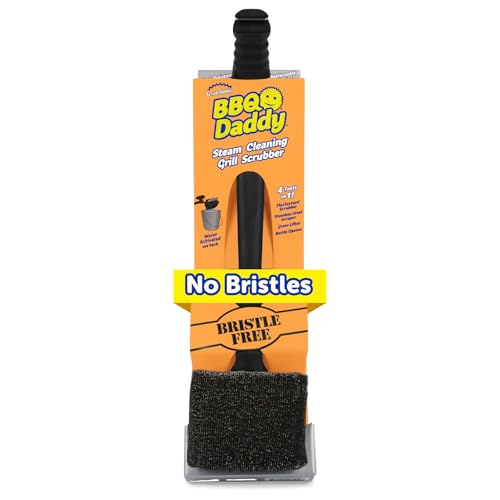
Best for people who hate scrubbing and would rather let water do it
- Reservoir releases water onto the hot grate to steam off residue
- Replaceable bristle-free scrubber head
- No wire, no shedding, dishwasher-safe head
- Works cold as a scraper too
Why buy it: steam does the loosening so you are not grinding carbon off with force — the reason owners describe it as the first brush they have not thrown away in frustration.
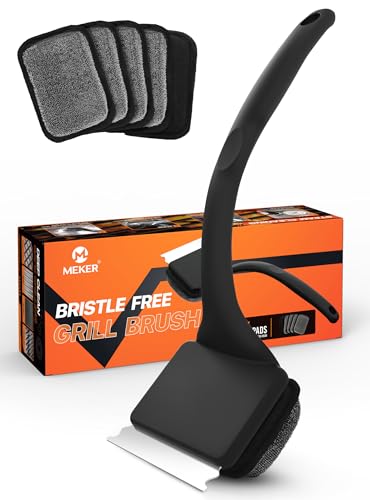
Best for heavy grillers who wear out a head every season
- Bristle-free scrubbing pad head with five spares in the box
- Angled head reaches between and under bars
- Rated for cast iron, porcelain and stainless grates
- Long handle with a hanging loop
Why buy it: five heads means you replace the pad the moment it stops working instead of scrubbing harder with a worn one, which is when grates get scratched.

Best for porcelain-enameled grates that scratch under steel
- Nylon bristles that will not scratch porcelain enamel
- Integrated scraper and bottle opener
- 17-inch handle with a rubber grip
- Rinses clean under a tap
Why buy it: the gentlest option for enameled grates — but nylon melts, so this one is only used on a cold or barely warm grate, never a hot one.

Best for buyers who want wire and want the lowest-shedding wire design available
- Woven stainless wire mesh rather than loose radial bristles
- Three-sided head cleans top, sides and between bars in one pass
- 18-inch handle and a scraper edge
- Dishwasher safe
Why buy it: if you will not give up wire, a woven mesh sheds far less than a conventional bristle head — but it is not zero risk, and the grate must still be inspected before you cook.

Best for big grills, deep smokers and anyone who has singed their knuckles
- Extra-long wooden handle for distance from the fire
- Wide woven head covers more grate per stroke
- Steel scraper for the heavy carbon at the back
- Replaceable head design
Why buy it: reach is an underrated safety feature — most grill-brush burns happen because the handle was too short to clean the far grate comfortably.

Quick Comparison
| Product | Best for | Rating | Price | Buy |
|---|---|---|---|---|
| Bristle Free Grill Brush and Scraper, 18-inch Stainless Steel Coil Head | Best Overall | — | Check (paid link) | |
| Scrub Daddy BBQ Daddy Grill Brush, Bristle Free with Steel Scrubber Head | Best Steam Cleaner | — | Check (paid link) | |
| MEKER Bristle Free Grill Brush with 5 Replacement Heads, Cast Iron Safe | Best Value Bristle-Free | — | Check (paid link) | |
| Kingsford Grill Cleaning Brush with Scraper and Bottle Opener, 17 inch | Best for Porcelain Grates | — | Check (paid link) | |
| GRILLART Grill Brush and Scraper, 18-inch Woven Wire 3-in-1 Head | Best Wire Brush, If You Insist | — | Check (paid link) | |
| BBQ-Aid Grill Brush and Scraper with Extended Wooden Handle | Best Long Handle | — | Check (paid link) |
How to Actually Clean a Grate
Most brush frustration is technique, not equipment. The sequence that works:
- Preheat on high for 10 to 15 minutes with the lid closed. This carbonizes food residue to dry ash. Scrubbing a cold grate is doing the job the hard way, and it is when brushes shed and grates get scratched.
- Scrub with the grain of the bars, not across them. Across is what bends bristles and coils sideways.
- Scrape the heavy carbon separately. The scraper edge exists for the built-up ridge at the back; do not try to brush it off.
- Inspect the grate visually before food goes on. Every time, whatever brush you use. This is MMWR's own recommendation, and it takes five seconds.
- Oil the grate, not the food. Wipe a folded paper towel dipped in high-smoke-point oil across the bars with long tongs. It seasons the metal and stops the next cook sticking.
Twice a season, pull the grates out and do a deep clean off the grill — cast iron gets scrubbed and re-seasoned, porcelain gets warm soapy water and a soft pad. Our gas grill cleaning guide and cast iron grate seasoning guide cover both.
Cleaning With No Brush at All
Three methods cost nothing and carry zero shed risk. Foil ball: crumple heavy-duty aluminum foil into a fist-sized ball, grip it with long tongs, and scrub the hot grate. It conforms to the bar profile better than most brushes. Wooden scraper: a hardwood paddle that burns its own grooves to match your bars on the first use and then fits them exactly. Steam: a damp cloth or half an onion held with tongs on a hot grate; the steam lifts residue with no abrasion at all, which is the gentlest option for porcelain enamel.
All three require long tongs. Never put a hand near a hot grate.

Food Safety, Beyond the Bristles
A clean grate is one part of not getting anyone sick. The other is internal temperature, and it is not negotiable either. Cook to the USDA FSIS safe minimum internal temperatures: 165°F for all poultry, 160°F for ground meats, and 145°F with a three-minute rest for whole cuts of beef, pork, veal and lamb. Time and color are not reliable indicators — the only way to know is a food thermometer in the thickest part of the food, away from bone and fat. See our meat thermometer picks.
And the rule that applies to every grill on this site: never grill in a garage, under a carport, on a covered balcony or in any enclosed or partly enclosed space. Both charcoal and propane produce carbon monoxide, an odorless gas the CPSC warns kills without any sensory warning, and leaking propane pools in enclosed spaces rather than dispersing. An open garage door does not make a garage outdoors.
How We Rank
We do not buy or test these brushes. Rankings come from aggregated owner ratings across the most-owned models in the category — one of the deepest review pools in outdoor cooking — weighted toward reviews from owners past their first season, where head wear and shedding appear. Four things carry the weight, and the first outranks the rest: shed risk, which is why bristle-free designs are ranked above wire regardless of cleaning speed; cleaning effectiveness on a properly preheated grate; grate compatibility, because steel on porcelain enamel scratches; and handle length and head durability, the two things owners complain about most. Prices were checked at the time of writing. Full method: how we rank.
What Owners Actually Complain About
Heads that wear out in a season. Universal across types. Replaceable-head designs are the sensible answer, and they cost a few dollars a refill rather than the price of a new brush.
Short handles. The most common complaint after wear, and a genuine burn risk on a large grill. Anything under 16 inches is short for a full-size gas grill.
Bristles found on the grate. Still reported regularly on every wire model, including ones marketed as safe. This is the complaint that should end the debate for most households.
Nylon brushes melting. A recurring one-star theme, and it is a use error rather than a defect: nylon is for cold grates only, and the packaging rarely makes that loud enough.
Steam brushes on cold grates. The steam models only work on a hot grate. Owners who try them cold conclude the product is useless; owners who preheat rate them highest in the category.
The Verdict
Buy a bristle-free brush. The 18-inch stainless coil is the sensible default, the Scrub Daddy BBQ Daddy is the better buy if you would rather steam than scrub, and the MEKER five-head set is the cheapest way to always be working with a fresh pad. If you will not part with wire, the GRILLART woven mesh sheds less than any loose-bristle design — but inspect the grate before every cook regardless, exactly as CDC recommends. A grill brush is a $20 decision with a documented downside, and the downside is entirely avoidable. Check price on Amazon → (paid link)
More from this hub: outdoor living & grills · how to clean a gas grill · how to clean a charcoal grill · best meat thermometer · best grill cover · how we rank.