 Garden

Affiliate Disclosure
Some links on this page are affiliate links. As an Amazon Associate, we earn from qualifying purchases — at no extra cost to you. We do not buy, test, or physically handle the products we cover; our rankings come from aggregated owner reviews, ratings and expert consensus. Commissions never change our verdicts. How we rank · full disclosure.
Wood firing gives you the flavor, the flame and the ritual — and a live fire to manage every single time you want dinner. That trade is the whole story of this category, and it deserves to be stated before any spec. A wood oven is genuinely more rewarding and genuinely more work: twenty-five to forty-five minutes to temperature, small pieces of kiln-dried hardwood fed steadily throughout, a floor temperature that drifts while you cook, soot on the stone and the window, and ash to shovel out when you are done.
People who love process love this. People who wanted pizza on a Tuesday end up with an oven under a cover. The honest pattern across owner reviews is that gas ovens get used far more often, and the abandoned ovens are overwhelmingly wood-only. So the best advice in this category is slightly awkward: buy a wood oven that also takes a gas burner, and buy the burner.
Top Picks at a Glance
What Wood Firing Actually Involves
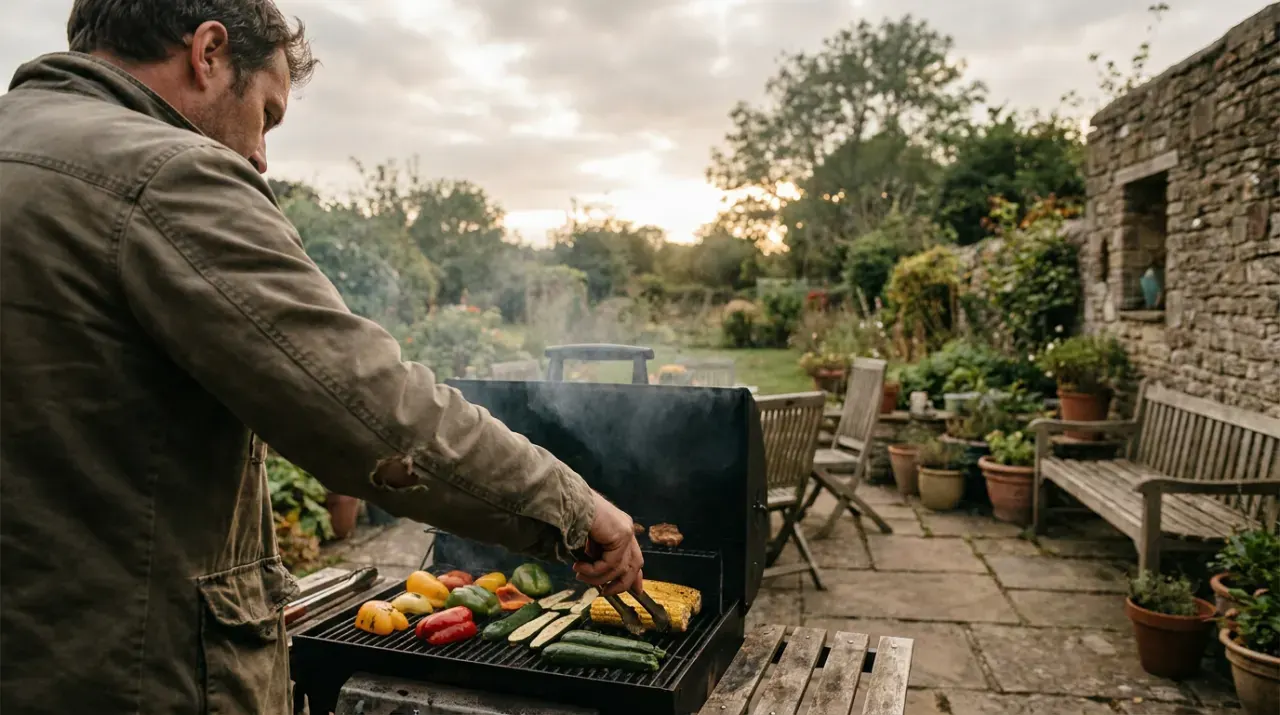
Not to discourage anyone — this is genuinely enjoyable — but so nobody is surprised.
- Fuel prep. Kiln-dried hardwood, split small — roughly finger to wrist thickness, six to eight inches long. You need a supply, dry storage for it, and enough on hand for a session. A bag lasts a few sessions, not a summer.
- Building the fire. A small fire in the center of the stone with a firelighter and kindling, then ten to fifteen minutes to establish before you start adding fuel properly.
- Bringing the floor up. Push the coals to one side or the back and feed small pieces steadily. The dome goes hot long before the stone does, which is why a dome thermometer misleads people into launching too early and getting a pale, soggy base.
- Reading the stone, not the dome. An infrared thermometer aimed at the floor is the single most useful accessory in wood firing. Dome and floor commonly differ by well over 100°F.
- Cooking while feeding. A pizza bakes in sixty to ninety seconds at 850°F and needs turning every twenty to thirty seconds. Meanwhile the fire needs a piece of wood every few minutes. It is a two-handed activity and it is why people cook in pairs.
- Cooling and cleanup. Let it burn down and cool with the door open, then shovel and brush the ash out cold. Wet ash left sitting is mildly caustic and attacks steel from the inside — the reason ovens stored with ash in them corrode faster.
Add the learning curve on top. The first dozen pizzas are where you learn to stretch dough, launch it off a peel without folding it, and turn it before one edge blackens. That is technique, not equipment, and it is the same on any oven. Ooni's own guidance on launching a pizza is worth reading before your first session — the core of it is creating a pocket of air under the dough and committing to one decisive shimmy.
Fuel: What to Burn and What Never To
| Fuel | Use it? | Why |
|---|---|---|
| Kiln-dried oak, maple, beech, ash | Yes | Burns hot, clean and long; the standard choice |
| Fruitwood (apple, cherry) | Yes | Slightly sweeter smoke; burns a little faster |
| Hardwood lump charcoal | Yes, as a base | Steady heat with less tending; less flavor and less flame |
| Hardwood pellets | In pellet-fed ovens only | Convenient; needs frequent topping up and burns through fast |
| Seasoned but not kiln-dried wood | Marginal | Above ~20% moisture it smokes, soots and will not hold temperature |
| Pine, spruce, any softwood | No | Resin pops and sparks, and coats the oven in creosote |
| Pressure-treated, painted or stained lumber | Never | Releases genuinely toxic fumes — and this is food |
| Plywood, pallets, particle board | Never | Adhesives and treatments; same reason |
| Driftwood | Never | Salt content releases harmful compounds when burned |
| Lighter fluid or accelerant | Never | Tastes of it for the rest of the session, and it is dangerous |
Kiln-dried matters more than species. A great oak log at twenty-five percent moisture will smoke, soot the window, black the stone and refuse to hold 850°F, and the owner will blame the oven.
Our #1 Pick: Ooni Karu 2
The Karu 2 is the wood oven to buy now, and the reason is a feature that reads like a minor spec bump: an integrated thermometer that reports stone temperature rather than dome temperature.
That solves the defining problem of wood firing. The dome of a portable oven gets scorching within ten minutes while the stone is still hundreds of degrees behind, so the natural instinct — the gauge says it is hot, launch the pizza — produces a burnt top and a pale, floppy base. Owners then conclude the oven is uneven when in fact the floor was never ready. Being told the floor temperature turns wood firing from guesswork into a process.
The revised air flow over the original Karu also matters more than it sounds. Better draw means a cleaner burn, less soot on the stone and the viewing window, and less of the acrid note that a smoldering fire puts into the crust. And the hinged door with a damper gives you actual control over the burn rate rather than an open mouth and hope.
Two honest caveats. The review record is thinner than the older Karu 12 simply because it is newer, so there is less evidence about year-three behavior. And the propane burner is a separate purchase — which, based on how owners actually use these ovens, you should probably plan on making.
Check price on Amazon → (paid link)
The Ranked Field
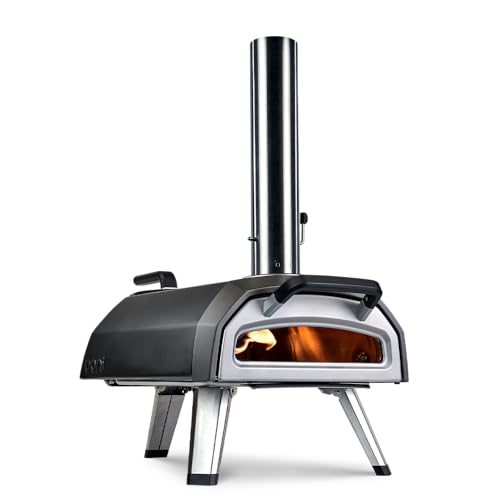
Best for the buyer who wants live fire and wants to know what the floor is actually doing
- Burns wood or charcoal; propane burner available separately
- Integrated digital thermometer reading stone temperature, not dome temperature
- Revised air flow over the original Karu for a cleaner, less sooty burn
- Hinged door with viewing window and chimney damper
Why buy it: the biggest frustration in wood firing is guessing at the floor while the dome gauge reads something else entirely — an integrated stone thermometer removes that, and it is why this is the wood oven to buy now.

Best for wood-fire flavor with a gas option for weeknights
- Wood or charcoal out of the box; propane burner sold separately
- Roughly 950°F, 12-inch pizza in about 60 seconds
- Door with a window and a chimney damper for burn control
- Cordierite stone floor
Why buy it: the longest ownership record of any portable wood-fired oven, which on a live-fire appliance is worth a great deal — you can see how the burn behaves in year three rather than month two.

Best for someone who will genuinely swap between gas and wood by occasion
- Thick insulated body — holds floor temperature across consecutive bakes
- Gas burner included; wood burner sold separately
- Roughly 950°F with a built-in thermometer
- Silicone outer skin that is safe to touch
Why buy it: the best-insulated portable here, and insulation matters more in wood firing than gas because a live fire is already fighting temperature drift — mass keeps the floor steady while the flame does not.

Best for a 16-inch wood-fired floor without premium-brand pricing
- 16-inch stone floor — full-size pizzas
- Wood-fired as supplied; gas burner sold separately
- Stainless body with chimney and folding legs
- Claimed peak stone temperatures above 900°F
Why buy it: the cheapest route to a genuinely full-size wood-fired pizza, and floor size is the one thing you cannot fix later with technique.

Best for finding out whether managing a live fire is your idea of fun
- Two-layer chamber with a stone floor
- Ships with a pizza peel and a waterproof cover
- Wood or charcoal fired
- Removable components for cleaning
Why buy it: the honest trial purchase — thin-walled and fussy about temperature, but it reaches real pizza heat and comes with the accessories, so nobody spends $500 to discover they dislike tending a fire.

Best for a fixed patio setup where the oven lives outside and never moves indoors
- Wheeled cart with two folding side tables — landing space included
- Wood-fired with a built-in dome thermometer
- Stone floor and a chimney with damper
- Taller working height than a tabletop oven
Why buy it: the side tables solve a problem nobody warns you about — you need somewhere within reach for the loaded peel, the toppings and the finished pizzas, and a tabletop oven gives you none of it.
Quick Comparison
| Product | Best for | Rating | Price | Buy |
|---|---|---|---|---|
| Ooni Karu 2 Multi-Fuel Outdoor Pizza Oven, Wood and Gas, with Stone and Integrated Thermometer | Best Overall | — | Check (paid link) | |
| Ooni Karu 12 Multi-Fuel Outdoor Portable Pizza Oven, 12-Inch | Best Value Multi-Fuel | — | Check (paid link) | |
| Gozney Roccbox Outdoor Pizza Oven, Portable, Gas & Wood Fired, Black | Best Dual-Fuel | — | Check (paid link) | |
| BIG HORN OUTDOORS 16-Inch Multi-Fuel Outdoor Pizza Oven, Wood-Fired and Gas Compatible | Best Large | — | Check (paid link) | |
| Outdoor Pizza Oven Wood Fired, 2-Layer, with Stone, Peel and Cover | Best Budget | — | Check (paid link) | |
| Giantex Outdoor Pizza Oven, Wood Fired, on Wheels, with Side Tables and Built-in Thermometer | Best Cart-Mounted | — | Check (paid link) |
Why Insulation Matters More in a Wood Oven
With gas you set a knob and the burner compensates. With wood the heat source is inherently variable — it surges when you add fuel and fades before you add more — so the oven's own thermal mass is what smooths that out. A well-insulated oven with a heavy floor stores heat and releases it steadily into the base of the pizza; a thin stainless box with an air gap heats fast, drops the moment a cold pizza lands, and swings with every log.
The practical consequence: in the budget tier the complaint is almost never "it does not get hot enough". It is "the second pizza was worse than the first". If you plan to feed more than two people from a wood oven, buy mass, or accept a longer wait between pies while the floor recovers.
Safety: Carbon Monoxide, Sparks and Clearance
A wood fire in a small steel chamber is hotter and less predictable than a grill, and it produces carbon monoxide — no smell, no color, no taste. The NFPA's carbon monoxide guidance and the CPSC Carbon Monoxide Information Center are consistent: fuel-burning appliances belong outdoors in open air.
- Never indoors, and never in a garage — an open garage door does not make a garage outdoors.
- Never under a low, enclosed or unventilated cover. Solid-roof pergolas, panelled gazebos, patio umbrellas above the chimney and screened porches all trap exhaust. The plume needs open sky.
- Keep clear of structures and overhangs. A wood chimney throws serious heat straight up, along with the occasional spark. Low branches, fabric awnings, vinyl siding, eaves and soffits are all at risk. Follow the manufacturer's clearance as a minimum, and see our clearance guide — apply more margin here, not less.
- Non-combustible, stable surface only. Masonry, stone, a steel cart or the maker's stand. Never a plastic or resin table.
- Nothing combustible within reach. Wood bags, kindling, paper towels and cardboard pizza boxes do not belong beside a 900°F appliance.
- Have water or an extinguisher to hand, and never leave a lit oven unattended, particularly with children or pets around — the outside of most wood ovens is genuinely hot to the touch.
- Empty ash cold, and never carry warm ash indoors. Ash that looks dead can hold live embers for a day or more. Put it in a metal container with a lid, outdoors.
- Check local burn rules. Some jurisdictions restrict open burning or wood-burning appliances on air-quality days, and some HOAs prohibit them outright. This is genuinely local — check before you buy.
General outdoor cooking fire safety is covered in NFPA's grilling safety guidance and the US Fire Administration's cooking fire prevention page.
How We Rank
We do not buy, fire or cook on these ovens. Rankings come from aggregated owner ratings across the most-owned wood-fired and multi-fuel outdoor pizza ovens on the US market, weighted toward reviews written after a full season. Four things carry the weight: temperature control and readability, because wood firing lives or dies on knowing and holding the floor temperature; thermal mass and heat recovery, which matters more with a variable heat source than with a burner; burn cleanliness, meaning air flow good enough to avoid sooting the stone and the food; and practical ergonomics — door, damper, ash access and landing space, all of which decide whether a session is fun or frantic. Prices were checked at the time of writing. Full method: how we rank.
The Field, Reviewed
1. Ooni Karu 2 — Best Overall
Covered above. Owners praise: the integrated stone thermometer removing guesswork, a cleaner burn than the original Karu, real wood flavor, and genuine control from the door and damper. Owners gripe about: constant small feeding to hold temperature, soot on the viewing window, ash cleanup after every session, a newer and thinner review record, and the gas burner being an extra purchase. Check price (paid link).
2. Ooni Karu 12 — Best Value Multi-Fuel
The longest ownership record of any portable wood-fired oven, which on a live-fire appliance is genuinely valuable — you can see how the burn, the seals and the stone behave after several seasons rather than several weeks.
Owners praise: wood flavor, the door and damper, flexibility to switch to gas by season, and a price below the current model. Owners gripe about: the 12-inch floor feeling cramped, needing fast turns, soot, and that most owners end up buying the gas burner anyway. Check price (paid link).
3. Gozney Roccbox — Best Dual-Fuel
The best-insulated portable in the category, and insulation is worth more in wood firing than in gas because you are already fighting drift. It ships with the gas burner and takes a wood burner separately, which is the reverse of the Ooni approach and arguably the more honest default.
Owners praise: heat retention across consecutive pizzas, a build that feels like equipment, and the safe-to-touch skin when people are gathered around. Owners gripe about: weight, a mouth that feels tight with a 12-inch pie, the wood burner costing extra, and the price. Check price (paid link).
4. BIG HORN 16-Inch Multi-Fuel — Best Large
Floor size is the one thing technique cannot fix, and this is the cheapest way to a genuinely full-size wood-fired pizza. You are trading refinement and insulation for stone area.
Owners praise: a 16-inch stone at roughly half premium pricing, high peak temperature, and multi-fuel flexibility. Owners gripe about: thinner walls that lose temperature between pizzas, uneven heat requiring more frequent turning, assembly quality, and occasional stone cracking. Check price (paid link).
5. Two-Layer Wood-Fired Outdoor Oven — Best Budget
The trial purchase. Wood firing is a genuinely different hobby from gas cooking and not everyone enjoys it, so spending under $200 to find out is rational. It comes with a peel and a cover, which is more than some premium ovens include.
Owners praise: price, included accessories, and that it does reach real pizza temperature. Owners gripe about: thin construction and poor heat retention, temperature that swings during cooking, fit and finish, and constant feeding. Check price (paid link).
6. Giantex Wood-Fired Oven on Wheels — Best Cart-Mounted
The lowest-rated oven on this list and included for one specific reason: the side tables. Nobody warns first-time buyers that wood firing needs landing space within arm's reach — the loaded peel, the toppings, the turning peel, the finished pizzas — and a tabletop oven on a small side table makes a chaotic evening. A cart with folding tables and a comfortable working height genuinely helps.
Owners praise: the working height, the side tables, mobility on the patio, and the built-in thermometer. Owners gripe about: the weakest owner rating here, assembly quality and instructions, a dome gauge that reads well off the actual stone temperature, and heat retention typical of thin construction. If a strong review record matters most to you, buy the Karu and a table. Check price (paid link).
What Owners Actually Complain About
The base was pale and the top was burnt. The signature wood-firing mistake: launching when the dome is hot and the stone is not. An infrared thermometer aimed at the floor fixes it permanently.
Soot on the stone, the window and the crust. Almost always wet wood or a starved fire. Kiln-dried hardwood in small pieces, and enough air, and the problem largely disappears.
Temperature falls off after the second pizza. Thin walls, and the reason insulation ranks high here. Wait two or three minutes between pies to let the floor recover, or buy mass.
Cracked stones. Thermal shock — a stone that soaked up rain over winter and then met a fast preheat, or water thrown on a hot stone. Cover the oven, let stones heat and cool with it, and never wash one hot.
It became a summer-only appliance. The most common quiet complaint in the whole category, and the reason multi-fuel exists. A gas burner turns a wood oven from an event into a weeknight option.
The Verdict
If live fire is genuinely what you want, the Ooni Karu 2 is the pick — the integrated stone thermometer alone removes the biggest source of wood-firing frustration. The Karu 12 is the value alternative with a longer proven record, and the Gozney Roccbox is the one to take if heat retention matters most. Want a full 16-inch floor without premium pricing? BIG HORN 16. Not sure you will enjoy tending a fire at all? Spend under $200 finding out first. And whichever you buy, do yourself the favor of also buying the gas burner — the ovens that keep getting used are the ones that can be lit with a knob on a Tuesday. Check price on Amazon → (paid link)
More from this hub: Outdoor Living & Grills · Best outdoor pizza oven · Gas vs wood pizza oven · How to use an outdoor pizza oven · How to clean a pizza oven · How we rank.