 Garden

Affiliate Disclosure
Some links on this page are affiliate links. As an Amazon Associate, we earn from qualifying purchases — at no extra cost to you. We do not buy, test, or physically handle the products we cover; our rankings come from aggregated owner reviews, ratings and expert consensus. Commissions never change our verdicts. How we rank · full disclosure.
Keep a grill at least 10 feet from the house and from any combustible surface — exterior walls, deck and porch railings, fences, eaves and overhangs. That 10-foot figure is the clearance the National Fire Protection Association (NFPA) and most fire departments cite for gas and charcoal grills. Just as important is the space above: never light a grill under a roof, awning, carport or overhanging branches, because trapped heat, grease vapor and carbon monoxide are what turn a cookout into a structure fire. Distance and open air overhead are the whole rule.
Why 10 feet, and what counts as combustible?
The NFPA and CPSC put grill-related structure fires in the thousands each year, and the recurring cause is a grill placed too close to something that burns or melts. Ten feet gives radiant heat room to dissipate and keeps sparks and flare-ups away from the wall. Treat as combustible: siding of any kind, wood railings and posts, fences, sheds, stored firewood, door mats, cushions and dry landscaping. Non-combustible surfaces like a concrete patio or brick wall are safer neighbors, but even there you want the grill out from under any overhang.
| Nearby feature | Minimum clearance | Why |
|---|---|---|
| House wall / any siding | 10 ft | Radiant heat, flare-ups, grease fires |
| Vinyl siding specifically | 10 ft+ | Melts and warps below flame temperature |
| Deck or porch railing (wood) | 10 ft | Combustible and often overlooked |
| Eaves, awnings, overhangs (above) | Open sky required | Traps heat, grease vapor, carbon monoxide |
| Fences, sheds, outbuildings | 10 ft | Combustible in any direction |
| Overhanging tree branches | Clear of any | Dry foliage ignites from rising heat |
How close is too close to vinyl siding?
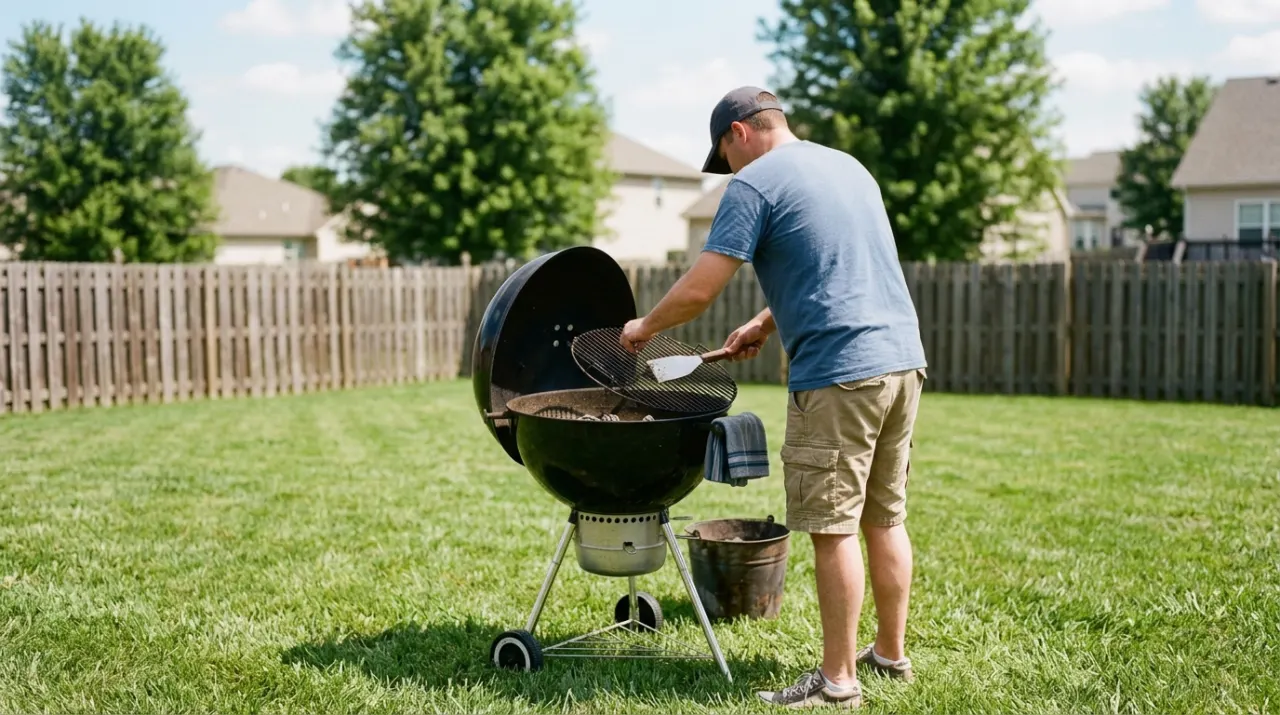
Vinyl is the material homeowners melt most often, because it deforms at temperatures far below an open flame — no fire required, just radiant heat from a grill parked a few feet away. Light-colored vinyl and a high-output grill make it worse. The fix is the same 10 feet; if the yard truly cannot allow it, a rated non-combustible heat shield between grill and wall reduces the load, but nothing substitutes for distance. Buckled siding behind a grill is one of the most common and most preventable damage reports there is.
Why you can never grill under a cover
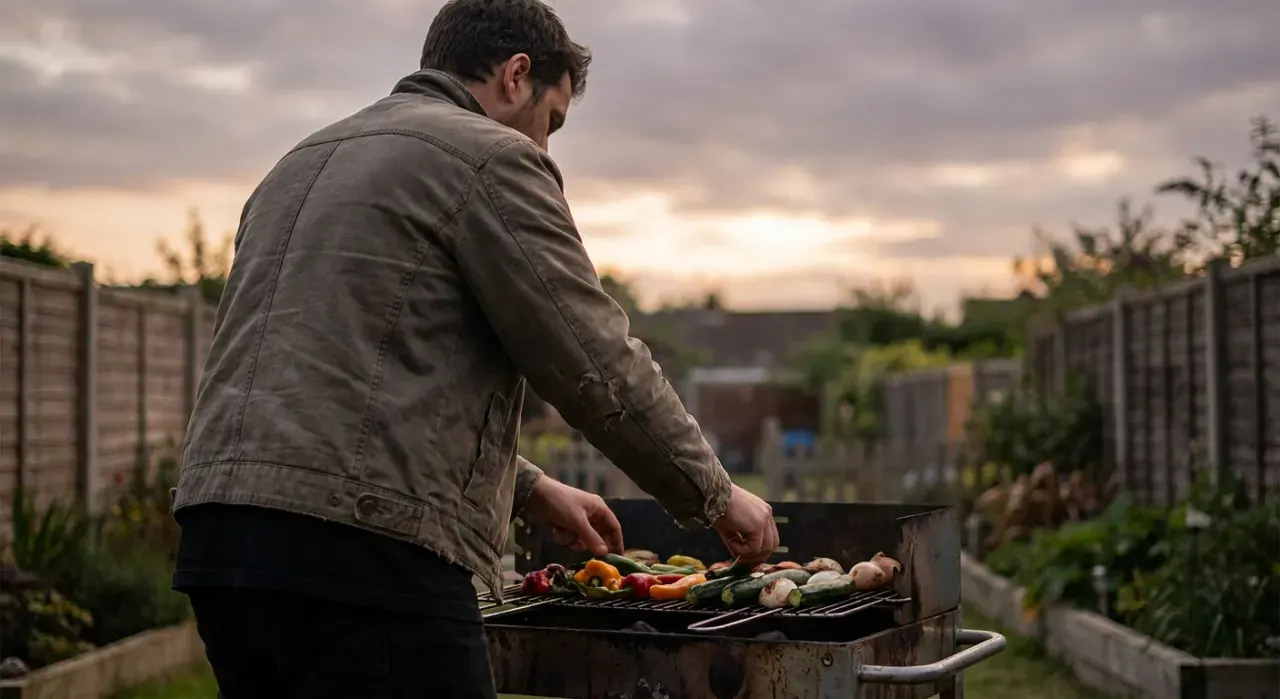
A grill needs open air above it. Under a patio roof, awning, carport or balcony above, two things build up: heat and grease vapor that can flash into flame, and carbon monoxide, which the CPSC warns is odorless and deadly in enclosed and partly enclosed spaces. This applies to charcoal and gas alike. If your only shade is a patio cover, pull the grill out into the open to light it and cook — the convenience of staying dry is not worth a house fire or CO poisoning.

Balcony, apartment and HOA rules
Multi-unit buildings are stricter for good reason. The International Fire Code generally prohibits operating or storing charcoal and gas grills on combustible balconies or within 10 feet of a multi-unit structure unless it is fully sprinklered, and many cities and HOAs allow only electric grills on balconies. Rules vary by jurisdiction, so check your local fire code and your lease or HOA covenants before grilling on any shared-building balcony. When in doubt, an electric grill or a designated ground-level grilling area keeps you compliant and your neighbors safe.
Positioning also shapes what grill suits your space — if a small patio is the constraint, our best gas grill picks flag compact models, and keeping the grill away from the wall pairs with knowing how long a gas grill lasts when it is properly sited and covered.
We do not buy, test or physically handle any product on this site. Safety guidance here reflects NFPA, CPSC and International Fire Code standards — see how we rank.
More from this hub: Outdoor Living & Grills · Fire pits on a wood deck · Fire pit permits · Best gas grills · How we rank