 Garden

Affiliate Disclosure
Some links on this page are affiliate links. As an Amazon Associate, we earn from qualifying purchases — at no extra cost to you. We do not buy, test, or physically handle the products we cover; our rankings come from aggregated owner reviews, ratings and expert consensus. Commissions never change our verdicts. How we rank · full disclosure.
Buy a pellet grill if you want real wood smoke and hands-off temperature control for long cooks. Buy a gas grill if you want food on the table in twenty minutes and a proper sear. Pellet grills are thermostat-controlled wood-burning convection ovens, brilliant from 180F to about 450F. Gas grills light in seconds, hit 600F-plus over a burner, need no power, and cost less to buy and to run. Most households that own both use the gas one four times as often — and still would not give up the pellet one.
How each one actually works
A gas grill is simple: propane or natural gas flows to burner tubes under the grates, and knobs control the flow. Heat is direct, immediate and adjustable within seconds. Flavor comes from fat dripping onto hot metal below the grates and vaporizing back up.
A pellet grill is closer to an appliance. Compressed hardwood pellets sit in a hopper; an auger driven by an electric motor feeds them into a firepot where a glow rod ignites them; a fan drives combustion and circulates hot air around a baffle that shields the food from direct flame. A controller measures chamber temperature and speeds or slows the auger to hold your setting. That is why a pellet grill can sit at 225F for twelve hours unattended, and why it needs an outlet.

Head to head
| Factor | Pellet grill | Gas grill |
|---|---|---|
| Time to cooking temperature | 10–15 min | 10–15 min to 500F, usable sooner |
| Temperature range | ~180–500F | ~250–650F+ |
| Low-and-slow smoking | Excellent — its core purpose | Poor without accessories |
| Searing | Adequate; needs a broiler plate or sear kit | Excellent |
| Smoke flavor | Real hardwood smoke | Only from drippings, or a smoker box |
| Needs electricity | Yes, always | No (except some igniters) |
| Fuel cost per hour | ~$1–3 | ~$1–2.50 |
| Typical purchase price | $350–1,200 | $200–900 |
| Maintenance | Vacuum the firepot, clean the baffle, empty ash | Clean burner ports, empty grease tray |
| Cold-weather behavior | Uses far more fuel, slower to recover | Output drops, but recovers quickly |
| Failure points | Controller, auger motor, igniter rod, fan | Burners, igniter, regulator |
The flavor question, honestly
Pellet grills produce real smoke, because they are burning real wood. But they burn it very efficiently and very cleanly, which is exactly what makes them easy to run and also what limits smoke intensity. Experienced barbecue cooks generally rate pellet smoke as lighter than a charcoal offset smoker's, and many pellet grills include a "super smoke" or low-temperature mode specifically to produce a smokier, less efficient burn.
Gas grills produce essentially no smoke flavor of their own. What people taste is fat vaporizing on hot metal — genuine and pleasant, but it is grilling flavor rather than barbecue flavor. A smoker box of wood chips over a burner adds a modest amount; it does not turn a gas grill into a smoker. If barbecue is the goal, see our smoker rankings, which also explains why the well-reviewed field there is thinner than you would expect.
Running cost, with the actual arithmetic
Pellets. A 20-pound bag of hardwood pellets typically runs $18 to $25. Consumption is roughly 1 to 1.5 pounds per hour at smoking temperatures and 2 to 3 pounds per hour running hot. So a 12-hour brisket burns 12 to 18 pounds — most of a bag, or about $15 to $20 in fuel. A one-hour weeknight cook at 400F costs $2 to $3.
Cold weather changes this materially. Below about 40F, pellet consumption commonly rises by half again as the grill fights heat loss through thin steel walls.
Propane. A full 20-pound cylinder holds about 4.6 gallons, roughly 420,000 BTU. A 40,000 BTU grill running every burner on high empties it in about 10.5 hours. At $25 for a cylinder exchange that is about $2.40 per hour flat out, and closer to $1 per hour at the medium settings most cooking actually uses. Refilling rather than exchanging is meaningfully cheaper and gets you a full 20 pounds — exchange cylinders are commonly filled to 15. For context, the EIA's residential propane survey put the US average at about $2.67 per gallon for the week ending March 30, 2026, though grill-cylinder pricing sits well above bulk residential rates.
The headline: fuel cost is close enough that it should not decide the purchase. Buy price and how you actually cook should.
Which one suits you
| If this is you | Buy | Why |
|---|---|---|
| Weeknight burgers, chicken, steaks | Gas | Speed, sear, no fuss |
| Weekend ribs, pork shoulder, brisket | Pellet | Hands-off long cooks with real smoke |
| No outdoor power outlet | Gas | Pellet grills cannot run without electricity |
| Cooking mostly in winter | Gas | Faster recovery, no pellet consumption penalty |
| Want one machine for everything | Pellet with a flame broiler | Covers 180F to 500F with a direct-sear option |
| Cooking for a crowd fast | Gas | Multiple burners, instant heat, high throughput |
| Enjoy the process more than the speed | Pellet | Long cooks, wood choice, app monitoring |
A representative pick from each side
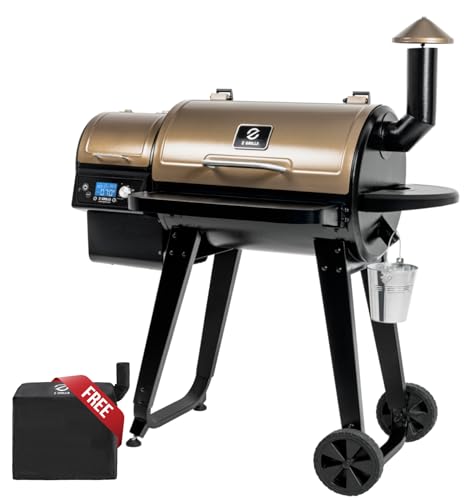
Best for wood flavor plus set-and-forget temperature control
- PID 3.0 controller for tight temperature holding
- 180F to 450F covers smoking and roasting
- 459 sq in cooking area
- Meat probe and hopper cleanout
Why buy it: the pellet grill that makes the strongest case at a mid price, because the PID controller is what separates a smoker from a heated box.
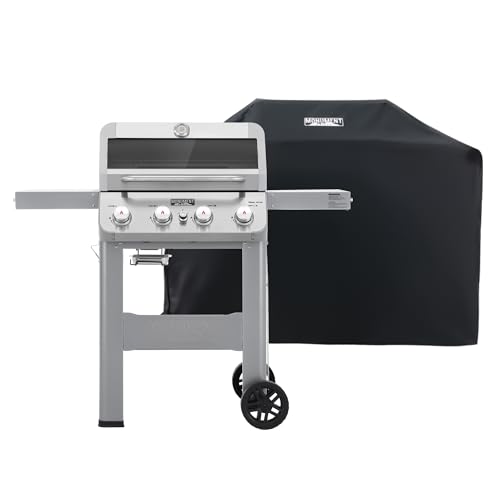
Best for fast weeknight cooking and searing
- 4 independently controlled stainless burners
- Clearview glass window in the lid
- Cast-iron cooking grates
- Enclosed cart hides the tank
Why buy it: ready in ten minutes, four separate heat zones, and no electricity, pellets or ash to think about.
Full fields for both: best gas grills and best smokers and pellet grills.
What breaks, on each
Pellet grills have more to go wrong because they have more parts. The controller is the most-cited failure, followed by the auger motor and the igniter rod. All three are replaceable and generally available, but they turn a passive appliance into one with a service history. Pellets themselves are a maintenance item: they absorb moisture, swell and jam the auger, so a bag left open in a damp garage is a future problem. Ash accumulates in the firepot and causes failed starts if it is not vacuumed out every 15 to 20 hours of cooking.
Gas grills fail more predictably. Burner tubes corrode and their ports widen or block, igniters stop sparking, and eventually the firebox rusts through — the one part that is not worth replacing. Owners of well-built grills routinely report changing burners once and continuing for years. Our gas grill lifespan guide covers the timeline and when repair stops making sense.
Safety applies equally to both
Never grill or store a lit or hot grill in a garage, a carport, a covered or screened porch, or any other enclosed or partly enclosed space. Propane and burning wood pellets both produce carbon monoxide, which is colorless and odorless; the CPSC records roughly 20 deaths and about 400 emergency-room-treated injuries in the United States each year from carbon monoxide produced by charcoal alone and states directly that ventilation does not make it safe (CPSC, Carbon Monoxide Information Center).
On propane: check connections with soapy water and never with a flame, close the tank valve before disconnecting the regulator, and never store a spare cylinder indoors, in a basement or in an attached garage. On either grill, keep well clear of the house, siding, railings and overhanging branches, per the NFPA grilling guidance, and empty the grease tray regularly — grease build-up is the leading cause of grill fires.
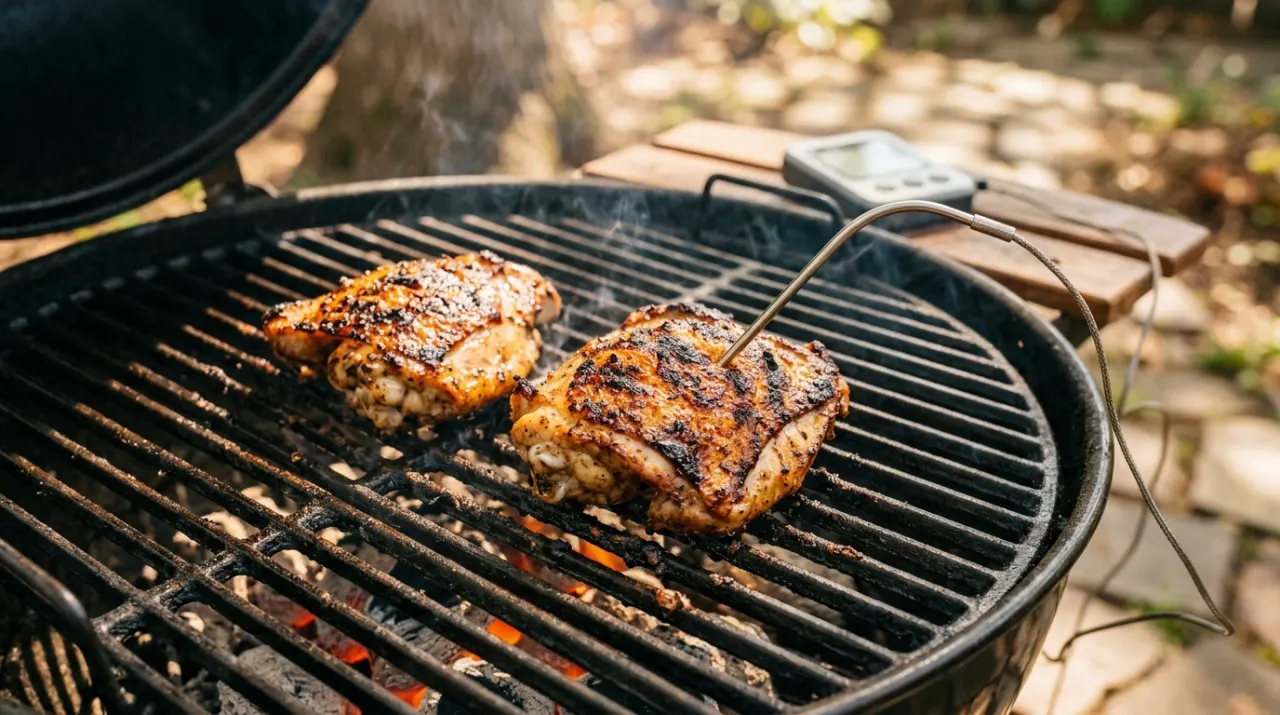
And whichever you buy, doneness is measured, not guessed: poultry 165F, ground meat 160F, whole cuts of beef, pork, veal and lamb 145F with a three-minute rest (USDA FSIS Safe Minimum Internal Temperature Chart).
The verdict
If you can only own one grill and you cook mostly on weeknights, buy gas — it is cheaper, faster, simpler, and it sears properly. If barbecue is the reason you are shopping, buy a pellet grill with a PID controller and accept that it will not sear like gas without help. The households that end up happiest own a modest gas grill for Tuesday and a pellet grill for Saturday, which together cost less than one premium grill that does neither job perfectly.
More from this hub: outdoor living & grills · gas vs charcoal grills · best smoker · how much propane a grill uses · how we rank.