 Garden
Affiliate Disclosure
Some links on this page are affiliate links. As an Amazon Associate, we earn from qualifying purchases — at no extra cost to you. We do not buy, test, or physically handle the products we cover; our rankings come from aggregated owner reviews, ratings and expert consensus. Commissions never change our verdicts. How we rank · full disclosure.
The short version: tape does two different jobs, and buying one roll for both is why people are disappointed. Cutting a crisp line needs an edge-sealing tape — our #1 pick is FrogTape Multi-Surface, whose PaintBlock polymer swells on contact with latex and closes the edge. Covering things you do not want painted needs cheap tape in quantity, which is what Duck Clean Release and standard ScotchBlue 2090 are for. And anything going onto paint less than a month old needs a delicate-surface tape or you will peel your own work off the wall.
We do not buy, apply, or physically handle any of these products. These rankings come from aggregated owner reviews, star ratings, review volume and expert consensus — the full method is on how we rank. Whatever you mask with, the EPA advises maximum ventilation during painting. The wider painting advice lives in our paint and walls hub.
Top Picks at a Glance
Our #1 Pick: FrogTape Multi-Surface Painter’s Tape
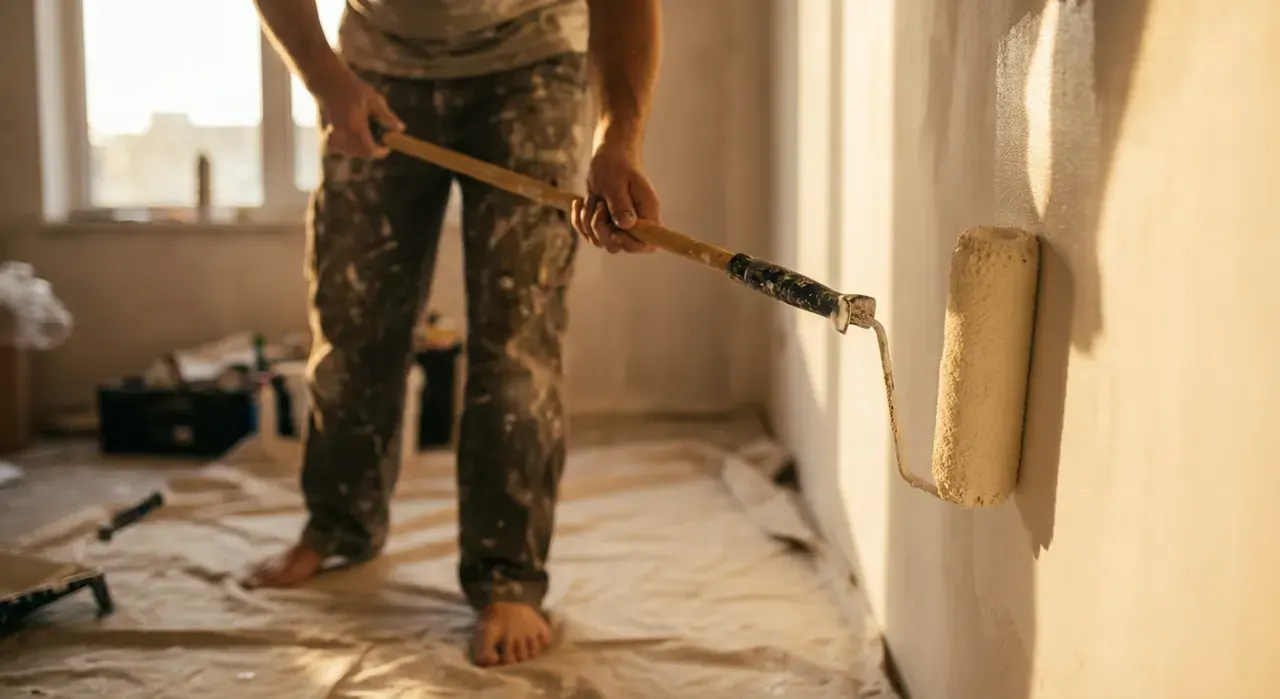
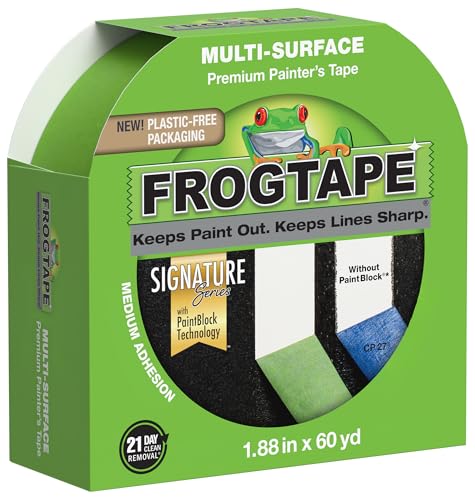
Every painter’s tape claims sharp lines. Only a couple of them do something mechanical to earn it. (Tape choice matters more than it sounds in an older house, where a too-aggressive roll can pull the existing finish off the wall — the EPA warns that homes built before 1978 are more likely to contain lead-based paint.) FrogTape’s green multi-surface roll is treated with a super-absorbent polymer along the edge; when water-based paint touches it, the polymer swells and physically blocks the microscopic channel between tape and wall that paint otherwise wicks along. That is a different proposition from simply having a firmer adhesive, and it shows up clearly in the review record, where the recurring note is the absence of the fuzzy, feathered edge people expect from taped work.
The rest of the specification is conventional and well judged. Medium adhesion means it holds on cured wall paint, trim, glass, metal and lightly textured surfaces without pulling the finish off when it comes away. It removes cleanly for up to 21 days indoors, which is generous for a project that runs over a couple of weekends. And the green color is genuinely practical — at a glance you can see what has been masked, which matters more than it sounds in a room half-covered in plastic.
The honest cons: the polymer only reacts with water-based paint, so on oil-based finishes it is just a good conventional tape and the sharp-line advantage largely disappears. It costs noticeably more than plain blue tape, which makes it a poor choice for taping plastic sheeting to a floor. And it is not immune to physics — a heavily loaded brush dragged along the edge will still push paint under. Burnish the edge down, and brush away from the tape rather than along it.
Consensus Score ██████████░░ 9.1
Check price on Amazon → (paid link)
The Ranked Field
Best for the sharpest line on trim, baseboards and accent walls
- PaintBlock polymer swells on contact with latex and seals the tape edge
- Medium adhesion suited to cured paint, trim, glass and metal
- Clean removal for up to 21 days indoors
- Bright green so you can see what you have masked
Why buy it: the edge-sealing polymer is the only feature in this category that measurably reduces bleed rather than just claiming to.

Best for general masking on walls, trim, tile and glass
- Medium adhesion — sticks to lightly textured walls without lifting paint
- Clean removal for up to 14 days including outdoors
- UV and sunlight resistant
- The most widely stocked painter’s tape there is
Why buy it: the default for a reason — it does 90% of what the premium tapes do at a price that lets you mask generously.

Best for crisp stripes, two-tone walls and anywhere the line is the point
- Edge-Lock treated edge seals against paint seepage
- Thinner backing conforms tightly to trim profiles
- Clean removal up to 21 days indoors, 7 days outdoors
- Multi-surface adhesion including glass and metal
Why buy it: the 3M answer to PaintBlock — sealed edges, and easier to burnish flat into a molding profile than the FrogTape.

Best for walls painted within the last month, wallpaper and faux finishes
- Low adhesion for paint that has cured for 24 hours or more
- Same PaintBlock edge-sealing polymer as the green tape
- Clean removal for up to 60 days
- Yellow, so it will not be confused with the multi-surface roll
Why buy it: the tape that stops you tearing your own week-old paint off the wall when you unmask.

Best for wallpaper, plaster and anything that lifts easily
- Gentle adhesive designed for delicate and freshly painted surfaces
- Stays on for up to 60 days and still removes cleanly
- Edge-Lock treatment for a defined line
- Narrower widths suit trim and detail work
Why buy it: the safest tape here for a surface you are genuinely worried about damaging.

Best for masking large areas, drop cloths and plastic sheeting
- Medium adhesion, 14-day clean removal
- Thick crepe backing resists tearing when you unroll it
- UV resistant for exterior work
- Cheapest of the name-brand tapes here
Why buy it: when you are taping plastic to a floor rather than cutting a line, paying premium prices makes no sense.
Quick Comparison
| Product | Best for | Rating | Price | Buy |
|---|---|---|---|---|
| FrogTape Multi-Surface Painter’s Tape, 1.88" x 60 yd | Best Overall | — | Check (paid link) | |
| ScotchBlue Original Multi-Surface Painter’s Tape 2090, 1.88" x 60 yd | Best Value | — | Check (paid link) | |
| ScotchBlue Sharp Lines Painter’s Tape 2093EL, 1.88" x 60 yd | Best for Sharp Lines | — | Check (paid link) | |
| FrogTape Delicate Surface Painter’s Tape, 1.88" x 60 yd | Best for Fresh Paint | — | Check (paid link) | |
| ScotchBlue 2080 Safe-Release Delicate Surface Tape | Best Gentle Alternative | — | Check (paid link) | |
| Duck Clean Release Blue Painter’s Tape, 1.88" x 60 yd | Best Budget | — | Check (paid link) |
How We Rank Painter’s Tape
We never buy or physically handle the products on this site — we read the review record at scale instead. Four things carried the most weight here. Bleed reports, which are the whole point of the product and appear in reviews with unusual clarity because the failure is visible and photographed. Damage on removal, weighted heavily for the delicate-surface tapes, since the entire reason those exist is to come off without taking paint or wallpaper with them. Behavior on textured and awkward surfaces, where medium-adhesion tapes are far more likely to be reported as lifting or failing to seal. Unrolling and tearing, a mundane but frequently criticized property — tape that splits down the middle or refuses to release from the roll wastes real time on a big job.
Star ratings, review counts and prices were current at the time of writing and all move. The complaint patterns move far less, and those are what we weight hardest.
Consensus Scores
Each score is our weighted read of the owner-review record for that product — never a lab figure, and never a number we typed onto a rating we did not verify.
- FrogTape Multi-Surface ██████████░░ 9.1
- ScotchBlue Original 2090 █████████░░░ 8.8
- ScotchBlue Sharp Lines 2093EL █████████░░░ 8.9
- FrogTape Delicate Surface █████████░░░ 8.7
- ScotchBlue 2080 Safe-Release █████████░░░ 8.6
- Duck Clean Release ████████░░░░ 8.3
The Tapes, Reviewed
1. FrogTape Multi-Surface — Best Overall
Covered above. Owners praise: genuinely sharp lines on trim and accent walls, clean removal without lifting cured paint, easy visibility of what has been masked, and consistent performance across glass, metal and wood. Owners complain about: a price roughly half again what plain blue tape costs, no PaintBlock benefit with oil-based paint, and occasional reports of the roll tearing lengthwise when pulled quickly.
2. ScotchBlue Original 2090 — Best Value
The tape most people already have in a drawer, and it deserves its position. Medium adhesion that sticks to cured wall paint and lightly textured surfaces without pulling anything off, 14-day clean removal that includes outdoor exposure, and a price that lets you mask an entire room without thinking about it. It does not have an edge-sealing treatment, so lines are good rather than surgical, but for most masking that is exactly the right trade. Owners praise: reliability, availability everywhere, sticking to slightly textured walls, and coming off cleanly even after a couple of weeks. Owners complain about: more bleed than the sealed-edge tapes on a critical line, occasional lifting on very rough surfaces, and adhesion that can be too strong for paint less than a month old.
3. ScotchBlue Sharp Lines 2093EL — Best for Sharp Lines
3M’s answer to PaintBlock. The Edge-Lock treatment seals the tape edge against seepage, and the backing is thinner than standard blue tape, which is the underrated part — a thinner tape presses down into the profile of a molding or the corner of a baseboard rather than bridging it, and bridging is where paint sneaks through. For stripes, two-tone walls and detailed trim, it is the equal of the FrogTape and slightly better on complex profiles. Owners praise: very crisp lines, excellent conformance to trim shapes, clean removal up to three weeks, and multi-surface adhesion on glass and metal. Owners complain about: a thinner backing that tears more readily if you yank it, a premium price, and the fact that it still requires burnishing — no tape works if you skip that step.
4. FrogTape Delicate Surface — Best for Fresh Paint
The roll that prevents the most heartbreaking failure in painting: taping over a wall you painted last week, then pulling your own finish off with the tape. Latex paint is dry to the touch in hours and does not fully cure for weeks, and a medium-adhesion tape applied in that window will lift it. This yellow roll uses a low-tack adhesive designed for exactly that situation, while keeping the PaintBlock edge-sealing polymer so you do not sacrifice line quality. It can stay in place for up to 60 days. Owners praise: coming off week-old paint and wallpaper without damage, still giving a clean line despite the lower tack, the long removal window, and the obvious color coding. Owners complain about: adhesion that is genuinely light — it lifts off textured walls and in humidity — a higher price than standard tape, and the reality that it will not hold plastic sheeting up.
5. ScotchBlue 2080 Safe-Release — Best Gentle Alternative
The other established delicate-surface option, and the one to reach for when the surface itself is the worry rather than the age of the paint: wallpaper, old plaster, faux finishes, varnished wood. The adhesive is gentle enough to leave those intact after weeks in place, and Edge-Lock still gives a defined line. Available in narrower widths, which is what you want for detail work. Owners praise: not damaging wallpaper or delicate finishes, a long safe dwell time, clean removal with no residue, and useful narrow widths. Owners complain about: insufficient grip on anything textured, a tendency to release early in humid rooms or bathrooms, and lines slightly less crisp than the multi-surface tapes on a plain wall.
6. Duck Clean Release — Best Budget
The right tape for the eighty percent of masking that has nothing to do with cutting a line: taping plastic sheeting to a floor, wrapping a doorway, holding drop cloths, covering outlet plates. It is a solid medium-adhesion crepe tape with 14-day clean removal and UV resistance, and it is meaningfully cheaper than the premium rolls. Buying premium tape for this work is simply wasting money. Owners praise: the price, thick backing that resists tearing off the roll, adequate line quality for general work, and holding up outdoors. Owners complain about: more bleed than the edge-sealed tapes on a critical line, adhesion that varies between rolls, and occasional residue if left on longer than the rated window.
What Owners Actually Complain About
Read enough one- and two-star tape reviews and five patterns account for almost all of them — and at least two are user error the packaging does nothing to prevent. Bleed under the edge leads, and the majority of those reviews describe not burnishing the tape down; a firm pass with a putty knife along the edge closes the gap paint wicks through and transforms the result. Paint pulled off on removal is second, and it is nearly always medium-adhesion tape applied to paint that had not cured, or left on far past its rated window, or removed after the film had fully dried. Tape not sticking to textured walls is third and is a genuine limitation: heavy knockdown and orange peel do not offer enough contact area, and the honest fix is caulking the line or freehanding it rather than a different tape. Rolls tearing or splitting is fourth, more common with thin-backed premium tapes. And residue left behind is fifth, driven by heat, sunlight and time — tape on a sunlit window frame for a month will not come off cleanly regardless of what the box says.
How to Choose Painter’s Tape
Buy two rolls, not one. An edge-sealing tape — FrogTape Multi-Surface or ScotchBlue Sharp Lines — for the places where the line will be looked at: trim, baseboards, ceiling lines, stripes. A cheap medium-adhesion tape — Duck Clean Release or plain ScotchBlue — for everything else, because masking plastic to a floor does not need polymer technology. Add a delicate-surface roll if you are taping onto anything recently painted, papered, or old.
Then match width to task. Wider tape gives you more protection against roller spatter but is harder to press into a molding profile; 1.88 inches is the general-purpose choice and 0.94 inches is far easier to work into detailed trim. And check the removal window against your actual timeline, since the difference between the 14-day and 60-day tapes matters exactly once — when a project runs long.
Technique beats product here more than in any other painting category. Clean and dry the surface so the adhesive can make contact. Burnish the edge with a putty knife. Brush away from the tape, not along it, and keep the brush lightly loaded near the line. Pull while slightly tacky, slowly, back on itself. Do those four things with mid-priced tape and you will beat premium tape applied carelessly. More technique in how to paint a room, and if your lines have already gone wrong, the fixes are in fixing paint problems.
The Verdict
FrogTape Multi-Surface is the tape the owner-review record backs most strongly for a line you care about, with ScotchBlue Sharp Lines a genuine equal on detailed trim. Keep a cheap roll of Duck Clean Release or plain ScotchBlue 2090 for bulk masking, and buy FrogTape Delicate Surface before you tape over anything you painted in the last month.
Next: choose the applicator in best paint rollers, pick the paint in best interior paint, decide whether spraying beats masking in best paint sprayers, or head back to the paint and walls hub.