 Garden

Affiliate Disclosure
Some links on this page are affiliate links. As an Amazon Associate, we earn from qualifying purchases — at no extra cost to you. We do not buy, test, or physically handle the products we cover; our rankings come from aggregated owner reviews, ratings and expert consensus. Commissions never change our verdicts. How we rank · full disclosure.
The fastest way to clear paint smell is cross-ventilation: open windows on opposite sides and set a box fan in one, blowing air out, so fumes are pushed outdoors and fresh air is pulled in. Back that up with bowls of activated charcoal or baking soda around the room to absorb what lingers. Keep the temperature moderate so the paint cures quickly. With low-VOC water-based paint and good airflow, the strong smell usually fades within a day; oil-based paint takes longer. The smell is the paint off-gassing as it hardens, so speeding the cure and moving the air is the whole game.
What is the smell, and why does it linger?
It is VOCs — volatile organic compounds — evaporating out of the paint as it dries and cures. Wet paint releases these solvent vapors into the air, and that off-gassing is what you smell. It continues until the paint film has cured, which is why the odor fades gradually rather than vanishing the moment the surface feels dry. Oil-based paints contain more VOCs and stronger solvents, so they smell more intensely and for longer than modern water-based latex. Cool temperatures, high humidity and poor airflow all slow the cure and therefore stretch out the smell — the same conditions that slow drying generally, covered in waiting between coats.
How do I ventilate for the fastest clearance?
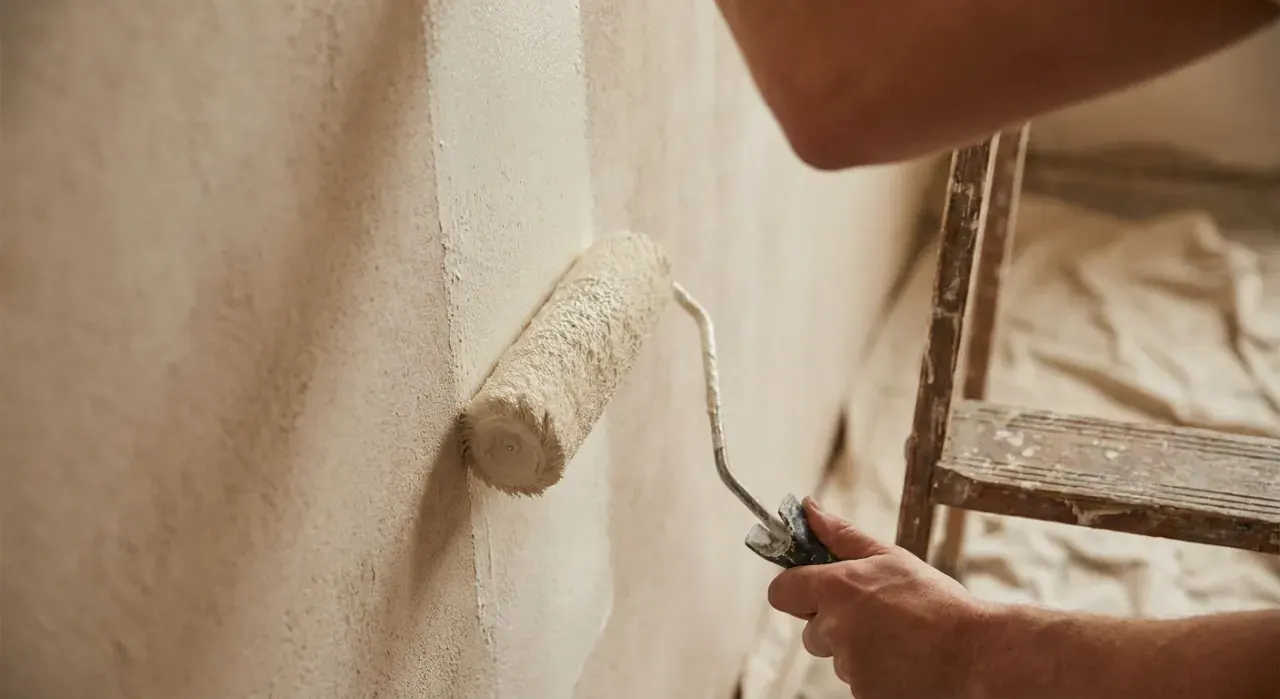
Create a through-draft that carries fumes out rather than circulating them. The setup matters more than the effort.
- Open two windows on opposite walls if you can, for cross-flow. One window is far less effective than two.
- Put a box fan in one window facing outward, pushing air out of the room, so fresh air is drawn in the other. Blowing out beats blowing in.
- Open interior doors to the rest of the house only if you want the whole house ventilated too; otherwise keep the room's air moving straight outdoors.
- Run the ventilation during and after painting, not just at the end — the sooner the fumes leave, the less they settle into fabrics.
Ventilation removes the source of the smell, which is why nothing else works as fast. Everything below is a supplement to keep air moving.
What actually absorbs the odor?
Some remedies genuinely bind odor molecules; others just mask them. Here is what works and what does not.
| Method | Effectiveness | How to use |
|---|---|---|
| Activated charcoal | Best absorber | Several bowls around the room; leave overnight |
| Baking soda | Good, cheap | Shallow bowls, or sprinkle on carpet and vacuum later |
| Carbon air filter / purifier | Good for odor | A carbon-filter unit; HEPA alone does little for smell |
| Bowls of water | Minimal | Absorbs little; skip it |
| Onion / coffee / lemon | Masks only | Trades paint smell for another; not removal |
Run an air purifier with a carbon (not just HEPA) filter if you have one, since HEPA captures particles but does little for gas-phase odor. Keep lids on paint cans and clean up drips so open paint is not adding fresh fumes.
When is it safe to use the room again?
With low-VOC water-based paint and good ventilation, a dry, mildly-smelling room is fine for most people the same day, though waiting a night is more cautious. With oil-based or strongly-scented paint, give it a day or two of ventilation first. The fumes can cause headaches, dizziness and eye or throat irritation, and they matter more for children, pregnant people, older adults and anyone with asthma — those groups should keep out longer and rely on strong airflow. The cleanest solution is to avoid the problem: choose a low-VOC or zero-VOC paint from the start, ventilate throughout, and paint in warm, dry conditions so it cures fast. Product choice makes a real difference here — see best interior paint, where low-VOC options are noted.
We never buy, test or physically handle the products we rank. Recommendations come from aggregated owner reviews, star ratings, review volume and expert consensus — see how we rank.
More from this hub: Paint & Walls · Best interior paint · Waiting between coats · Too cold to paint · How we rank