 Garden

Affiliate Disclosure
Some links on this page are affiliate links. As an Amazon Associate, we earn from qualifying purchases — at no extra cost to you. We do not buy, test, or physically handle the products we cover; our rankings come from aggregated owner reviews, ratings and expert consensus. Commissions never change our verdicts. How we rank · full disclosure.
One gallon of interior paint covers about 350 to 400 square feet per coat on a smooth, sealed wall. That is roughly the wall area of an average 12-by-12 room in a single coat. Real coverage drops on surfaces that drink paint — bare drywall, fresh joint compound, textured or porous walls, and dramatic color changes can pull it down to 250 to 300 square feet a gallon. Because almost every job needs two coats for even color, plan your paint quantity for two coats, not one, and round up so you never run out mid-wall.
What changes the coverage?
The 350-to-400 figure on the can assumes ideal conditions. Five things pull real-world coverage below it.
| Factor | Effect on coverage |
|---|---|
| Smooth, previously painted wall | Best case; full 350–400 sq ft |
| Bare drywall or fresh joint compound | Porous; drops to ~250–300 (prime first) |
| Textured or knockdown walls | More surface area; noticeably less |
| Dark-to-light or bold color change | Needs extra coats for opacity |
| Thin / cheap paint | Less pigment; poorer hide per coat |
Priming bare or patched surfaces first is what protects your coverage — an unprimed wall soaks up the first coat unevenly and wastes paint, which is one more reason new drywall and repairs get a primer before the color goes on.
How do I estimate gallons for a room?
The math is quick and worth doing before you buy.
- Perimeter × height. Add up the lengths of all walls and multiply by ceiling height. A room 12×12 with 8-foot walls: perimeter 48 ft × 8 ft = 384 sq ft.
- Subtract openings. Take off about 20 sq ft per door and 15 per window. One door and one window: roughly 350 sq ft left.
- Divide by 350 for one coat: about one gallon.
- Multiply by coats. Two coats: two gallons.
Add a quart or gallon if you are painting the ceiling, and always round up. Running short in the middle of a wall means either a rushed store trip or a visible lap line where a fresh batch meets a dried edge. A little leftover paint is also the easiest way to touch up scuffs later.
Why plan for two coats?
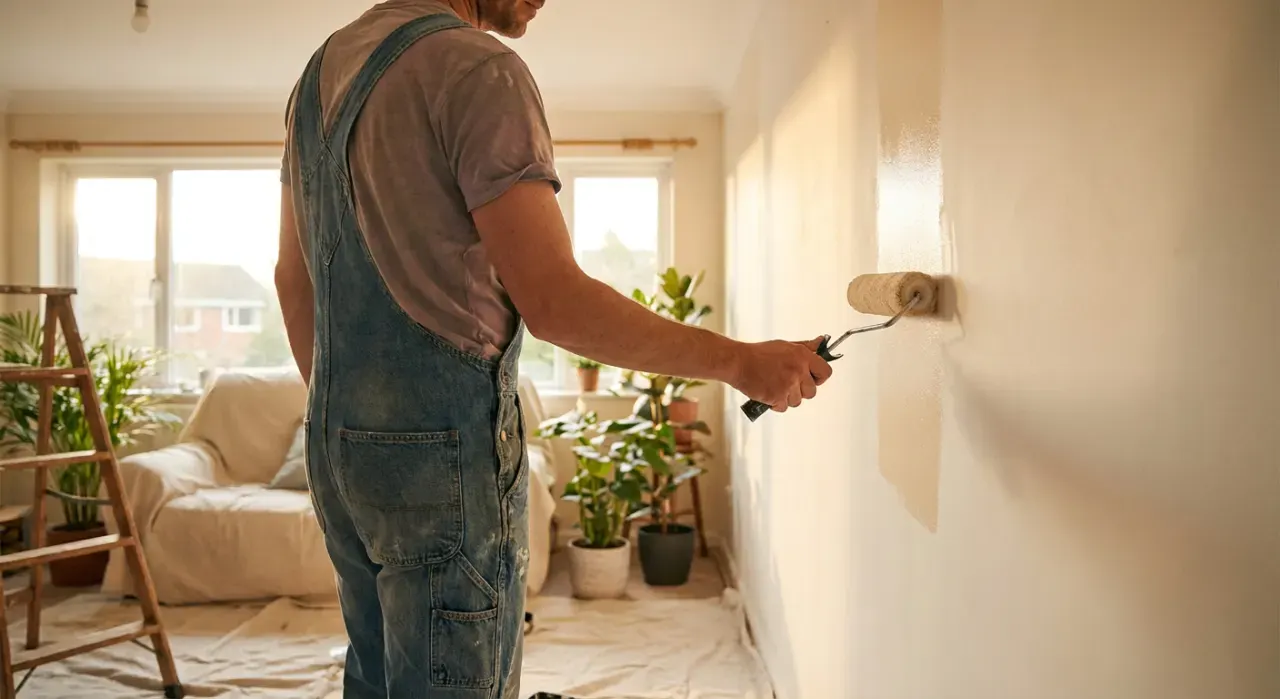
Because one coat rarely looks finished. A single pass tends to show roller streaks, patchy sheen and the old color ghosting through, and it builds too thin a film to wear well. Two coats deliver even color, a consistent sheen and the durability the paint is rated for. Deep and vivid colors — reds, bold blues, bright yellows — hide even less and sometimes want a third coat, which is where a tinted primer earns its keep: tint the primer toward your final color and the topcoats reach full opacity in fewer passes. The relationship between coats and dry time matters too — give each coat its full recoat window, covered in how long to wait between coats.
How much paint should I actually buy?
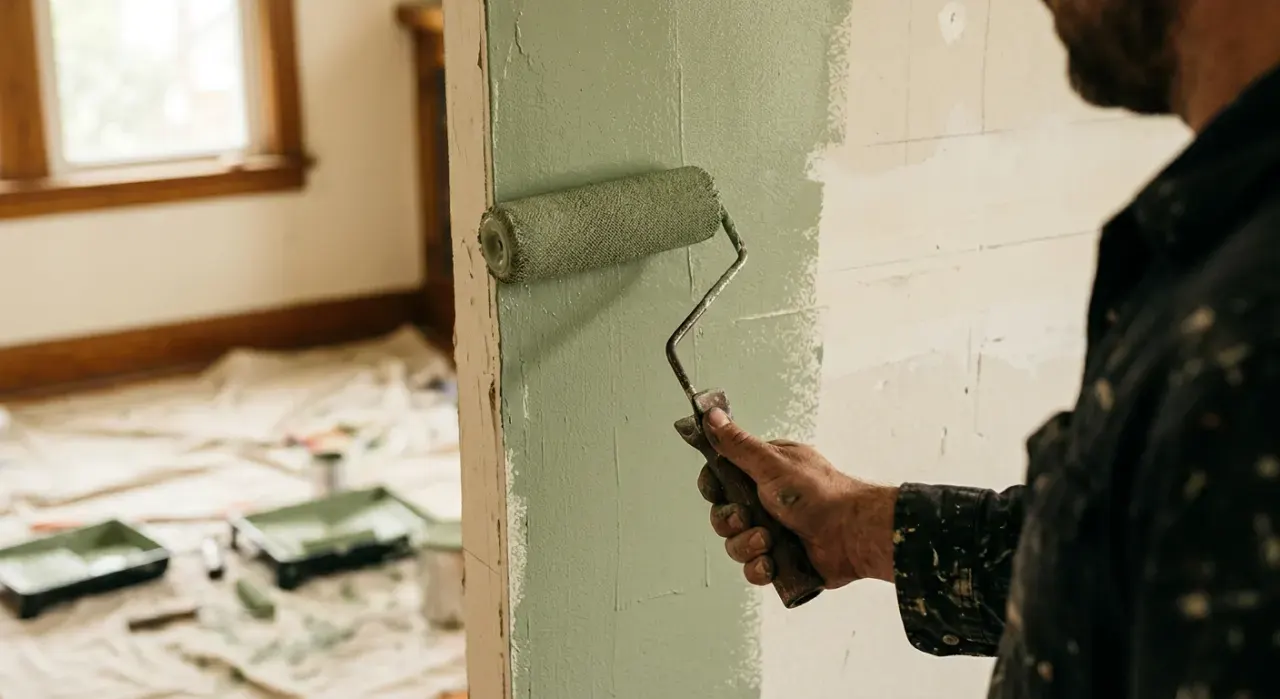
For a standard bedroom, two gallons of wall paint covers two coats with a touch-up reserve. For a large living room or an open-plan space, measure and calculate rather than guessing — the perimeter method above takes two minutes and saves both an overbuy and a mid-job shortfall. Buy all the paint for one room in a single purchase and, ideally, have the store box (intermix) multiple gallons together, so there is no batch-to-batch color shift across a big wall. The paint grade affects hide per coat, so a premium paint can genuinely cover in fewer coats — the trade-offs are in best interior paint, and the right roller lays it more evenly, in best paint rollers.
We never buy, test or physically handle the products we rank. Recommendations come from aggregated owner reviews, star ratings, review volume and expert consensus — see how we rank.
More from this hub: Paint & Walls · Best interior paint · Waiting between coats · Cost to paint a room · How we rank