 Garden

Affiliate Disclosure
Some links on this page are affiliate links. As an Amazon Associate, we earn from qualifying purchases — at no extra cost to you. We do not buy, test, or physically handle the products we cover; our rankings come from aggregated owner reviews, ratings and expert consensus. Commissions never change our verdicts. How we rank · full disclosure.
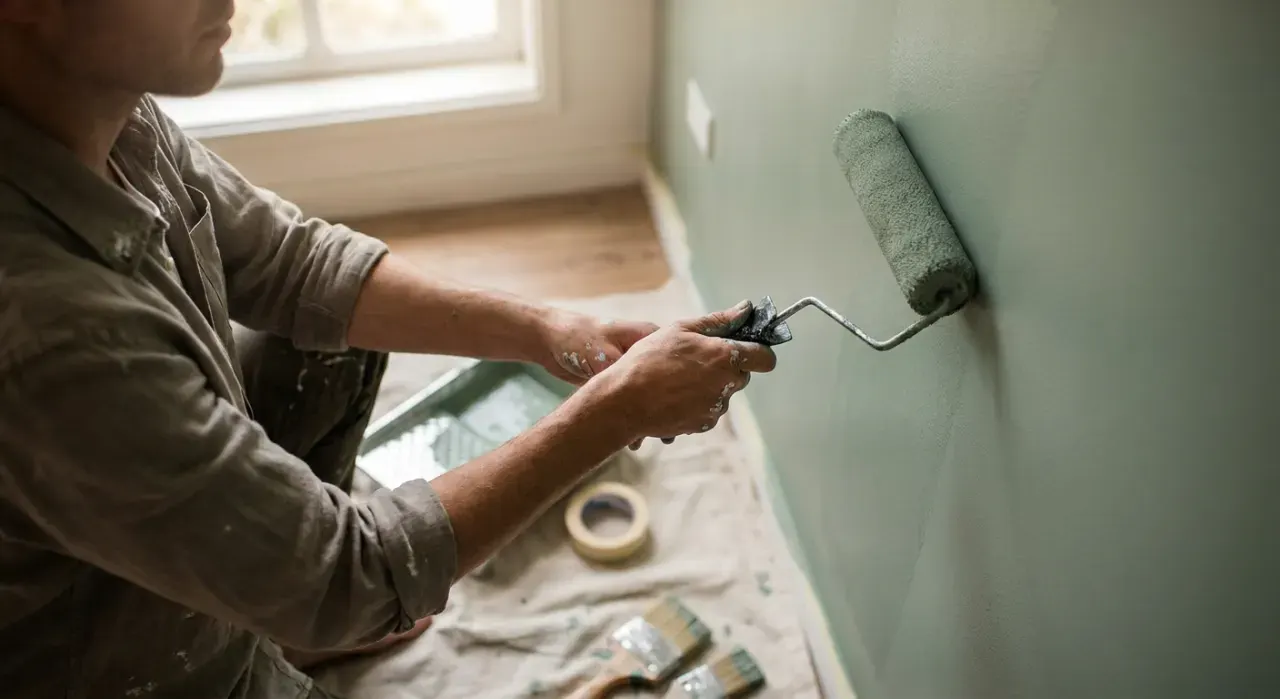
Below about 50°F is too cold to paint indoors with standard latex paint — that is the minimum most interior paints need to cure properly. Colder than that, water-based paint cannot form a proper film: it dries poorly, cracks, chalks and fails to bond, often showing up as peeling months later. The ideal range is 60 to 75°F. What matters most is the wall's surface temperature, not just the air, since a cold exterior-facing wall can lag behind the thermostat. If the room cannot be warmed, use a low-temperature paint rated down to 35°F.
Why is 50°F the cutoff?
Because of how water-based paint dries. Latex paint cures by coalescence: as the water evaporates, the paint particles flow together and fuse into a continuous, durable film. Cold slows the evaporation and, below a threshold, prevents the particles from properly coalescing at all — so instead of one solid film you get a weak, porous, poorly-bonded layer. The result is cracking, chalking, uneven sheen and a coat that never reaches full hardness, which is why manufacturers set a minimum application temperature, typically 50°F for standard interior latex. Oil-based paint has its own cold problem: it thickens, drags under the brush and cures unevenly.
| Temperature | Standard latex result |
|---|---|
| Below 50°F | Too cold — poor adhesion, cracking, chalking |
| 50°F | Minimum; cures slowly, allow extra time |
| 60–75°F | Ideal — flows, levels and cures well |
| 85–90°F+ | Too hot — dries fast, lap marks, brush drag |
Always check the specific minimum on the can, since it varies by product. Painting below it is one of the avoidable causes of a finish that fails early — related to the adhesion failures in why paint peels.
Why does the wall's temperature matter most?
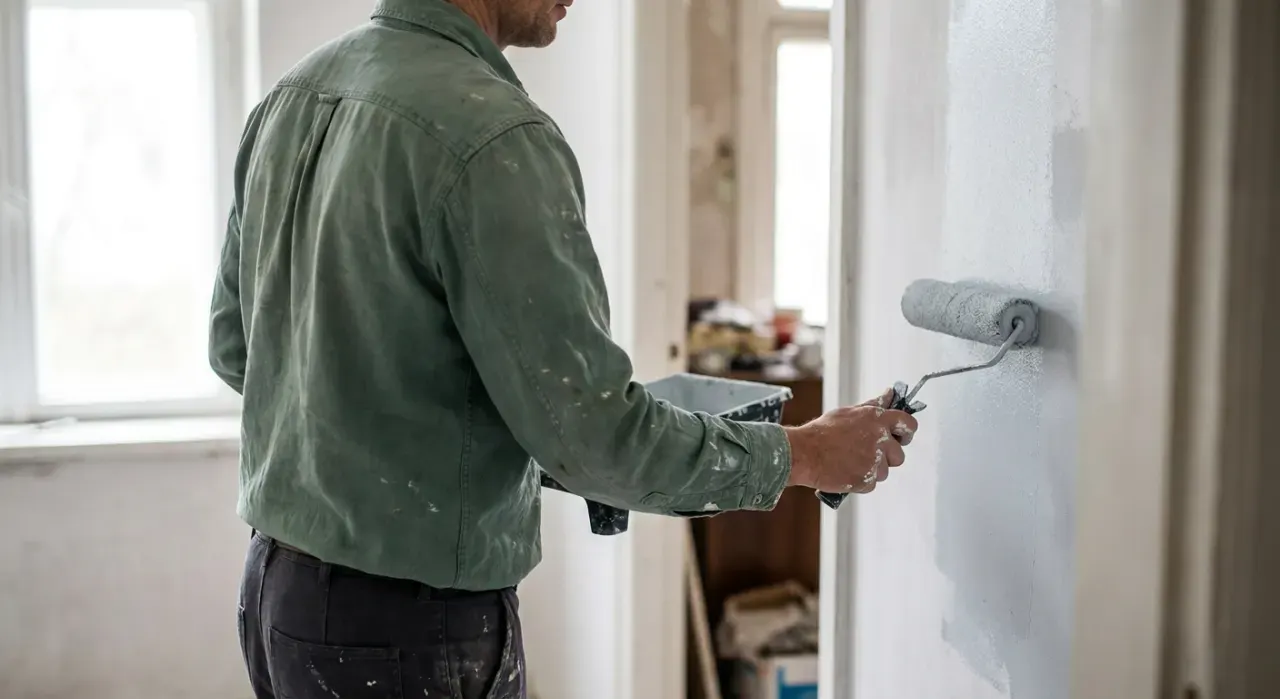
Because the paint cures against the surface, not against the air, and the two are not always the same. The room air might read a comfortable 65°F on the thermostat while an exterior-facing wall, a wall over an unheated garage or crawlspace, or any wall that was cold overnight is still sitting below 50°F. Paint applied to that cold surface fails no matter what the air says. So warm the room well ahead of time — hours, not minutes — so the walls themselves come up to temperature, and touch the wall before you start: it should feel warm, not cool. Exterior-facing and below-grade walls are the ones to check, since they hold the cold longest.
What are the options in a cold room?
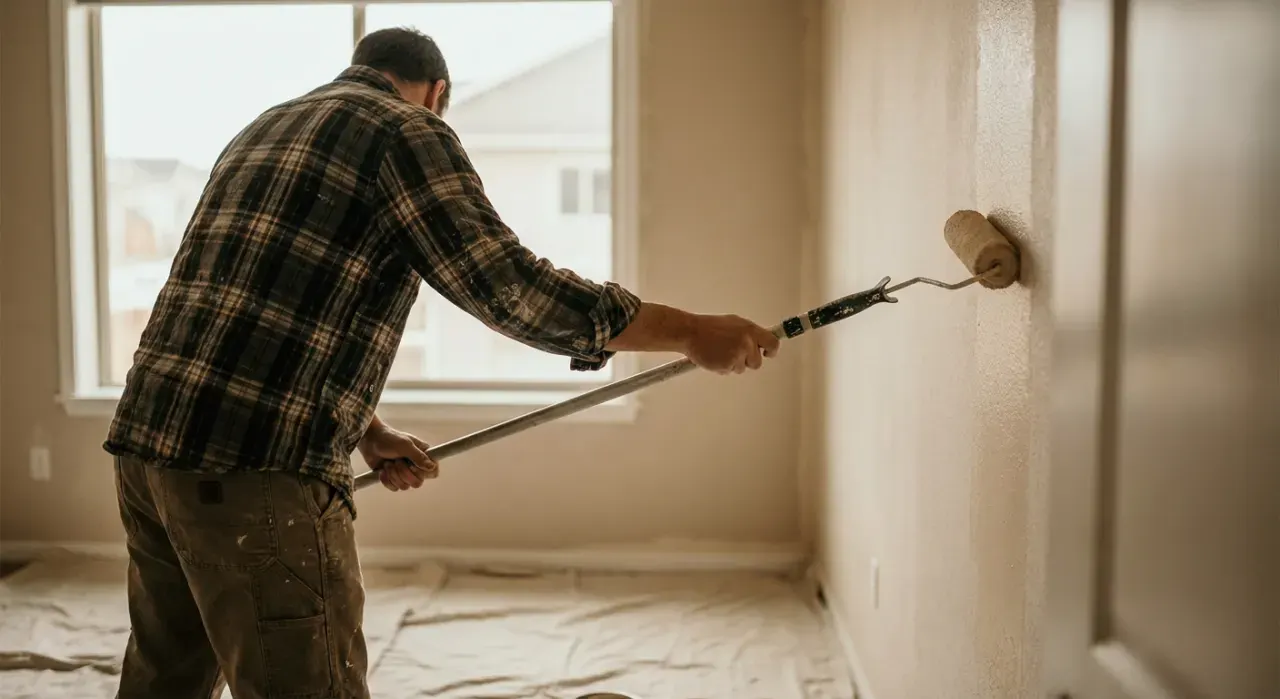
Two, and they can be combined. First, warm the room: run the heat or a space heater to bring both the air and the walls into the 60s ahead of painting, keep it there during application, and hold it through the curing period of a day or two — cold that returns overnight can still spoil a coat that has not fully cured. Use heaters evenly and gently, keep them clear of wet paint and open flame away from fumes, and ventilate, since heat plus a closed room concentrates VOCs. Second, if you genuinely cannot warm the space — an unheated garage, a winter project — use a paint specifically formulated for low temperatures, which are rated to cure down to as low as 35°F. Do not simply thin standard paint or hope it will be fine; the minimum on the can is a real limit.
How does cold change dry times?
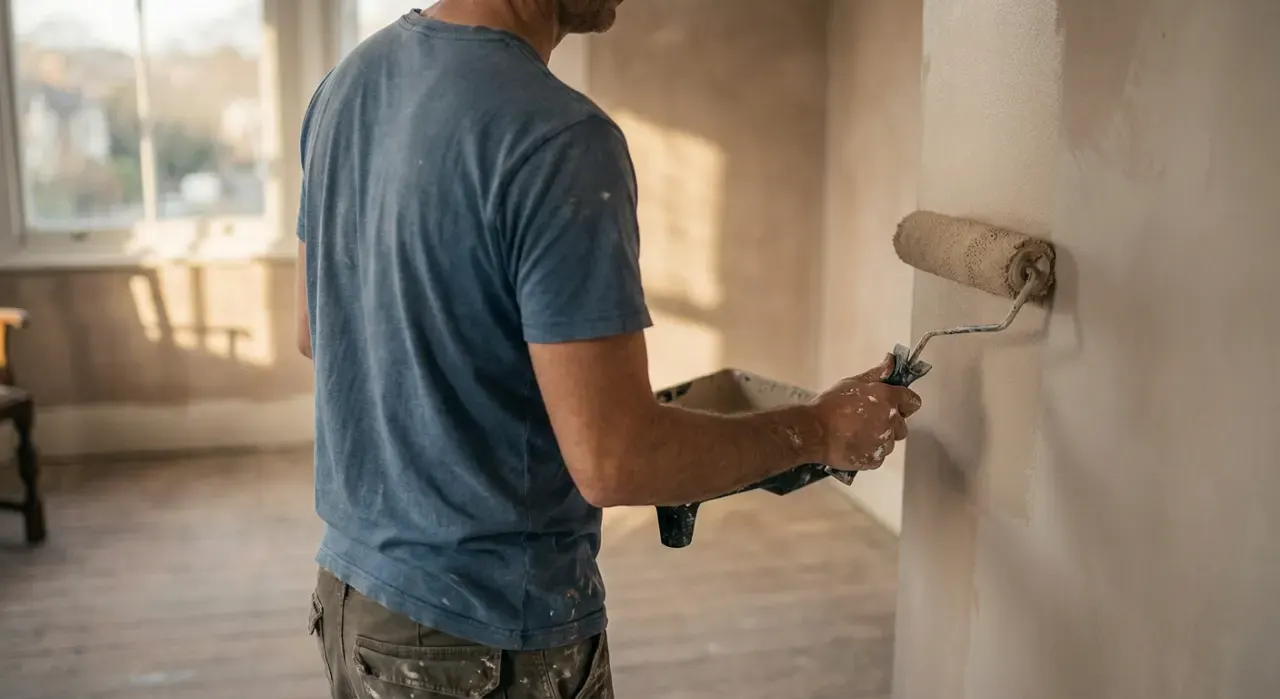
It lengthens everything. Even within the acceptable range, a room at 50°F dries and recoats far slower than one at 70°F, so plan on longer waits between coats and before returning the room to use — the full picture is in waiting between coats. High humidity compounds the slowdown. The practical upshot: paint in a warm, moderately dry, ventilated room whenever you can, give cold-weather jobs generous drying time, and never rush a second coat onto a first that the cold has left soft. Good conditions plus good paint is what makes the finish last — the roundup is best interior paint.
We never buy, test or physically handle the products we rank. Recommendations come from aggregated owner reviews, star ratings, review volume and expert consensus — see how we rank.
More from this hub: Paint & Walls · Best interior paint · Waiting between coats · Why paint peels · How we rank