 Garden

Affiliate Disclosure
Some links on this page are affiliate links. As an Amazon Associate, we earn from qualifying purchases — at no extra cost to you. We do not buy, test, or physically handle the products we cover; our rankings come from aggregated owner reviews, ratings and expert consensus. Commissions never change our verdicts. How we rank · full disclosure.
The short version: trapping is the most effective gopher control available to a homeowner, and it fails far more often because of where the trap goes than because of which trap it is. Our #1 pick is the Victor Black Box — the enclosed body is forgiving of a rough setup, needs no large excavation, and is much less unpleasant to empty than an open jaw trap. If you expect to be doing this every season, the Cinch two-pack is the trap professionals carry and it will outlast the yard. Skip poisons and the ultrasonic stakes; the owner-review record on both is bleak.
Before any of it matters, learn to read a mound. A pocket gopher pushes soil out of a lateral tunnel and plugs the opening, leaving a fan-shaped or horseshoe-shaped pile with the plug offset to the flatter side. Fresh soil is dark, damp and loose; old mounds crust over and pale. Traps set in old tunnels catch nothing, and that single mistake accounts for most of the one-star reviews on every product below.
Top Picks at a Glance

Our #1 Pick: Victor The Black Box Gopher Trap
The Black Box is a rectangular plastic housing containing a spring-loaded kill mechanism. The gopher enters through the open end, trips the trigger inside, and the mechanism operates within the box. Nothing is exposed while it is set, and the catch stays inside.
Three things make it the right first trap. It can be set into a lateral tunnel from the mound rather than requiring you to dig down to the main run, which cuts the hardest part of the job. It is forgiving — a slightly imperfect placement still catches, whereas a scissor trap set at the wrong angle simply gets pushed aside. And the enclosed catch removes the part of the job most people dislike enough to give up on: you lift the box, empty it away from the yard, and reset.
The trade-offs are real. It is bulkier than a pincher trap, so it needs a slightly larger opening in the tunnel. The plastic body becomes brittle after several seasons of sun and freeze cycles, which shows up in reviews from long-term owners. And its trigger is less hair-fine than the professional steel traps, so a cautious gopher can occasionally back out. Two boxes set facing opposite directions in the same run solve most of that.
Check price on Amazon → (paid link)
The Ranked Field

Best for first-time trappers who want the mechanism fully enclosed
- Fully enclosed box — no exposed jaws when set
- Works in a lateral tunnel without excavating a main run
- Weather-resistant plastic body, reusable season after season
- Catch is contained, so disposal means lifting the box
Why buy it: the enclosed design is the reason most people finally succeed — it is forgiving of clumsy setting and it is far less unpleasant to empty.
Best for serious infestations and anyone trapping year after year
- Heavy galvanized steel, made in the USA
- Sets from above with the supplied lever — no reaching into the tunnel
- Very high trigger sensitivity
- Reusable for decades with basic care
Why buy it: the trap professional trappers actually carry, and the one owners buy after two seasons of frustration with cheaper alternatives.
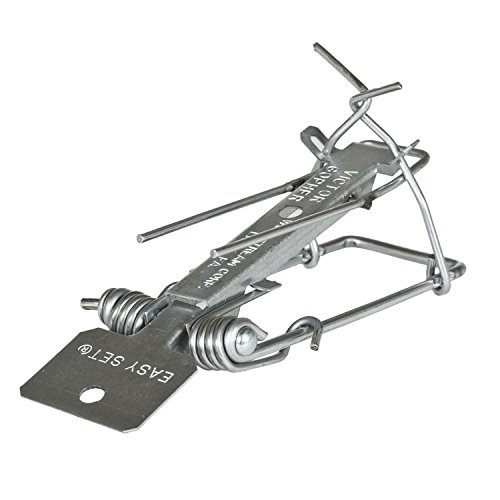
Best for setting several traps at once across a yard on a budget
- Galvanized steel pincher design, the classic style
- Narrow body fits inside a lateral tunnel
- Two traps per pack — set both ends of a run
- All moving parts sit below ground when placed
Why buy it: trapping is a numbers game and two cheap traps in the right tunnel beat one expensive trap in the wrong one.
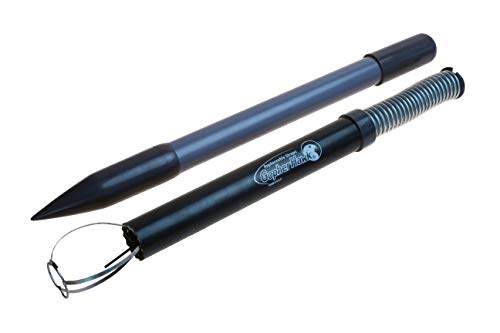
Best for lawns you do not want to excavate to set a trap
- Probe locates the tunnel, wedge opens a narrow slot
- Trap drops through the slot — no shovel work
- Yellow catch indicator visible from a distance
- Kit includes the tools, not just the trap
Why buy it: the only system here that does not require cutting a hole in your lawn, which matters a great deal on a manicured yard.

Best for owners who already trap and want spares cheaply
- Macabee-style scissor jaw design
- Four traps supplied — enough to cover several runs
- Compact enough for small lateral tunnels
- Lowest cost per trap in this lineup
Why buy it: the design that has been catching pocket gophers in the American West for a century, sold four at a time.

Best for covering a large property or an established colony
- Three traps plus the setting and placement tools
- Same steel mechanism as the two-pack
- Enough traps to work several runs simultaneously
- Kit format keeps the tools with the traps
Why buy it: one gopher is a weekend; a colony is a campaign, and a campaign needs more than two traps working at once.
Quick Comparison
| Product | Best for | Rating | Price | Buy |
|---|---|---|---|---|
| Victor The Black Box Gopher Trap 0625 - Reusable - Weather-Resistant | Best Overall | — | Check (paid link) | |
| Cinch Traps Gopher Trap - Two Pack | Best Pro-Grade | — | Check (paid link) | |
| Victor Easy Set Gopher Trap, 2-Pack, Weather-Resistant Rodent Traps, M0611 | Best Value | — | Check (paid link) | |
| GopherHawk® Trapping Set, Includes Wedge and Probe Tool | Best No-Dig | — | Check (paid link) | |
| Sweeney’s Gopher Trap, 2 Pack S9013 (Two Boxes of 2 Traps) | Best Classic Design | — | Check (paid link) | |
| Cinch Gopher Trap Kit, Reusable Trap System for Mole and Small Rodents, Made in USA (3 Medium) | Best Multi-Trap Kit | — | Check (paid link) |

Specifications Side by Side
| Trap | Mechanism | Material | Excavation needed | Traps supplied |
|---|---|---|---|---|
| Victor Black Box | Enclosed box, spring kill bar | Plastic housing, steel mechanism | Lateral tunnel only | One |
| Cinch Two Pack | Body-grip, set from above | Galvanized steel | Small hole to the run | Two |
| Victor Easy Set M0611 | Pincher | Galvanized steel | Open the lateral | Two |
| GopherHawk Set | Drop-in body grip | Steel with plastic frame | None — wedge makes a slot | One plus tools |
| Sweeney’s S9013 | Macabee-style scissor jaw | Steel wire | Open the lateral | Four |
| Cinch Kit (3 Medium) | Body-grip, set from above | Galvanized steel | Small hole to the run | Three plus tools |
How We Rank
We do not buy or set these traps. The ranking is built from aggregated owner ratings, read with an unusual amount of care in this category because a large share of negative reviews describe user error rather than product failure — a trap in an abandoned tunnel catches nothing regardless of who made it. Four factors carry the weight. Reported catch rate in reviews that also describe placement, which lets us separate the trap from the technique. Ease of correct setting, since a trap that is difficult to arm gets set badly or not at all. Durability across seasons of soil, moisture and sun, drawn from long-term reviews rather than first impressions. And the unpleasantness of the job, which sounds soft but is the practical reason people abandon trapping halfway through. Prices were checked at the time of writing. Full method: how we rank.
How to Set a Gopher Trap Properly
- Find a fresh mound. Dark, moist, crumbly soil. Ignore pale crusted mounds — those tunnels are usually abandoned.
- Locate the plug. The mound is fan- or horseshoe-shaped; the plug sits on the flat side, and the lateral tunnel runs from it down toward the main run.
- Probe for the main run. Push a rod or length of rebar into the soil roughly 8 to 12 inches to the plug side of the mound. You will feel a sudden drop of an inch or two when the probe breaks through into the tunnel, typically 6 to 12 inches deep — Texas A&M AgriLife Extension describes the same method for locating the main burrow runway.
- Open the tunnel. Cut a small hole down to the run with a trowel or a bulb planter, keeping the sod intact so you can replace it.
- Set two traps, facing opposite directions. The main run goes both ways and you do not know which side the animal is on. This single step roughly doubles success rates and is the most-skipped instruction in the whole process.
- Stake every trap. Wire or cord to a stake or flag at the surface. Traps that are not tethered get dragged away and lost.
- Cover the opening. Replace the sod or lay cardboard and soil over the hole to block light and draft, so the gopher does not simply pack dirt into the trap.
- Check within 24 to 48 hours. No catch and no fresh soil pushed into the tunnel means the run is inactive — move to a fresher mound rather than waiting.
University of California IPM guidance is unambiguous that trapping is the most effective and most reliable control method available to a homeowner, and that placement in an active main run is what determines success. If you are unsure whether the culprit is a gopher or a mole — the control methods differ completely — our guide to getting rid of moles covers the distinction, as does Penn State Extension: moles leave volcano-shaped mounds and raised surface tunnels, gophers leave fan-shaped mounds with an offset plug and no surface ridges.

The Gopher Traps, Reviewed
1. Victor Black Box — Best Overall
Covered above. Owners praise: catching on the first or second attempt, easy setting compared with jaw traps, containment of the catch, and no digging down to the main run. Owners gripe about: plastic becoming brittle after a few seasons, needing a larger opening than a wire trap, and occasional misses from a less sensitive trigger. Check price (paid link).
2. Cinch Traps Gopher Trap Two Pack — Best Pro-Grade
Heavy galvanized steel, made in Oregon, and effectively permanent. The distinguishing feature is the setting method: the trap goes into the tunnel and is armed from above using the supplied lever, so your hands never enter the burrow and you are never fighting a spring at arm's length in a hole. Trigger sensitivity is very high — light contact fires it.
Owners praise: high catch rates, setting without reaching into the tunnel, build quality that lasts decades, and hair-trigger sensitivity. Owners gripe about: price, a first-time learning curve, needing to dig properly to the main run, and rust when stored damp. Check price (paid link).
3. Victor Easy Set Gopher Trap, 2-Pack — Best Value
The classic galvanized pincher trap, sold in twos, which is exactly how gopher traps should be sold — the two-directions rule means a single trap is half a setup. The narrow body slides into a lateral tunnel without a large excavation, and all moving parts sit below ground once placed.
Setting takes hand strength and a little care, and the reviews reflect that: owners who found it fiddly are the same ones reporting pinched fingers. Once set, it works. For a first gopher, buying this pack and a Black Box together is a sensible hedge.
Owners praise: low price, two traps per pack, compact size for small tunnels, and simple reliable mechanics. Owners gripe about: stiff setting, pinched fingers, rust over seasons, and the trap being dragged into the tunnel when not staked. Check price (paid link).
4. GopherHawk Trapping Set — Best No-Dig
The GopherHawk exists to solve the part of the job that stops people: cutting a hole in a lawn. The kit includes a probe to locate the tunnel and a wedge that opens a narrow vertical slot down to it, then the trap drops through the slot and sits in the run. No shovel, no sod to replace, and a yellow indicator at the surface tells you it has fired without kneeling down to look.
Owners praise: no lawn damage, the probe and wedge working as a system, the visible catch indicator, and clean fast placement in workable soil. Owners gripe about: difficulty in hard, dry or rocky soil, price for a single trap, and a trigger some owners find less sensitive than the steel traps. Check price (paid link).
5. Sweeney’s Gopher Trap 2 Pack — Best Classic Design
A Macabee-pattern scissor trap, the design that has been catching pocket gophers across California and the West for over a hundred years. It is small, it fits tunnels the bulkier traps cannot, and four traps per order means you can work several runs at once for the price of one premium trap.
Its ratings are the lowest here, and the pattern in the reviews is consistent rather than random: the scissor mechanism demands the most technique of anything on this page. Set at the wrong angle, or with the trigger pan not centered in the run, it gets pushed aside or fires empty. Experienced trappers rate it highly; first-timers frequently do not.
Owners praise: low cost per trap, compact size, four traps per order, and effectiveness in skilled hands. Owners gripe about: a fussy trigger, difficulty setting, empty springs, and lighter wire than the premium steel traps. Check price (paid link).
6. Cinch Gopher Trap Kit (3 Medium) — Best Multi-Trap Kit
The same steel mechanism as pick 2 in a three-trap kit with the setting and placement tools included. If your yard has multiple fresh mound clusters — which usually means multiple animals, since pocket gophers are solitary and territorial — three traps working simultaneously shortens the campaign considerably.
Owners praise: covering several runs at once, tools included, and the same build quality as the two-pack. Owners gripe about: price, the same learning curve, and needing to dig to the main run for each placement. Check price (paid link).
What Owners Actually Complain About
“I caught nothing.” This dominates every product's negative reviews and it is nearly always placement. Three specific errors account for most of it: setting in a lateral tunnel instead of the main run, setting in an old tunnel because the mound looked convincing, and setting one trap where the run goes two ways. If a trap sits undisturbed for 48 hours with no fresh soil pushed against it, the run is inactive — move it.
Sprung but empty. Usually the gopher packed soil into the trap rather than walking into it, which is what happens when light and draft come down the opening. Cover the hole properly with sod or cardboard and soil.
Traps lost underground. A gopher can drag an untethered trap deep into a tunnel. Every trap should be wired to a stake or a flag. This is universal advice and universally ignored until it happens once.
Hard to set, pinched fingers. The scissor and pincher designs demand hand strength and attention. Set them on the ground, never over your other hand, and if the spring is genuinely beyond you, the Black Box or the Cinch lever system exist for exactly that reason.
How to Choose a Gopher Trap
Start with how much of this you expect to do. One animal in a suburban yard, once? The Black Box, and buy two. A rural property, an orchard or a recurring problem every spring? Cinch, and treat it as a permanent tool.
Then look at your soil. Loose loam suits every trap here, including the no-dig GopherHawk. Heavy clay or rocky ground makes the wedge system hard work and favors traps you place through an excavated hole.
Finally, be honest about the unpleasant part. Gopher trapping is lethal control and it involves handling a dead animal. The enclosed Black Box makes that easier than an open jaw trap, and for a lot of households that is the difference between finishing the job and abandoning it. If you would rather not trap at all, our wildlife control guide covers exclusion approaches, and the evidence on ultrasonic repellers is worth reading before you spend money on stakes — the owner-review record and the published research both point the same unflattering direction. Check local regulations too; rules on lethal control of burrowing rodents vary by state and sometimes by county.
The Verdict
The Victor Black Box is the gopher trap we would hand to someone dealing with their first mound: enclosed, forgiving, no major excavation, and far less unpleasant to empty than the alternatives. Buy two and set them facing opposite ways. If gophers are an annual event on your property, the Cinch two-pack is the trap that professional trappers carry and it will outlive the problem. The Victor Easy Set two-pack is the budget way to get two traps into a run, the GopherHawk is the answer when you refuse to cut the lawn, and the Cinch three-trap kit is what a real colony needs. Whatever you buy, the trap matters less than finding the fresh mound and reading the run correctly. Check price on Amazon → (paid link)
More from this hub: pest & weed control · how to get rid of moles · deer and rabbit control · do ultrasonic repellers work · best wasp and hornet sprays · how we rank.