 Garden
Affiliate Disclosure
Some links on this page are affiliate links. As an Amazon Associate, we earn from qualifying purchases — at no extra cost to you. We do not buy, test, or physically handle the products we cover; our rankings come from aggregated owner reviews, ratings and expert consensus. Commissions never change our verdicts. How we rank · full disclosure.
The short version: the repellents that work are the ones with an EPA-registered active ingredient the CDC lists — DEET, picaridin, IR3535, oil of lemon eucalyptus (OLE) or its refined form PMD, and 2-undecanone. Everything else is marketing. Our #1 pick is Sawyer 20% picaridin, which protects for up to 12 hours and, unlike DEET, will not craze your sunglasses or eat a synthetic shirt. For heavy pressure, OFF! Deep Woods at 25% DEET remains the proven workhorse. For a patio, skip skin entirely and use a Thermacell zone repeller.
This is the wide view of the whole category — skin, clothing and air. If your problem is specifically an outdoor seating area, our narrower best mosquito repellent for a patio guide goes deeper on zone repellers, and for treating the property itself see best mosquito repellent for a yard and best mosquito yard spray.
Top Picks at a Glance

Our #1 Pick: Sawyer 20% Picaridin
Picaridin earned its place the slow way. It has been used in Europe and Australia for decades and has been available in the United States since 2005, and at 20% concentration it delivers protection measured in the same league as 25% DEET — the label claims up to 12 hours against mosquitoes and ticks. What separates it is what it does not do. DEET is a plasticizer: it hazes watch crystals, softens synthetic fabric, degrades fishing line and lifts the finish off painted gear. Picaridin does none of that, which matters more than people expect once they have ruined one pair of sunglasses.
The honest limits: picaridin is not magic, and a 20% product still needs reapplying on the label schedule if you are sweating or swimming. Some owners find the pump spray slower to apply over large areas than an aerosol, and a 3 oz bottle disappears quickly on a family. Neither is a reason to buy something else. Read the label before you use it — under federal law the pesticide label is legally enforceable, and repellents are registered pesticides.
Check price on Amazon → (paid link)
The Ranked Field

Best for all-day skin protection without the DEET downsides
- 20% picaridin — an EPA-registered active the CDC lists as effective
- Up to 12 hours against mosquitoes and ticks per the label
- Does not dissolve plastics, synthetics or gear finishes
- Fragrance-free and not greasy on skin
Why buy it: picaridin matches DEET for duration at the 20% strength while staying off the list of things that melt sunglasses, fishing line and synthetic fabric — which is why owners who switch rarely switch back.

Best for heavy mosquito pressure, woods, dusk and swamp edges
- 25% DEET, the most-studied repellent active in existence
- Up to 8 hours of protection per the label
- Also listed for ticks, biting flies, gnats and chiggers
- Cheap, universally stocked, aerosol coverage
Why buy it: the default for a reason — decades of published data behind it, sold in every drugstore in America, and it simply works when the mosquitoes are thick.

Best for people who want a botanical active that is actually CDC-listed
- 30% oil of lemon eucalyptus (OLE), the refined PMD-rich extract
- Up to 6 hours per the label
- The only plant-based active on the CDC list
- DEET-free and inexpensive
Why buy it: the one botanical repellent with real registered efficacy behind it — but read the label: it is not approved for children under three years old.
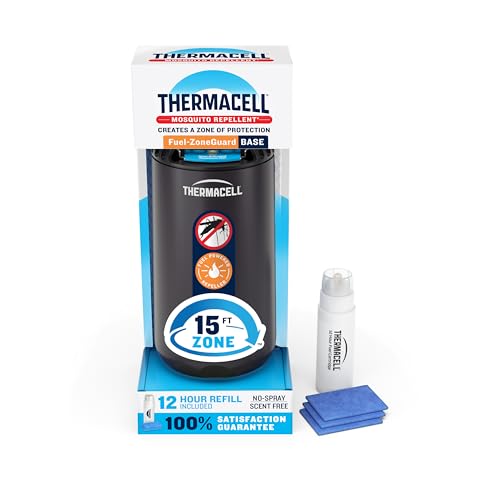
Best for protecting a seating area instead of your skin
- Roughly a 15 ft zone of protection
- Butane cartridge heats a repellent-treated mat
- No spray on skin, no scent, no flame
- Reaches full strength in about 15 minutes
Why buy it: nobody wants to spray themselves to eat dinner on their own deck — this treats the air around the table instead, and it is the single most-loved mosquito product in the category.

Best for treating clothes, boots, packs and tents rather than skin
- 0.5% permethrin for fabric only — never for skin
- One treatment lasts through about six washings per the label
- Kills as well as repels ticks, mosquitoes and chiggers
- Odorless once fully dried
Why buy it: the layer most people skip: treated clothing keeps working while your skin repellent wears off, and it is the CDC-recommended approach for tick country.

Best for a scent-free repellent you can spray indoors before heading out
- 20% picaridin in a low-odor trigger spray
- Up to 12 hours against mosquitoes and ticks per the label
- Trigger sprayer rather than an aerosol
- Also sold in a genuinely scent-free version
Why buy it: the same active as our #1 pick in a bottle designed not to announce itself — the pick for anyone who finds standard bug spray unbearable to smell.
Quick Comparison
| Product | Best for | Rating | Price | Buy |
|---|---|---|---|---|
| Sawyer Products SP543 Premium Insect Repellent, 20% Picaridin Pump Spray, 3 oz | Best Overall | — | Check (paid link) | |
| OFF! Deep Woods Insect Repellent Aerosol, 25% DEET, 6 oz | Best DEET | — | Check (paid link) | |
| Repel Plant-Based Lemon Eucalyptus Insect Repellent, 4 oz Pump Spray | Best DEET-Free Plant-Based | — | Check (paid link) | |
| Thermacell Patio Shield Mosquito Repeller with 12-Hour Refill | Best Zone Repeller | — | Check (paid link) | |
| Sawyer Products Premium Permethrin Clothing Insect Repellent, 24 oz Trigger Spray | Best for Clothing and Gear | — | Check (paid link) | |
| Ranger Ready Picaridin 20% Tick & Insect Repellent, 5 oz | Best Odor-Free Picaridin | — | Check (paid link) |
The Only Five Actives Worth Buying
Strip away branding and there are five registered repellent chemistries, plus permethrin for fabric. The CDC names DEET, picaridin, IR3535, OLE/PMD and 2-undecanone; the EPA registration number on the back panel is how you verify a product is genuinely one of them.
| Active | Typical strength | Protection window | Watch out for |
|---|---|---|---|
| DEET | 10–30% | 2–8 hours by strength | Damages plastics, synthetics, fishing line |
| Picaridin | 10–20% | Up to 12 hours at 20% | Nothing significant; 10% versions are short-lived |
| IR3535 | 10–20% | Roughly 4–8 hours | Can sting eyes; weaker on ticks |
| OLE / PMD | 30% | About 6 hours | Not for children under 3 years old |
| 2-undecanone | ~7.75% | Several hours | Hard to find on a shelf |
| Permethrin | 0.5% | ~6 washings on fabric | Fabric only — never on skin |
Protection windows are the manufacturer label claims, not measured results. Always follow the label — it is the law under FIFRA, and using a repellent in a way inconsistent with its labeling is a federal violation.
The Lemon Eucalyptus Trap
This distinction gets confused constantly and it is worth being blunt about. Oil of lemon eucalyptus (OLE) is a refined, standardized extract rich in para-menthane-diol, and it is EPA-registered as an insect repellent — it is the one plant-based active the CDC lists. Lemon eucalyptus essential oil, the small brown bottle in the aromatherapy aisle, is a different, unrefined product. It is not registered for use as a repellent and the CDC does not recommend it for that purpose. The names are nearly identical and the outcomes are not. Look at the active-ingredient panel: it must say oil of lemon eucalyptus or para-menthane-diol, and there must be an EPA registration number.
How We Rank
We never buy, wear or spray these products. Rankings come from aggregated owner ratings across the most-owned repellents in each chemistry, weighted toward reviews describing a full season of real use, and cross-checked against EPA registration and CDC guidance so that no product earns a place on marketing alone. Four factors carry the weight: registered efficacy, whether the active is one public-health agencies actually endorse; duration, how long one application realistically covers; usability, skin feel, smell and whether it wrecks your gear; and value, since a family goes through repellent fast. Prices were checked at the time of writing. Full method: how we rank.

The Repellents, Reviewed
1. Sawyer 20% Picaridin — Best Overall
Covered above. Owners praise: the long window, the absence of the classic bug-spray stink, and not having to keep it away from sunglasses and phone screens. Owners gripe about: the small bottle size, a pump that can clog if it is not rinsed, and a faint but real scent despite the fragrance-free labeling. Check price (paid link).
2. OFF! Deep Woods 25% DEET — Best DEET
The benchmark everything else is measured against. DEET has more published safety and efficacy data behind it than any other repellent active, and 25% covers a long evening outdoors. The aerosol makes covering arms and legs fast, which matters when the mosquitoes are already on you.
Owners praise: that it flatly works under heavy pressure, the low price, and availability everywhere. Owners gripe about: the smell, the greasy film, and DEET's habit of damaging plastic — watch faces, sunglasses, phone cases and synthetic clothing. Check price (paid link).
3. Repel Lemon Eucalyptus (OLE) — Best DEET-Free Plant-Based
The only botanical repellent with genuine registered standing. At 30% OLE it claims about six hours, which is short of picaridin but far beyond the citronella and cedar sprays it sits next to on the shelf.
Owners praise: a pleasant eucalyptus smell, real effectiveness, and a DEET-free formula at a low price. Owners gripe about: the shorter window, a strong scent some find overwhelming indoors, and eye irritation if it drifts. Note the label restriction: not for children under three. Check price (paid link).
4. Thermacell Patio Shield — Best Zone Repeller
A different approach entirely: rather than treating you, it heats a repellent-treated mat and builds a roughly 15-foot bubble of protected air. For a deck, a patio table or a campsite chair, it is the product owners rave about most in this whole category.
Owners praise: going from driven indoors to sitting out all evening, and never having to spray a child. Owners gripe about: wind blowing the protected zone downwind, the 15-minute warm-up, and the ongoing cost of mats and butane. Check price (paid link).
5. Sawyer Permethrin — Best for Clothing and Gear
The layer most households never add. You treat clothing, boots, packs and tents — never skin — let it dry fully, and the fabric keeps repelling and killing ticks and mosquitoes for around six washings. For tick country this is the step the CDC actually emphasizes.
Owners praise: a dramatic drop in ticks found after hikes and yard work, and how long one treatment lasts. Owners gripe about: the two-hour drying wait, the need to treat outdoors, and that permethrin is toxic to cats until it is fully dry — keep treated items away from cats during application and drying. Check price (paid link).
6. Ranger Ready 20% Picaridin — Best Odor-Free Picaridin
Same active as our top pick, built around not smelling like bug spray. The trigger bottle sprays without aerosol propellant, which some households prefer indoors before heading out.
Owners praise: the near-absent scent and the long protection window. Owners gripe about: costing noticeably more per ounce than Sawyer and a trigger sprayer that can be slow over large areas. Check price (paid link).
What Owners Actually Complain About
Under-applying. The most common cause of a one-star review is a thin, patchy application. Mosquitoes find the gap — the back of an ankle, the strip below a sleeve — and the buyer concludes the product failed. Cover exposed skin evenly, and spray hands then wipe onto the face rather than spraying at your face.
DEET damage. Hazed sunglasses, a ruined watch bezel, a tacky spot on a phone case. This is not a defect; DEET dissolves certain plastics. If that matters to you, buy picaridin.
Expecting a repellent to fix the yard. Nothing you put on your skin reduces the mosquito population. If your yard is genuinely infested, the answer is upstream — see how to get rid of mosquitoes in the yard.
Buying an unregistered "natural" spray. Citronella, cedar, peppermint and lemongrass sprays without an EPA registration number dominate the shelf and disappoint reliably. Owners who switch to an OLE product are usually startled by the difference.
How to Choose
All-day outdoors, gear you care about? 20% picaridin. Heavy mosquito pressure, dusk in the woods? 25 to 30% DEET. Want plant-based but effective? 30% OLE, and not for kids under three. Sitting still on a deck? A Thermacell zone repeller instead of anything on skin. Ticks? Permethrin on clothing plus a skin repellent — the full field is in our best tick repellent guide. And if you are weighing the two mainstream actives directly, we broke that down in DEET vs picaridin.
One more thing that costs nothing: mosquitoes are weak fliers. An oscillating fan aimed across a seating area disperses the carbon dioxide plume that draws them in and physically makes it hard for them to land — one of the cheapest and most reliable patio fixes there is.
The Verdict
Sawyer 20% picaridin is the repellent we would put in most people's hands: long-lasting, CDC-listed, pleasant to wear and harmless to gear. Keep OFF! Deep Woods in the truck for the nights that get ugly, add Sawyer permethrin on your clothes if you live where ticks do, and put a Thermacell on the patio table so nobody has to spray at all. Check price on Amazon → (paid link)
More from this hub: pest & weed control · best patio mosquito repellent · best tick repellent · what attracts mosquitoes · compare products · how we rank.