 Garden


Affiliate Disclosure
Some links on this page are affiliate links. As an Amazon Associate, we earn from qualifying purchases — at no extra cost to you. We do not buy, test, or physically handle the products we cover; our rankings come from aggregated owner reviews, ratings and expert consensus. Commissions never change our verdicts. How we rank · full disclosure.
Residual barrier mosquito sprays are typically reapplied about every 3 to 4 weeks through the season, which is why professional services usually run on a roughly monthly schedule — but heavy rain shortens that, and eliminating standing water matters far more than how often you spray. Spraying suppresses adult mosquitoes for a few weeks; it does not wipe out the population, because new ones keep hatching and flying in. The CDC and EPA both put source reduction first, with spraying as a supplement. Follow the product label for the exact interval.
What does the reapplication interval depend on?
The three-to-four-week figure is a marketed average for residual barrier products, and real-world timing swings around it based on conditions. The active residue — commonly a pyrethroid on foliage and resting surfaces — degrades under ultraviolet light, high heat and, most of all, rain. A dry, shaded yard holds a treatment longer; a week of storms can strip it and justify an earlier retreatment. The product label sets both the reapplication frequency and the maximum, and in the United States that label is legally binding, so it is the ceiling, not a suggestion. Do not spray more often than the label allows in an attempt to get better results.

Why doesn’t spraying just solve it?
A barrier spray knocks down and repels the adult mosquitoes present when it is applied and for a while after, but it does nothing about the larvae developing in standing water or the adults migrating in from a neighbor’s yard or nearby woods. Mosquitoes complete their aquatic larval stage and emerge as new biting adults continually through the season, so the population refills. This is exactly why public-health guidance from the CDC treats adulticide spraying as one layer on top of source reduction rather than a standalone fix. Understanding that keeps expectations realistic and points to where the real leverage is.

What works better than spraying?
Removing breeding sites, because mosquitoes need standing water to reproduce and can do it in a startlingly small amount.
| Action | How often | Why it helps |
|---|---|---|
| Dump standing water (saucers, buckets, tarps) | At least weekly | Breaks the ~1-week egg-to-adult cycle |
| Clear clogged gutters and drains | Seasonally / after storms | Removes hidden breeding water |
| Larvicide (Bti dunks) in rain barrels, ponds | Per label | Kills larvae in water you can’t dump |
| Refresh birdbaths and pet bowls | Every few days | Denies egg-laying sites |
| Fans and screens on patios | As needed | Physically keeps mosquitoes off you |
Weekly source reduction reduces how much you need to spray in the first place, which also reduces the pollinator trade-off below.
The pollinator trade-off
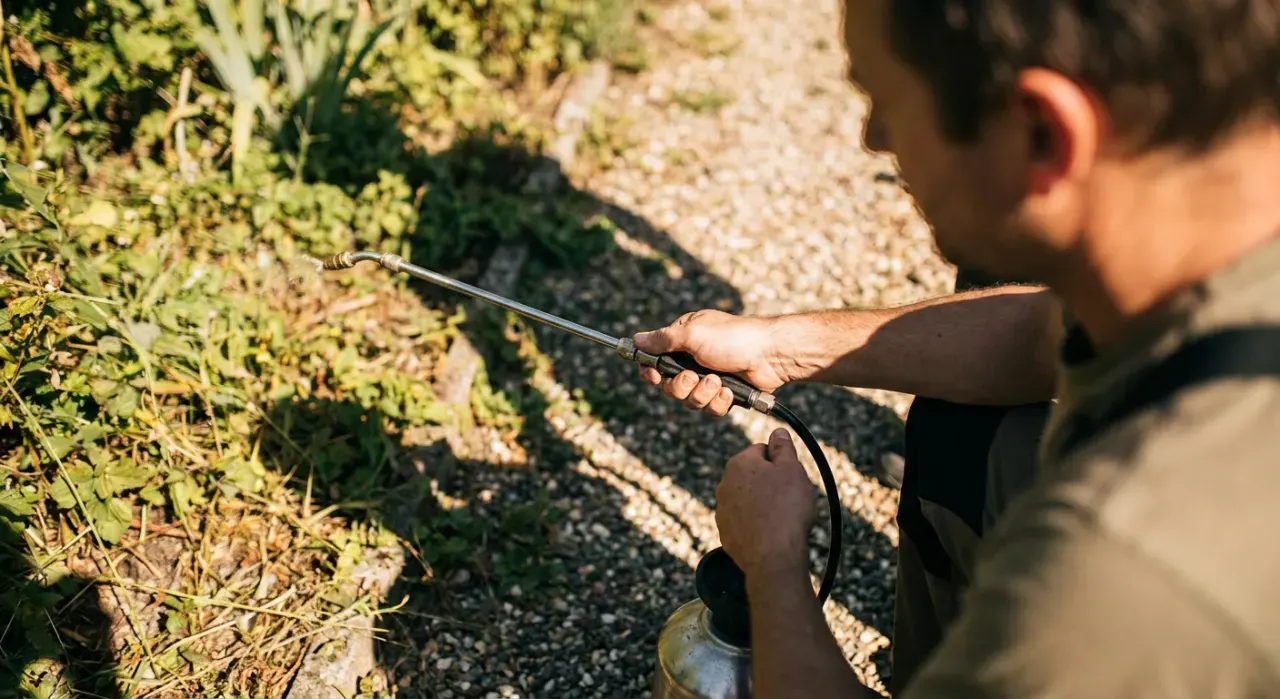
Barrier sprays are broad-spectrum and can harm bees, butterflies and other beneficial insects they contact, so use them thoughtfully. Do not spray blooming flowers or vegetable blossoms, aim treatments at shaded mosquito resting areas — dense shrubbery, under decks, tall grass — rather than blanketing the open lawn, and apply when pollinators are not foraging. The label’s pollinator precautions exist for this reason and must be followed. This is a real cost of frequent spraying and another argument for leaning on source reduction. We do not give medical advice on exposure; follow the label’s safety directions and re-entry times.
When to bring in a professional
A licensed applicator is worth it for season-long control on a large or wooded property, for persistent problems, or any time you would rather not handle insecticide yourself. They have professional-grade products, the equipment to place them correctly, and the training to comply with application and pollinator rules. For a one-off before an event, a labeled consumer product used strictly per directions can bridge the gap.
Where to go next
For yard insects more broadly, best insect killer for yards ranks the labeled products, and non-chemical pest and weed control covers lower-impact tactics. If pets share the yard, read weed and pest product pet safety before applying anything. Everything sits under the pest and weed control hub.
We never buy, apply or physically handle the products we rank — recommendations come from aggregated owner reviews and expert consensus, and the method is on how we rank. Follow the label and check CDC and local health-department guidance for your area.