 Garden

Affiliate Disclosure
Some links on this page are affiliate links. As an Amazon Associate, we earn from qualifying purchases — at no extra cost to you. We do not buy, test, or physically handle the products we cover; our rankings come from aggregated owner reviews, ratings and expert consensus. Commissions never change our verdicts. How we rank · full disclosure.
The short version: the first decision in yard pest control is not which brand but which format, because granules and sprays reach completely different places. Granules wash down into the thatch and soil, where fleas, ticks, ants and grubs live. Sprays coat foliage and siding, where mosquitoes and spiders rest. Buy the wrong one and the treatment does very little regardless of how good the product is.
After weighing six of the most-used yard insecticides in the US on aggregated ratings, published labels and owner reports, our #1 pick is Ortho Home Defense Insect Killer for Lawns granules — the broadest general-purpose ground treatment, at a sensible price per thousand square feet. For mosquitoes on a patio, the Cutter hose-end concentrate does more. And in a yard with dogs and children on it daily, Wondercide trades some potency for the ability to let everyone straight back out.
Top Picks at a Glance
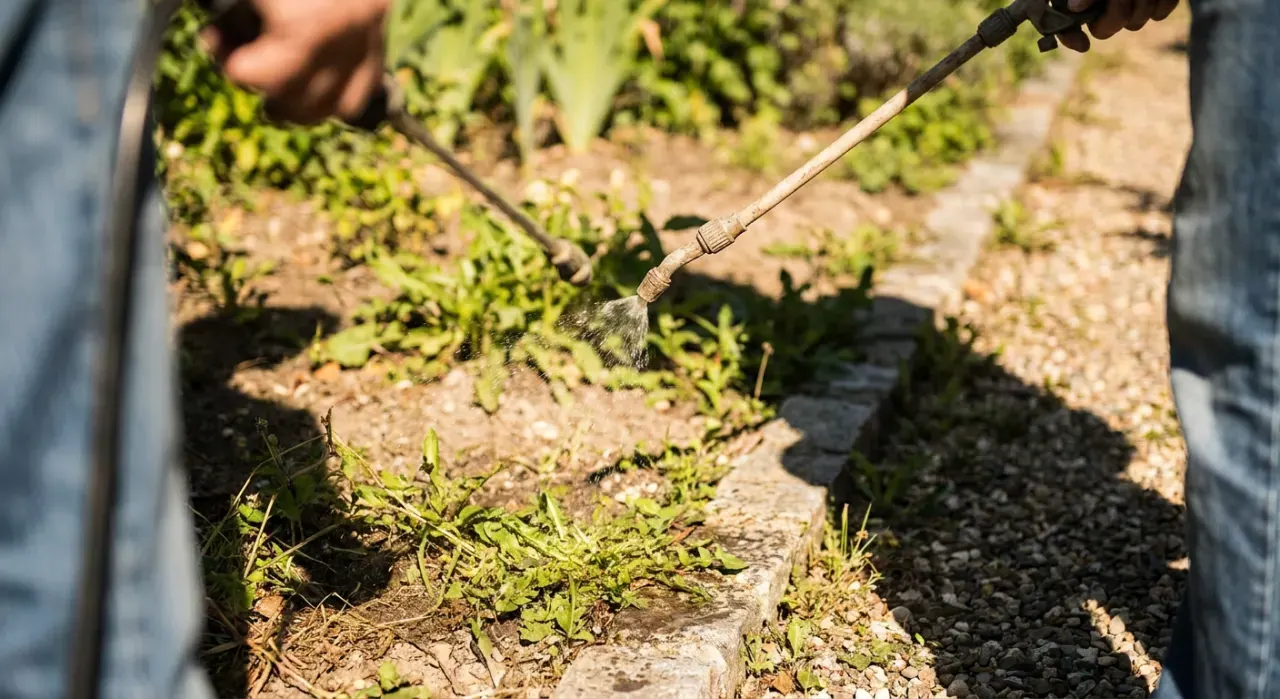
Our #1 Pick: Ortho Home Defense Insect Killer for Lawns Granules
Fleas and ticks do not live on the tips of your grass blades. They live down in the thatch — the dense layer of stems and dead material at the soil surface — where a sprayed mist barely penetrates. Granules solve that by design: they fall through the canopy, sit at the base of the grass, and dissolve down into the thatch when you water them in. That is why granular treatments dominate flea and tick control, and why owners consistently report better results from them than from a spray for the same problem.
The practical advantages are considerable. It goes into a broadcast spreader you probably own, a 10 lb bag covers roughly 10,000 square feet, and the label carries up to three months of control on listed pests. The limitations are honest: it must be watered in or it does very little, it does nothing for mosquitoes resting in shrubs six feet off the ground, and like every broad-spectrum insecticide it kills beneficial insects along with the targets. Keep it out of flowering borders and away from ponds and storm drains.
Check price on Amazon → (paid link)
The Ranked Field

Best for a whole-yard treatment for ants, fleas, ticks and spiders
- Granular — spreads with any broadcast spreader
- Covers roughly 10,000 sq ft per bag
- Labeled for ants, ticks, fleas, spiders and centipedes
- Up to three months of control per application
Why buy it: granules get down into the thatch where fleas and ticks actually live, which is exactly where a surface spray never reaches.

Best for covering lawn and shrubs in one hose-end pass
- Hose-end sprayer, no mixing required
- Gamma-cyhalothrin, kills on contact
- Labeled for lawns, ornamentals and listed edibles
- Long list of target insects on the label
Why buy it: the cheapest fast knockdown available — attach it to a hose and treat a whole yard in fifteen minutes.

Best for insects living below ground as well as on it
- Treats above-ground and below-ground insects
- Granular, spreads and waters in
- Up to three months of protection
- Covers roughly 10,000 sq ft
Why buy it: most yard insecticides never reach the root zone, which is why grub damage keeps returning after surface treatments.

Best for making a patio usable on a summer evening
- Hose-end concentrate, treats up to 5,000 sq ft
- Targets mosquitoes, fleas and listed ants
- Up to 12 weeks of control on some listed pests
- Treats shrubs and shaded resting areas
Why buy it: mosquitoes rest in shaded foliage during the day — treating those surfaces does more than anything you spray on yourself.

Best for yards with dogs, cats and children using them daily
- Cedarwood and other plant-derived essential oils
- Attaches directly to a garden hose
- No drying or re-entry wait when used as directed
- Treats up to roughly 5,000 sq ft for fleas and mosquitoes
Why buy it: the only product here you can spray and let the dog straight back out onto, which is the whole reason people buy it.

Best for an acre or more, treated more than once a season
- Gallon concentrate for tank or backpack sprayers
- Same active as the hose-end version
- Covers a large property multiple times
- Long list of listed pests
Why buy it: the per-acre economics change completely once you are buying concentrate by the gallon instead of hose-end bottles.
Quick Comparison
| Product | Best for | Rating | Price | Buy |
|---|---|---|---|---|
| Ortho Home Defense Insect Killer for Lawns Granules, 10 lb | Best Overall | — | Check (paid link) | |
| Spectracide Triazicide Insect Killer for Lawns & Landscapes Concentrate, 32 oz | Best Ready-to-Spray | — | Check (paid link) | |
| BioAdvanced Complete Brand Insect Killer for Soil & Turf Granules, 10 lb | Best for Grubs | — | Check (paid link) | |
| Cutter Backyard Bug Control Spray Concentrate, 32 oz | Best for Mosquitoes | — | Check (paid link) | |
| Wondercide Ready-to-Use Flea, Tick and Mosquito Yard Spray, 32 oz | Best Pet-Friendly Option | — | Check (paid link) | |
| Spectracide Large Plot Triazicide Insect Killer Concentrate, 1 Gallon | Best Value for Large Yards | — | Check (paid link) |
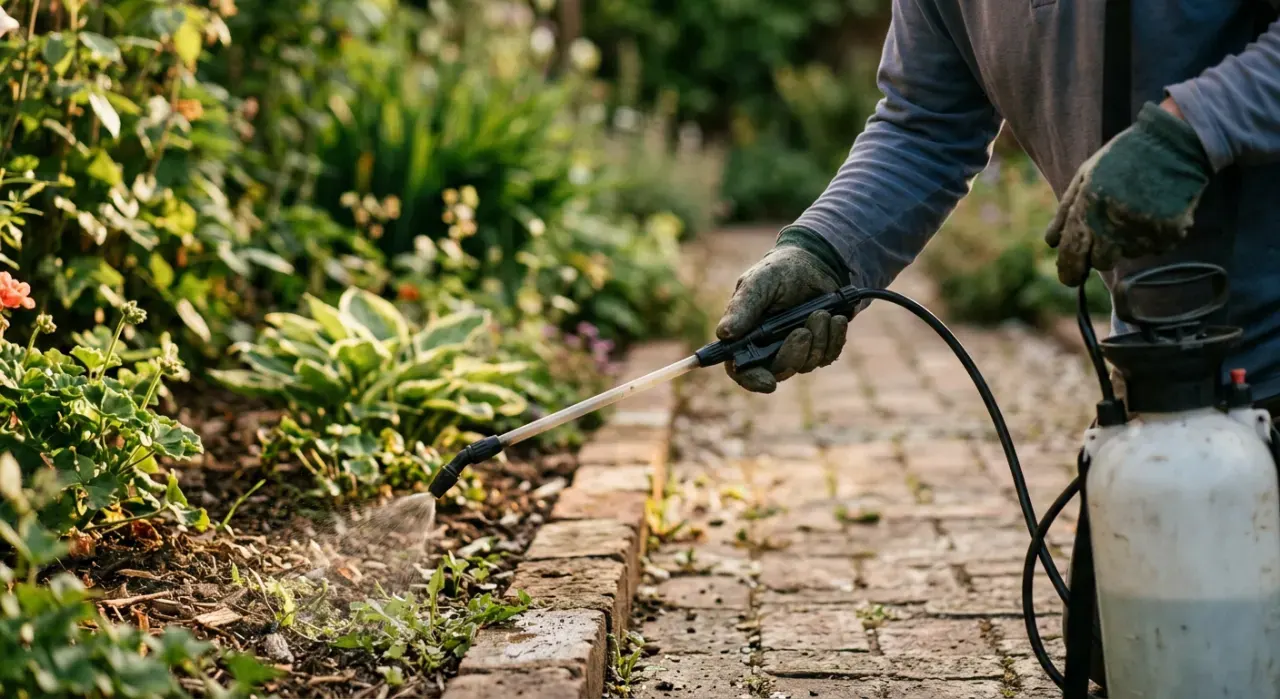
Specifications Side by Side
| Product | Format | Reaches | Approx. coverage | Main targets |
|---|---|---|---|---|
| Ortho Home Defense Granules | Granular | Thatch and soil | ~10,000 sq ft | Ants, fleas, ticks, spiders |
| Spectracide Triazicide RTS | Hose-end spray | Foliage and surfaces | Whole yard per bottle | Broad insect list |
| BioAdvanced Complete | Granular | Above and below ground | ~10,000 sq ft | Grubs, ants, soil insects |
| Cutter Backyard Bug Control | Hose-end spray | Shrubs and shaded foliage | ~5,000 sq ft | Mosquitoes, fleas, listed ants |
| Wondercide Yard Spray | Hose-end, plant oils | Turf and foliage | ~5,000 sq ft | Fleas, ticks, mosquitoes |
| Spectracide Large Plot | Gallon concentrate | Foliage and surfaces | Large property, repeated | Broad insect list |
How We Rank
We do not buy, spread or spray these products, and we would rather state that than pretend to a test yard. The ranking is built from aggregated owner ratings across the six products here, weighted toward reviews written several weeks after application, because an insecticide is judged on residual rather than on knockdown. Four factors carry the weight. Format versus target — whether the product physically reaches where the pest lives, which is the single strongest predictor of whether owners report success. Published label breadth and residual, taken from the container rather than the marketing. Rating strength against review volume. And household and environmental safety, including re-entry intervals, pollinator hazard and aquatic toxicity, all of which are stated on the label and all of which matter in a yard people and animals use. Prices were checked at the time of writing. Full method: how we rank.
The Yard Insect Killers, Reviewed
1. Ortho Home Defense Granules — Best Overall
Covered above. Owners praise: a genuine reduction in fleas, ticks and ants, easy spreader application, good coverage per bag, and a residual measured in months. Owners gripe about: needing to be watered in, no effect on flying mosquitoes, reinfestation from untreated neighboring yards, and dust when spreading on a windy day. Check price (paid link).
2. Spectracide Triazicide Concentrate — Best Ready-to-Spray
The hose-end Triazicide is the fastest and cheapest way to treat a whole yard. Screw it on, walk the property, and lawn, shrubs and the base of the house are covered in fifteen minutes. The active kills a very long list of insects on contact, which is what makes it the go-to for an ant trail across a patio or a sudden spider problem on the siding.
Owners praise: the price, immediate knockdown, hose-end convenience, and coverage of both lawn and ornamentals. Owners gripe about: a shorter residual than granules, uneven application from hose-end sprayers, needing reapplication after heavy rain, and killing beneficial insects indiscriminately. Check price (paid link).
3. BioAdvanced Complete for Soil & Turf — Best for Grubs
Grubs are beetle larvae feeding on grass roots below the surface, and they are the reason patches of lawn lift like a carpet in late summer. Most yard insecticides never reach them. This one is labeled for both above-ground and below-ground insects, so a single granular application handles the surface pests and the root-zone ones together — which is why it turns up so often in reviews from people who treated for grubs three times before finding it.
Timing matters more than product choice with grubs. Treating in late spring to early summer, when the eggs are hatching and the larvae are small, works far better than treating large larvae in the fall.
Owners praise: genuinely stopping grub damage, easy spreader application, a long residual, and covering both surface and soil pests. Owners gripe about: needing thorough watering in, results that take weeks to become visible, the price against surface-only granules, and pollinator concerns that mean keeping it off flowering plants. Check price (paid link).
4. Cutter Backyard Bug Control — Best for Mosquitoes
Mosquito control in a yard works by treating the places mosquitoes rest, not the air they fly through. During the day they sit on the undersides of leaves in shaded shrubs, under decks and in tall grass along fences, and a hose-end spray that coats those surfaces removes a large part of the resting population. Owners consistently describe the difference on a patio in the first two weeks as substantial.
The honest framing: it reduces the resident population, it does not build a wall. Mosquitoes fly in from elsewhere, and standing water anywhere nearby will keep producing them regardless of what you spray. Emptying saucers, gutters and buckets does more per hour spent than any insecticide — the CDC asks for a weekly pass to empty and scrub anything holding water.
Owners praise: a noticeable drop in mosquitoes for a couple of weeks, low price, easy hose-end use, and coverage of shrubs where they rest. Owners gripe about: reinfestation within weeks, no help against standing water sources nearby, uneven hose-end coverage, and harm to beneficial insects. Check price (paid link).
5. Wondercide Yard Spray — Best Pet-Friendly Option
Plant-oil insecticides occupy a genuine middle ground. Cedarwood oil and its relatives kill and repel fleas, ticks and mosquitoes on contact, and because they are not synthetic pyrethroids the label carries no drying or re-entry wait when used as directed. In a yard where a dog is out every hour and children are on the grass all afternoon, that changes the calculation considerably.
What you trade is residual. Essential oils break down fast in sun and rain, so treatment is a fortnightly or monthly routine rather than a quarterly one, and the coverage per bottle is modest. Owners who understood that going in are the enthusiastic reviews; owners expecting three months of control are the disappointed ones.
Owners praise: no re-entry wait for pets and children, a pleasant cedar smell, real reduction in fleas and ticks, and peace of mind for households avoiding synthetics. Owners gripe about: a short residual needing frequent reapplication, the price per treated area, and results that are less dramatic than a synthetic product. Check price (paid link).
6. Spectracide Large Plot Concentrate — Best Value for Large Yards
Once a property runs to an acre or more and gets treated several times a season, hose-end bottles stop making financial sense. A gallon of concentrate mixed into a tank or backpack sprayer costs a fraction as much per treated area, and a sprayer also gives far more even coverage than a hose-end unit, which is the main quality complaint about the cheaper format.
Owners praise: excellent value per acre, even application through a proper sprayer, and the same broad label as the hose-end version. Owners gripe about: needing a sprayer and mixing correctly, the upfront cost, and storage of a large quantity of concentrate. Check price (paid link).

What Owners Actually Complain About
Insects coming back is the leading complaint and mostly a mismatch of expectations. Yard insecticides are rated in weeks to months, not seasons, and your yard is not a sealed system — ants, mosquitoes and ticks walk and fly in from everywhere around it. Plan on a schedule rather than a single heroic application.
Not watering granules in is the most common outright application error. Granules sitting on top of the grass are doing almost nothing; the label calls for irrigation to move the active into the thatch and soil, and skipping it wastes the bag.
Uneven hose-end coverage shows up as bands of yard where nothing changed. Hose-end sprayers dilute according to water pressure and walking speed, both of which vary. Walk at a steady pace, overlap the passes, and if the results matter, use a pump sprayer with a measured mix instead.
Collateral damage is the complaint people voice after the fact. Broad-spectrum insecticides kill bees, butterflies, ladybugs and predatory beetles along with the pests, and pyrethroids are severely toxic to fish and aquatic life. Never spray plants in bloom, treat in the evening, spot-treat rather than blanket-spray — EPA integrated pest management treats broadcast spraying of non-specific pesticides as a last resort — and keep everything well away from ponds and storm drains. For grub-specific damage, confirm the diagnosis before treating at all — how to get rid of grubs covers how to check.
How to Choose a Yard Insect Killer
Identify where the pest lives. Ground level — fleas, ticks, ants, chinch bugs — means granules. Foliage and structures — mosquitoes, spiders, wasps — means a spray. Below the roots — grubs, mole crickets — means a granular product specifically labeled for soil insects. This one decision does more for your results than any brand comparison.
Then match coverage to the property. A 10 lb bag covering 10,000 square feet suits a typical suburban lot. An acre is roughly 43,500 square feet, so a large property should be buying concentrate by the gallon and applying it with a backpack sprayer.
Then read the safety section, not just the pest list. Re-entry intervals for pets and children, pollinator restrictions, aquatic toxicity and the rainfast period are all on the label and all affect how and when you apply; the EPA asks you to remove children, toys and pets before applying and keep them away until the pesticide has dried. Households that want to avoid synthetics entirely should accept the shorter residual of plant-oil products rather than stretching a synthetic label.
Finally, remove the habitat before you treat it. Standing water breeds mosquitoes faster than any spray kills them. Leaf litter and long grass along fences is where ticks wait. Wood piles against the house are ant highways. Insecticide applied to a yard with those problems intact is a treadmill; fix them first and the treatment lasts far longer. Bigger wildlife is a different problem entirely — see keeping deer and rabbits out.
The Verdict
Ortho Home Defense Insect Killer for Lawns granules is the yard treatment we would recommend to most households: it reaches the thatch where fleas and ticks live, it covers a typical lot from one bag, and the residual is measured in months. For mosquitoes on a patio, the Cutter hose-end concentrate is cheaper and better targeted. For grub damage, only the BioAdvanced soil and turf granules get down to where the larvae are. And in a yard full of dogs and children, Wondercide buys you an immediate return to the grass in exchange for treating more often. Check price on Amazon → (paid link)
More from this hub: pest & weed control · best weed killers · how to get rid of grubs · are weed killers safe for pets · how we rank.