 Garden


Affiliate Disclosure
Some links on this page are affiliate links. As an Amazon Associate, we earn from qualifying purchases — at no extra cost to you. We do not buy, test, or physically handle the products we cover; our rankings come from aggregated owner reviews, ratings and expert consensus. Commissions never change our verdicts. How we rank · full disclosure.
Before you treat, cut and lift a square foot of sod and count the white C-shaped larvae underneath. Fewer than five per square foot and grubs are almost certainly not your problem — healthy turf outgrows that. Most brown patches blamed on grubs turn out to be drought, dull mower blades, dog urine or fungal disease. Treating anyway costs money and puts insecticide into a yard for nothing.
What Grubs Are and Why They Matter
Lawn grubs are the larval stage of scarab beetles — Japanese beetle, masked chafers, June beetles, European chafer and, in parts of the Southeast, green June beetle. They are white or cream, plump, and curl into a distinctive C when disturbed, with a tan head and three pairs of legs at the front end.
The life cycle explains the whole calendar. Adults emerge in early to midsummer, feed on ornamental foliage, mate, and lay eggs in moist turf through roughly June and July. Eggs hatch in two to three weeks, and the young larvae feed on grass roots through late summer — this is when damage appears. As soil cools they burrow down below the frost line to overwinter, return to the root zone briefly in spring, then pupate and emerge as adults to start over.
The damage mechanism is simple: they eat roots. A lawn with severe grub feeding has been mown off at the root and the turf sits on the soil like a rug, which is where the classic diagnostic comes from.

The Free Diagnostic That Saves Most People Money
Three checks in order, and none of them costs anything.
1. The tug test. Grab a handful of turf in a browning area and pull upward. Healthy grass resists. Grass whose roots have been eaten lifts free in a sheet, like pulling up carpet, with no root mass underneath. If it holds firm, stop here — your problem is not grubs.
2. The square-foot cut. At the edge of a damaged area, where healthy turf meets brown, cut three sides of a one-foot square with a spade, four inches deep. Peel it back like a flap and count the grubs in the soil and root zone. Do this in three or four spots and average, because grubs cluster and one sample tells you very little. Replace the flap and water it.
3. Read the count. Under 5 per square foot: no treatment, in almost any circumstance. 5 to 10: a judgment call that depends on turf vigor — a well-watered, dense lawn tolerates this comfortably, a thin or drought-stressed one may not. Over 10: damage is likely and treatment is reasonable. Extension services in some regions set the Japanese beetle threshold at ten or higher for healthy turf, which is worth knowing before you act on a count of six.
The animal tell. Skunks, raccoons and crows tearing up a lawn in ragged flaps are hunting grubs and are a genuinely reliable indicator of a meaningful population, often before the turf itself shows much. If the lawn is being rototilled overnight by wildlife, do the square-foot count.
What It Usually Is Instead
| Symptom | Likely cause | Tell |
|---|---|---|
| Uniform browning across the lawn in summer | Drought or dormancy | Turf greens up after a soaking; roots intact |
| Tan, frayed leaf tips across the whole lawn | Dull mower blade | Look at the cut end of a blade — shredded, not sliced |
| Small dark-green ringed spots with dead centers | Dog urine | Located along a dog route; ring of lush growth |
| Irregular straw-colored patches spreading in humid heat | Fungal disease such as brown patch | Lesions on individual blades; often a smoke ring at the edge in early morning |
| Strips of brown along driveways and sidewalks | Heat and reflected drought stress | Follows the hardscape edge precisely |
| Sod lifts free, no roots, wildlife digging | Grubs | Count confirms 5–10+ per square foot |
The reason this table exists is that grub treatments are among the most over-applied products in American yards. If the tug test holds and the count is low, the insecticide will not fix your lawn, because your lawn does not have the problem the insecticide solves.

Preventive and Curative Are Not Interchangeable
This is where most treatment failures come from. The two categories work on different insects at different life stages and are used in different months.
Preventive products — chlorantraniliprole, imidacloprid, clothianidin, thiamethoxam — are applied before or during egg-laying and early hatch, broadly April through July depending on region and product. They persist in the soil and kill very young larvae as they begin feeding. They are highly effective when timed right and essentially useless against large late-season grubs. Chlorantraniliprole needs the earliest application of the group because it moves into the soil slowly, and it is the active most often chosen where pollinator concerns matter, since the neonicotinoids in this list carry documented risk to bees when flowering weeds such as clover are present in the treated turf. Mow off blooms before applying, whatever you use.
Curative products — trichlorfon and carbaryl — are fast-acting and used on grubs already feeding, typically late summer into early fall. They work best on small larvae near the surface and lose effectiveness once grubs are large or have begun moving deeper in cool weather. By late October in most of the country, the window has closed.
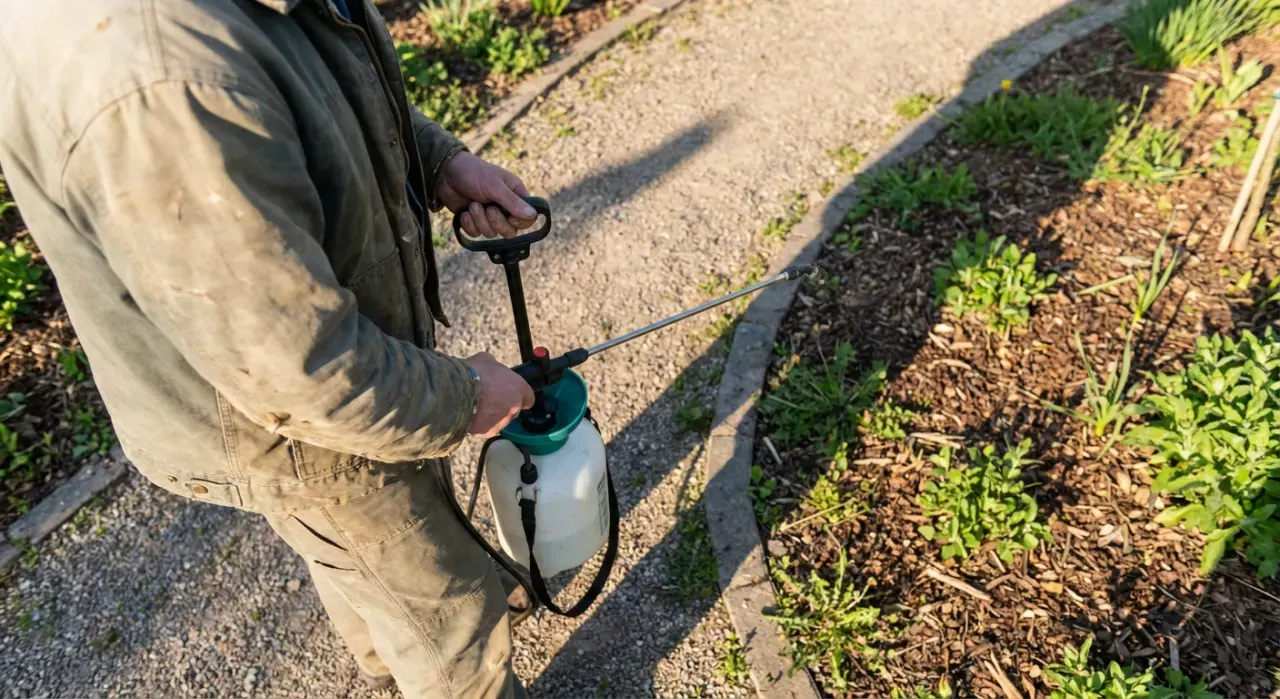
Water it in. Every grub product, preventive or curative, has to reach the root zone where the insects are. Most labels call for roughly half an inch of irrigation immediately after application. Skipping this is the second most common reason a treatment appears to have failed.
The ranked field, including the granule-versus-liquid trade-off and what owners consistently report about coverage, is in best insect killer for yards.
Beneficial Nematodes and Milky Spore, Honestly
Beneficial nematodes — Heterorhabditis bacteriophora is the species that matters for grubs — are microscopic parasitic roundworms that enter larvae and kill them. They have genuine efficacy, but they are living organisms and the handling requirements are the reason results vary so much. They must be refrigerated and used before the expiration date, applied at dusk or on an overcast day because ultraviolet light kills them quickly, watered in immediately, and applied to soil that stays moist for the following two weeks. Soil temperature needs to be above roughly 60°F. Meet those conditions and reports are good; miss two of them and you have watered in nothing.
Milky spore (Paenibacillus popilliae) is a bacterial disease specific to Japanese beetle grubs. Two things to understand before buying: it does not affect masked chafer, European chafer or June beetle larvae, which are the dominant species in many regions, so identifying your grub matters. And it establishes over several years rather than working this season — the honest framing is a long-term soil amendment, not a treatment. Where Japanese beetle is confirmed as the species and you are willing to think in five-year terms, it has a following. Where you need this year's lawn saved, it is the wrong tool.
Cultural control deserves a mention because it is free. Beetles prefer moist soil for egg-laying, so a lawn kept deliberately dry in late June and July is measurably less attractive — impractical for many people, but real. And deep, infrequent watering that drives roots down gives turf a much larger margin before root feeding shows as damage.
Repairing the Damage
Killing grubs does not regrow roots. Where the sod lifts free, the turf is dead and needs replacing. In cool-season regions early fall is the ideal window for both reseeding and sod, and conveniently it lines up with when grub damage becomes obvious.
Rake out the dead material, loosen the top inch of soil, seed at the rate on the bag with a starter fertilizer, and keep the surface consistently moist until germination — light watering once or twice daily for two to three weeks, which is the opposite of the deep-and-infrequent rule that applies to established turf. Areas with moderate damage and intact roots usually recover on their own with adequate water and a fall feeding. The wider routine is in the lawn care hub.
Where to Go Next
If the tug test held and the count came back low, look at your weeds instead — thin, patchy turf and the weeds filling it are a readable diagnosis, covered in common lawn weeds identified. For ranked yard insecticides across grubs, fleas, ticks and ants, see best insect killer for yards. If deer or rabbits are also working your yard, keeping deer and rabbits out covers fencing and repellents. Everything sits under the pest and weed control hub.
We never buy, apply or physically handle the products we rank — recommendations come from aggregated owner reviews and expert consensus, and the method is on how we rank. Follow the product label, which is the legally binding instruction in the United States, and check your state agriculture department or local extension service for regional timing.