 Garden
Affiliate Disclosure
Some links on this page are affiliate links. As an Amazon Associate, we earn from qualifying purchases — at no extra cost to you. We do not buy, test, or physically handle the products we cover; our rankings come from aggregated owner reviews, ratings and expert consensus. Commissions never change our verdicts. How we rank · full disclosure.
The short answer: get rid of spider mites by combining a physical knockdown with a persistent contact spray. Rinse the plant hard with water to blast off most of the mites and their webbing, raise the humidity to make the environment hostile to them, then spray insecticidal soap, horticultural oil, or neem oil over every leaf surface — especially the undersides — every three days for two to three weeks. That interval is the whole trick: mite eggs hatch faster than adults can be killed, so only repeated spraying breaks the cycle.
Spider mites are not insects but tiny arachnids, less than 1/50 inch across, that pierce leaf cells and drain them. The classic signs are fine yellow or white stippling on leaves, a dusty or bronzed look, and — in a bad case — delicate webbing across leaf joints and stems. They multiply explosively in hot, dry air, which is why they are the number one winter houseplant pest and a drought scourge outdoors.
Confirm it is spider mites
Mites are almost too small to see, so you diagnose by the damage and a simple test.
- Stippling: countless tiny pale dots on the leaf, giving it a speckled, faded look.
- Webbing: fine silk strands between leaves and stems, most visible on a heavy infestation or when misted.
- The paper test: hold a sheet of white paper under a leaf and tap it. If specks fall and slowly crawl, those are mites. Smear them — a rusty streak confirms it.
- Location: check leaf undersides first, where they feed and lay.
If you see chewing damage or larger visible bugs instead, it is a different pest. Sap-feeders like aphids call for a different approach — see does dish soap kill aphids. For the broader picture of what works on garden pests, start at the pest and weed control hub.
Step 1: isolate the plant immediately
Spider mites spread from plant to plant with alarming speed, walking, riding air currents, and hitching on your hands and sleeves. The first move is containment.
- Move the infested plant away from all others the moment you spot mites. A separate room is ideal.
- Check its neighbors with the paper test — anything within a couple of feet has probably been exposed.
- Wash your hands and avoid brushing from an infested plant to a clean one.
Step 2: knock them off with water
A strong rinse physically removes a huge share of the mites, eggs, and webbing before you spray anything. It also matters outdoors, where a regular jet of water on vulnerable plants keeps populations from building.
- Indoors: take the plant to a sink or shower and spray the whole plant, leaf undersides included, with a firm stream of room-temperature water.
- Outdoors: hit the plant with a hose nozzle set to a sharp jet, focusing under the leaves, and repeat every few days during an outbreak.
- Let it drain so the crown and soil are not left waterlogged.
This single step often removes 70 to 80 percent of a light infestation. It does not finish the job — eggs cling on — but it makes every following spray more effective.

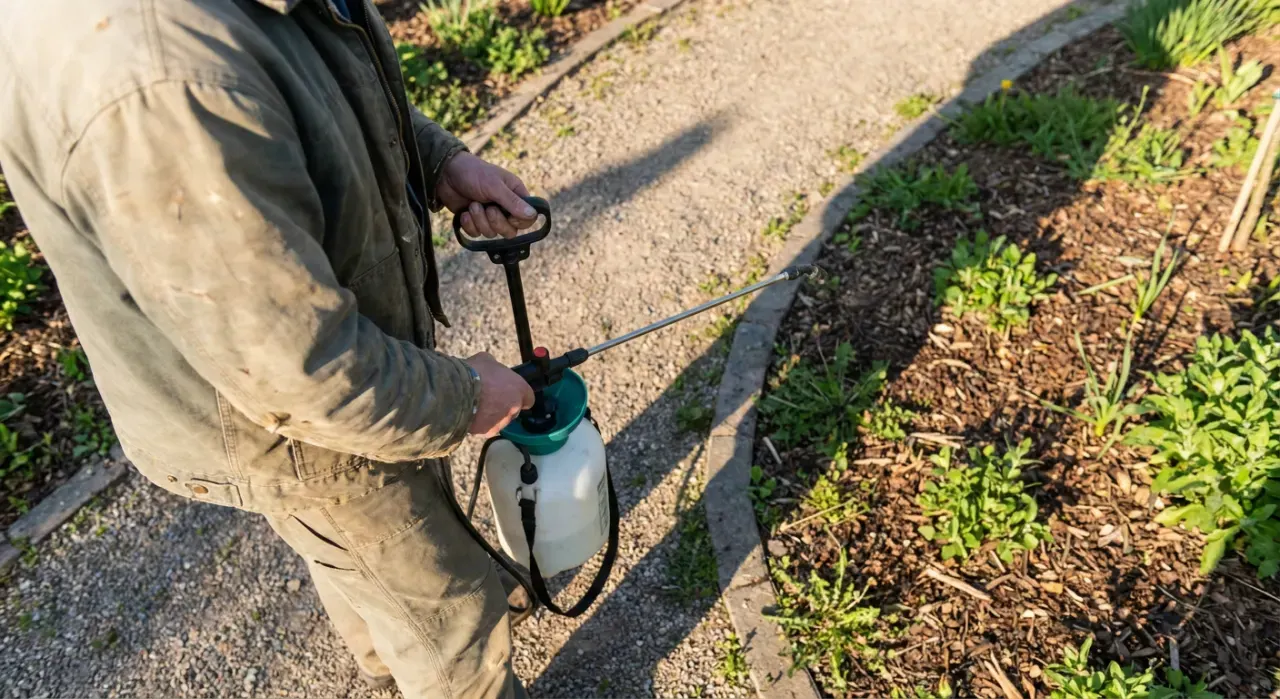
Step 3: spray on a three-day cycle
This is the core of the whole plan. Contact sprays kill mites and, depending on the product, smother eggs — but survivors and freshly hatched mites rebuild fast, so timing is everything.
| Spray | How it works | Frequency | Notes |
|---|---|---|---|
| Insecticidal soap | Breaks down mite cell membranes on contact | Every 3 days, 2 to 3 weeks | Must hit the mite directly; no residual |
| Horticultural oil | Smothers mites and eggs | Every 5 to 7 days, 3 cycles | Kills eggs too; avoid on hot days |
| Neem oil | Smothers plus disrupts reproduction | Every 5 to 7 days, 3 cycles | Longer-acting; evening application |
Whichever you choose:
- Coat every surface, undersides first. Mites hide and feed under leaves; a top-only spray misses most of them.
- Spray to the point of dripping so no leaf is skipped.
- Apply in the evening or out of direct sun to avoid leaf scorch, and never treat a wilted, heat-stressed plant.
- Keep the three-day rhythm with soap, or the five-to-seven-day rhythm with oil, until a full week passes with no live mites.
For the ranked field of ready-to-use sprays and concentrates, see best yard insect killer. We do not buy or test these ourselves; our rankings come from aggregated owner reviews, as explained in how we rank.
Step 4: change the environment against them
Spider mites love hot, dry, still air. Shifting those conditions slows their breeding dramatically and is what stops them coming straight back.
- Raise humidity indoors. Group plants, run a humidifier, or set pots on a pebble tray. Mite reproduction slows sharply above about 50 percent humidity.
- Mist mite-prone plants in dry heating season — the mites hate moisture on the leaves.
- Keep plants well-watered. Drought-stressed plants are mite magnets, indoors and out. Consistent watering is genuine prevention; see the best time of day to water plants.
- Wipe dust off leaves. Dusty foliage shelters mites and blocks sprays.

Step 5: prune and clean up the worst damage
Heavily webbed, stippled leaves will not recover and are full of mites and eggs. Removing them cuts the population and helps the plant redirect energy to healthy growth.
- Cut off leaves that are more than half stippled or webbed and bag them — do not compost mite-infested material near your plants.
- Do not remove more than about a third of the plant at once; leave enough to keep it going.
- Sanitize your pruners with alcohol between plants.
Preventing the next outbreak
Once you have cleared them, a few habits keep spider mites from returning.
- Quarantine new plants two weeks and inspect leaf undersides before adding them to your collection — new plants are the top entry route.
- Keep humidity up and dust down through winter heating season, when indoor outbreaks peak.
- Inspect mite-prone plants weekly — palms, ivy, calathea, and many vegetables and fruit trees are favorites.
- Do not over-fertilize. Soft, nitrogen-rich new growth is exactly what mites prefer.
Common mistakes that let mites win
| Mistake | Why it fails | Do this instead |
|---|---|---|
| One-and-done spraying | Eggs hatch after you spray | Repeat every 3 days for 2 to 3 weeks |
| Spraying tops of leaves only | Mites live underneath | Coat undersides thoroughly |
| Stopping when visible mites vanish | New generation is already hatching | Treat until a full clean week |
| Spraying in hot sun | Oil and soap scorch leaves | Treat in the evening |
| Leaving the room dry | Dry air lets them rebound | Raise humidity above 50 percent |
The theme is persistence. Spider mites are beaten not by a single powerful treatment but by a stubborn routine that outlasts their breeding cycle. Hold the schedule for the full two to three weeks and change the conditions that invited them, and they stay gone. For related jobs and the tools that make them easier, browse the pest and weed control hub and our guide to whether ultrasonic pest repellers actually work.